
Karthi Travels®
ISO 9001:2015 Certified
Authoor, Thoothukudi, Tamil Nadu
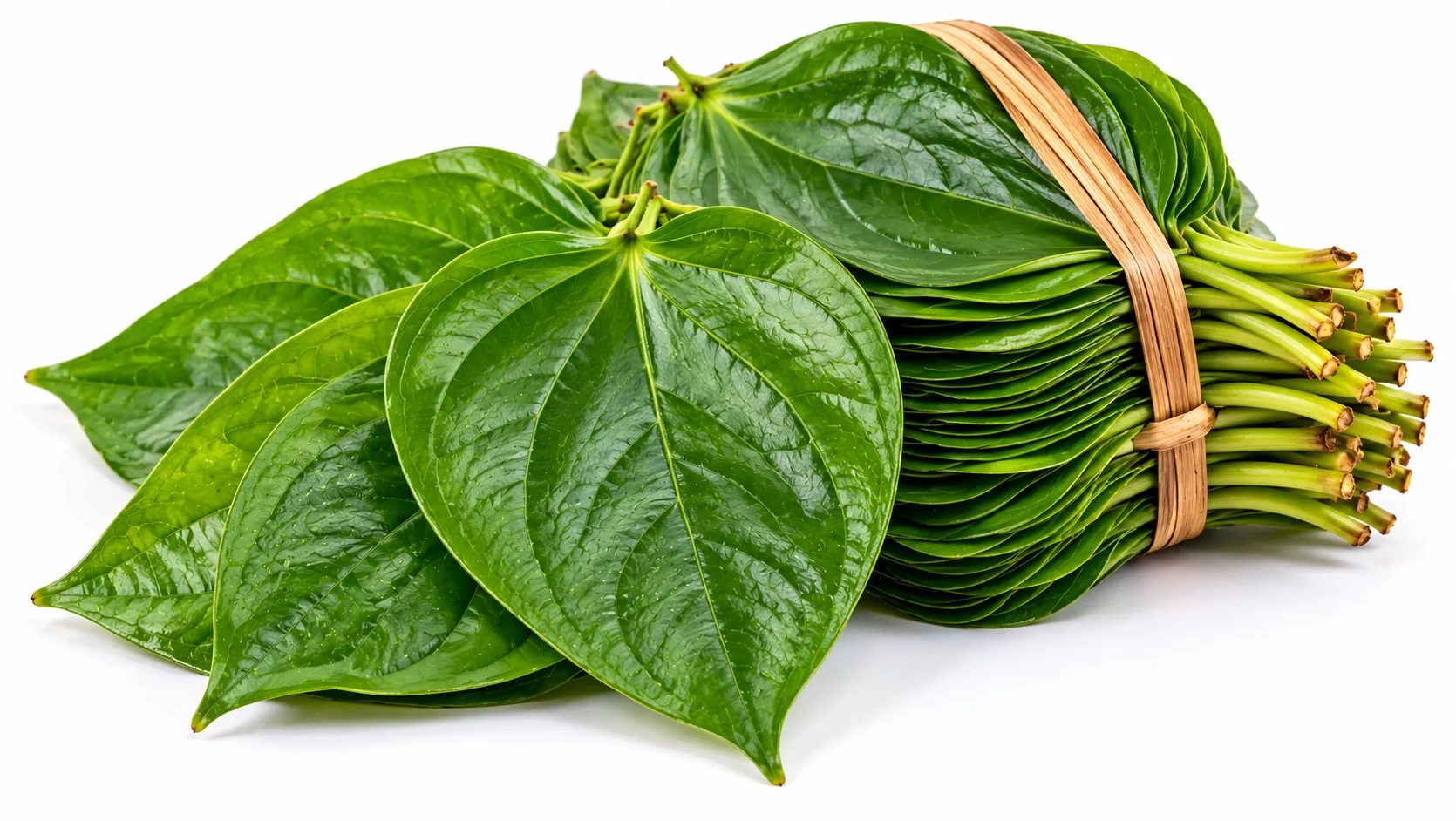
This image has been generated using AI for visual representation purposes only.
Discover Authoor Vetrilai, a GI-registered regional product associated with Authoor, celebrated for its local heritage and traditional craftsmanship or production.
Authoor Vetrilai is the regional betel leaf (vetrilai) variety historically cultivated around the village of Authoor in Thoothukudi district. It is a GI-registered agricultural product recognised for its distinctive morphological, aromatic and flavour characteristics developed under local growing conditions along the Thamirabarani river basin.
Authoor Vetrilai was formally registered as a Geographical Indication (GI) with application number 719 (filed 11 November 2020) and the Certificate of Registration issued on 31 March 2023; the registration is recorded as valid up to 10 November 2030. The GI application was made by the Authoor Vattara Vetrilai Viyasayigal Sangam. Press reports and local archaeological references record the long association of betel leaves with the Authoor area: stone inscriptions at the Authoor Somanathaswamy temple note the serving of vetrilai and arecanut in ritual contexts, and local sources report historical mentions of Authoor betel in older travel and regional documents. Contemporary reporting describes a decline in cultivated area over the 20th century, with cultivation continuing in pockets (reported at roughly 500 acres across Authoor and nearby villages).
Cultivation and handling techniques for Authoor Vetrilai have been transmitted within local farming communities. Traditional practices documented in the region include planting betel creepers on raised beds with water drains, use of living-support intercrops (locally known as 'Thandayam Kattudal') such as agathi (Sesbania grandiflora) to support the vines, and local grading and harvesting knowledge (selection of leaves from specific nodes and timing of harvests). The leaves are also embedded in local ritual use and temple offerings.
Authoor Vetrilai is reported by local sources to have a distinct pungency and spicy flavour that growers and observers attribute to local growing conditions and irrigation from the Thamirabarani river. Documented varietal differences include: Nattukodi — noted for a long petiole that helps retain freshness and extends shelf life; Pachaikodi — cordate, dark green leaves with a strong aroma and an entire margin; Karpoori — narrow, ovate leaves that are lighter in colour (light green to yellowish green) and described as having a camphor-like (karpooram) aroma and lower pungency. Local reports also note higher eugenol content and significant terpinyl acetate in the oil of some Authoor varieties relative to varieties from other regions (as reported in regional coverage).
Creepers are planted on raised beds with a two‑foot deep water drain separating the rows and irrigated from local water sources; planting frequently uses living supports and intercropping (for example with agathi). After establishment, plants mature (reported cultivation timelines indicate significant growth by roughly 140–160 days), and leaves are harvested in intervals determined by season (documented harvest intervals: about 10–15 days during the rainy season and about 40–50 days in winter). Harvested leaves are graded and arranged in bunches (kavulis) which are tied — traditionally using banana stem fibre — to reduce spoilage. Grading and sorting (see FAQ/varieties) precede packing for distribution.
Thandayam Kattudal: an intercrop support method using agathi (Sesbania grandiflora) as living poles for betel creepers; a local node-based selection and grading practice for leaves (local grades such as Sakkai, Maathu and Podi are used for commercial classification of Nattukodi leaves); traditional post-harvest handling includes bundling leaves into kavulis and tying with banana stem fibre to minimise spoilage.
Authoor Vetrilai has local agricultural and cultural importance: it contributes to livelihoods in Authoor and neighbouring villages, features in temple and ritual traditions, and is used in customary occasions such as weddings, housewarmings and festivals. The GI registration recognises the product's regional identity and the specific agricultural practices and qualities associated with Authoor.
Authoor Vetrilai was registered as a Geographical Indication (Application No. 719). The Certificate of Registration was issued on 31 March 2023 and the registration is recorded as valid up to 10 November 2030.
Three principal locally recognised varieties are Nattukodi (long-petioled), Pachaikodi (dark green, strongly aromatic) and Karpoori (narrow, lighter-coloured, camphor-scented). These varieties are described in regional documentation and press coverage of the GI application.
Authoor betel leaves are recorded in local temple inscriptions and are part of ceremonial use in the region; regional sources also report historical mentions of Authoor betel in older travel and regional records.
Local temple inscriptions at Authoor (e.g., Authoor Somanathaswamy temple) document the historical use of vetrilai and arecanut in ritual meals; regional reporting and local scholarship link Authoor betel leaves to longstanding ritual and social customs in the Thamirabarani basin.
Regional reporting on handling and shelf life notes that common betel leaves typically keep three to five days in summer and five to six days in winter; growers and nodal officers have reported that Authoor betel leaves, owing partly to varietal traits (for example the long petiole of Nattukodi) and handling practices, can retain freshness for a longer period (reported at about seven to ten days). Traditional handling to reduce spoilage includes arranging harvested leaves in bunches (kavulis) and tying them with banana stem fibre.
Authoor Vetrilai is the local betel leaf variety associated with Authoor village in Thoothukudi district, Tamil Nadu. It is a GI-registered agricultural product recognised for its regional identity and characteristic aroma and flavour.
The GI application for Authoor Vetrilai (Application No. 719) was filed on 11 November 2020; the Certificate of Registration was issued on 31 March 2023 and the registration is recorded as valid up to 10 November 2030.
Regional reporting and the GI specification describe distinctive morphological and aromatic features — growers point to a pronounced pungency and spiciness attributed to local growing conditions and irrigation from the Thamirabarani river. Documented varietal differences (Nattukodi, Pachaikodi, Karpoori) include petiole length, leaf shape and aroma; some local reports additionally note higher eugenol and terpinyl acetate content in Authoor varieties compared with some other regions.
The principal locally recognised varieties are Nattukodi (noted for a long petiole), Pachaikodi (dark green, strongly aromatic) and Karpoori (narrow, lighter-coloured with a camphor-like aroma). Nattukodi leaves are further graded into commercial classes such as Sakkai (high-grade, from stem/nodes), Maathu (medium-grade, from branches) and Podi (lower-grade, from older plants).
Local reporting indicates common betel leaves typically keep three to five days in summer and five to six days in winter; Authoor betel leaves have been reported to retain freshness for about seven to ten days under traditional handling. Farmers traditionally arrange harvested leaves into bunches (kavulis) and tie them with banana stem fibre to reduce spoilage.
This image has been generated using AI for visual representation purposes only.
Let Karthi Travels help you plan a comfortable and memorable journey across Tamil Nadu.
Experience, Trust & Memories Built Over the Years





Your journey is in experienced hands, from planning to the final drop.

No hidden charges. Clear and upfront pricing.

Clean, inspected and well-serviced vehicles for a comfortable journey.

Professional drivers focused on safe and pleasant travel.

Dependable pickups and reliable travel service.
Travel Made Simple, Experiences Made Grand

Explore the best of each destination with our curated sightseeing tours.

Perfect for families and groups, planned with comfort, safety and flexibility in mind.

Peaceful and spiritually enriching journeys with carefully planned routes.

Personalised honeymoon tours and romantic destinations for your special journey.

Compliant and well-documented tour plans to make the most of your travel concession.
 WhatsApp Us