
Karthi Travels®
ISO 9001:2015 Certified
Chettinad region, Sivaganga
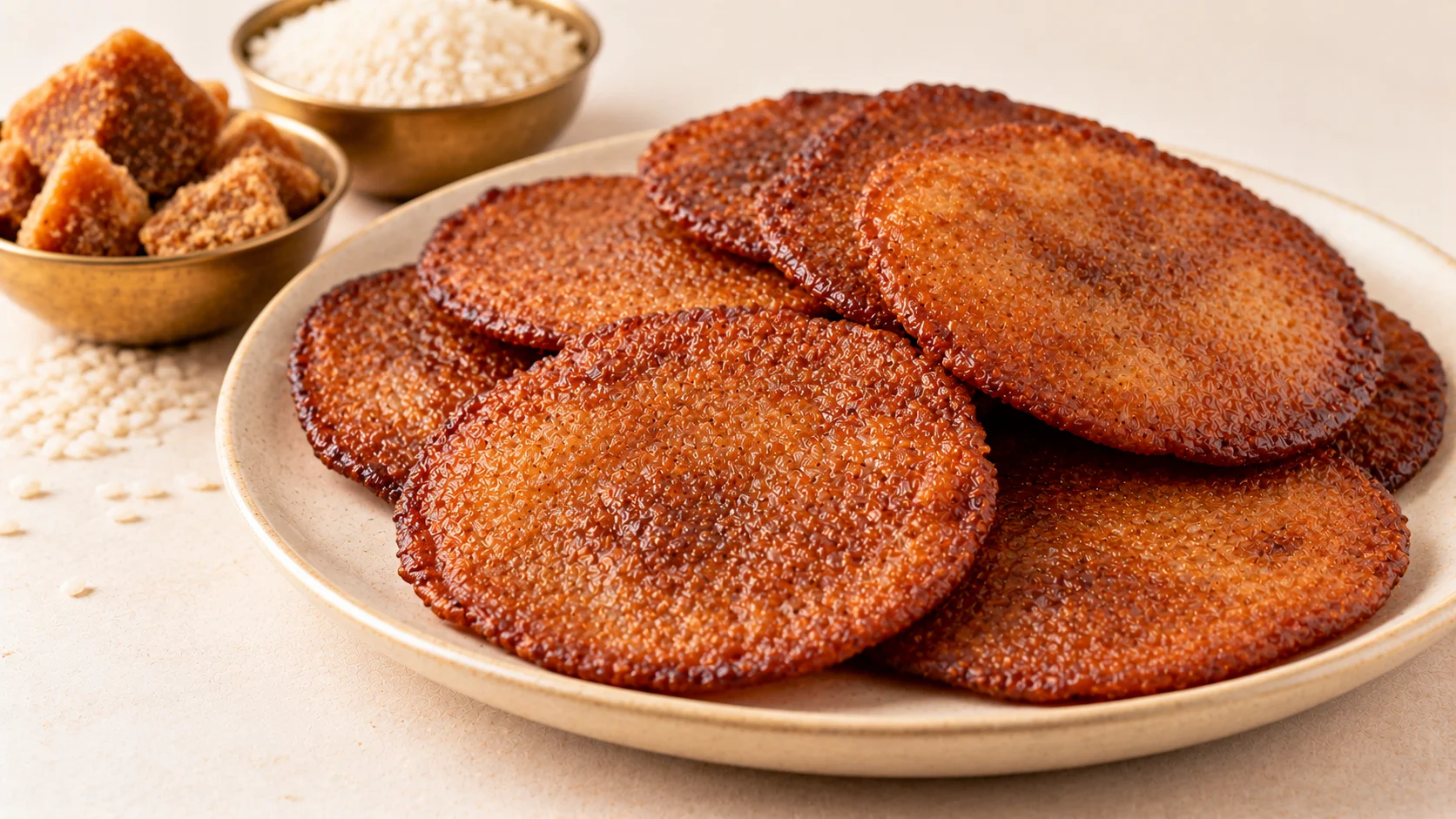
This image has been generated using AI for visual representation purposes only.
A regional version of the traditional rice-flour and jaggery sweet found across South India. The exact recipe and regional distinction vary, so document the specific local preparation rather than presenting it as exclusive to Chettinad.
Chettinad Athirasam is a traditional Tamil sweet associated with the Chettinad region of Tamil Nadu, including the culinary traditions of Karaikudi and surrounding settlements. Also known as Adhirasam, this deep-fried confectionery is primarily prepared using rice flour and jaggery. The ingredients are combined to form a dough, which is shaped into flattened discs and fried until the exterior develops a rich brown colour while the interior remains soft and chewy. Cardamom is commonly added for fragrance, while some recipes incorporate dry ginger or other flavourings. Traditional Chettinad preparations emphasise freshly ground rice flour and carefully prepared jaggery syrup. The resulting sweet has a distinctive caramel-like flavour and a dense, tender texture. Athirasam forms part of the traditional sweet repertoire of Chettinad and is associated with festive occasions, family celebrations and Tamil culinary heritage.
Athirasam has a long history in South Indian culinary traditions and is particularly associated with Tamil household cooking, temple food traditions and festive celebrations. Historical culinary and temple-related records refer to preparations known as athirasam or related names, including atirasa-padi in historical inscriptions associated with offerings. These references indicate that related rice-and-jaggery sweets were known in earlier periods, although they do not establish the precise origin of the Chettinad version. In Chettinad, Athirasam became part of a broader repertoire of traditional sweets prepared using rice, jaggery and other locally familiar ingredients. Household recipes were transmitted through generations, with techniques involving the preparation of fresh rice flour, careful cooking of jaggery syrup, resting the dough and deep-frying individual portions. The Chettinad style is commonly associated with freshly ground rice flour and a carefully controlled jaggery syrup, although recipes differ between households. Athirasam is particularly associated with Deepavali and other auspicious occasions in Tamil Nadu. The precise date when the Chettinad variation developed, and the identity of its first preparer, have not been conclusively documented. Its regional significance is best understood through its continuing place in Chettinad food traditions rather than through an unverified single-origin story.
Chettinad Athirasam reflects inherited confectionery skills associated with traditional household cooking in southern Tamil Nadu. Its preparation requires knowledge of rice flour consistency, jaggery syrup concentration, dough resting and frying. Rice flour is gradually incorporated into the prepared jaggery syrup, and the resulting dough may be rested to develop its consistency before shaping. The cook must judge when the syrup has reached a suitable stage, since this affects the dough's texture and the finished sweet. Individual portions are flattened into discs and fried carefully to develop a browned exterior while maintaining a soft interior. Freshly ground rice flour and traditional syrup preparation are important features of many Chettinad recipes. These methods are transmitted through household cooking practices, although ingredient proportions, resting times and frying techniques vary between families.
Chettinad Athirasam is distinguished by its flattened, round shape, deep golden-brown to brown colour and characteristic combination of rice flour and jaggery. The sweet generally has a caramel-like flavour, a slightly crisp exterior and a soft, dense or chewy interior. The precise texture depends on the moisture content of the rice flour, the concentration of the jaggery syrup, the resting period and the frying conditions. Cardamom is commonly used to provide fragrance, while some recipes incorporate dry ginger or sesame seeds. Traditional preparations often use freshly ground rice flour rather than relying exclusively on commercially milled flour. Unlike sugar-based fried pastries, Athirasam derives its characteristic sweetness and colour primarily from jaggery. Although the basic ingredients remain similar across many regional versions, the thickness, texture and flavour can vary according to household methods.
Traditional Chettinad Athirasam preparation generally begins with cleaning and soaking raw rice. The rice is drained and partially dried before being ground into a fine flour. Some moisture is retained in the flour according to the recipe. Jaggery is dissolved in water and heated to produce a syrup of the required consistency. The syrup may be strained to remove impurities before further heating. Rice flour is gradually added to the warm jaggery syrup while mixing continuously to form a thick dough. Cardamom or other flavourings may be incorporated according to the recipe. The dough is covered and rested for a period that varies between preparations; some traditional methods involve overnight resting or longer fermentation. When ready, small portions are taken from the dough and flattened into discs. The discs are carefully deep-fried in hot oil or ghee until they develop the characteristic brown colour and are cooked through. Excess oil may be gently pressed out after frying. The sweets are allowed to cool before serving or storage. Exact proportions, syrup concentration, resting time and frying conditions vary between recipes.
A characteristic traditional method is the use of freshly ground rice flour prepared from soaked and partially dried rice. The flour is incorporated gradually into jaggery syrup, whose consistency must be controlled to produce a dough that can be shaped and fried successfully. Some household recipes allow the dough to rest overnight or longer before cooking, while others use different resting periods. Individual portions are flattened by hand before frying. The cook controls the oil temperature and frying duration to prevent the exterior from browning too quickly while leaving the centre undercooked. Some preparations use ghee or a mixture of fats for frying. These techniques rely on practical experience and vary among Chettinad households; no single preparation method should be assumed to apply universally.
Chettinad Athirasam is an example of the traditional confectionery associated with the culinary heritage of Chettinad and southern Tamil Nadu. Its combination of rice and jaggery reflects established regional sweet-making practices, while the preparation method demonstrates the importance of controlling syrup consistency, dough texture and frying. Athirasam is commonly prepared during Deepavali and other family and festive occasions. Related rice-and-jaggery sweets also appear in South Indian temple food traditions, although specific ceremonial practices differ between locations. Its continuing presence in household cooking illustrates the transmission of traditional recipes across generations. The Chettinad variation contributes to the region's broader reputation for distinctive traditional sweets and carefully prepared festive foods.
Chettinad Athirasam is traditionally made by combining rice flour with jaggery syrup and shaping the dough into discs before frying.
Freshly ground rice flour and carefully controlled jaggery syrup are important features of many traditional Athirasam recipes.
Athirasam is associated with Deepavali and other celebrations and forms part of the traditional sweet repertoire of Chettinad.
Athirasam is part of Tamil Nadu's traditional food culture and is commonly prepared during Deepavali and other auspicious occasions. In some settings, related rice-and-jaggery sweets are associated with temple offerings and religious observances. The Chettinad version reflects the household confectionery traditions of the region, where preparation techniques and recipes have been passed between generations. The process of preparing rice flour, cooking jaggery syrup, resting the dough and frying individual discs represents a form of practical culinary knowledge. Athirasam's place in festive meals and traditional sweet assortments contributes to its cultural importance. Specific religious associations and ceremonial uses vary across households and temples and should not be assumed to apply to every preparation.
Shelf life depends on the moisture content of the dough, ingredient proportions, frying method, packaging and storage conditions. Allow freshly fried Athirasam to cool before placing it in a clean, dry, airtight container. Protect the sweets from moisture and contamination. Follow the storage instructions and stated consumption period supplied with packaged products. Homemade preparations may have different storage requirements depending on their texture and moisture content. No universal shelf-life duration can be established for all Chettinad Athirasam preparations.
Chettinad Athirasam is a traditional Tamil sweet associated with the Chettinad region. It is primarily made from rice flour and jaggery, shaped into flattened discs and deep-fried to produce a sweet with a browned exterior and a soft, chewy interior.
Chettinad Athirasam is associated with the Chettinad region of Tamil Nadu, including Karaikudi and surrounding settlements in Sivaganga district. Athirasam is also prepared widely elsewhere in Tamil Nadu and South India, and the exact origin of the Chettinad variation has not been conclusively documented.
The principal ingredients are rice flour and jaggery. Water is used to prepare the syrup, and the dough may include cardamom, dry ginger or sesame seeds depending on the recipe. Cooking oil or ghee is used for frying.
Athirasam is a traditional sweet in Tamil Nadu and is commonly prepared as part of Deepavali celebrations. It is also made for other family gatherings and auspicious occasions, although particular practices vary between households.
An official Geographical Indication registration specifically for Chettinad Athirasam could not be established from the available research. Its recognised association with Chettinad cuisine does not by itself establish GI registration. A GI claim should be made only if confirmed by the official Indian Geographical Indications Registry.
This image has been generated using AI for visual representation purposes only.
Let Karthi Travels help you plan a comfortable and memorable journey across Tamil Nadu.
Experience, Trust & Memories Built Over the Years





Your journey is in experienced hands, from planning to the final drop.

No hidden charges. Clear and upfront pricing.

Clean, inspected and well-serviced vehicles for a comfortable journey.

Professional drivers focused on safe and pleasant travel.

Dependable pickups and reliable travel service.
Travel Made Simple, Experiences Made Grand

Explore the best of each destination with our curated sightseeing tours.

Perfect for families and groups, planned with comfort, safety and flexibility in mind.

Peaceful and spiritually enriching journeys with carefully planned routes.

Personalised honeymoon tours and romantic destinations for your special journey.

Compliant and well-documented tour plans to make the most of your travel concession.
 WhatsApp Us