
Karthi Travels®
ISO 9001:2015 Certified
Chettinad region, Tamil Nadu, Sivaganga
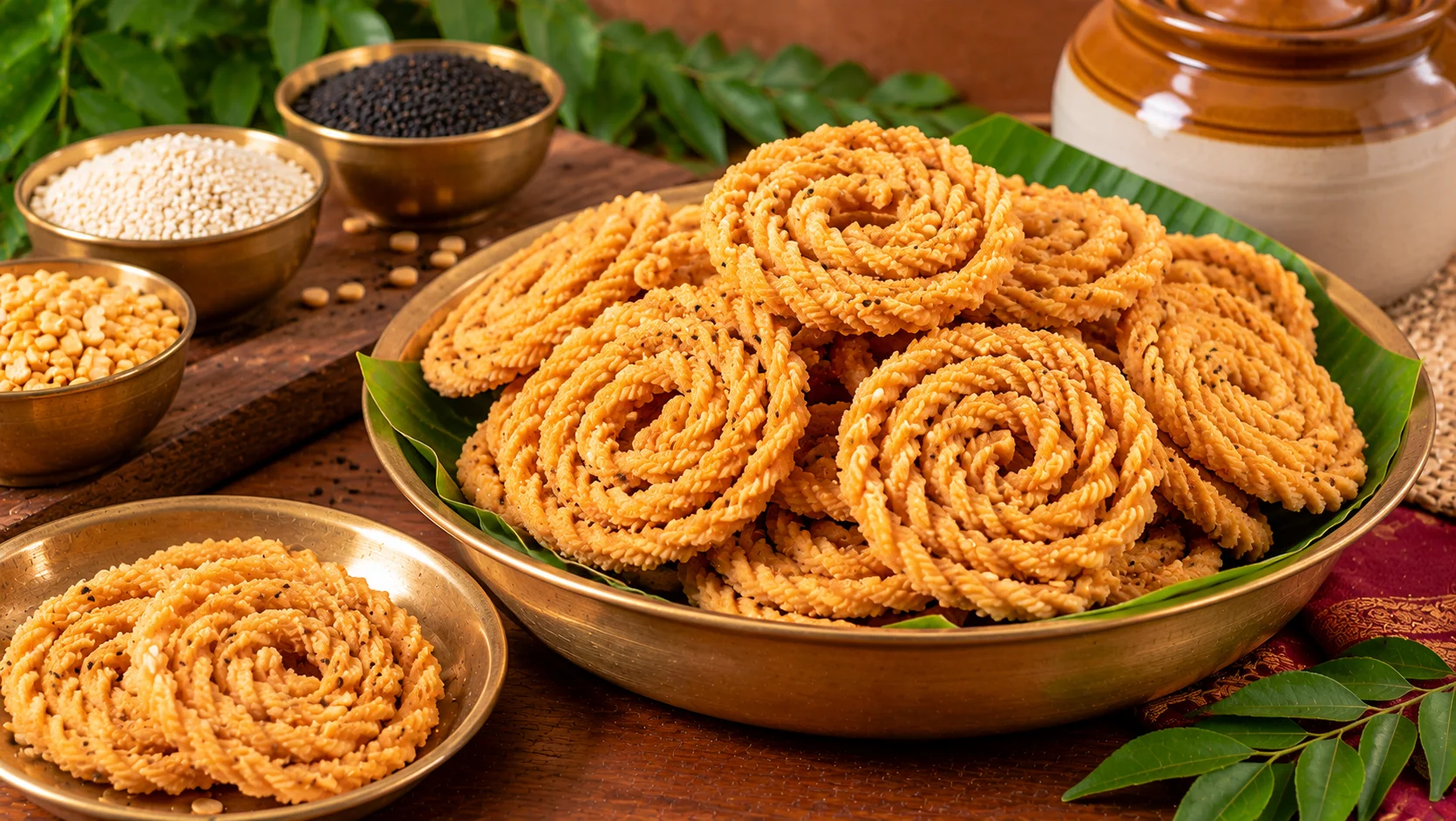
This image has been generated using AI for visual representation purposes only.
A traditional savoury snack associated with Chettinad and its regional culinary traditions.
Chettinadu Kai Murukku is a traditional savoury snack associated with the Chettinad region of Tamil Nadu, particularly Karaikudi and surrounding areas. The word 'kai' means hand in Tamil, referring to the distinctive technique of shaping each murukku manually into a circular spiral. Unlike snacks formed entirely through a mechanical press, kai murukku requires the maker to guide the dough by hand into a series of even loops. It is commonly prepared using rice flour, urad dal flour, salt and a fat such as butter or ghee, then deep-fried until crisp. Recipes vary between households and producers, with some versions including cumin, sesame seeds or other seasonings. Chettinadu Kai Murukku is enjoyed as a tea-time snack and is often prepared for festivals, weddings, family gatherings and other celebrations. Its appeal lies in the combination of a delicate crunch, a mild savoury flavour and the skill required to create its characteristic spiral shape.
Murukku has a long-standing place in Tamil Nadu's culinary traditions, where rice-based savoury snacks are prepared for everyday enjoyment, festivals and family occasions. Kai murukku developed as a hand-shaped variation in which the dough is twisted into circular patterns without relying entirely on a mould or press. In the Chettinad region, the preparation of traditional savouries forms part of a wider food culture associated with household cooking, hospitality and festive gatherings. Karaikudi and nearby towns have businesses producing and selling Chettinad snacks, including hand-twisted murukku. Although the technique is well established in Tamil Nadu and is associated with Chettinad cuisine, a precise historical date for the beginning of Chettinadu Kai Murukku has not been independently established.
Kai murukku reflects the importance of handmade snacks in Tamil household food traditions. Preparing the spirals by hand requires practice, control of dough consistency and coordinated finger movements. The snack is commonly associated with festive food preparation, family gatherings, weddings and hospitality. In the Chettinad region, traditional savouries are often served to visitors or included in gift assortments during celebrations. The preparation of Chettinadu Kai Murukku therefore represents both a familiar culinary tradition and a practical skill passed between generations of home cooks and snack makers.
The defining feature of Chettinadu Kai Murukku is its hand-twisted spiral, which may contain several circular loops arranged into a flat, round shape. The number and regularity of the loops depend on the maker's technique and the recipe. The snack is generally light in colour, crisp and savoury, with a flavour influenced by the rice flour, urad dal, fat and seasoning used. Butter or ghee can contribute richness, while cumin or sesame seeds may be included in some variations. Because each piece is shaped manually, slight differences in thickness and pattern are normal and help distinguish handmade pieces from highly uniform machine-formed snacks. Recipes and frying oils vary by producer, so no single ingredient combination applies to every product.
Rice flour and urad dal flour are measured and combined according to the recipe. Salt and any optional seasonings are added, followed by butter, ghee or another specified fat. Water is incorporated gradually to form a smooth, pliable dough that is firm enough to hold its shape but flexible enough for hand twisting. The maker takes a small portion of dough and guides it between the fingers onto a clean surface or suitable shaping area, forming connected circular loops into a spiral. The finished piece is carefully lifted and placed into hot cooking oil. It is fried until crisp and lightly golden or pale golden, depending on the recipe, then removed and drained. Once fully cooled, the murukku is packed in an airtight container or suitable food-grade packaging. Commercial producers may use batch-processing equipment for mixing and frying, while retaining hand shaping as the defining step.
Traditional kai murukku making relies on hand-twisting rather than forming the entire spiral through a mechanical extruder. The dough must have the right balance of firmness and elasticity to allow the maker to create continuous, even loops without breaking. Skilled makers use their fingers to control the movement, spacing and thickness of the dough as it forms the circular pattern. The shaped pieces are transferred carefully into hot oil and fried until crisp. Some recipes begin with rice that is soaked, dried and milled, while others use prepared rice flour. Urad dal flour, butter, ghee and seasonings are used in varying proportions. The exact technique differs between families and producers, and the hand-shaping method is shared with kai murukku traditions elsewhere in Tamil Nadu.
Chettinadu Kai Murukku is valued as a traditional savoury that combines everyday ingredients with a distinctive manual shaping technique. It is suitable for sharing and gifting and is commonly associated with celebrations, hospitality and tea-time eating. The product also provides work for small snack makers and home-based producers who prepare and sell traditional savouries. Its regional identity connects the snack with Chettinad's wider culinary reputation, while the hand-twisting process preserves a form of practical food craftsmanship that cannot be judged by ingredients alone.
Each piece is shaped manually into connected circular loops, requiring skill and practice to achieve a neat pattern.
The snack is sold and prepared as part of the traditional savoury repertoire of Karaikudi and the wider Chettinad region.
Rice flour forms the main ingredient, often combined with urad dal flour for texture and flavour.
The finished murukku is deep-fried until crisp, with seasoning and richness varying according to the recipe.
Kai murukku is commonly enjoyed during festivals, weddings, family gatherings and visits from guests.
Hand shaping requires control of dough consistency and coordinated finger movements, helping preserve a familiar culinary craft.
Traditional savouries occupy an important place in Tamil food culture, especially during festivals, weddings and family gatherings. Kai murukku is distinctive because the spiral is formed by hand, making the maker's skill an integral part of the finished snack. In the Chettinad region, a tradition of preparing and sharing savouries complements the area's wider culinary heritage and hospitality practices. Hand-twisted murukku may be included in festive food collections or served to guests alongside sweets and other snacks. While the technique is not exclusive to Chettinad, its local preparation and sale contribute to the region's reputation for traditional foods.
Kai murukku should be stored in a clean, dry, airtight container after it has cooled completely. Exposure to moisture can soften the snack and reduce its crispness. Keep it away from direct sunlight, heat and strong odours. The actual shelf life depends on the ingredients, frying oil, moisture content, hygiene, packaging and storage conditions. Follow the best-before date and storage instructions printed by the manufacturer. Freshly prepared or unpackaged murukku may have a shorter shelf life than professionally sealed products. Discard the snack if it develops an unusual smell, visible mould or other signs of spoilage.
Chettinadu Kai Murukku is a traditional savoury snack associated with the Chettinad region of Tamil Nadu. It is made from a rice-based dough that is twisted by hand into circular loops and deep-fried until crisp.
In Tamil, 'kai' means hand. The name refers to the traditional technique of shaping the murukku manually rather than relying entirely on a mechanical press.
It is associated with the Chettinad region of Tamil Nadu, particularly Karaikudi and nearby areas in Sivaganga district. Kai murukku is also made in other parts of the state.
Common ingredients include rice flour, urad dal flour, salt, water and butter or ghee, with cooking oil used for frying. Some recipes include cumin, sesame seeds or asafoetida. Ingredients vary by producer.
A small portion of prepared dough is guided between the fingers into connected circular loops. The maker controls the thickness and spacing before carefully transferring the shaped piece into hot oil.
Kai murukku is shaped manually into its spiral pattern, while many other murukku varieties are extruded through a mould or press. Hand shaping often results in slight differences between individual pieces.
It can be enjoyed as a daily snack with tea or coffee and is also commonly prepared or purchased for festivals, weddings, family gatherings and hospitality.
Allow it to cool completely, then keep it in a clean, dry, airtight container away from moisture and heat. Follow the manufacturer's best-before date and storage instructions for packaged products.
A specific GI registration for Chettinadu Kai Murukku has not been verified. The snack is associated with Chettinad cuisine, but this regional association alone does not establish GI registration.
This image has been generated using AI for visual representation purposes only.
Let Karthi Travels help you plan a comfortable and memorable journey across Tamil Nadu.
Experience, Trust & Memories Built Over the Years





Your journey is in experienced hands, from planning to the final drop.

No hidden charges. Clear and upfront pricing.

Clean, inspected and well-serviced vehicles for a comfortable journey.

Professional drivers focused on safe and pleasant travel.

Dependable pickups and reliable travel service.
Travel Made Simple, Experiences Made Grand

Explore the best of each destination with our curated sightseeing tours.

Perfect for families and groups, planned with comfort, safety and flexibility in mind.

Peaceful and spiritually enriching journeys with carefully planned routes.

Personalised honeymoon tours and romantic destinations for your special journey.

Compliant and well-documented tour plans to make the most of your travel concession.
 WhatsApp Us