
Karthi Travels®
ISO 9001:2015 Certified
Chettinad region, Tamil Nadu, Sivaganga
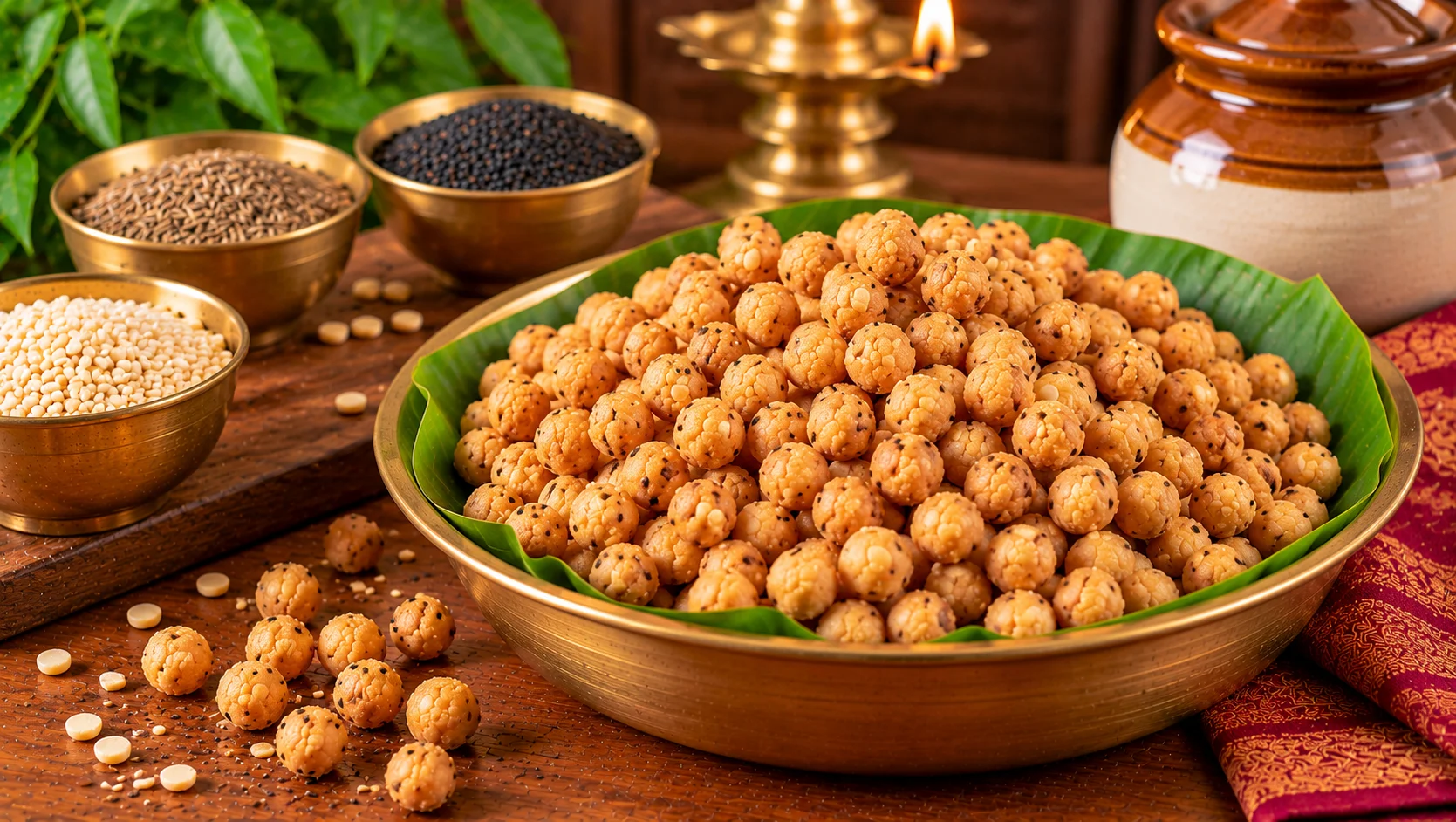
This image has been generated using AI for visual representation purposes only.
A traditional savoury snack associated with the culinary traditions of Chettinad.
Chettinadu Seedai is a traditional savoury snack associated with the Chettinad region of Tamil Nadu. These small, round, bite-sized snacks are generally prepared using rice flour, urad dal flour, salt and a little butter or another fat, then deep-fried until crisp. Depending on the household recipe, sesame seeds, cumin or other seasonings may be added. Seedai is valued for its crunchy texture, mild savoury flavour and convenient size, making it suitable for serving with tea or coffee. It is also prepared for festive occasions and family gatherings. In Tamil culinary traditions, seedai is particularly familiar as a festive snack, including during Krishna Jayanthi celebrations. Recipes and shaping methods differ between families and producers, and the name Chettinadu Seedai identifies a regional culinary association rather than a single standardised recipe.
Seedai has a long-standing place in Tamil Nadu's traditional snack culture and is prepared in many households for everyday enjoyment and religious festivals. Small rice-based savouries are commonly made at home, with recipes passed between generations and adjusted to local tastes. Seedai is especially associated with Krishna Jayanthi, when it may be prepared alongside other traditional offerings and snacks. In Chettinad, seedai forms part of the broader repertoire of regional savouries enjoyed during celebrations and hospitality. Although the snack is widely known across Tamil Nadu and beyond, a precise historical date for the beginning of Chettinadu Seedai as a distinct regional variety has not been independently established.
Seedai is associated with Tamil household cooking, festive food preparation and religious celebrations. It is particularly familiar during Krishna Jayanthi, when rice-based snacks may be prepared as part of customary offerings and family celebrations. In Chettinad, seedai can also be served to guests, included in snack assortments and shared during gatherings. Making seedai requires attention to flour preparation, dough consistency, shaping and frying. The continued preparation of this snack reflects the preservation of familiar culinary practices within households and local food businesses.
Chettinadu Seedai consists of small, round pieces that are crisp on the outside and crunchy throughout when properly prepared. Rice flour provides the main structure, while urad dal flour can contribute flavour and texture. A small amount of butter, ghee or another suitable fat may help create the desired consistency. Some recipes include sesame seeds or cumin for additional flavour. The individual pieces are generally rolled by hand into small balls before frying. Their size, colour and degree of crispness depend on the recipe and cooking method. As with other traditional seedai varieties, even shaping, appropriate moisture levels and controlled frying are important for a consistent result.
Rice flour and urad dal flour are measured and combined. Salt and any optional seasonings are added, followed by butter or another specified fat. Water is incorporated gradually to form a firm but workable dough. Small portions are pinched off and rolled between the palms into round balls of relatively even size. The pieces are then placed carefully into hot cooking oil and fried until crisp and cooked through. Depending on the recipe, the finished seedai may be pale golden or a deeper golden colour. The fried snacks are removed and drained, then allowed to cool completely before being packed. Commercial producers may use batch-processing equipment for mixing and frying, while the traditional shaping step is often performed by hand.
Traditional seedai preparation begins with attention to the quality and fineness of the rice flour. Some home recipes prepare the flour from rice that is soaked, drained, dried and ground, while others use ready-made rice flour. Urad dal is roasted or processed into flour according to the chosen recipe. The dry ingredients are mixed with fat and enough water to form a dough that can be rolled without becoming overly sticky. Small portions are shaped into balls by hand and fried in batches. Consistent sizing and controlled oil temperature help the pieces cook evenly. Traditional recipes vary between households, and preparation practices may differ according to family customs, ingredient availability and the desired texture.
Chettinadu Seedai is valued as an accessible, shareable snack that connects regional food traditions with everyday hospitality and festive cooking. Its small size makes it convenient for serving in snack bowls, adding to festive assortments or packing as a food gift. Its association with Krishna Jayanthi also connects seedai with the wider tradition of preparing rice-based snacks for religious occasions in Tamil Nadu. Local snack makers help keep these familiar flavours available beyond home kitchens, while household recipes preserve variations in seasoning, texture and preparation.
Seedai is prepared and enjoyed in the Chettinad region as part of its wider repertoire of traditional savoury foods.
The bite-sized balls are usually shaped by hand, making them easy to serve and share.
Rice flour is the principal ingredient, commonly combined with urad dal flour for flavour and texture.
Deep-frying gives seedai its characteristic crunch when the dough and cooking conditions are suitable.
Seedai is familiar during Krishna Jayanthi and can also be served at family gatherings and celebrations.
Ingredients and seasoning vary, with some recipes including sesame seeds, cumin or other mild flavourings.
Seedai is an established part of Tamil Nadu's traditional snack culture and is especially associated with Krishna Jayanthi. Families may prepare it alongside other traditional snacks as part of festive cooking and religious observances. The process of preparing the dough, rolling small balls and frying them in batches reflects household food skills passed between generations. In the Chettinad region, seedai contributes to the broader tradition of preparing and sharing savouries during celebrations and when welcoming guests. Although the snack is not exclusive to Chettinad, regional recipes and local production form part of the area's culinary identity.
Store seedai in a clean, dry, airtight container after it has cooled completely. Keep it away from moisture, direct sunlight, excessive heat and strong odours. Exposure to humidity can reduce crispness, while unsuitable storage may affect quality. Shelf life depends on the recipe, moisture content, frying oil, hygiene, packaging and storage conditions. Follow the manufacturer's best-before date and storage instructions for packaged products. Homemade or unpackaged seedai may have a shorter shelf life than professionally sealed products. Discard any product that develops an unusual smell, visible mould or other signs of spoilage.
Chettinadu Seedai is a traditional savoury snack associated with the Chettinad region of Tamil Nadu. It consists of small, round pieces made from a rice-based dough and deep-fried until crisp.
It is associated with the Chettinad region, particularly Karaikudi and nearby communities in Sivaganga district. Seedai is also prepared in other parts of Tamil Nadu.
Rice flour, urad dal flour and salt are common ingredients. Butter or ghee may be added, while sesame seeds, cumin and other mild seasonings are optional depending on the recipe.
Seedai is a familiar traditional snack associated with Krishna Jayanthi celebrations in Tamil Nadu. It may be prepared alongside other rice-based snacks as part of family and religious observances.
The flour and seasonings are mixed with fat and water to form a workable dough. Small portions are rolled into balls by hand and deep-fried until crisp and cooked through.
Traditional seedai is generally mildly seasoned rather than strongly spicy. The flavour depends on the recipe, and some versions may include pepper, cumin or other seasonings.
Seedai is generally shaped into small round balls, while murukku is usually formed into coils, spirals or other shapes. Both are popular rice-based savoury snacks, but their appearance and shaping methods differ.
Allow the snack to cool completely before storing it in a clean, dry, airtight container. Keep it away from moisture and heat, and follow the manufacturer's instructions for packaged products.
A specific GI registration for Chettinadu Seedai has not been verified. Its association with Chettinad cuisine does not by itself establish that the product has GI registration.
This image has been generated using AI for visual representation purposes only.
Let Karthi Travels help you plan a comfortable and memorable journey across Tamil Nadu.
Experience, Trust & Memories Built Over the Years





Your journey is in experienced hands, from planning to the final drop.

No hidden charges. Clear and upfront pricing.

Clean, inspected and well-serviced vehicles for a comfortable journey.

Professional drivers focused on safe and pleasant travel.

Dependable pickups and reliable travel service.
Travel Made Simple, Experiences Made Grand

Explore the best of each destination with our curated sightseeing tours.

Perfect for families and groups, planned with comfort, safety and flexibility in mind.

Peaceful and spiritually enriching journeys with carefully planned routes.

Personalised honeymoon tours and romantic destinations for your special journey.

Compliant and well-documented tour plans to make the most of your travel concession.
 WhatsApp Us