
Karthi Travels®
ISO 9001:2015 Certified
Cumbum, Theni, Tamil Nadu
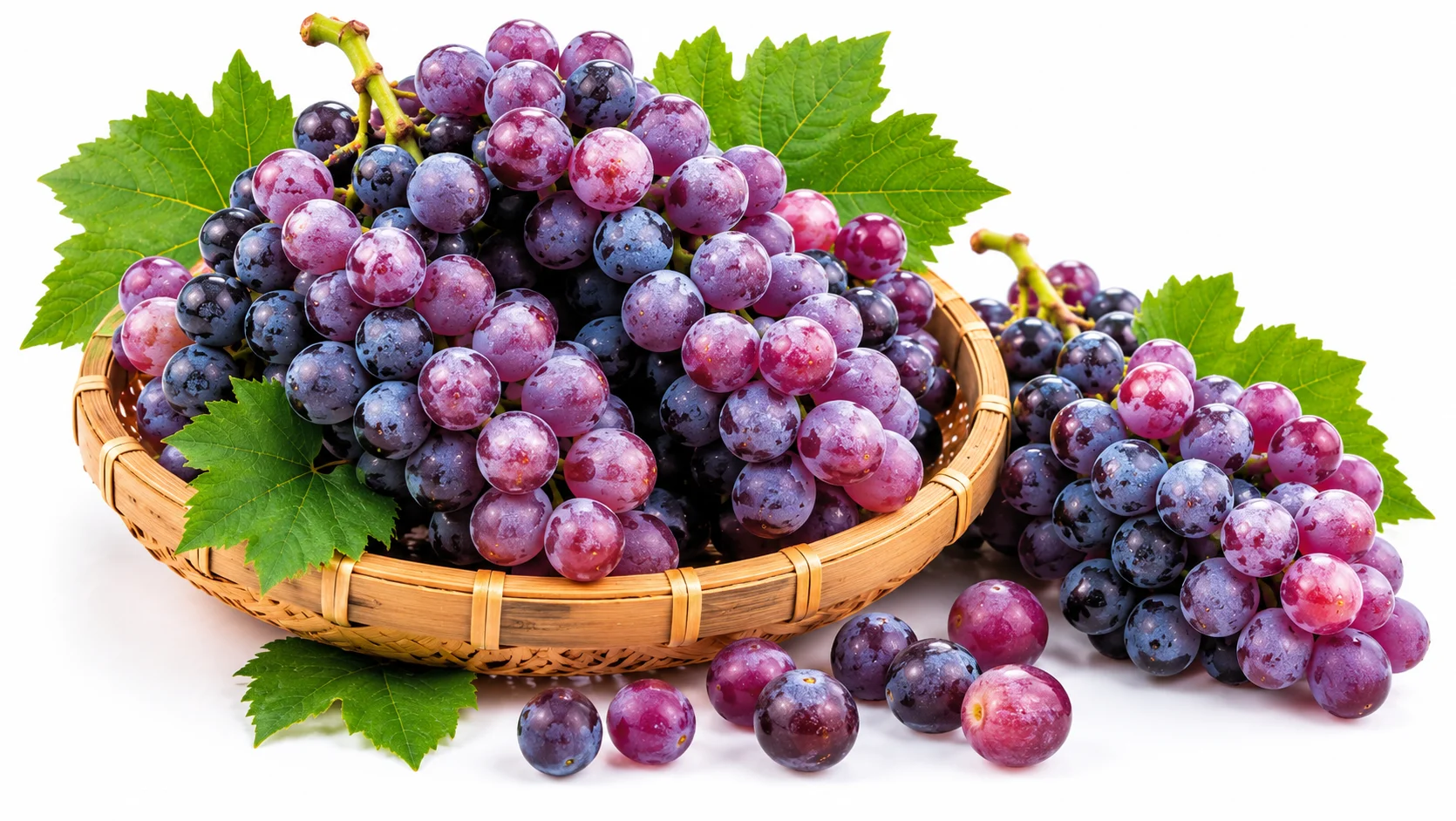
This image has been generated using AI for visual representation purposes only.
Discover Cumbum Panneer Thratchai, a GI-registered regional product associated with Cumbum, celebrated for its local heritage and traditional craftsmanship or production.
Cumbum Panneer Thratchai is the Geographical Indication (GI)–registered name for a grape product grown in and around Cumbum in Theni district, Tamil Nadu, India. The name refers to grapes of the Muscat Hamburg type (locally called Panneer Thratchai) grown in the Cumbum valley and recognised for their association with the region's agro-climatic conditions and local grape-growing practices.
The name Cumbum Panneer Thratchai refers to table and multi‑purpose grapes produced in the Cumbum valley (Theni district). The geographical indication for Cumbum Panneer Thratchai (Application No. 734) is recorded under Class 31 (Grapes) and is shown in the Register of Registered Geographical Indications, with the GI registration recorded as of January 1, 2021. A local farmers’ organisation (Kaamayam Thiratchai Vivasayigal Sangam) is documented as the registered proprietor; authorised-user applications related to the GI have been filed by local applicants in subsequent years. Local accounts and secondary sources describe the Panneer (Panneer Thratchai) type as long‑established in the Cumbum valley; some local narratives attribute the early introduction of certain grape forms to foreign missionaries in the 19th century (presented in sources as local tradition rather than established historical fact).
Cultivation of the Panneer Thratchai (Muscat Hamburg) grape is an inherited agricultural practice in the Cumbum valley. Local farmers and grower associations have developed seasonal pruning and cropping cycles, shared field practices for training and canopy management, and community-level organisation around grape production. The crop is a key seasonal livelihood for many growers in the valley and features in the region’s identity as a grape‑producing area.
The product is identified with the Muscat Hamburg group (locally called Panneer Thratchai) and, in the Cumbum context, is described as producing medium‑to‑large, dark (purple/black) berries with a muscat-like aroma and relatively high soluble solids (reported high TSS values for selected local cultivars). The variety commonly grown in the Cumbum valley is a seeded Muscat Hamburg type and is noted locally for early maturity and the ability to be produced across multiple pruning cycles (which supports near year‑round availability). Local selections and experimental selections derived from Muscat Hamburg (for example documented selections used in regional research) are also cultivated in the area.
Cultivation begins with vineyard establishment suited to the valley’s agro‑climatic conditions. Vines are trained on supports or bower/trellis systems and managed with pruning cycles (fruit pruning and back pruning) timed to produce main and off‑season crops. Standard vineyard cultural operations include canopy management (shoot thinning, bunch thinning), nutrient and irrigation management adapted to local conditions, pest and disease control, and monitoring of fruit maturation (soluble solids and flavour). Harvesting is done by hand when bunches reach the desired maturity for intended use (table consumption, juice, wine or processing). After harvest, fruit is sorted and packed for transport or further processing depending on end use.
Traditional local techniques reported for the region include the bower/pendal training systems and trellis/telephone‑trellis arrangements for vine support, combined with regionally adapted pruning schedules (double or timed pruning patterns to obtain main- and off‑season crops). These practices reflect long‑standing local vineyard management adapted to Cumbum valley’s cropping calendar.
Cumbum Panneer Thratchai is agriculturally important in the Cumbum valley and surrounding parts of Theni district, contributing to the local rural economy and farmer livelihoods. The grapes are an element of regional identity—the Cumbum valley is widely referenced in government and media sources as a major grape‑producing area in South India. The GI registration formalises the link between the crop and its geographic origin, and local grower associations are active in organising production and GI representation.
Cumbum Panneer Thratchai is registered as a geographical indication for grapes (Class 31) with a Recorded GI registration entry in the national register.
The Cumbum product is associated with the Muscat Hamburg group, locally referred to as Panneer Thratchai, a seeded grape type grown extensively in the valley.
Vineyards in the Cumbum valley use traditional training (bower/trellis) and pruning schedules that enable multiple cropping cycles, supporting broad seasonal availability of the grapes.
The grape cultivation of the Cumbum valley forms part of local agricultural identity; the valley is commonly described in regional sources as a major grape‑growing area. Grower groups and village associations associated with grape farming play roles in community organisation and in representing producers in matters linked to the GI.
Cumbum Panneer Thratchai is the GI-registered name for grapes grown in the Cumbum valley (Theni district), primarily referring to Muscat Hamburg‑type grapes cultivated in that geographic area.
The geographical indication for Cumbum Panneer Thratchai is recorded in the national GI register with a recorded registration entry dated January 1, 2021.
The product is associated with the Muscat Hamburg group (locally known as Panneer Thratchai), a Vitis vinifera type commonly grown in the Cumbum valley.
Documented uses include fresh table consumption, and processing for juice, wine and dried products (raisins), depending on harvest and post‑harvest handling.
Local production uses trellis/bower training systems and regionally timed pruning cycles (including practices that produce main and off‑season crops) suited to the valley’s agro‑climate, enabling near year‑round availability in some years.
This image has been generated using AI for visual representation purposes only.
Let Karthi Travels help you plan a comfortable and memorable journey across Tamil Nadu.
Experience, Trust & Memories Built Over the Years





Your journey is in experienced hands, from planning to the final drop.

No hidden charges. Clear and upfront pricing.

Clean, inspected and well-serviced vehicles for a comfortable journey.

Professional drivers focused on safe and pleasant travel.

Dependable pickups and reliable travel service.
Travel Made Simple, Experiences Made Grand

Explore the best of each destination with our curated sightseeing tours.

Perfect for families and groups, planned with comfort, safety and flexibility in mind.

Peaceful and spiritually enriching journeys with carefully planned routes.

Personalised honeymoon tours and romantic destinations for your special journey.

Compliant and well-documented tour plans to make the most of your travel concession.
 WhatsApp Us