
Karthi Travels®
ISO 9001:2015 Certified
Eathomozhy, Kanniyakumari, Tamil Nadu
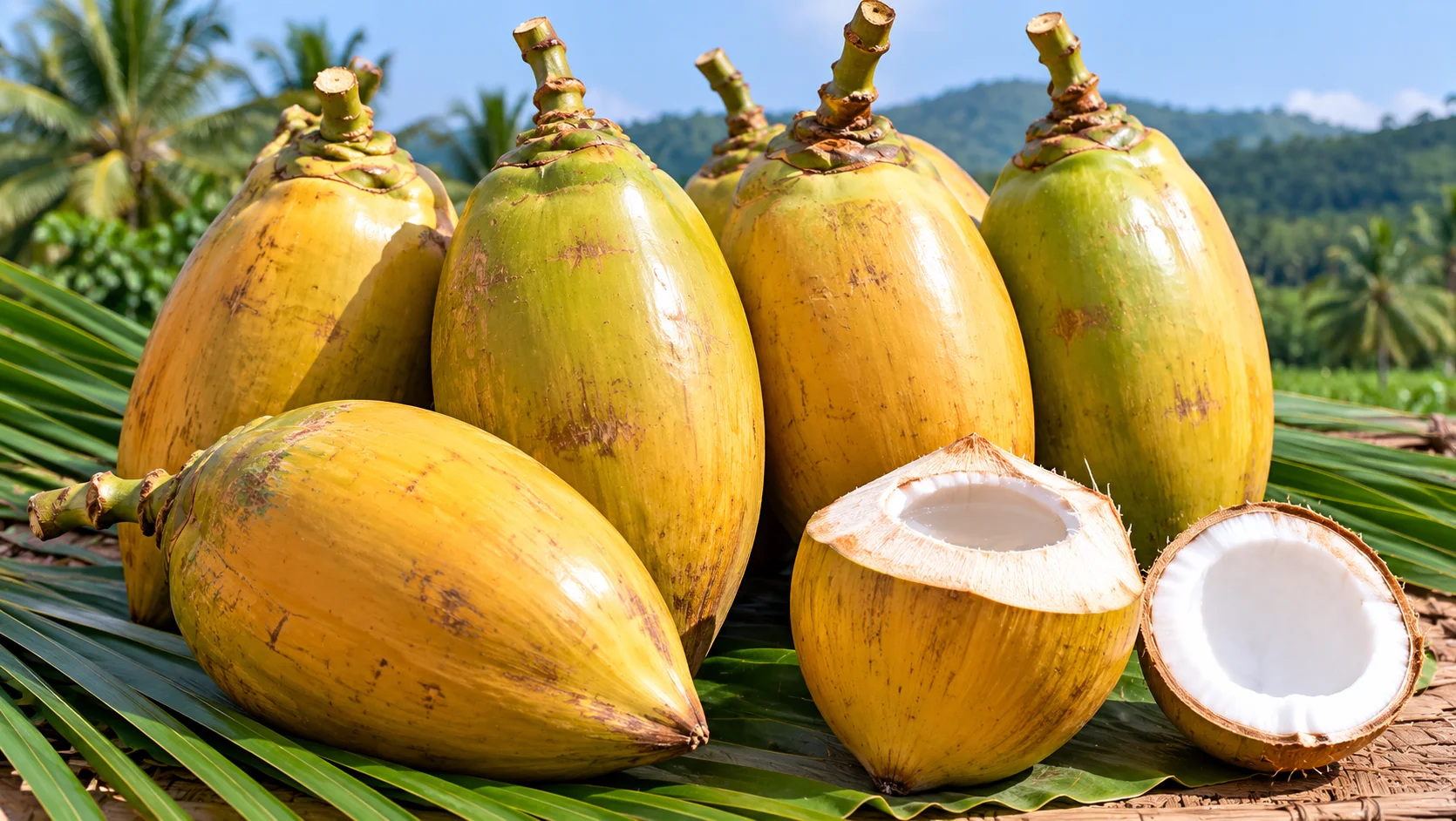
This image has been generated using AI for visual representation purposes only.
Discover Eathomozhy Tall Coconut, a GI-registered regional product associated with Eathomozhy, celebrated for its local heritage and traditional craftsmanship or production.
Eathomozhy Tall Coconut is a GI-registered coconut cultivar associated with the Eathomozhy area of Kanniyakumari district, Tamil Nadu, India. Documented in its GI application as a natural selection of the West Coast Tall type, the cultivar is described for its tall stature, large crown and fairly large nuts with a thick shell and substantial fibre. The type is used locally for copra and oil production and for coir/fibre-based small-scale industries.
The Eathomozhy Tall Coconut was submitted for protection through a Geographical Indication application in 2007 and is recorded in the Indian GI register as a cultivar associated with a long coastal strip in Kanyakumari district. The GI application describes the type as a natural selection from the West Coast Tall coconut group, established by local farmers over many years through selection and inbreeding within the coastal revenue blocks that include Agastheeswaram, Rajakkamangalam, Eathomozhy, Colachel and Puthalam. The application notes the cultivar’s local commercial history (including trade through the Kottar market) and documents agricultural practices, seedling distribution and small-scale fibre industries that have grown up around the palm. The GI registration and certificate were issued following the 2007 filing and formal registration in the Indian Geographical Indications register.
The GI application records traditional knowledge and farmer practices for preserving and cultivating this coconut type in the Eathomozhy area. Local farmer groups and coconut grower associations in the district have historically selected mother palms for desirable traits, maintained nurseries and practised seed selection and spacing methods. Retting of husk in local backwaters and small-scale rope- and fibre-processing trades are recorded as community practices tied to the cultivar.
Described in the GI specification as a natural selection of West Coast Tall coconuts, key documented characteristics include a tall trunk (trees reported to grow up to about 30 metres), a large crown with about 36–40 leaves, fairly large round or oblong nuts (dark or light green), a relatively thick kernel (noted in the specification as around 1.25–1.50 cm in thickness), thick shells with strong brown fibre (coir) produced by retting, and nut maturation of approximately 11–12 months. The cultivar is described as suited to largely rainfed cultivation in the defined coastal tract and as having comparatively high copra and oil potential—features that the GI application highlights as agriculturally and commercially relevant.
Production as recorded in the GI documentation begins with selection of disease-free mother palms that show regular bearing and desired morphological traits; seed nuts are collected and raised in nurseries (seedlings typically lifted at 9–12 months). Planting follows recommended spacing and field management; cultivation in the GI area is predominantly rainfed with organic manuring practices such as use of sunnhemp, glyricidia and green manures. Nut harvests supply fresh nut markets and are processed for copra and oil; husks are retted in backwaters to extract strong brown coir fibre that is used in rope and other fibre products.
Documented traditional methods include farmer-led mother-tree and nut selection, nursery raising of seedlings using sprinkler/flow irrigation until transplanting, and retting of husks in backwaters to obtain brown coir fibre. Local small-scale rope-making and fibre-processing techniques based on retted coir are recorded as established cottage-industry practices in the area.
The cultivar has agricultural and local economic significance in the Eathomozhy/Kanniyakumari area: it is documented as a locally adapted coconut type valued for its fibre and for copra/oil production, and it supports cottage-level coir and rope-making activities. The GI application frames registration as a measure to protect the cultivar’s genetic traits and local heritage, to support seedling multiplication and to help preserve farmer knowledge linked to the variety.
Eathomozhy Tall Coconut is recorded in the Indian Geographical Indications register; the GI application was filed in 2007 and the GI certificate was subsequently issued by the registry.
The cultivar is described for a tall habit (trees to about 30 m), large crown (c. 36–40 leaves), fairly large round or oblong nuts, thick shells with strong brown coir fibre, and kernel thickness noted around 1.25–1.50 cm.
Retted brown coir fibre from Eathomozhy Tall coconut husks is used in small-scale rope- and fibre-processing activities; nuts are also processed for copra and oil in regional supply chains.
The GI documentation records that coconut has a long recorded history in coastal South India and notes the crop’s presence in local religious literature and cultural programmes of the GI area; the application also records historical trade links (for example through the Kottar market) that tie the palm to local commercial and cultural life.
Yes. The Eathomozhy Tall Coconut is recorded in the Indian Geographical Indications register following an application filed in 2007; the cultivar holds a GI registration in the official register.
Documented traits include a tall tree habit (trees described to about 30 metres), a large crown (around 36–40 leaves), fairly large round or oblong nuts, a relatively thick kernel, thick shells that yield strong brown coir fibre, and nut maturation around 11–12 months.
The cultivar is used for copra and oil production, supply of fresh and dehusked nuts to market, and for extraction of brown coir fibre (by retting the husk) which supports rope- and fibre-processing cottage industries.
The GI documentation identifies a coastal and near-coastal strip of Kanyakumari district — including revenue blocks such as Agastheeswaram, Rajakkamangalam, Eathomozhy, Colachel and Puthalam — as the traditional production area for the cultivar.
The GI record describes mother-tree selection for desirable traits, nursery raising of seedlings (seedlings typically lifted at 9–12 months), and documented production of seedlings by government and local nurseries to supply farmers; the application notes a government nursery target for seedling production in the region.
This image has been generated using AI for visual representation purposes only.
Let Karthi Travels help you plan a comfortable and memorable journey across Tamil Nadu.
Experience, Trust & Memories Built Over the Years





Your journey is in experienced hands, from planning to the final drop.

No hidden charges. Clear and upfront pricing.

Clean, inspected and well-serviced vehicles for a comfortable journey.

Professional drivers focused on safe and pleasant travel.

Dependable pickups and reliable travel service.
Travel Made Simple, Experiences Made Grand

Explore the best of each destination with our curated sightseeing tours.

Perfect for families and groups, planned with comfort, safety and flexibility in mind.

Peaceful and spiritually enriching journeys with carefully planned routes.

Personalised honeymoon tours and romantic destinations for your special journey.

Compliant and well-documented tour plans to make the most of your travel concession.
 WhatsApp Us