
Karthi Travels®
ISO 9001:2015 Certified
Kallidaikurichi, Tirunelveli
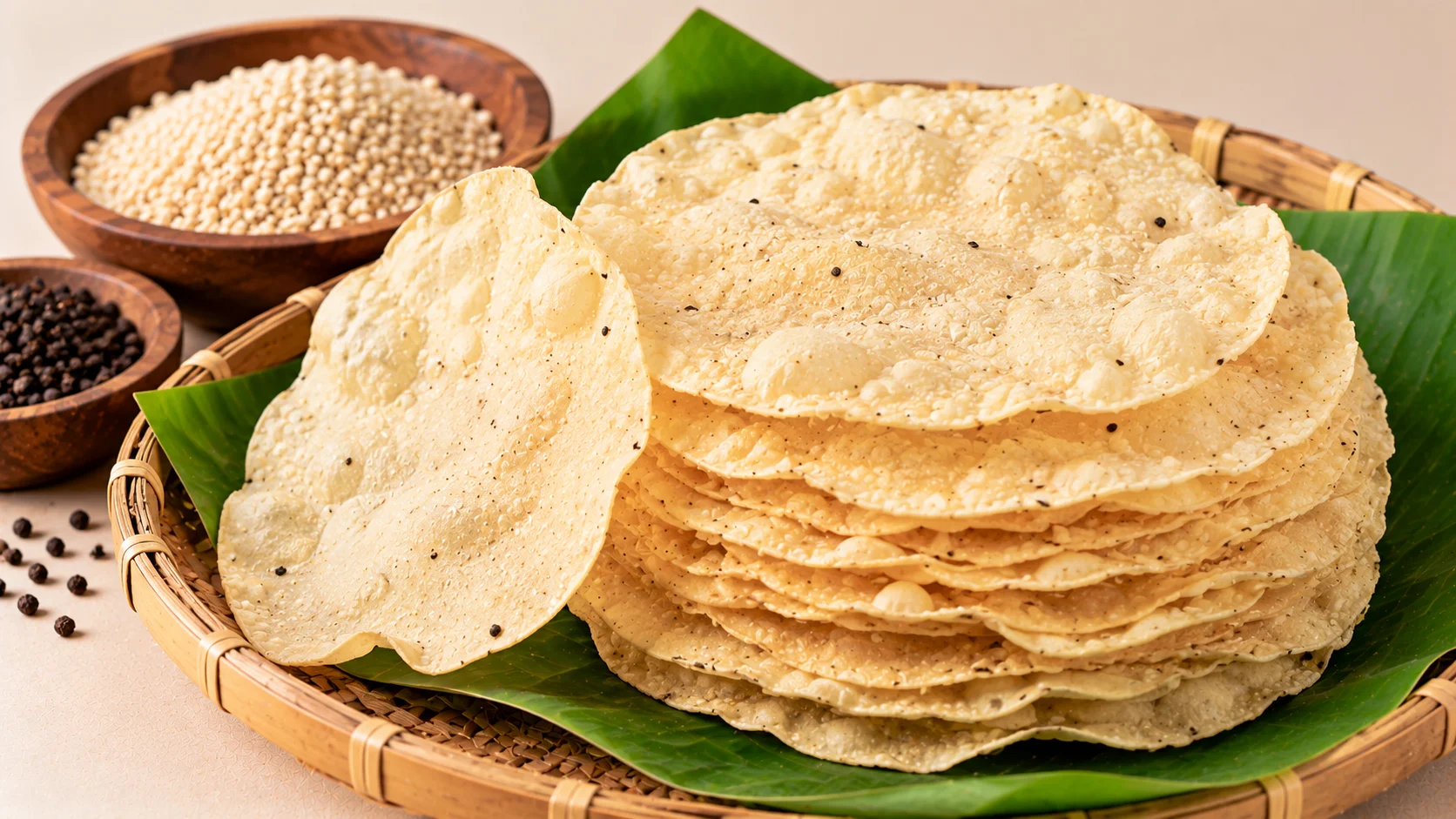
This image has been generated using AI for visual representation purposes only.
Thin papad-style wafers prepared from a dough, dried and cooked before serving. The town has a food-product association worth investigating; verify the individual producer and recipe before claiming a long or exclusive history.
Kallidaikurichi Appalam is a traditional South Indian papad associated with Kallidaikurichi in Tirunelveli district, Tamil Nadu. Traditionally prepared using urad dal flour, salt, asafoetida, and selected spices, the dough is kneaded, worked until smooth, rolled into thin discs, and dried before being packed. When roasted or deep-fried, the appalam expands and becomes crisp. Kallidaikurichi is known for its longstanding appalam-making tradition, which includes several varieties prepared with different ingredients and seasonings. The product is commonly served as an accompaniment to rice-based meals and is also enjoyed as a crunchy snack.
Kallidaikurichi has an established reputation for traditional appalam production. Local food-history accounts describe the growth of the industry through household preparation and the skills of women in the town, followed by wider demand that encouraged more people to take up appalam making. The availability of urad dal and rice in the surrounding region has also been cited as part of the area's food-production context. Traditional production methods, including working the dough thoroughly and drying the discs carefully, have contributed to the product's reputation. A Geographical Indication application for Kallidaikurichi Appalam was filed in May 2025 by the Kallidaikurichi Appalam Urpathiyalargal Sangam. The official registry lists the application as Pre Examination, so registration has not been confirmed.
Appalam is a familiar part of Tamil cuisine and is often served with rice, sambar, rasam, kuzhambu, and other traditional dishes. In Kallidaikurichi, appalam making developed into a recognised local food industry, supported by household skills and small-scale producers. The preparation and drying of the discs require attention to dough consistency, thickness, and weather conditions. The product reflects the town's food-processing heritage and the continued role of traditional savoury accompaniments in everyday meals.
Traditional Kallidaikurichi Appalam is associated with thin, carefully prepared discs that expand and become crisp when cooked. Urad dal flour is a common base for the classic variety, while salt, asafoetida, cumin, and other seasonings may be used. Some local varieties are made with rice flour, sago flour, tapioca flour, or other ingredients. Traditional descriptions also mention a distinctive double or twin-disc form known as Errattai Appalam. The texture and flavour depend on the recipe, dough preparation, rolling, drying, and cooking method. Ingredients and dimensions vary among producers, so there is no single formulation for every appalam sold under the regional name.
For a traditional urad dal variety, urad dal is ground into flour and combined with salt, asafoetida, water, and any recipe-specific seasonings to form a firm dough. The dough is kneaded and may be pounded or worked thoroughly to improve its consistency. Small portions are rolled into thin, even discs, sometimes using rice flour to prevent sticking. The discs are arranged on suitable surfaces and dried carefully, often with a combination of shade-drying and sunlight depending on local practice and weather. Once thoroughly dry, the appalams are packed in moisture-resistant packaging. Rice-based and other varieties use different formulations and may involve steaming or additional processing before rolling and drying. To serve, the dried appalam is roasted or briefly deep-fried until it expands and becomes crisp.
Traditional appalam making in Kallidaikurichi involves preparing the flour, mixing it with water and seasonings, and kneading the dough until it becomes smooth and workable. Some documented descriptions mention pounding the dough in a stone mortar to improve its texture. The dough is rolled into thin discs and dried in stages, with care taken to prevent uneven drying. Shade and sunlight may both be used according to the recipe and weather. Some varieties use rice flour and sago flour instead of urad dal, while seasoned versions may include cumin, pepper, or other ingredients. Traditional methods differ by family and producer, and not every commercial variety follows the same process.
Kallidaikurichi Appalam is an important part of the town's traditional food-processing identity. Appalam production has supported local skills and small-scale businesses, while the finished product is widely used in Tamil meals. Its reputation is associated with handmade preparation and the careful processing of dough into thin, dried discs. The Geographical Indication application filed in 2025 reflects an effort to formally recognise the product's regional association, although the application remains pending rather than registered according to the official registry.
The appalam is linked to Kallidaikurichi in Tirunelveli district, a town known for its traditional appalam-making activity.
Classic varieties commonly use urad dal flour, combined with salt, water, and seasonings to form the dough.
Kneading and, in some traditional methods, pounding the dough help create a smooth and workable consistency.
The shaped discs are dried thoroughly, sometimes using shade and sunlight in stages, before being packed.
Local varieties include urad dal, rice, cumin, pepper, and other formulations, with Errattai Appalam noted as a distinctive form.
A Geographical Indication application was filed in May 2025, but the official registry lists it as Pre Examination rather than Registered.
Appalam is deeply familiar in Tamil household cooking, where it is served as a crisp accompaniment to rice-based meals. Kallidaikurichi's reputation for appalam production connects the product with local food-making skills and small-scale enterprise. Traditional accounts describe household-based production growing into a wider local industry as demand increased. The product is valued for its role in everyday meals and for the continuation of preparation and drying techniques across generations. Its regional identity is also reflected in the GI application submitted by the local producers' association.
Uncooked appalam must be kept dry because moisture can cause it to soften, spoil, or cook unevenly. Store the dried discs in a clean, airtight container in a cool, dry place away from humidity and direct sunlight. Avoid handling them with wet hands. Keep them protected from insects and other contamination. Follow the manufacturer's storage instructions and best-before date for packaged products. Once fried or roasted, appalam is best eaten soon after preparation because it can lose its crispness when exposed to moisture. Discard uncooked appalam if it shows mould, an unusual smell, or signs of insect damage.
Kallidaikurichi Appalam is a traditional South Indian papad associated with Kallidaikurichi in Tirunelveli district, Tamil Nadu. It is commonly prepared from urad dal flour and seasonings, shaped into thin discs, dried, and roasted or fried before serving.
Traditional urad dal varieties commonly use urad dal flour, salt, water, and seasonings such as asafoetida or cumin. Rice flour, sago flour, tapioca flour, and other ingredients are used in certain varieties.
The flour and seasonings are mixed into dough, which is kneaded and sometimes pounded. The dough is rolled into thin discs and dried thoroughly. The dried appalam is roasted or deep-fried before serving.
Errattai Appalam is described in local food accounts as a distinctive double or twin-form appalam associated with Kallidaikurichi. Specific shapes and methods may vary by producer.
Dried appalam can generally be deep-fried briefly in hot oil until it expands and becomes crisp, or roasted according to the product's instructions. Avoid overheating, which can burn the thin discs.
Not according to the official registry information checked for this profile. Application number 1535 was filed on 9 May 2025 by the Kallidaikurichi Appalam Urpathiyalargal Sangam, and its status is listed as Pre Examination. This means the application should not be described as a completed GI registration.
Store uncooked appalam in a clean, airtight container in a cool, dry place. Protect it from humidity, water, insects, and direct sunlight to help maintain its quality.
This image has been generated using AI for visual representation purposes only.
Let Karthi Travels help you plan a comfortable and memorable journey across Tamil Nadu.
Experience, Trust & Memories Built Over the Years





Your journey is in experienced hands, from planning to the final drop.

No hidden charges. Clear and upfront pricing.

Clean, inspected and well-serviced vehicles for a comfortable journey.

Professional drivers focused on safe and pleasant travel.

Dependable pickups and reliable travel service.
Travel Made Simple, Experiences Made Grand

Explore the best of each destination with our curated sightseeing tours.

Perfect for families and groups, planned with comfort, safety and flexibility in mind.

Peaceful and spiritually enriching journeys with carefully planned routes.

Personalised honeymoon tours and romantic destinations for your special journey.

Compliant and well-documented tour plans to make the most of your travel concession.
 WhatsApp Us