
Karthi Travels®
ISO 9001:2015 Certified
Karaikudi / Chettinad, Sivaganga, Tamil Nadu
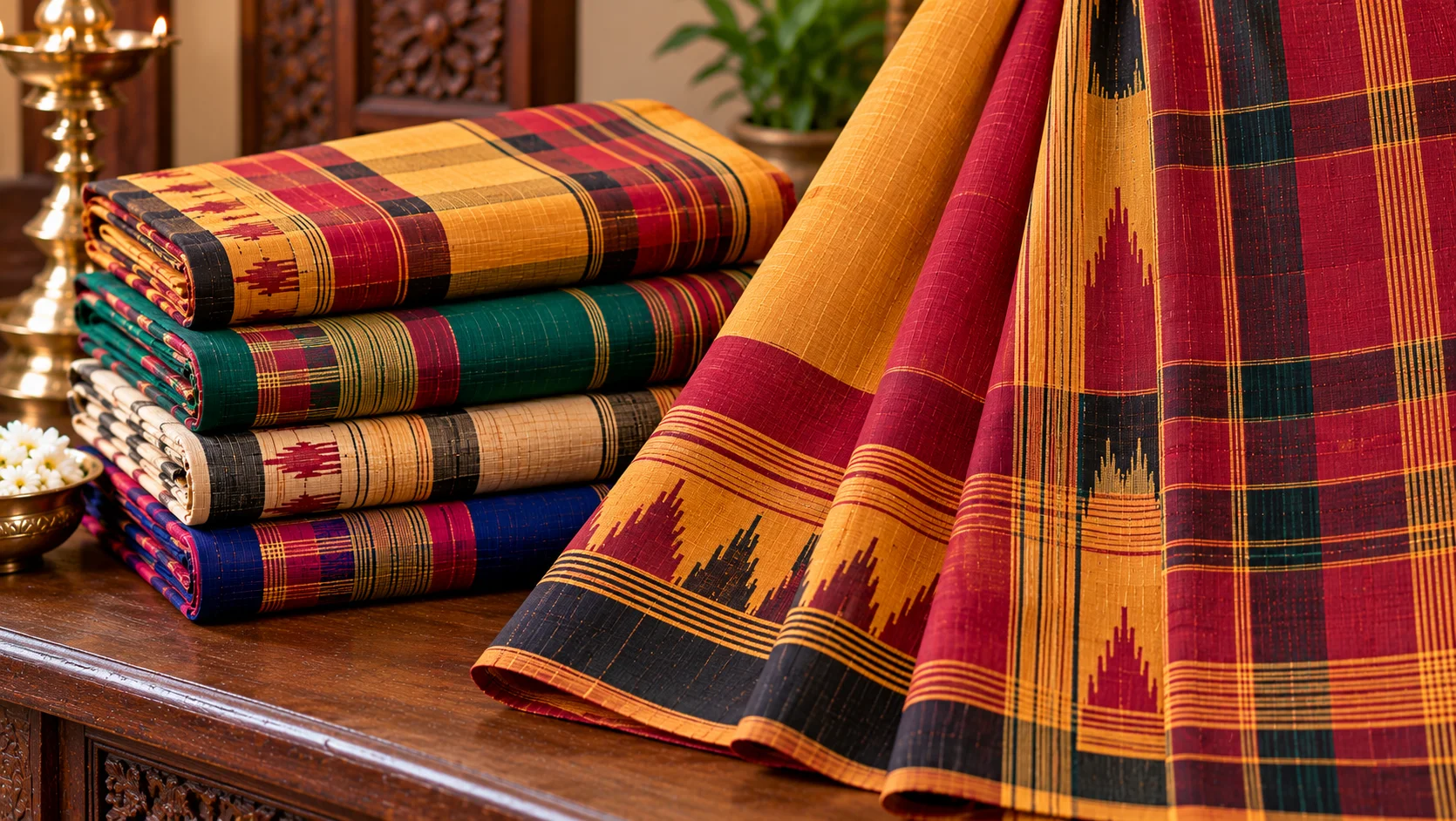
This image has been generated using AI for visual representation purposes only.
Discover Kandangi Saree, a GI-registered regional product associated with Karaikudi / Chettinad, celebrated for its local heritage and traditional craftsmanship or production.
Kandangi Saree is a handwoven cotton saree associated with the Karaikudi / Chettinad area of Karaikudi taluk, Sivaganga district. The name refers to the characteristic checked or striped pattern (kandam = check) and a broad contrasting border; the handloom tradition for this saree is locally recognised and has an official Geographical Indication registration. ()
Documented sources describe Kandangi weaving as a regional Chettinad tradition patronised historically by the Nagarathar (Chettiar) community in and around Karaikudi. Early versions were woven in silk and later adapted in coarse cotton; local cooperatives and the Tamil Nadu Department of Handlooms worked to register the Kandangi saree with the Geographical Indications Registry (application filed in 2013; registration granted in 2019). Where accounts describe older origins or patronage stories, those are reported as local tradition rather than established historical fact. ()
Kandangi weaving is an inherited handloom skill passed within weaving families in the Karaikudi area. The weave, colour combinations and border motifs reflect local aesthetic preferences established under Chettinad patronage; production has been organised historically through household looms and local cooperative societies that sustain technical knowledge and livelihoods. ()
Kandangi sarees are typically woven in coarse, heavily sized cotton with bold checks or stripes across the body and a wide, contrasting border (occasionally with temple/architectural motifs). Traditional colour palettes include mustard, brick/red, orange, browns and black accents. Typical finished lengths reported for traditional Kandangi sarees are about 5.10–5.60 metres and widths around 47–49 inches; these construction and sizing choices contribute to the saree’s drape and durability. ()
Supported, documented stages include: preparing or procuring cotton yarn (often mill-spun yarn prepared for handloom use), sizing/degumming and dyeing (historically with vegetable dyes), warping and winding the yarn onto the loom, setting up the warp with contrasting border and body sections, and hand-weaving on local looms to produce checks/stripes and the border. Final finishing includes washing and conditioning to stabilise the cloth; co-operative producers have reported additional pre- and post-weave treatments intended to control shrinkage. ()
Documented traditional techniques and tools include family-operated handlooms (pit looms in the Karaikudi area), use of shuttle and bobbin in hand-weaving, and locally developed warp setups to create the characteristic checked/striped body with a contrasting border. Local weaver co-operatives have recorded the continuing use of these conventional tools and working patterns. ()
Regionally, the Kandangi saree is an identifiable element of Chettinad material culture and a source of livelihood for weavers around Karaikudi. The weave and colour vocabulary form part of local dressing practices and community identity; the GI registration recognises the saree’s geographic and craft-specific association. ()
Kandangi saree was the subject of an official GI application filed in 2013 and the indication was granted and reported in 2019, recognising the Karaikudi / Chettinad origin and defining its traditional characteristics. ()
The most recognisable features are the repeated checks or stripes across the body and a broad, contrasting border; these design choices give the saree its name and local identity. ()
Weaving is practised in households and small co-operatives around Karaikudi using conventional handloom equipment; community organisation has been important to sustaining the craft. ()
Kandangi sarees are associated with Chettinad social and aesthetic practices and were historically patronised by the Nagarathar (Chettiar) community. The weave and colour language form part of local ceremonial dress customs and are referenced in regional heritage accounts. ()
Kandangi sarees are specifically identified by their repeated checks or stripes across the body and a wide, contrasting border woven in coarse, heavily sized cotton; the set of design, material and local weaving practices tied to Karaikudi distinguishes it from broader or commercial uses of the term 'Chettinad cotton'. ()
The traditional production area is Karaikudi and nearby villages in Karaikudi taluk, Sivaganga district, Tamil Nadu, India. ()
Yes. An official GI application for Kandangi sarees was filed (documented in 2013) and sources report the indication being granted in 2019, recognising the region and the product’s traditional characteristics. ()
Traditional Kandangi sarees are woven in cotton and have historically used natural or vegetable dyes for the strong colour palettes documented in the region. ()
Documented production involves preparing yarn, warping with separate border and body sections, and hand-weaving on family-operated handlooms (reported pit looms and shuttle-based weaving); finishing includes washing and finishing steps to stabilise the cloth. ()
This image has been generated using AI for visual representation purposes only.
Let Karthi Travels help you plan a comfortable and memorable journey across Tamil Nadu.
Experience, Trust & Memories Built Over the Years





Your journey is in experienced hands, from planning to the final drop.

No hidden charges. Clear and upfront pricing.

Clean, inspected and well-serviced vehicles for a comfortable journey.

Professional drivers focused on safe and pleasant travel.

Dependable pickups and reliable travel service.
Travel Made Simple, Experiences Made Grand

Explore the best of each destination with our curated sightseeing tours.

Perfect for families and groups, planned with comfort, safety and flexibility in mind.

Peaceful and spiritually enriching journeys with carefully planned routes.

Personalised honeymoon tours and romantic destinations for your special journey.

Compliant and well-documented tour plans to make the most of your travel concession.
 WhatsApp Us