
Karthi Travels®
ISO 9001:2015 Certified
Nagercoil / Kanniyakumari region, Kanniyakumari
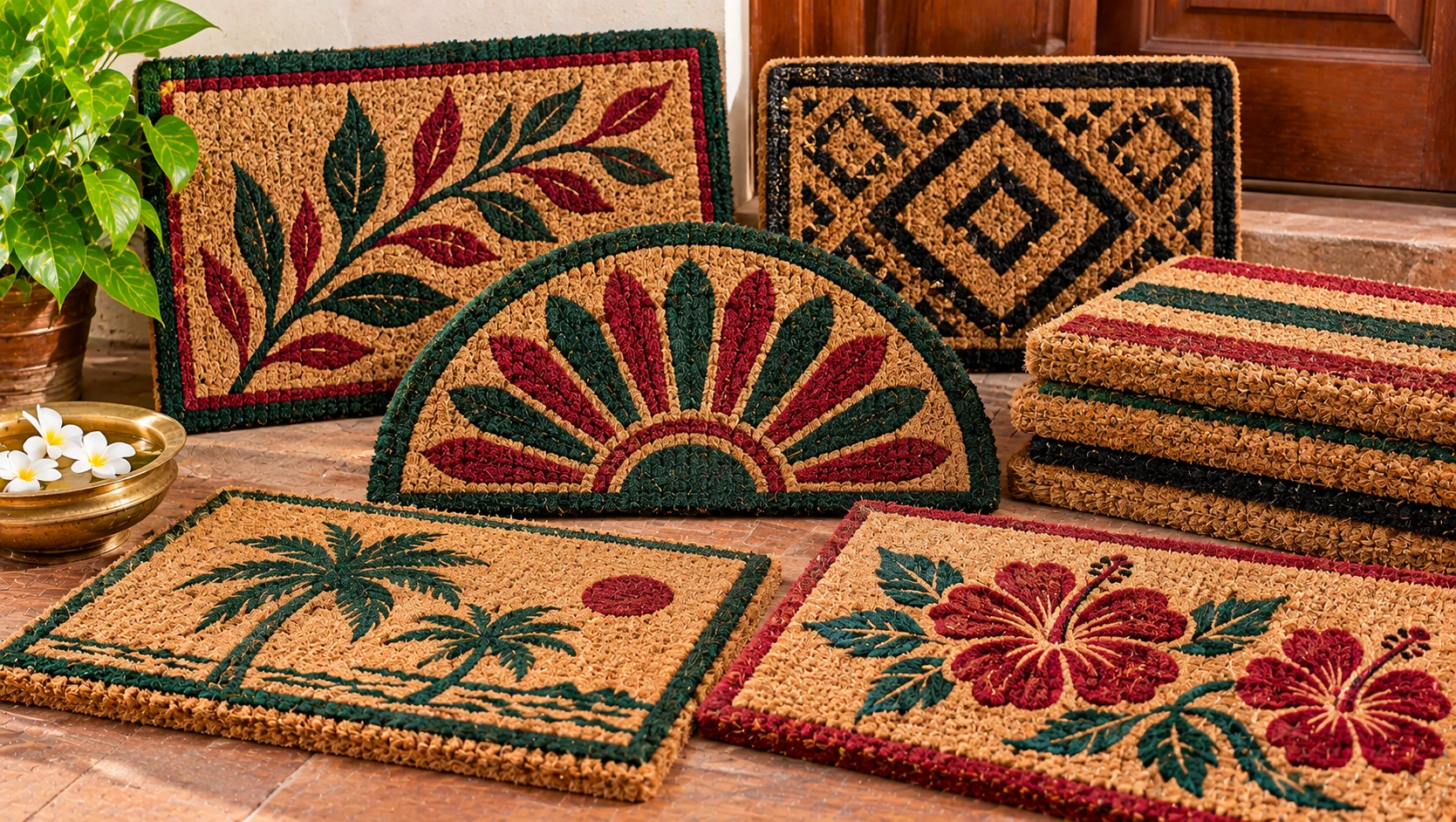
This image has been generated using AI for visual representation purposes only.
Door mats made from coconut coir by an identifiable manufacturer. Verify whether fibre processing and manufacture occur locally and record material, dimensions and care requirements.
Kanyakumari Coir Door Mats are practical household products made from coir, the natural fibre extracted from coconut husks. Kanyakumari district has a long-established coir industry, supported by coconut cultivation and coastal cottage industries. Nagercoil is an important commercial centre for coir products, while the Ethamozhy region is associated with a coir-processing cluster. Coir fibres can be twisted into yarn, woven or assembled into mats designed to remove dust and dirt from footwear at entrances. Depending on the manufacturer, door mats may feature a natural brown finish, coloured patterns, rubber backing or different surface textures. These products represent the region's wider coconut-fibre manufacturing tradition rather than a single standardised design.
The coir industry in Kanyakumari district has historical roots in the coastal communities that processed coconut husks into fibre and yarn. The District Census Handbook for Kanyakumari published in 1961 described coir production as an established cottage industry along the coast, from Cape Comorin northwards, and identified the district as a significant coir-producing area. Traditionally, coir yarn and ropes were used for household and marine-related purposes. Over time, coir processing expanded into a broader range of products, including mats and other household goods. Modern production combines traditional fibre preparation and spinning skills with machinery and contemporary finishing techniques.
Coir production has contributed to the livelihoods of coastal and rural communities in Kanyakumari district. Processing coconut husks into usable fibre makes use of an agricultural by-product and supports cottage industries, fibre processors and product manufacturers. The industry reflects practical knowledge of natural materials, fibre preparation and yarn production. While modern door mats may incorporate machine-made components or synthetic backing, the principal coir fibre continues to connect these products with the district's traditional coconut-based industries.
Coir door mats are known for their firm, bristly texture, which helps loosen dust and dirt from footwear. Coconut fibre is naturally coarse and resilient, making it suitable for entrance mats and other utility products. Mats may be manufactured in rectangular, semicircular or other shapes, with plain surfaces, coloured patterns, printed designs or rubber backing. Their thickness and stiffness vary according to the fibre grade, yarn construction and manufacturing method. Products made with natural coir commonly have brown or golden-brown tones, while dyed fibres provide additional colour options. The quality of a mat depends on fibre strength, construction, finishing and resistance to everyday wear.
Coconut husks are collected and processed to separate the fibrous material from the pith and other components. Depending on the production method, husks may undergo retting or mechanical fibre extraction. The extracted fibre is cleaned, dried and graded according to its intended use. Suitable fibres are spun or twisted into yarn, which may then be woven, coiled, tufted or otherwise assembled into a door mat. Manufacturers cut the mat to the required dimensions and finish its edges. Some designs receive a rubber backing to improve grip, while others remain entirely coir-based. Quality checks may include examining the surface, fibre density, dimensions and finish before packaging.
Traditional coir processing involves separating fibre from coconut husks, drying it and twisting the strands into yarn or rope. Skilled workers use hand-operated or simple mechanical methods for selected stages, while larger production units may use specialised machinery. Coir yarn can be woven or assembled into products using different techniques according to the intended design. The long-established coir industry in Kanyakumari district provides the regional context for these practices, although the precise method used for a particular door mat varies by manufacturer and product specification.
Kanyakumari Coir Door Mats represent the practical application of a natural fibre produced by the district's established coir industry. They connect coconut-based rural industries with everyday household needs and contemporary markets for durable utility products. The industry creates opportunities in fibre extraction, yarn production, mat manufacturing, finishing, trading and distribution. Coir also provides a use for coconut husks that might otherwise have limited value. The environmental benefits of an individual mat depend on its processing, dyes, adhesives, backing materials, durability and disposal options.
Coir is obtained from coconut husks and processed into fibre suitable for yarn, mats and other utility products.
Historical district records document coir production along the coastal areas of Kanyakumari, making it an established part of the local industrial heritage.
The coarse fibre surface helps remove loose dust and dirt from footwear before people enter a building.
Door mats are available in various dimensions, shapes, thicknesses, colours and surface patterns.
Uncoated coir mats have a distinctive rough texture and natural brown appearance, although dyed and backed versions are also available.
The wider regional industry provides work in fibre preparation, yarn making, manufacturing, finishing and sales.
The coir industry is part of Kanyakumari district's coastal economic history, where coconut resources supported fibre processing and related cottage industries. Nagercoil serves as a commercial centre for coir products, and the Ethamozhy region is associated with organised coir-industry development. Although coir door mats are practical manufactured goods rather than a single ceremonial craft, they reflect the continued use of coconut fibre in local and wider markets. Purchasing products from verified regional manufacturers can help support the district's coir-sector livelihoods.
A well-made coir door mat can provide extended service when used and maintained appropriately. Shake it regularly to remove trapped dirt and allow it to dry if it becomes wet. Keep it in a well-ventilated location and avoid leaving it continuously exposed to standing water. Natural coir can deteriorate or develop mould under persistently damp conditions. Mats with rubber backing should be cleaned according to the manufacturer's instructions, and the backing should be checked periodically for cracking or separation. Actual lifespan depends on fibre quality, foot traffic, weather exposure and construction.
They are made primarily from coir, the natural fibre extracted from coconut husks. Depending on the design, a mat may also contain dyes, stitching materials or a rubber backing.
Nagercoil is an important commercial centre for coir products, and the Ethamozhy region is associated with a coir-industry cluster. Coir production has historically taken place along the district's coastal belt.
Coir fibres are naturally coarse and firm, helping loosen dust and dirt from footwear. Their texture and durability make them useful for entrance mats and other household products.
Coconut husks are processed to extract fibre, which is cleaned, dried and spun or twisted into yarn. The yarn or fibres are then woven, tufted, coiled or assembled into mats and finished to the required size.
Not all of them. Mats made entirely from coir can be predominantly natural-fibre products, but some models use synthetic dyes, printed finishes, adhesives or rubber backing. Check the product specifications if you prefer a mat made only from natural materials.
Shake the mat to remove loose dirt and brush its surface when needed. Allow it to dry thoroughly if it becomes wet, and follow the manufacturer's instructions for products with rubber backing or special finishes.
They can be used at many outdoor entrances, preferably in a sheltered or well-drained location. Prolonged exposure to rain and standing moisture can shorten the lifespan of natural coir.
Coir uses coconut husk, an agricultural by-product, and can offer a natural-fibre alternative to some synthetic mats. The overall environmental impact depends on processing, dyes, backing materials, durability and disposal.
A specific GI registration for Kanyakumari Coir Door Mats has not been verified. The district has an established coir industry, but this regional association should not be treated as proof of GI registration.
This image has been generated using AI for visual representation purposes only.
Let Karthi Travels help you plan a comfortable and memorable journey across Tamil Nadu.
Experience, Trust & Memories Built Over the Years





Your journey is in experienced hands, from planning to the final drop.

No hidden charges. Clear and upfront pricing.

Clean, inspected and well-serviced vehicles for a comfortable journey.

Professional drivers focused on safe and pleasant travel.

Dependable pickups and reliable travel service.
Travel Made Simple, Experiences Made Grand

Explore the best of each destination with our curated sightseeing tours.

Perfect for families and groups, planned with comfort, safety and flexibility in mind.

Peaceful and spiritually enriching journeys with carefully planned routes.

Personalised honeymoon tours and romantic destinations for your special journey.

Compliant and well-documented tour plans to make the most of your travel concession.
 WhatsApp Us