
Karthi Travels®
ISO 9001:2015 Certified
Karaikudi / Chettinad region, Sivaganga
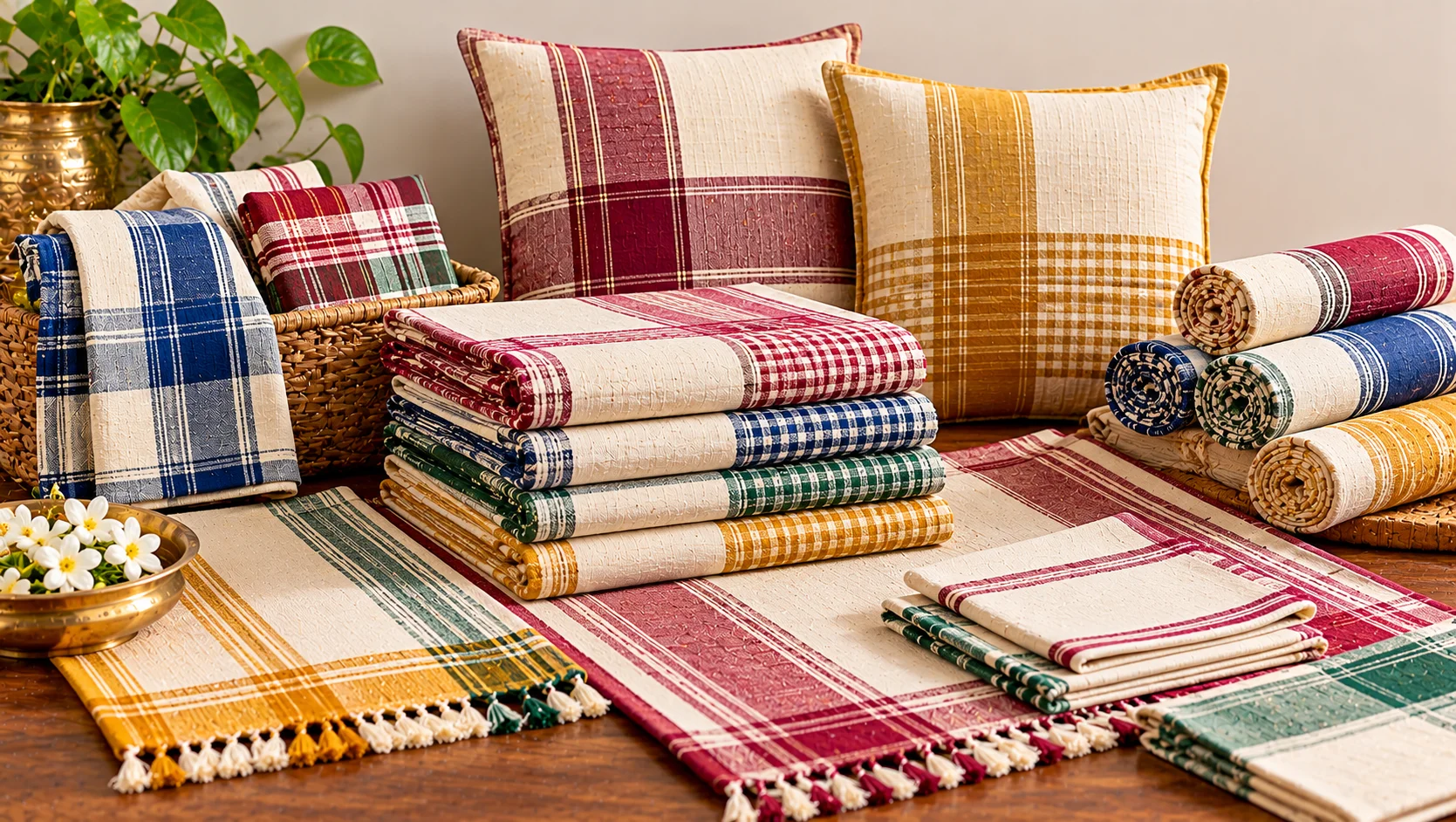
This image has been generated using AI for visual representation purposes only.
Home-linen products inspired by Chettinad colours or patterns. Treat this as a research candidate until a local maker and actual production location are confirmed; do not mislabel GI textiles as non-GI.
Karaikudi Chettinad Cotton Home Linen refers to home furnishing products made using cotton fabrics inspired by the traditional textile heritage of the Chettinad region. Karaikudi is particularly associated with Chettinad cotton handloom weaving, including Kandangi sarees, known for their bold checks, stripes, contrasting borders and rich colour combinations. These distinctive textile characteristics can inspire contemporary home linen such as cushion covers, table runners, tablecloths, curtains, kitchen towels and decorative fabric panels. Such products combine the visual appeal of traditional Chettinad cotton with practical applications in modern interiors. However, Chettinad cotton weaving is best documented through its traditional sarees; a separate, established regional tradition of Chettinad cotton home linen has not been independently verified. The product category therefore represents a contemporary home furnishing application inspired by the area's documented cotton textile heritage.
The Chettinad region of Tamil Nadu has a long association with cotton handloom weaving. Karaikudi and surrounding settlements became known for Kandangi sarees, traditionally woven with substantial cotton yarn, prominent checks or stripes and broad contrasting borders. The textile tradition developed through generations of artisan work and the patronage of the Nagarathar community. Historical accounts describe household-based weaving and the use of durable cotton fabrics suited to the region's warm climate. Chettinad cotton textiles subsequently gained wider recognition through handloom promotion and retail distribution. Although traditional sarees remain the best-documented expression of this weaving heritage, contemporary designers and textile businesses can adapt similar colours, patterns and fabric characteristics for home furnishing products.
Chettinad cotton weaving represents an important part of the textile heritage of Sivaganga district. Traditional Kandangi sarees demonstrate the region's distinctive approach to colour, checks, stripes and contrasting borders. The weaving tradition has supported artisan livelihoods and helped preserve handloom skills across generations. Applying related patterns and cotton fabrics to home furnishing products offers a way to bring the visual character of Chettinad textiles into contemporary living spaces. Such home linen should be understood as a modern application of the regional textile aesthetic rather than assumed to be a separately documented traditional craft.
Chettinad-inspired cotton home linen may feature bold checks, stripes, contrasting colour combinations and decorative borders associated with the region's established cotton textile tradition. Depending on the fabric and design, colours may include red, mustard, green, blue, black, white and other contrasting shades. Cotton provides a familiar natural-fibre option for household textiles, with breathability, a comfortable feel and versatility across different products. Items may be made from handloom fabric, mill-produced cotton or a combination of materials, so manufacturing methods vary. The finished products can range from understated table linen to statement cushion covers and decorative textile accessories. Not every product sold under this category will use authentic Chettinad handloom fabric.
The process begins with selecting a suitable cotton fabric and deciding which home furnishing product to make. For products using traditional Chettinad handloom fabric, cotton yarn is prepared and woven into fabric with the required pattern, such as checks, stripes or contrasting borders. Contemporary alternatives may use machine-woven fabric printed or woven with similar designs. The fabric is inspected for defects and colour consistency before being measured and cut according to the product dimensions. Pieces are stitched together using appropriate seams and finishing techniques. Cushion covers may receive zippers or buttons, while table linen and kitchen textiles may have folded hems or reinforced edges. The finished products are checked for stitching quality, dimensions, pattern alignment and loose threads before packaging. Exact processes depend on the fabric source, product design and manufacturer.
The traditional textile techniques associated with the Chettinad region are most clearly documented in Kandangi cotton saree weaving. These textiles are woven using cotton yarn, with checks, stripes and contrasting borders incorporated into the fabric structure. Traditional production has used pit looms and raised pit looms, including fly-shuttle techniques. For contemporary home linen, the fabric may be handwoven or machine-produced and then cut and stitched into the required shape. The traditional element may therefore lie in the source fabric, woven pattern or design inspiration, while cutting, stitching and finishing follow modern home textile production methods. Buyers should verify whether a particular item is handloom-woven, powerloom-produced or printed.
Karaikudi Chettinad Cotton Home Linen provides a way to incorporate the distinctive textile aesthetic of the Chettinad region into everyday household interiors. Cushion covers, table runners, curtains and other fabric accessories can introduce traditional colour combinations and geometric patterns into modern homes. Products made using authentic regional handloom fabric may also provide an additional market for local textile producers and designers. The broader category connects traditional weaving heritage with contemporary home furnishing needs, although the value and provenance of individual products depend on their materials, production location and manufacturing methods.
Designs draw inspiration from the established cotton textile tradition of Karaikudi and the wider Chettinad region.
Selected designs reflect the strong geometric patterns and contrasting colours associated with traditional Chettinad cotton textiles.
Cotton fabrics can be used to make cushion covers, table runners, tablecloths, curtains and other decorative or practical home accessories.
Cotton is widely used in household textiles because of its familiar feel, breathability and versatility.
Products may use authentic handloom fabric or contemporary fabrics inspired by regional patterns, depending on the manufacturer.
Chettinad-inspired patterns offer a way to bring regional textile aesthetics into contemporary homes and hospitality spaces.
Chettinad's textile identity is closely associated with its traditional cotton handloom sarees, particularly Kandangi sarees. Their distinctive checks, stripes, bold colours and broad borders reflect a recognisable regional design vocabulary. Contemporary home linen inspired by these textiles offers a new context for appreciating that visual heritage beyond clothing. When products use fabric genuinely woven by regional artisans, they can also help extend demand for traditional weaving skills. However, the specific cultural history of Chettinad cotton home linen as a separate traditional product category has not been established, and its significance should be understood primarily through its connection to the broader Chettinad textile tradition.
The lifespan of cotton home linen depends on fabric quality, weave, dye stability, stitching and frequency of use. Follow the manufacturer's washing instructions, particularly for handloom fabrics and strongly coloured textiles. Wash contrasting colours separately during the first few washes if colour bleeding is possible. Use a suitable detergent, avoid excessive bleaching and dry coloured fabrics away from prolonged direct sunlight. Store clean, completely dry textiles in a cool, dry cupboard. Avoid damp storage, which can encourage mould and unpleasant odours. For delicate handloom products, gentle hand washing or professional cleaning may be preferable when recommended by the producer.
It is a category of cotton home furnishing products inspired by the textile heritage of Karaikudi and the wider Chettinad region. Examples may include cushion covers, table runners, tablecloths and other household fabric accessories.
Karaikudi is a major town in Sivaganga district, Tamil Nadu, and is widely associated with the Chettinad region and its traditional cotton handloom textiles.
Traditional Chettinad cotton textiles, particularly Kandangi sarees, are known for their bold checks or stripes, strong colour contrasts and broad borders. These characteristics can inspire contemporary home linen designs.
Not necessarily. Some products may use authentic handloom-woven Chettinad fabric, while others use machine-woven or printed cotton inspired by regional designs. Check the product description and fabric details before purchasing.
Possible products include cushion covers, table runners, tablecloths, pillow covers, curtains, kitchen towels and decorative fabric accessories. Availability depends on the manufacturer.
The material depends on the individual product. Some items may use 100% cotton, while others may contain blended fibres, lining materials or synthetic fasteners. Check the composition label before buying.
Follow the manufacturer's care instructions. For strongly coloured or handloom fabrics, gentle washing and separate washing during the first few washes may help reduce colour bleeding. Avoid harsh bleach unless the product label specifically permits it.
Kandangi sarees, also known as Kandangi cotton sarees, are a recognised GI-registered textile associated with the Karaikudi and Chettinad region. However, a separate GI registration specifically covering Chettinad cotton home linen has not been verified. A home furnishing product should not automatically be described as GI-certified merely because its design is inspired by Kandangi textiles.
Check the manufacturer's address, fabric composition, weaving method and product description. If regional handloom provenance matters, ask whether the fabric was woven in the Karaikudi or Chettinad area and whether the seller can provide details about the weaver or producer.
This image has been generated using AI for visual representation purposes only.
Let Karthi Travels help you plan a comfortable and memorable journey across Tamil Nadu.
Experience, Trust & Memories Built Over the Years





Your journey is in experienced hands, from planning to the final drop.

No hidden charges. Clear and upfront pricing.

Clean, inspected and well-serviced vehicles for a comfortable journey.

Professional drivers focused on safe and pleasant travel.

Dependable pickups and reliable travel service.
Travel Made Simple, Experiences Made Grand

Explore the best of each destination with our curated sightseeing tours.

Perfect for families and groups, planned with comfort, safety and flexibility in mind.

Peaceful and spiritually enriching journeys with carefully planned routes.

Personalised honeymoon tours and romantic destinations for your special journey.

Compliant and well-documented tour plans to make the most of your travel concession.
 WhatsApp Us