
Karthi Travels®
ISO 9001:2015 Certified
Karaikudi and Chettinad region, Sivaganga
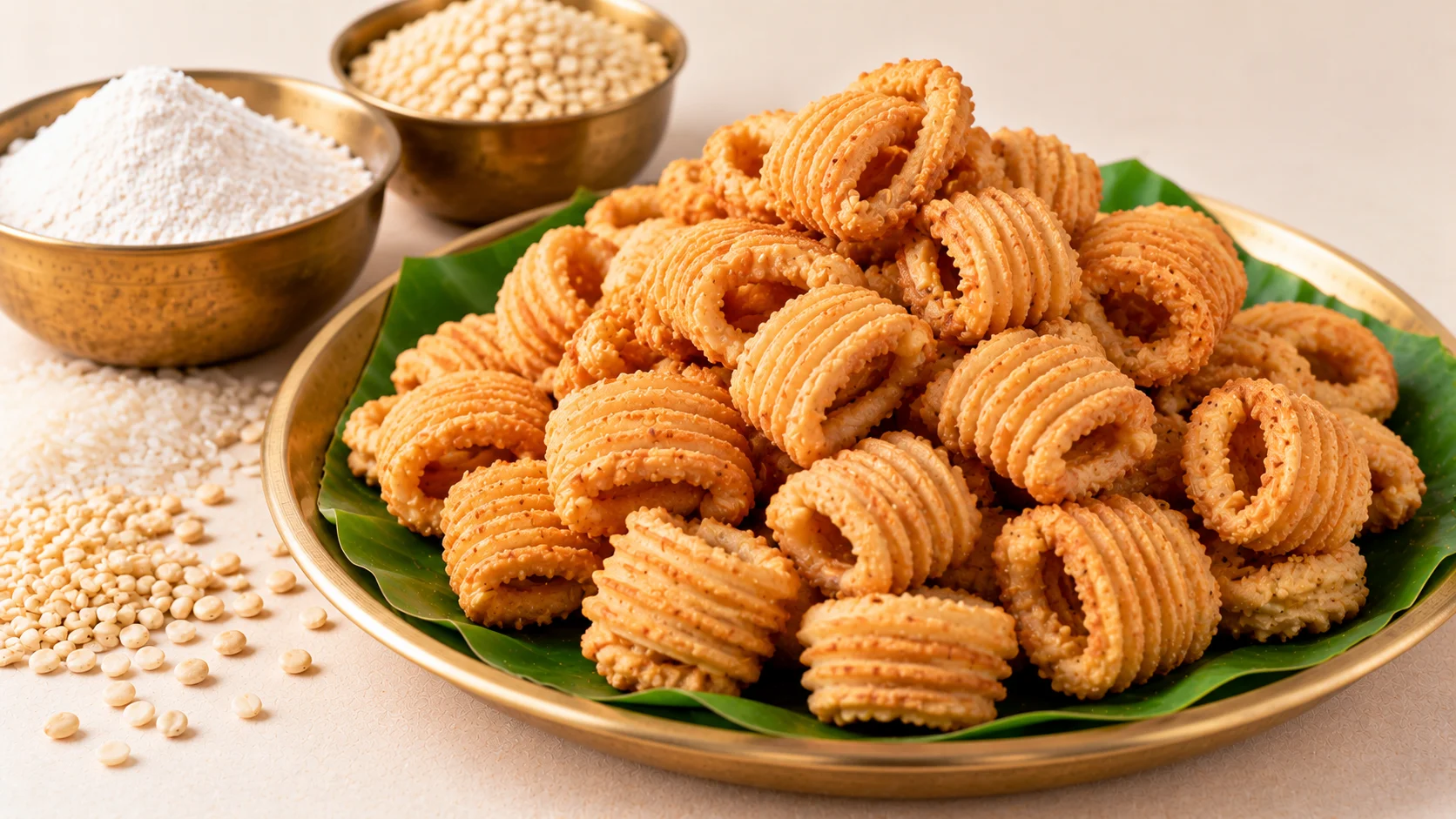
This image has been generated using AI for visual representation purposes only.
A traditional Chettinad snack shaped into ridged or curled forms before frying. Ingredient combinations differ by recipe; product details should identify the maker and distinguish it from other seedai varieties.
Karaikudi Seepu Seedai is a traditional savoury snack associated with the Chettinad region of Tamil Nadu, particularly Karaikudi and surrounding settlements. Also known as Chettinad Seepu Seedai, it is prepared primarily from rice flour, urad dal flour, coconut milk and salt. The dough is shaped into distinctive ridged rings resembling the teeth of a comb and then deep-fried until crisp. The name 'Seepu' refers to a comb in Tamil, reflecting the characteristic pattern of the snack. Coconut milk contributes flavour and helps form the dough, while the combination of rice and lentil flour produces its distinctive texture. Seepu Seedai is part of the traditional snack repertoire of Chettinad and is associated with festive food preparation, particularly during Deepavali. Its characteristic shape and preparation technique distinguish it from other varieties of seedai and murukku.
Karaikudi Seepu Seedai belongs to the traditional savoury snack repertoire of Chettinad, a cultural region of Tamil Nadu associated with the culinary practices of the Nagarathar community. The wider Chettinad food tradition includes numerous rice-based snacks prepared using grinding, shaping and frying techniques passed down through household cooking practices. Seepu Seedai is distinguished by its ridged, comb-like appearance and the use of coconut milk in its commonly documented preparation. Traditional recipes describe combining rice flour and urad dal flour with coconut milk and salt, shaping the dough into ridged strips and forming them into rings before frying. Some recipes include additional ingredients or use slightly different proportions. The snack is commonly prepared for festive occasions, including Deepavali, and forms part of the region's inherited culinary repertoire. Although its association with Chettinad is well established in culinary documentation, the exact date of its invention, the identity of its first preparer and the circumstances surrounding its development have not been conclusively documented. Its history is best understood through its continuing place in Chettinad household food traditions rather than through an unverified origin story.
Karaikudi Seepu Seedai reflects the inherited snack-making skills associated with Chettinad cuisine. Its preparation requires the correct consistency of rice flour, urad dal flour and coconut milk to produce a dough that can be shaped without breaking. Traditionally, the dough is pressed or drawn against a comb-like ridged surface to create parallel grooves before being formed into rings. The shaped pieces are then deep-fried until crisp. Maintaining the ridged pattern and ensuring even cooking require practical knowledge of dough consistency, shaping and oil temperature. Household recipes may vary in their proportions and additional ingredients, but the characteristic grooved shape remains central to the identity of Seepu Seedai. The preparation demonstrates the specialised manual techniques involved in traditional South Indian snack-making.
The defining characteristic of Karaikudi Seepu Seedai is its circular or ring-shaped form with multiple parallel ridges resembling a comb. The snack is generally prepared using rice flour, urad dal flour, coconut milk and salt. Its texture is crisp and crunchy, while coconut milk contributes a mild coconut flavour. The ridges distinguish it visually from round seedai balls, flat rice crackers and other varieties of murukku. Depending on the recipe, the dough may also include roasted gram flour, butter or other ingredients. The finished colour ranges from pale golden to deeper golden brown according to the frying conditions. Traditional versions are savoury rather than sweet, although ingredient proportions and flavour can vary between household recipes.
Traditional Seepu Seedai preparation generally begins with preparing rice flour from cleaned raw rice. Depending on the recipe, the rice may be soaked, drained, dried partially and ground into flour before being sieved. Urad dal is prepared and ground separately into flour. Coconut milk is extracted from grated coconut or prepared according to the recipe. The rice flour and urad dal flour are combined with salt, and coconut milk is gradually added until a pliable dough forms. Some recipes incorporate roasted gram flour, butter or ghee. The dough is divided into portions and pressed against a comb-like ridged surface to create parallel grooves. The ridged strips are carefully formed into small rings or loops. The shaped pieces are placed in hot oil and deep-fried until crisp and cooked through. They are removed from the oil and allowed to cool before serving or storing. Exact ingredient proportions, dough moisture, shaping techniques and frying conditions vary among recipes.
A distinctive traditional technique is the creation of parallel grooves in the dough using a comb-like ridged surface. The dough is pressed or drawn across the ridges and then shaped into circular rings. This manual process gives Seepu Seedai its characteristic appearance and requires a dough that is sufficiently pliable to hold the grooves without cracking. The use of coconut milk instead of relying exclusively on water is another characteristic feature of commonly documented recipes. Careful control of oil temperature during deep-frying helps produce a crisp texture without leaving the centre undercooked. These techniques reflect practical culinary knowledge transmitted through household preparation and regional snack-making traditions.
Karaikudi Seepu Seedai is a recognised traditional snack associated with Chettinad's culinary heritage. Its distinctive ridged appearance and rice-and-lentil-flour composition distinguish it from other regional savoury snacks. The preparation demonstrates the importance of manual shaping techniques in traditional Tamil snack-making, where appearance and texture are influenced by the way the dough is formed before frying. Its association with Karaikudi and the wider Chettinad region contributes to the culinary identity of southern Tamil Nadu. The snack is also connected with festive cooking, particularly Deepavali, when traditional savoury preparations are commonly made in Tamil households. Its continuing preparation illustrates the preservation of regional food traditions through household recipes and practical cooking skills.
The dough is shaped against a ridged surface to create the characteristic grooves that give Seepu Seedai its name and appearance.
The traditional preparation combines rice flour and urad dal flour with coconut milk and salt to produce a crisp savoury snack.
Seepu Seedai is associated with the traditional snack repertoire of Karaikudi and the wider Chettinad region, including festive preparations for Deepavali.
Seepu Seedai forms part of the traditional food culture of Chettinad, a region associated with distinctive household recipes and carefully shaped savoury snacks. Its comb-like ridges reflect a manual preparation technique that distinguishes it from other rice-based snacks. The preparation is commonly associated with festive cooking, including Deepavali, when families prepare a range of traditional sweets and savouries. The snack also reflects the transmission of practical cooking skills across generations, particularly knowledge of dough consistency, shaping and frying. Its continued association with Karaikudi and the wider Chettinad region contributes to the preservation of the region's culinary identity. Specific household customs and recipes may differ, and not every family prepares Seepu Seedai for the same occasions.
Shelf life depends on the moisture content, ingredient proportions, frying method and packaging. Seepu Seedai is generally intended to retain a crisp texture, so exposure to moisture can reduce its crispness. Allow freshly fried pieces to cool completely before placing them in a clean, dry, airtight container. Protect the snack from humidity and contamination. For packaged products, follow the manufacturer's storage instructions and stated consumption period. No universal shelf-life duration can be established for all Seepu Seedai preparations.
Karaikudi Seepu Seedai is a traditional savoury snack associated with Chettinad in Tamil Nadu. It is generally made from rice flour, urad dal flour, coconut milk and salt, shaped into ridged rings and deep-fried until crisp.
The Tamil word 'seepu' means comb. The snack is named for its characteristic parallel ridges, which are created by pressing the dough against a comb-like ridged surface before forming it into rings.
Seepu Seedai is traditionally associated with the Chettinad region of Tamil Nadu, particularly Karaikudi in Sivaganga district. Its exact historical place and date of origin have not been conclusively documented.
Common ingredients include rice flour, urad dal flour, coconut milk and salt. Some recipes also include roasted gram flour, butter or ghee. The precise proportions vary between household recipes.
An official Geographical Indication registration specifically for Karaikudi Seepu Seedai could not be established from the available research. Its recognised association with Chettinad cuisine does not by itself establish GI registration. A GI claim should be made only if confirmed by the official Indian Geographical Indications Registry.
This image has been generated using AI for visual representation purposes only.
Let Karthi Travels help you plan a comfortable and memorable journey across Tamil Nadu.
Experience, Trust & Memories Built Over the Years





Your journey is in experienced hands, from planning to the final drop.

No hidden charges. Clear and upfront pricing.

Clean, inspected and well-serviced vehicles for a comfortable journey.

Professional drivers focused on safe and pleasant travel.

Dependable pickups and reliable travel service.
Travel Made Simple, Experiences Made Grand

Explore the best of each destination with our curated sightseeing tours.

Perfect for families and groups, planned with comfort, safety and flexibility in mind.

Peaceful and spiritually enriching journeys with carefully planned routes.

Personalised honeymoon tours and romantic destinations for your special journey.

Compliant and well-documented tour plans to make the most of your travel concession.
 WhatsApp Us