
Karthi Travels®
ISO 9001:2015 Certified
Karukurichi, Tirunelveli
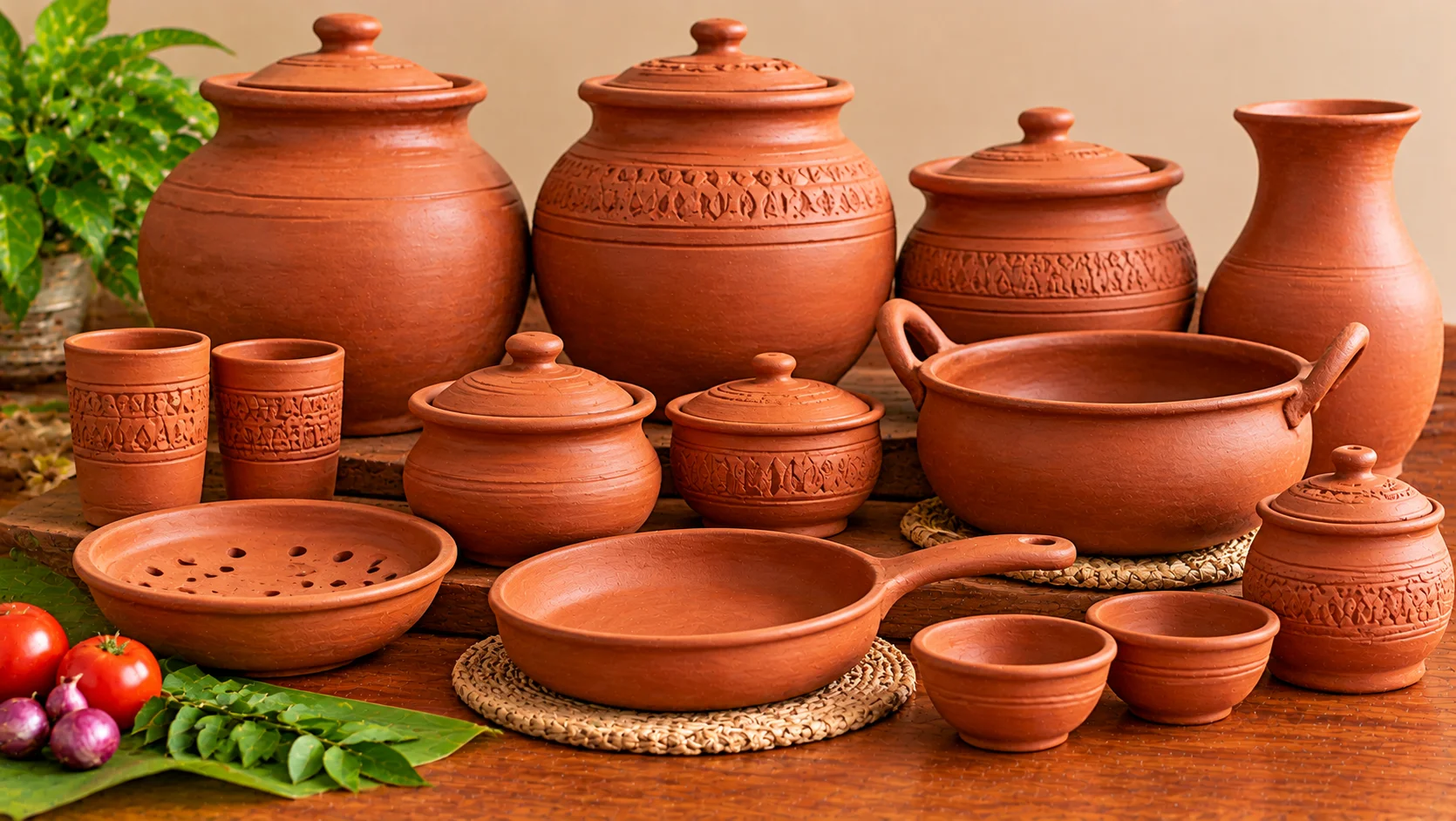
This image has been generated using AI for visual representation purposes only.
Functional and decorative terracotta pots from a documented maker. The area is associated with pottery and terracotta craft; verify the specific product and avoid unsupported claims about age or exclusivity.
Karukurichi Terracotta Utility Pots are traditional clay products made in Karukurichi, a village in Tirunelveli district known for its pottery-making tradition. Local artisans produce a wide range of practical vessels, including water pots, cooking pots, storage jars, curd pots, frying pans, water jugs and containers for everyday household use. The craft combines the selection and preparation of suitable clay with wheel-throwing, shaping, drying and firing techniques. Karukurichi pottery is recognised for its technical workmanship, distinctive vessel shapes and variety of functional designs. Alongside conventional earthenware, the wider local pottery industry also produces contemporary household products to meet changing customer needs.
Pottery has been an important traditional occupation in Tamil Nadu for generations, supplying households with vessels for storing water, preparing food and keeping provisions. Karukurichi and neighbouring pottery-producing villages in the Tirunelveli region developed a reputation for practical clay products and skilled craftsmanship. Historical accounts of pottery in the region describe improvements in production techniques and the development of distinctive shapes and finishes. The 1961 Census of India district handbook documents Karukurichi's pottery industry, including the development of lacquer-coated pottery and the production of both decorative objects and traditional utility vessels. Today, the local craft continues through household workshops and small-scale manufacturing, with products adapted to contemporary kitchens and markets.
Karukurichi pottery reflects the traditional role of clay vessels in Tamil households. Earthen pots have long been used for storing water, cooking food, preserving ingredients and serving meals. Pottery-making also forms part of the livelihood and occupational heritage of artisan communities. The work requires practical knowledge of clay preparation, moisture control, shaping, drying and kiln firing. The continued production of utility pots helps preserve these skills while providing useful alternatives to some factory-made household containers.
Karukurichi utility pots are valued for their practical shapes, handmade character and traditional earthenware appearance. Depending on the intended use, they may have wide mouths for easy filling and cleaning, narrow openings for controlled pouring, rounded bodies for storage or specially shaped bases for cooking. Unglazed products retain the natural texture and colour of fired clay, commonly ranging from reddish-brown to deeper earthy shades. Some pottery made in Karukurichi has also been associated with distinctive coloured coatings and lacquer finishes, although these are not present on every utility pot. Sizes and designs vary according to the vessel's purpose and the potter's technique.
The production process begins with selecting clay suitable for pottery and removing stones, roots and other unwanted particles. The clay is mixed with water and kneaded until it reaches a workable consistency. Depending on the vessel's design and size, the potter shapes it on a wheel or uses additional hand-forming techniques. The vessel's walls, rim, neck and base are refined to achieve the intended shape. After shaping, the pot is allowed to dry gradually, often in a shaded or protected area before further drying. Once sufficiently dry, it is fired in a kiln or an appropriate pottery-firing arrangement. Selected products may receive additional surface treatment or decorative finishing. The finished pots are inspected for cracks, uneven rims and other defects before being sold.
Traditional Karukurichi pottery relies on the potter's skill in preparing clay and shaping vessels by hand, often using a rotating potter's wheel. The clay must have the correct moisture and consistency to support the vessel during shaping. The potter controls the wheel, pressure and movement of the hands to form the body, opening and rim. After shaping, gradual drying helps reduce the risk of cracking during firing. Firing techniques vary according to the clay, size and intended finish of the product. Some local pottery traditions also use surface coatings or polishing methods, but these should not be assumed to be part of every Karukurichi utility pot.
Karukurichi Terracotta Utility Pots represent the practical and commercial importance of traditional pottery in Tirunelveli district. They connect local artisan skills with everyday needs such as cooking, storing water and keeping food ingredients. The craft supports small-scale production, local trade and the continuation of knowledge passed between generations. Clay vessels also remain culturally familiar in Tamil Nadu, particularly during festivals and household traditions that involve earthen cooking pots. Modern potters continue to adapt the form, size and function of their products to suit contemporary homes and changing markets.
Karukurichi in Tirunelveli district is recognised in regional handicraft references for its pottery and terracotta production.
Local pottery products include water pots, cooking vessels, storage jars, curd pots, frying pans and water jugs.
Potters use knowledge of clay consistency, wheel movement and vessel proportions to produce functional shapes.
Many utility pots retain the earthy colours and tactile surface of fired clay, with variations depending on the material and firing conditions.
Products can be made in different capacities and shapes for cooking, storing, serving and other domestic purposes.
The local pottery industry preserves traditional skills while responding to demand for contemporary household clay products.
Clay pots have a familiar place in Tamil culture, particularly in household cooking, agricultural life and seasonal celebrations. During Pongal, a new earthen cooking pot is traditionally used in many households to prepare the festival dish, symbolising prosperity and abundance. Pottery also reflects the relationship between artisan communities and everyday domestic life, with skills transmitted through practical experience and family workshops. Karukurichi's pottery tradition contributes to this wider heritage by continuing to produce functional vessels suited to local customs and modern household requirements.
Fired clay pots can remain useful for years when properly made and handled, but they are brittle and can crack if dropped or exposed to sudden temperature changes. Store unused pots in a dry, stable location where they cannot be knocked over. Clean them according to the intended use and the maker's instructions. Before using a new unglazed cooking pot, follow the seller's recommended preparation or seasoning procedure. Allow washed pots to dry fully before storing them. Avoid placing a cold clay vessel directly over intense heat unless it is specifically designed for that purpose. For food and drinking-water use, choose products intended for that application and confirm that any coatings or finishes are suitable.
They are practical clay vessels made in Karukurichi, Tirunelveli district, Tamil Nadu. Products associated with the local pottery industry include water pots, cooking vessels, storage jars, curd pots and water jugs.
Karukurichi is a village in the Ambasamudram region of Tirunelveli district in southern Tamil Nadu, India.
The local pottery tradition includes utility vessels such as water pots, cooking pots, frying pans, storage jars, curd pots, water jugs and other household containers. Decorative and specially finished pottery may also be produced.
Potters prepare and knead the clay, shape the vessel using a wheel or hand-forming techniques, dry it gradually and fire it. Selected products may receive additional coatings or surface finishes.
Some are made specifically for cooking, but not every decorative or utility pot is suitable for direct heat. Confirm the intended use with the maker and follow the recommended preparation and heating instructions.
Pots designed for water storage can be used for this purpose. Choose a vessel intended for drinking water, clean it properly and follow the manufacturer's instructions. Unglazed clay may allow gradual evaporation, which can help keep water cool under suitable conditions.
Preparation depends on the clay, firing method and maker's recommendations. Ask the seller whether soaking, seasoning or another preparation method is required before the first use, and avoid sudden temperature changes.
Clay pots are made primarily from natural mineral material and can be durable household products when handled properly. Their environmental impact depends on clay sourcing, firing fuel, coatings, transport and how long the product remains in use.
A specific GI registration for Karukurichi Terracotta Utility Pots has not been verified. The village is documented as a pottery centre, but this regional association alone does not establish GI registration.
This image has been generated using AI for visual representation purposes only.
Let Karthi Travels help you plan a comfortable and memorable journey across Tamil Nadu.
Experience, Trust & Memories Built Over the Years





Your journey is in experienced hands, from planning to the final drop.

No hidden charges. Clear and upfront pricing.

Clean, inspected and well-serviced vehicles for a comfortable journey.

Professional drivers focused on safe and pleasant travel.

Dependable pickups and reliable travel service.
Travel Made Simple, Experiences Made Grand

Explore the best of each destination with our curated sightseeing tours.

Perfect for families and groups, planned with comfort, safety and flexibility in mind.

Peaceful and spiritually enriching journeys with carefully planned routes.

Personalised honeymoon tours and romantic destinations for your special journey.

Compliant and well-documented tour plans to make the most of your travel concession.
 WhatsApp Us