
Karthi Travels®
ISO 9001:2015 Certified
Karuppur, Thanjavur, Tamil Nadu
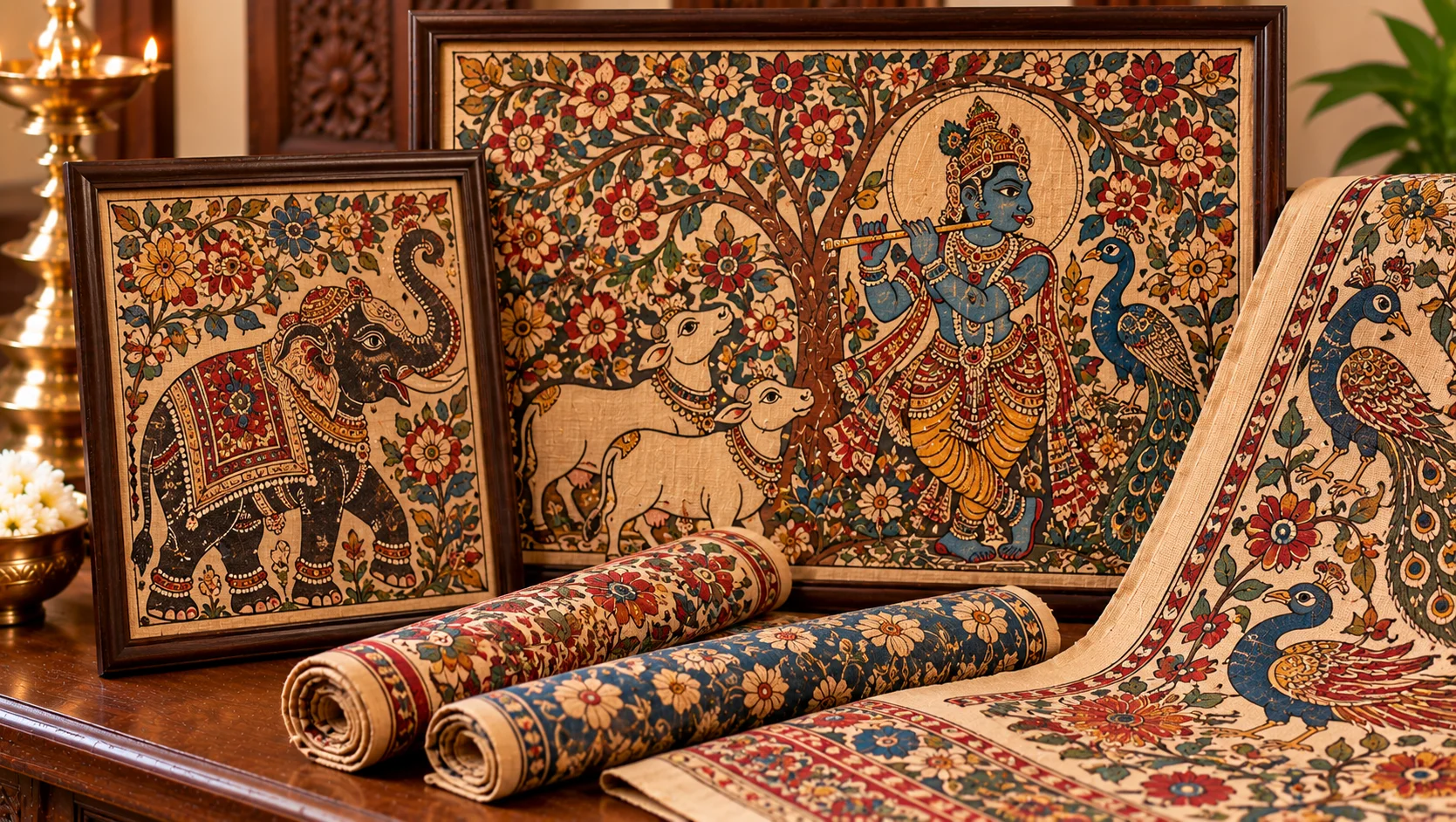
This image has been generated using AI for visual representation purposes only.
Discover Karuppur Kalamkari Paintings, a GI-registered regional product associated with Karuppur, celebrated for its local heritage and traditional craftsmanship or production.
Karuppur Kalamkari Paintings are a hand-painted textile art form associated with Karuppur in Thanjavur district, Tamil Nadu, India. The work is created by drawing and painting motifs directly onto cotton or silk using a traditional pen (kalam) and natural dyes; the named product is registered as a Geographical Indication (GI) for handicraft textiles. ()
Local documentary and institutional records associate the Karuppur/Kodali Karuppur style of Kalamkari with the Thanjavur region and with historical patronage of regional courts; modern formal documentation for the named GI was filed by the Tamil Nadu Handicrafts Development Corporation (Poompuhar) on 28 May 2013 and the Certificate of Registration was issued on 14 September 2021. Scholarly and conservation sources describe the Karuppur tradition as a distinct Thanjavur-area variant of Kalamkari that was practised for temple and ritual cloths and that experienced periods of court and patron support; oral and published accounts also record that the technique has become concentrated in a small number of villages and families in the Thanjavur area in recent decades. Where accounts trace earlier origins to earlier South Indian patronage, those are presented in the literature as regional tradition rather than as single, fully documented events. ()
The craft preserves inherited skills of freehand pen-and-brush painting (kalam work), preparation and application of plant- and mineral-based dyes, and cloth pre-treatment and mordanting techniques that were traditionally used to make temple hangings, procession cloths and decorative textiles. The named GI scope and authorised-user lists identify artisan households and practising communities in and around Karuppur, Sikkalnayakanpet (Sickalnayakenpet), Thiruppanandal and Thiruvidaimaruthur taluks of Thanjavur district. ()
Karuppur Kalamkari is characterised by freehand figurative painting and strong black outlining, applied directly with a pen (kalam) or natural-bristle brush to prepared cotton or silk. The tradition uses natural/vegetable dyes and a sequence of cloth treatments and mordanting to fix colours; some descriptions of the local style note a combination of freehand painting with block outlines and—in documented examples—metallic/gold-like embellishment on silk in certain pieces. The visual vocabulary is linked to temple and regional motifs and to the bold aesthetic associated with the Thanjavur/Karuppur variant. ()
In documented descriptions the process follows a sequence of preparing the cloth (washing, bleaching/softening with traditional agents such as cow-dung and lime, and mordanting/starching), outlining the design with a kalam (pen) to create black contours, applying natural dyes in stages (with intermediate washing, mordanting or fixing steps), repeated drying and finishing; traditional Kalamkari workflows are commonly described as involving many successive stages (often summarised as about 23 steps in comparative Kalamkari literature). The named Karuppur practice follows this broad Kalamkari sequence while exhibiting local choices of tools, dye sources and finishing specific to the Thanjavur-area tradition. ()
Use of a hand-made kalam (pen) from a bamboo or date-palm stem tipped with a fine bundle of hair; freehand line-and-wash painting (kalam work) using natural dyes; mordant painting and staged dye-fixing; use of traditional starching and cloth-treatment recipes (for example buffalo milk/rice starch and myrobalan) and natural brushes made from palm, coconut or bamboo stems. Some practitioner accounts record the combined use of freehand pen work with block outlines and hand-applied metallic embellishment on silk in specific local pieces. ()
Karuppur Kalamkari represents a named, regionally rooted Kalamkari tradition within Thanjavur district and forms part of the textile and ritual-art heritage of the area. The GI registration recognises the regional association and the specialised artisanal knowledge held by local families and communities. Scholarly and government sources document the craft's historical connections with temple decoration and court patronage in the Thanjavur region and note contemporary concerns about the small number of practising households and efforts at documentation and revival. ()
Karuppur Kalamkari Paintings are registered under the Geographical Indications of India (application filed 28 May 2013; Certificate of Registration issued 14 September 2021; registration recorded for handicraft textiles with geographical area Tamil Nadu). ()
The official GI record names authorised practitioners and identifies villages and localities in and around Karuppur, Sikkalnayakanpet (Sickalnayakenpet), Thiruppanandal and Thiruvidaimaruthur taluks as the recognised production area for the GI. ()
Documented descriptions of the Karuppur/Thanjavur Kalamkari practice emphasise freehand kalam drawing, use of bamboo/date-palm pens and natural dyes with a multi-stage cloth-preparation and mordanting sequence typical of Kalamkari traditions. ()
The Karuppur Kalamkari tradition is documented as part of the ritual and visual culture of the Thanjavur area, historically supplying painted textiles for temples, festivals and processions and reflecting iconography and motifs linked to regional religious and courtly traditions. Contemporary literature records the craft as a repository of specialised artistic knowledge within a small number of artisan households. ()
Yes. The Karuppur Kalamkari Paintings GI application was filed by the Tamil Nadu Handicrafts Development Corporation (Poompuhar) on 28 May 2013 and a Certificate of Registration was issued on 14 September 2021; the GI covers the handicraft textile tradition associated with Tamil Nadu. ()
The named tradition is associated with Karuppur in Thanjavur district and with nearby villages and localities such as Sikkalnayakanpet, Thiruppanandal and Thiruvidaimaruthur taluks, which appear as authorised production localities in the GI record. ()
Documented practice uses prepared cotton or silk cloth, natural vegetable and mineral dyes, mordants such as myrobalan or alum, and traditional pens (kalams) made from bamboo or date-palm stems and natural brushes from palm/coconut or bamboo. Cloth pre-treatments and starching agents such as buffalo milk or rice starch and traditional cleaning/bleaching agents are also recorded in practitioner descriptions. ()
Karuppur (Thanjavur) Kalamkari is described in the literature as a regionally distinct variant with strong black outlining and figurative, temple-linked motifs; scholarly and craft-heritage sources distinguish it from other Kalamkari traditions (for example Srikalahasti and Machilipatnam/Pedana) by differences in local techniques, motifs and historical patronage. ()
Contemporary studies and conservation reports record that the Karuppur Kalamkari tradition is practised by a limited number of artisan households in the Thanjavur area and that efforts at documentation and revival have been undertaken; published work highlights concern about the small number of surviving practitioners. ()
This image has been generated using AI for visual representation purposes only.
Let Karthi Travels help you plan a comfortable and memorable journey across Tamil Nadu.
Experience, Trust & Memories Built Over the Years





Your journey is in experienced hands, from planning to the final drop.

No hidden charges. Clear and upfront pricing.

Clean, inspected and well-serviced vehicles for a comfortable journey.

Professional drivers focused on safe and pleasant travel.

Dependable pickups and reliable travel service.
Travel Made Simple, Experiences Made Grand

Explore the best of each destination with our curated sightseeing tours.

Perfect for families and groups, planned with comfort, safety and flexibility in mind.

Peaceful and spiritually enriching journeys with carefully planned routes.

Personalised honeymoon tours and romantic destinations for your special journey.

Compliant and well-documented tour plans to make the most of your travel concession.
 WhatsApp Us