
Karthi Travels®
ISO 9001:2015 Certified
Kodaikanal, Dindigul
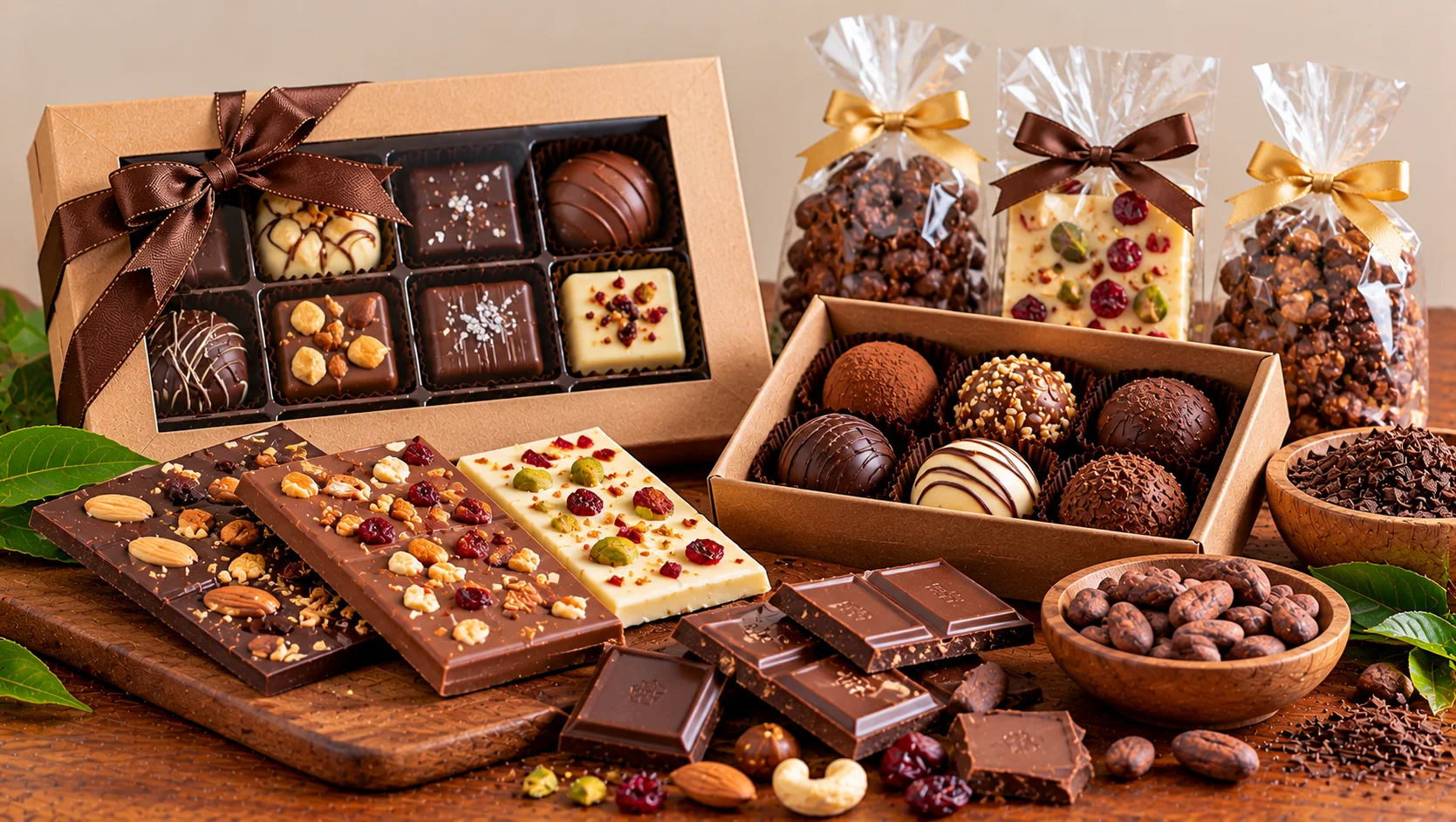
This image has been generated using AI for visual representation purposes only.
Locally made chocolate sold by confectioners in the hill station. Product origin, ingredients and production method depend on the maker; identify a traceable producer and verify current GI status before publication.
Kodaikanal Homemade Chocolates are handcrafted chocolate and confectionery products associated with Kodaikanal, a popular hill station in the Palani Hills of Tamil Nadu. The town is widely known for its chocolate shops, which offer an extensive range of milk chocolate, dark chocolate, white chocolate, fruit-and-nut chocolate, almond chocolate, cashew chocolate, coffee chocolate, mint chocolate, caramel and fudge. Depending on the manufacturer, these chocolates may be prepared in small batches using chocolate compounds or cocoa-based ingredients, milk solids, sugar, nuts, dried fruits and other flavourings. Some producers specialise in traditional recipes, while others offer contemporary combinations and premium gift assortments. Kodaikanal's cool mountain climate and established tourism industry have helped homemade chocolates become one of the town's recognisable edible souvenirs. Recipes, ingredients, production techniques and quality vary between individual producers.
Kodaikanal developed a distinctive local chocolate retailing tradition during the twentieth century. The hill station's cool climate, tourism economy and concentration of small confectionery businesses helped create a market for locally prepared chocolates. The precise beginnings of chocolate making in Kodaikanal are not firmly established, and popular accounts differ regarding when the practice first developed. By the early twenty-first century, homemade chocolates had become a familiar part of the visitor experience, sold in small shops, market areas and outlets near major tourist locations. Local confectioners expanded their product ranges to include nuts, dried fruits, flavoured chocolates, fudge and other sweets. Today, the tradition combines small-scale confectionery production with modern chocolate-making equipment, packaging and retailing.
Kodaikanal Homemade Chocolates are an important part of the hill station's food and souvenir culture. Visitors commonly purchase assorted chocolates to take home or give as gifts. Small confectionery shops and family-run businesses have helped sustain the local tradition by offering different flavours, fillings and packaging styles. The products reflect the relationship between Kodaikanal's tourism economy, its cool hill-station environment and the development of local chocolate retailing. Although the chocolates are strongly associated with the town, there is no single standardised recipe or universally documented method that defines every product sold under this name.
Kodaikanal Homemade Chocolates are distinguished by their wide selection of flavours, fillings, textures and presentation styles. Common varieties include milk chocolate, dark chocolate, white chocolate, fruit-and-nut chocolate, almond chocolate, cashew chocolate, coffee chocolate, mint chocolate and chocolate fudge. Some products contain crunchy roasted nuts, raisins, caramel or flavoured centres, while others have a smooth and creamy texture. Small confectionery businesses may produce chocolates in batches and sell them individually, by weight or in assorted gift boxes. The ingredients and manufacturing methods differ considerably between producers: some use cocoa butter and cocoa solids, while others use compound chocolate formulations containing vegetable fats. Kodaikanal's relatively cool climate can make chocolate handling and retailing more convenient than in hotter lowland areas, but suitable temperature and moisture control remain important for product quality.
Chocolate production begins with selecting a suitable chocolate base or processing cocoa ingredients according to the manufacturer's method. Depending on the product, cocoa mass, cocoa butter, sugar and milk solids may be combined and refined to achieve the desired flavour and texture. Some producers use prepared chocolate couverture or compound chocolate as the starting material. When cocoa butter-based chocolate is used, the mixture may be tempered through controlled heating and cooling to develop a stable structure, smooth finish and attractive appearance. Nuts, dried fruits, caramel or other flavourings are added according to the recipe. The chocolate is poured into moulds, spread into slabs or shaped into individual pieces and allowed to set under suitable conditions. Finished products are checked and packed in food-grade containers or wrappers. Small-scale producers may use simpler equipment, while larger confectionery units may use specialised mixers, melting equipment and temperature-controlled facilities. The exact process varies according to the product and manufacturer.
Small-scale chocolate making in Kodaikanal commonly involves preparing chocolate in batches, incorporating selected flavourings and fillings, shaping the mixture and allowing it to set before packaging. Producers may make slabs, moulded pieces, nut-filled chocolates, fudge-style sweets and assorted confectionery. Traditional-style products often rely on familiar flavour combinations such as milk chocolate with nuts, dark chocolate with coffee or fruit-and-nut chocolate. Proper temperature control is important when working with cocoa butter-based chocolate, particularly during tempering and setting. Softer chocolate and fudge products may require different formulations and handling methods. Local makers adapt their recipes to customer preferences, ingredient availability and production equipment, so the term homemade refers to a style of local confectionery production rather than one fixed traditional recipe.
Kodaikanal Homemade Chocolates are among the hill station's best-known edible souvenirs and contribute to the local confectionery and tourism economy. The products are widely available in the town's shopping streets, market areas and tourist-oriented outlets. Their popularity reflects how small businesses have developed a recognisable food speciality around chocolate making and retailing. The wide selection of flavours and gift packs appeals to visitors looking for something easy to carry and share. The tradition also supports local confectionery businesses and creates opportunities for producers to experiment with different ingredients, textures and packaging. Kodaikanal Homemade Chocolates are best understood as a regional confectionery speciality rather than a single standardised product.
Homemade chocolates are widely associated with visits to Kodaikanal and are commonly purchased as gifts for family and friends.
Popular varieties include milk chocolate, dark chocolate, white chocolate, fruit-and-nut chocolate, almond chocolate, coffee chocolate and fudge.
Many products combine chocolate with almonds, cashews, raisins, dried fruits and other ingredients to create contrasting textures.
Local chocolate businesses offer products made using different recipes, equipment and production methods.
Alongside familiar chocolate flavours, producers offer combinations involving caramel, mint, coffee, coconut and other flavourings.
Kodaikanal's relatively cool weather has helped support chocolate handling and retailing, although proper storage remains necessary.
Chocolates are commonly available in mixed assortments, individual pieces, slabs and gift boxes suitable for travel.
Kodaikanal Homemade Chocolates have become closely associated with the town's identity as a tourist destination. For many visitors, browsing chocolate shops and selecting assorted flavours is a familiar part of a trip to the hill station. Local confectionery businesses have helped establish this tradition by offering products in different flavours, textures and price ranges. The availability of homemade chocolates alongside other regional products contributes to the town's souvenir-shopping culture. The tradition has also evolved with changing tastes, with contemporary makers introducing new fillings, premium chocolate varieties and gift packaging. Although local chocolates are an established speciality, their ingredients and manufacturing practices vary, and the regional name does not guarantee a single standard of composition or production.
Store Kodaikanal Homemade Chocolates in a cool, dry place away from direct sunlight, heat, moisture and strong odours. Keep the packaging tightly closed to protect the chocolates from humidity and contamination. Avoid sudden temperature changes, which may cause condensation or a pale surface bloom. Chocolate bloom can affect appearance and texture and does not automatically mean the product is unsafe. Products containing fresh cream, dairy-based fillings or other perishable ingredients may require refrigeration according to the manufacturer's instructions. If refrigeration is necessary, use an airtight container and allow the sealed package to approach room temperature before opening to minimise condensation. Shelf life depends on the ingredients, processing method, filling and packaging. Follow the product label and consume the chocolates within the stated best-before period.
Kodaikanal Homemade Chocolates are chocolate and confectionery products associated with Kodaikanal, Tamil Nadu. They are sold in a wide range of flavours, including milk chocolate, dark chocolate, fruit-and-nut chocolate, nut-filled chocolate and fudge.
Kodaikanal has developed a strong local chocolate-retailing tradition supported by small confectionery businesses, its hill-station climate and tourism. Homemade chocolates have become a popular souvenir for visitors.
The precise beginning of Kodaikanal's chocolate-making tradition is uncertain. The town's local confectionery businesses became widely associated with homemade chocolates during the twentieth century, and the products gained popularity as tourist souvenirs.
Common varieties include milk, dark and white chocolate, fruit-and-nut chocolate, almond chocolate, cashew chocolate, coffee chocolate, mint chocolate, caramel chocolate, fudge and truffles. Availability depends on the producer.
Not necessarily. Individual producers may use prepared chocolate, cocoa ingredients or chocolate bases sourced from different suppliers. The origin of the cocoa ingredients should be checked with the manufacturer or on the product label.
No. Some products use cocoa butter-based chocolate, while others may use compound chocolate containing vegetable fats. The exact formulation varies by manufacturer, so check the ingredient list.
A registered GI status for Kodaikanal Homemade Chocolates could not be verified from the sources consulted. Their regional popularity does not by itself establish formal Geographical Indication registration.
Store them in a cool, dry place away from sunlight, heat and moisture. Chocolates with fresh cream or other perishable fillings may require refrigeration according to the manufacturer's instructions.
Yes. They are popular edible souvenirs and are available in assorted flavours, individual pieces and gift boxes. Choose packaging that protects the chocolates during travel and follow the storage instructions.
This image has been generated using AI for visual representation purposes only.
Let Karthi Travels help you plan a comfortable and memorable journey across Tamil Nadu.
Experience, Trust & Memories Built Over the Years





Your journey is in experienced hands, from planning to the final drop.

No hidden charges. Clear and upfront pricing.

Clean, inspected and well-serviced vehicles for a comfortable journey.

Professional drivers focused on safe and pleasant travel.

Dependable pickups and reliable travel service.
Travel Made Simple, Experiences Made Grand

Explore the best of each destination with our curated sightseeing tours.

Perfect for families and groups, planned with comfort, safety and flexibility in mind.

Peaceful and spiritually enriching journeys with carefully planned routes.

Personalised honeymoon tours and romantic destinations for your special journey.

Compliant and well-documented tour plans to make the most of your travel concession.
 WhatsApp Us