
Karthi Travels®
ISO 9001:2015 Certified
Coimbatore, Tamil Nadu
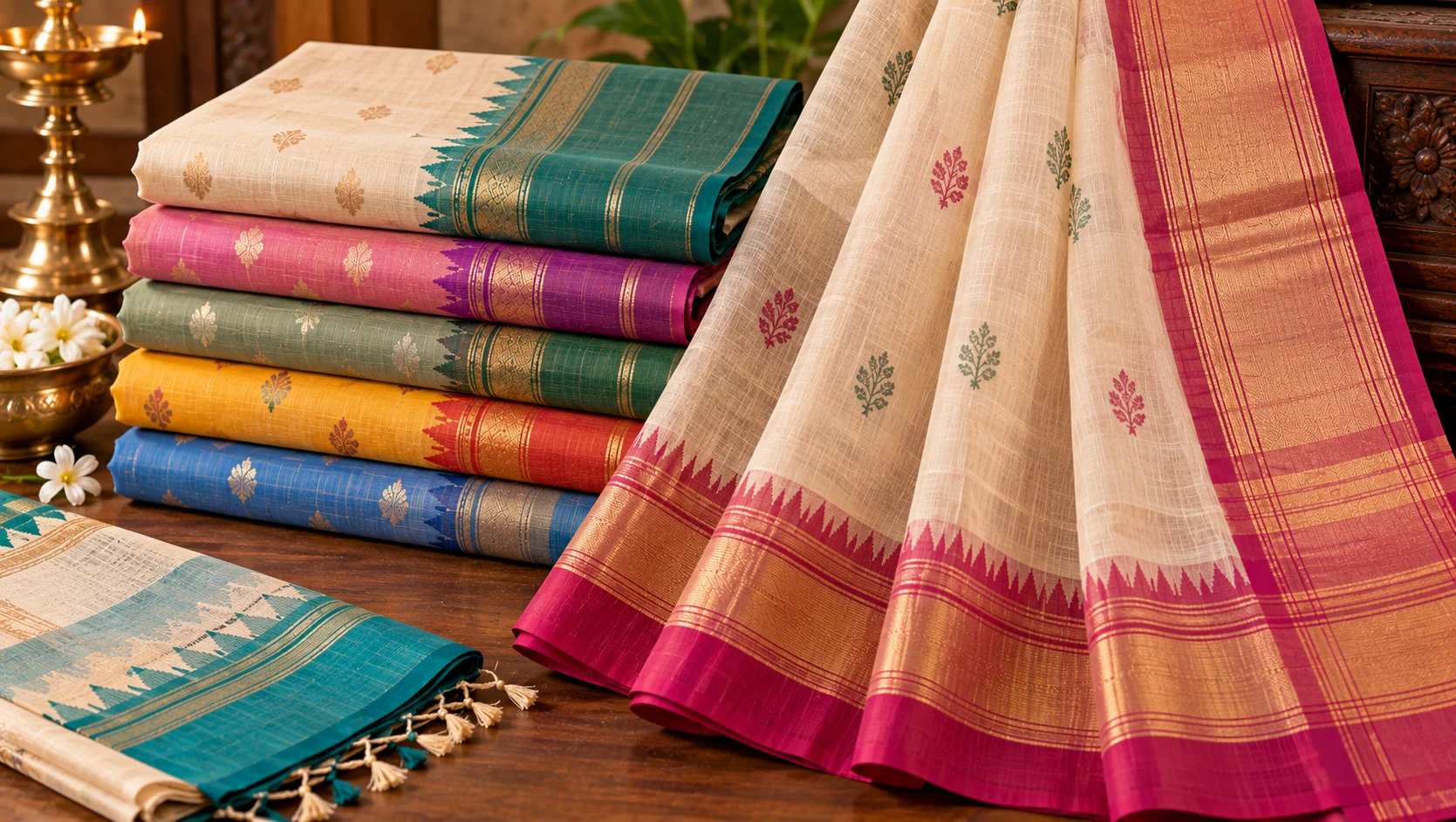
This image has been generated using AI for visual representation purposes only.
Discover Kovai Kora Cotton Sarees, a GI-registered regional product associated with Coimbatore, celebrated for its local heritage and traditional craftsmanship or production.
Kovai Kora Cotton Sarees are a Geographical Indication (GI)–registered handloom saree traditionally produced in the Coimbatore region of Tamil Nadu, India. The fabric—commonly called kora cotton—is woven using a combination of cotton and silk yarns to create lightweight, breathable sarees with distinctive borders and occasional zari embellishment. ()
The GI application for 'Kovai Kora Cotton Sarees' was filed by the Department of Handlooms and Textiles, Government of Tamil Nadu on 25 April 2007; the product is recorded as a registered Geographical Indication, with certificate number 57 and a certificate date recorded in government registers. The saree and its production are documented as part of the Coimbatore (Kongu Nadu) handloom tradition; academic and government sources place production in Coimbatore district and neighbouring weaving areas such as Tiruppur and Erode. Oral and community histories—recorded in regional textile studies—attribute the local weaving knowledge to specific weaving communities (reported in some accounts as Devanagar weavers who settled in parts of Kongu Nadu), which is described in the literature as a traditional/local account rather than established documentary fact. ()
Kovai Kora weaving embodies inherited handloom skills from weaving families in the Coimbatore/Kongu Nadu region. Traditional knowledge includes combining a silk warp with a cotton weft, use of handloom (including fly-shuttle and pit loom arrangements with jacquard mechanisms for patterned work), and locally transmitted design motifs and finishing practices. These skills are documented in regional textile studies and GI application materials. ()
Kovai Kora cotton sarees are characterised by a silk (kora) warp paired with a cotton weft, producing a fabric that blends the sheen of silk with the body of cotton. The sarees typically feature brightly coloured or contrasting borders, occasional use of metallic zari in the pallu or borders, and patterned or jacquard all‑over designs produced on hand-operated looms. These construction features distinguish them from plain cotton sarees and are emphasised in technical descriptions of the weave. ()
Principal documented stages: selection of quality cotton and silk yarns; warping and preparation of the warp (silk) and weft (cotton); mounting the warp on a handloom (often pit or raised looms) with jacquard attachments where patterned work is required; shuttle weaving to interlace silk warp and cotton weft to form the cloth; adding border patterns and any zari work during weaving or as integrated motifs; finishing processes such as washing, starching or pressing to stabilise the saree. The sequence and techniques are described in regional handloom studies and the GI specification materials. ()
Documented traditional methods include handloom weaving on pit or floor looms, use of fly-shuttle mechanisms and jacquard attachments for motifs, and hand-warping and shuttle-based weaving by weavers trained in local practices. These methods are part of the handloom craft recorded in technical descriptions of Kovai Kora production. ()
Kovai Kora cotton sarees represent a distinct textile tradition of the Coimbatore/Kongu Nadu region and are part of the region's handloom heritage. The GI registration recognises the saree’s regional identity and documented link to local weaving communities and production practices. The weave contributes to the cultural and artistic diversity of Tamil Nadu’s saree traditions without implying commercial endorsements. ()
Kovai Kora Cotton Sarees are registered in the Indian Geographical Indications Registry (application number 93; certificate number 57), recognising the product’s link to Tamil Nadu’s Coimbatore region. ()
The fabric is made using a silk (warp) and cotton (weft) combination—often described in sources as the defining kora construction—producing a characteristic texture and appearance. ()
Documented production and weaving communities for Kovai Kora include Coimbatore district and neighbouring weaving areas such as Tiruppur, Erode and parts of Kongu Nadu; Sirumugai in Coimbatore is frequently identified in regional reports as a significant weaving centre. ()
Kovai Kora cotton sarees form part of the textile heritage of Coimbatore and the wider Kongu Nadu cultural region; they are cited in studies of regional dress and handloom traditions and figure among Tamil Nadu’s registered handloom GIs. The saree and its craft are associated with local weaving communities and traditional design repertoires. ()
Yes. 'Kovai Kora Cotton Sarees' are recorded in the Indian Geographical Indications Registry (application number 93; certificate details recorded in the registry). ()
Documented production uses a cotton weft combined with a silk (kora) warp; metallic zari is used in some sarees for borders or pallu embellishment. ()
Kovai Kora weaving is associated with the Coimbatore district of Tamil Nadu and neighbouring weaving areas in the Kongu Nadu region such as Tiruppur and Erode; Sirumugai in Coimbatore is frequently mentioned as a local weaving centre. ()
The distinguishing construction is the use of a silk warp with a cotton weft (kora construction), patterned or jacquard designs, and often contrasting borders or occasional zari—features described in technical accounts of the weave. ()
Scholarly and regional sources document the craft and its regional location, and some accounts record local oral histories (for example, references to weaving communities said to have migrated to the region). Where such origin stories appear in the literature they are presented as tradition or community accounts rather than as fully established historical fact. ()
This image has been generated using AI for visual representation purposes only.
Let Karthi Travels help you plan a comfortable and memorable journey across Tamil Nadu.
Experience, Trust & Memories Built Over the Years





Your journey is in experienced hands, from planning to the final drop.

No hidden charges. Clear and upfront pricing.

Clean, inspected and well-serviced vehicles for a comfortable journey.

Professional drivers focused on safe and pleasant travel.

Dependable pickups and reliable travel service.
Travel Made Simple, Experiences Made Grand

Explore the best of each destination with our curated sightseeing tours.

Perfect for families and groups, planned with comfort, safety and flexibility in mind.

Peaceful and spiritually enriching journeys with carefully planned routes.

Personalised honeymoon tours and romantic destinations for your special journey.

Compliant and well-documented tour plans to make the most of your travel concession.
 WhatsApp Us