
Karthi Travels®
ISO 9001:2015 Certified
Mamallapuram, Chengalpattu, Tamil Nadu
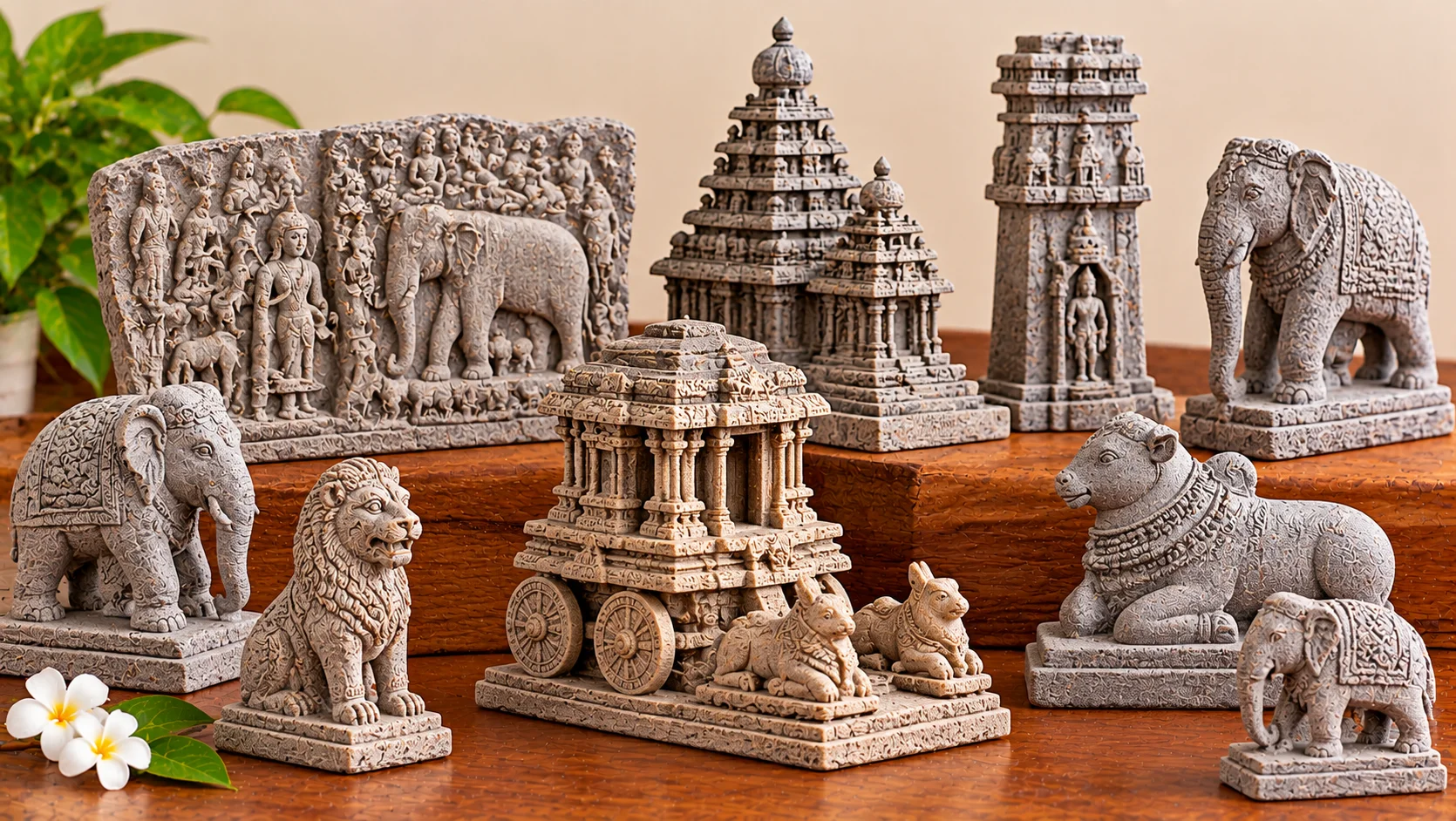
This image has been generated using AI for visual representation purposes only.
Small stone carvings or architectural miniatures inspired by Mamallapuram's sculptural tradition. Verify the artisan, stone type and actual place of carving; avoid duplicating Mahabalipuram Stone Sculpture GI products.
Mahabalipuram Stone Sculpture Miniatures is a registered Geographical Indication (GI) handicraft associated with the coastal town of Mahabalipuram (also spelled Mamallapuram) in Chengalpattu district. The designation covers hand-crafted stone-carving products produced in and around Mahabalipuram that draw on the local stone-carving tradition and regional motifs. ()
The stone-sculpture miniatures tradition of Mahabalipuram is documented in the town’s surviving Pallava-period monuments (7th–8th centuries CE), including rock-cut reliefs, monolithic rathas and the Shore Temple; these monuments confirm a long-established local practice of working the coastal granite outcrops. The living tradition of workshop carving in Mahabalipuram has continued into the modern period, with techniques and iconographic models that preserve aspects of Pallava-era forms while adapting to contemporary demands. The product’s GI application and registration process in India began with a filing in 2013 and the GI certificate was issued in 2017. ()
The craft is transmitted through local workshop practice and traditional training of stone carvers (often described in literature as 'shilpi' practice). For ritual or temple work carvers historically follow canonical proportions and iconographic rules drawn from sculptural canons (shilpa shastras), while decorative and tourist-market pieces may adapt those rules. The town’s craft community and workshop system sustain the knowledge of stone selection, roughing, carving, and finishing. ()
Work is primarily executed in dense coastal granite found in and around Mahabalipuram, producing sculpture miniaturess and architectural elements with Pallava-derived iconography and bas-relief composition. Distinctive features include use of large monolithic blocks or dressed blocks for structural elements and stone statues, a local idiom of flowing narrative bas-reliefs, reliance for important ritual images on traditional iconographic proportions, and a combination of hand-tool finishing with, where appropriate, electric cutting and grinding for initial rough work. These characteristics reflect both the geology (hard granite outcrops) and the local artistic lineage visible in the Pallava monuments. ()
Typical stages documented in contemporary practice are: selection and dressing of a suitable block; rough cutting or sawing to required size; drawing/sketching the design on the stone surface; removal of bulk material (roughing) to create the general form; progressively finer carving for form and detail, using chisels and other tools; surface finishing and polishing to the required texture. For large granite works, electric saws, drills or grinders are commonly used for bulk removal followed by manual chiseling and finishing. ()
Hand chisels and hammers remain fundamental for shaping and detailing; carvers use a sequence of chisels (point, tooth, flat), mallets and finishing abrasives. For ritual/temple sculpture miniaturess, carvers often follow canonical proportion systems derived from shilpa shastras; less formal decorative pieces may use local proportioning rules. Many workshops combine hand tools with mechanical aids for faster roughing of hard granite. ()
Mahabalipuram Stone Sculpture Miniatures is regionally significant both as a living craft tradition and because the town’s Pallava monuments form an important historical reference for South Indian stone sculpture miniatures. The GI registration recognises the local association of the craft with Mahabalipuram and its specific technical and iconographic practices. The continuity between historic monuments and contemporary workshop production underlies the product’s cultural and artistic importance. ()
Mahabalipuram Stone Sculpture Miniatures was applied for in 2013 and is registered under India’s Geographical Indications system; the GI certificate was issued in 2017 (registration record and certificate details appear in the IP India GI database).
The town’s 7th–8th century Pallava rock-cut reliefs, rathas and the Shore Temple provide the documented historical context and stylistic reference that strongly influence local stone-carving practice.
Mahabalipuram continues to host active workshops where skilled carvers produce a range of works from large granite temple pieces to softer-stone decorative carvings, combining traditional hand techniques with modern mechanical aids where appropriate.
Mahabalipuram’s carved monuments are a key part of the Pallava-era historical landscape and a UNESCO-recognised World Heritage ensemble; the contemporary craft links present-day artisanship with the town’s archaeological and religious traditions, supporting skills that are used for temple work, restoration and contemporary commissions. ()
The craft primarily uses the dense local coastal granite; softer stones such as certain sandstones are used occasionally for specific decorative pieces.
The town’s surviving Pallava-period monuments (7th–8th centuries CE) document an early and influential sequence of rock-cut and structural stone work; contemporary workshop practice continues that lineage in modern form.
The GI registration recognises Mahabalipuram Stone sculpture miniatures as a product linked to the geographical area and its traditional techniques; the product was applied for in 2013 and the GI certificate was issued in 2017 according to the Indian GI registry.
No. GI registration covers goods that meet the registered specification and are produced by authorised users or according to the product’s definition; not every stone object sold in the region is necessarily covered by the GI.
Workshops commonly use electric saws or grinders for initial roughing of very hard granite; detailed shaping, iconographic work and finishing are typically done with traditional chisels, mallets and hand-finishing techniques.
This image has been generated using AI for visual representation purposes only.
Let Karthi Travels help you plan a comfortable and memorable journey across Tamil Nadu.
Experience, Trust & Memories Built Over the Years





Your journey is in experienced hands, from planning to the final drop.

No hidden charges. Clear and upfront pricing.

Clean, inspected and well-serviced vehicles for a comfortable journey.

Professional drivers focused on safe and pleasant travel.

Dependable pickups and reliable travel service.
Travel Made Simple, Experiences Made Grand

Explore the best of each destination with our curated sightseeing tours.

Perfect for families and groups, planned with comfort, safety and flexibility in mind.

Peaceful and spiritually enriching journeys with carefully planned routes.

Personalised honeymoon tours and romantic destinations for your special journey.

Compliant and well-documented tour plans to make the most of your travel concession.
 WhatsApp Us