
Karthi Travels®
ISO 9001:2015 Certified
Nachiarkoil, Thanjavur, Tamil Nadu
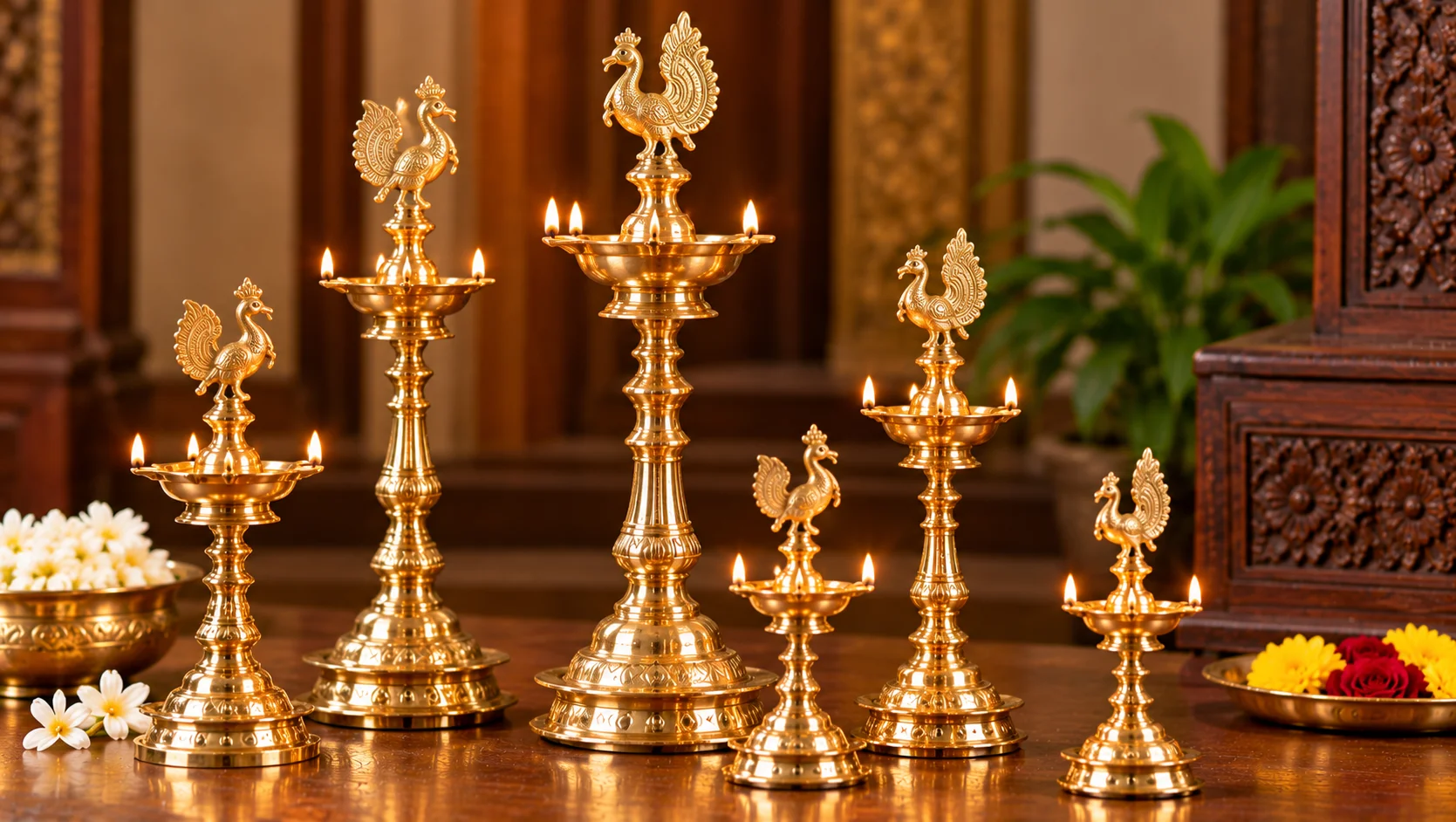
This image has been generated using AI for visual representation purposes only.
Discover Nachiarkoil Kuthuvilakku (Nachiarkoil Lamp), a GI-registered regional product associated with Nachiarkoil, celebrated for its local heritage and traditional craftsmanship or production.
Nachiarkoil Kuthuvilakku (Nachiarkoil Lamp) is a traditional brass oil lamp (kuthuvilakku) that is historically associated with Nachiarkoil (also spelled Nachiar Koil) in Thanjavur district, Tamil Nadu, India. The lamp is a metal handicraft made in multiple assembled parts and is used for ritual and decorative lighting in temples and homes. The product is registered as a Geographical Indication under the name Nachiarkoil Kuthuvilakku.
Documentary records and the Geographical Indications application identify Nachiarkoil (a temple town near Kumbakonam in Thanjavur district) as the craft’s place of origin. Historical sources cited in the GI documentation and craft studies describe the establishment of specialized brass lamp-making in Nachiarkoil in the 19th century; some sources record the migration of metalworking families (referred to in historical records as Pathers) from the Nagercoil area to Nachiarkoil around the mid-19th century. The craft was included in the official Geographical Indications registry (application number 196) with filing and registration activity recorded in the 2010–2013 period.
The craft involves inherited metalworking skills and assembly techniques passed down within local metalworking communities in Nachiarkoil. Traditionally the lamps were made for use in temple worship and household ritual lighting; the form, motifs and methods reflect a localized temple-lamp tradition tied to the town’s devotional and ceremonial practices.
Nachiarkoil lamps are made in brass and commonly assembled from multiple screw-fitted parts. Typical features include a stepped or heavy base, a tall central stem, an oil container (thanguli) with V-shaped spouts to hold wicks, and an ornamental apex (prabhai) often ending in a bird motif such as a hamsa. Lamps are produced in several forms (standing/floor lamps, suspended lamps, branching/tree forms and figurative shapes) and may incorporate divine or mythological motifs. The combination of brass composition, multi-part screw assembly and the characteristic V-shaped spouts and finial distinguish this regional form.
Traditionally the process begins with preparing the metal alloy and melting brass for casting. Production has involved two principal casting routes documented in craft accounts: the older wax-mould (lost-wax/wax-moulding) method and, later, faster box-mould techniques adopted for higher output. After casting of component parts (base, stem, thanguli/oil container, apex), finishing operations include filing, chasing/embellishment and polishing; the separate parts are then joined—commonly by screw threads—to form the complete lamp. Larger or suspended lamps may require additional chains or fittings and decorative finishing.
Distinctive traditional techniques reported for this craft include wax moulding (lost-wax method) used historically for detailed pieces, the use of locally sourced clay crucibles for melting metal in earlier practice, and later adoption of box-moulding for more rapid production. Hand-finishing (filing, chasing and polishing) is an important artisanal stage.
Nachiarkoil lamps hold religious and cultural importance locally as objects used in temple rituals and festival lighting, and they form part of the material culture of temple towns in the Thanjavur area. The lamp’s form and motifs reflect devotional iconography and regional metalworking traditions. The product’s GI registration recognises the lamp’s association with Nachiarkoil and helps document its regional origin and traditional techniques.
Nachiarkoil Kuthuvilakku is a registered Geographical Indication (GI application number 196) recorded with India’s GI registry, recognising the product’s association with Tamil Nadu and Nachiarkoil.
The lamp is made of brass and is typically assembled from several screw-fitted parts (base, stem, oil container/thanguli, and apex), with the oil container featuring characteristic V-shaped spouts for wicks.
Craft accounts document use of the lost-wax (wax-moulding) technique historically, with many workshops later adopting box-moulding for faster production; hand-finishing remains integral to the finished piece.
The lamp is integrated into local ritual practices and temple iconography in and around Nachiarkoil; its motifs and formal features are linked to devotional lighting traditions and the visual culture of South Indian temple towns.
It is a traditional brass oil lamp associated with Nachiarkoil in Thanjavur district, made in multiple assembled parts and used primarily for ritual and decorative lighting.
The principal material documented for Nachiarkoil kuthuvilakku is brass, an alloy of copper and zinc.
Historically artisans used wax-mould (lost-wax) casting; many workshops later adopted box-moulding for higher output. Cast parts are hand-finished and assembled—commonly with screw threads—into the completed lamp.
The GI registration recognises the lamp’s traditional association with Nachiarkoil and records its regional origin, characteristic form and local production practices.
They are used in temple rituals and ceremonies and as decorative lamps in homes, especially during festivals and devotional occasions.
This image has been generated using AI for visual representation purposes only.
Let Karthi Travels help you plan a comfortable and memorable journey across Tamil Nadu.
Experience, Trust & Memories Built Over the Years





Your journey is in experienced hands, from planning to the final drop.

No hidden charges. Clear and upfront pricing.

Clean, inspected and well-serviced vehicles for a comfortable journey.

Professional drivers focused on safe and pleasant travel.

Dependable pickups and reliable travel service.
Travel Made Simple, Experiences Made Grand

Explore the best of each destination with our curated sightseeing tours.

Perfect for families and groups, planned with comfort, safety and flexibility in mind.

Peaceful and spiritually enriching journeys with carefully planned routes.

Personalised honeymoon tours and romantic destinations for your special journey.

Compliant and well-documented tour plans to make the most of your travel concession.
 WhatsApp Us