
Karthi Travels®
ISO 9001:2015 Certified
Nagore, Nagapattinam
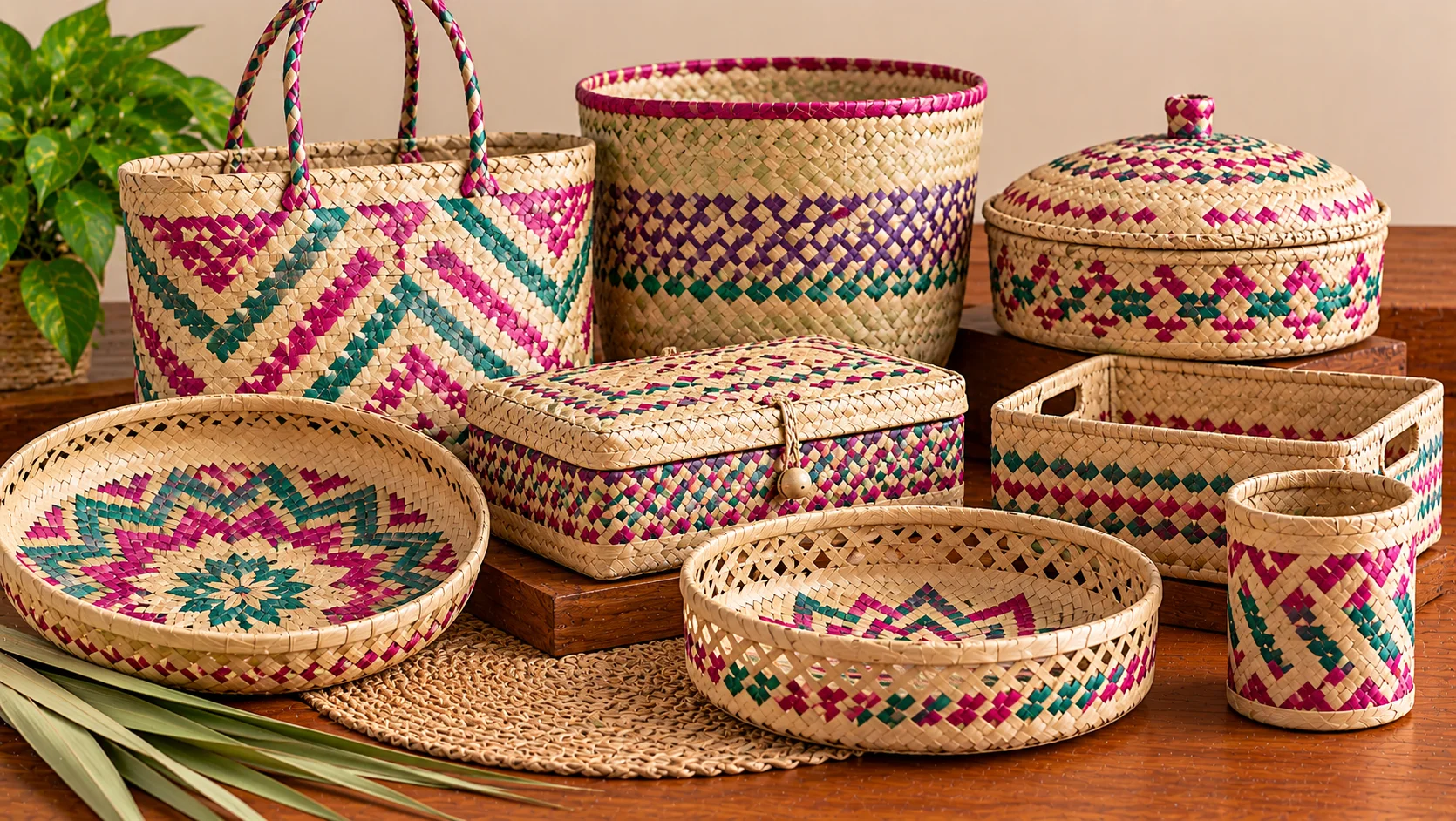
This image has been generated using AI for visual representation purposes only.
Woven baskets or small storage objects made from palm leaves. Craft references associate palm-leaf products with this coastal area, but a product page should verify the specific craft group, material and production town.
Nagore Palm-Leaf Baskets are traditional-style woven containers associated with the use of natural plant materials in everyday household and craft products. Nagore, a coastal town in Tamil Nadu's Nagapattinam district, has a distinctive cultural identity shaped by its coastal setting, religious heritage, and local trading traditions. Palm-leaf baskets can be made by weaving or plaiting prepared palm leaves into useful containers for carrying, storing, organising, and presenting items. Depending on the maker, these baskets may feature simple open-weave patterns, reinforced rims, handles, or decorative finishes. Their size and construction vary according to the intended use, the palm material available, and the skills of the craftsperson. The product description reflects the broader tradition of palm-leaf crafts in Tamil Nadu; specific local production practices in Nagore should be confirmed with individual artisans or sellers.
Palm leaves have been used across South India for a wide range of practical and cultural purposes, including manuscript preparation, mat weaving, baskets, containers, and other household objects. In communities where palm materials were readily available, craftworkers developed methods of preparing, splitting, drying, and weaving leaves into functional products. These objects were valued for their usefulness and for making use of natural materials. Palm-leaf basketry forms part of a wider craft tradition found in different parts of Tamil Nadu, although the history of a specific basket style can vary by locality. Nagore's association with these baskets should be understood as a regional product concept unless a documented local craft history or established production tradition is confirmed.
Palm-leaf basketry reflects the practical use of natural plant materials to create containers for everyday life. Across parts of Tamil Nadu, woven baskets and similar products have served household, agricultural, storage, and market-related purposes. Their construction demonstrates knowledge of preparing plant fibres and arranging them into strong, flexible structures. Such crafts can also support the continuation of handworking skills and provide alternatives to some disposable or synthetic containers. The connection between this broader craft tradition and Nagore specifically should not be assumed to establish an exclusive local heritage without further documentation.
Palm-leaf baskets are generally lightweight containers made by interlacing or plaiting prepared leaf strips. Depending on the design, they may have rounded or rectangular bases, open or close weaving, reinforced rims, integrated handles, or fitted lids. Natural variations in leaf colour and texture can give each basket an individual appearance. Basket strength and durability depend on the plant material, preparation, weaving density, shape, and quality of the rim and handle construction. Some products are left in a natural finish, while others may include dyed strips or decorative patterns. Because palm-leaf baskets are produced in different regions and from different palm species, the exact material and construction of an item marketed under the Nagore name should be confirmed with its maker or seller.
Basket production generally begins with selecting suitable palm leaves and preparing them for weaving. Depending on the material and local practice, leaves may be cleaned, dried, softened, split into strips, and trimmed to an appropriate width. The craftsperson arranges the strips to form the base, using an interlacing or plaiting pattern to establish the basket's shape. Additional strips are woven upward to form the sides, with the spacing and weave adjusted according to the intended strength and appearance. The rim is folded, plaited, or otherwise reinforced to help maintain the shape. Handles, lids, or decorative elements may be added if required. The finished basket is checked for loose strips, uneven edges, structural stability, and usability before being dried further or prepared for sale. Specific techniques vary according to the palm species, design, and craftworker.
Traditional palm-leaf basketry generally involves preparing natural leaves, splitting them into workable strips, and weaving or plaiting the strips by hand. The base is usually formed first, followed by the sides and a reinforced rim. Weaving patterns can range from simple interlacing to tighter structures intended to improve shape retention. Depending on the design, makers may add handles, lids, or decorative strips. These methods require practical knowledge of plant materials, moisture levels, flexibility, and tension during weaving. Techniques used for baskets sold in Nagore may vary, and the precise local methods should be verified with individual makers rather than assumed to be uniform throughout the region.
Nagore Palm-Leaf Baskets represent a useful natural-material product concept connected to the wider tradition of palm-leaf crafts in Tamil Nadu. Baskets made from plant materials can serve practical purposes in storage, carrying, household organisation, and presentation. Their production may provide opportunities for craftworkers and small-scale sellers, while the use of renewable plant material may appeal to buyers seeking alternatives to some synthetic products. Environmental benefits depend on how the leaves are sourced, how the basket is manufactured, how long it is used, and how it is disposed of. The product's specific local significance in Nagore requires confirmation from reliable local craft or production sources.
Made from prepared palm leaves or related plant materials, depending on the maker and product specification.
Traditional basketry techniques may include splitting, plaiting, interlacing, and reinforcing leaf strips by hand.
Suitable for carrying, storing, organising, and presenting selected household or market items.
Unpainted baskets may retain the natural colours and textures of the palm material.
Depending on the design, baskets may have round or rectangular bases, handles, reinforced rims, or lids.
Reflects the wider use of palm leaves in regional handicrafts, although specific production practices in Nagore require local verification.
Palm-leaf crafts are part of a wider tradition of using locally available plant materials for practical objects across South India. Baskets and woven containers reflect the knowledge required to prepare natural fibres and turn them into functional forms. In Tamil Nadu, such crafts connect everyday utility with handworking skills and the use of natural materials. Nagore has its own distinctive coastal and cultural heritage, but the specific relationship between the town and palm-leaf basket production should be established through local evidence. The cultural value of an individual basket may therefore depend on its maker, technique, material, and documented place of manufacture.
Palm-leaf baskets can remain usable for an extended period when kept dry and handled carefully, but their lifespan depends on the quality of the leaves, weaving, and storage conditions. Avoid prolonged exposure to rain, damp floors, and high humidity, as moisture may encourage mould or material deterioration. Store baskets in a dry, well-ventilated place and avoid crushing them under heavy objects. Clean them gently with a dry brush or cloth to remove dust. Do not soak them unless the maker confirms that the material and construction can tolerate it. Inspect the weave and rim periodically for loose or brittle strips, and avoid carrying loads beyond the basket's practical capacity.
Nagore Palm-Leaf Baskets are woven containers described as being associated with Nagore, Tamil Nadu. They may be made from prepared palm leaves using interlacing or plaiting techniques. The specific local production tradition should be confirmed with the maker or seller.
They are generally made from prepared palm leaves or split leaf strips. Depending on the design, makers may also use plant fibres, thread, dyes, or other materials for tying, decoration, and finishing.
The leaves are prepared and divided into strips, which are woven or plaited to form the base and sides. The rim is reinforced, and handles or lids may be added depending on the design.
Depending on their size and construction, they can be used for lightweight storage, carrying selected items, household organisation, gift presentation, and decorative displays.
They may offer a natural-material alternative to some synthetic containers. Their overall environmental impact depends on how the leaves are sourced, how the basket is produced, how often it is reused, and how it is disposed of.
Keep them dry, store them in a ventilated place, and remove dust with a soft brush or cloth. Avoid soaking the basket, exposing it to prolonged moisture, or placing heavy loads inside unless its construction is suitable.
Production methods may vary between sellers and makers. Ask the supplier whether the basket is fully handwoven, partly mechanised, or made using another process.
A specific Geographical Indication registration for Nagore Palm-Leaf Baskets has not been verified here. A product's association with a town or a broader craft tradition does not by itself establish GI registration.
Exclusive production in Nagore has not been verified. Palm-leaf basketry is found in different regions, so buyers who require a locally made product should confirm the maker's location and the basket's place of manufacture.
This image has been generated using AI for visual representation purposes only.
Let Karthi Travels help you plan a comfortable and memorable journey across Tamil Nadu.
Experience, Trust & Memories Built Over the Years





Your journey is in experienced hands, from planning to the final drop.

No hidden charges. Clear and upfront pricing.

Clean, inspected and well-serviced vehicles for a comfortable journey.

Professional drivers focused on safe and pleasant travel.

Dependable pickups and reliable travel service.
Travel Made Simple, Experiences Made Grand

Explore the best of each destination with our curated sightseeing tours.

Perfect for families and groups, planned with comfort, safety and flexibility in mind.

Peaceful and spiritually enriching journeys with carefully planned routes.

Personalised honeymoon tours and romantic destinations for your special journey.

Compliant and well-documented tour plans to make the most of your travel concession.
 WhatsApp Us