
Karthi Travels®
ISO 9001:2015 Certified
Namakkal, Tamil Nadu
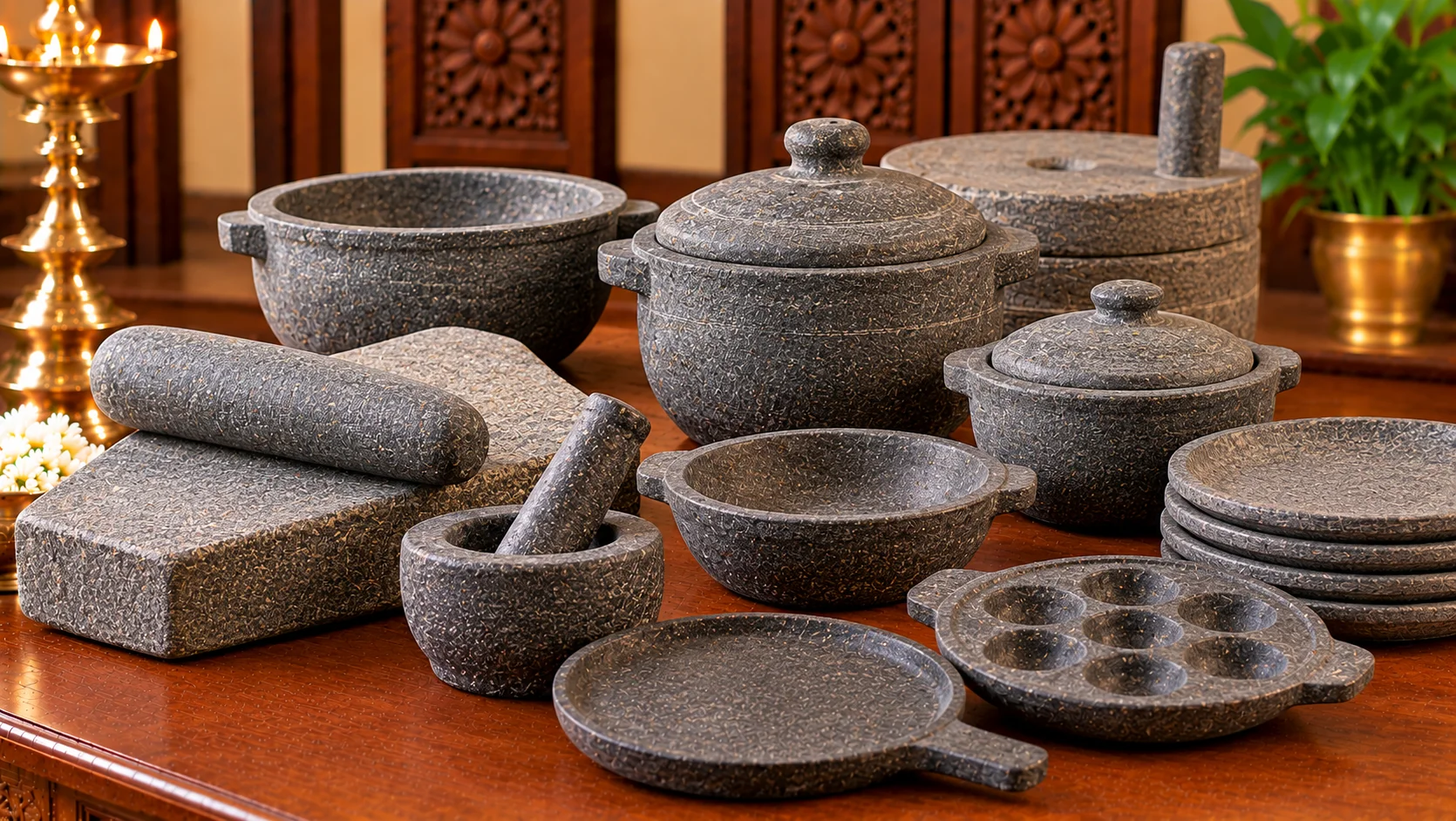
This image has been generated using AI for visual representation purposes only.
Discover traditional soapstone cookware associated with Namakkal and its skilled stone artisans.
Namakkal Maakkal Paattirangal are traditional hand‑made soapstone (steatite) cookware and related stone handicrafts associated with Namakkal town and surrounding taluks in Namakkal district, Tamil Nadu, India. The name refers to a cluster of stone vessels and household articles produced by local stone artisans using locally sourced soapstone. ()
A formal application for the geographical indication name "Namakkal Makkal Pattirangal" was filed on 22 April 2022 and the product is recorded with the Geographical Indications Registry of India as a registered handicraft entry (application number 880; certificate of registration recorded on 01 December 2025). The craft itself is rooted in long‑established local stone working traditions: local media and district reporting describe generations of families in Namakkal making soapstone cookware and small carved articles for household use, with production concentrated in rural communities such as Semmandapatti and nearby pockets where artisans have practised the craft for decades. These published accounts also document that raw soapstone for the craft has been sourced from deposits within Namakkal district and adjacent areas in Salem district. ()
The craft is an inherited, family‑based artisan practice in Namakkal district: published reporting notes that dozens to hundreds of families in and around villages such as Semmandapatti have traditionally produced soapstone vessels and small carved objects, passing skills between generations. The collective organisation named in the GI application includes the Namakkal Stone Products Manufacturers Association and supporting MSME/technology facilitation bodies, reflecting an organised local interest in protecting and recognising the traditional knowledge and workmanship. ()
Made from soapstone (steatite), Namakkal makkal pattirangal typically show a matt, rough or lightly finished surface and a porous texture rather than the high polish sometimes seen on other soapstone decorative items; this finish is associated with the functional cookware forms made for everyday kitchen use. The stone used in the region is talc‑rich (commonly described as soapstone or steatite), giving the products notable thermal mass and heat‑retention properties valued for slow cooking; local accounts emphasise the cookware’s ability to retain heat and suitability for tamarind‑based and other traditional gravies. The local raw material sources reported in coverage include deposits within Namakkal and adjoining areas of Salem district. ()
Documented stages described in public sources and the GI application process include: (1) obtaining raw soapstone blocks from local deposits in and near Namakkal district (and adjoining areas), (2) splitting and rough‑shaping the blocks into the required vessel or object size, (3) carving and hollowing the piece to shape using hand techniques (producing cookware forms such as pots, pans and plates), (4) surface finishing appropriate to the product (many functional cookware pieces retain a matt or lightly smoothed, porous surface characteristic of Namakkal work), and (5) traditional preparation/seasoning before first use (a local seasoning practice is described in contemporary reporting). Sources describing the craft and GI application emphasise that most work remains hand‑led in small rural workshops and family units. ()
A documented traditional practice for preparing newly made cookware before use is seasoning by boiling or pouring warm starch water (referred to in local reporting); artisans also use hand‑carving methods to hollow and shape the stone, and many products are left with a matt or lightly smoothed finish rather than a full polish, a feature noted in regional descriptions. ()
Namakkal soapstone vessels represent a local handicraft linked to village‑level livelihoods and household culinary traditions. The GI registration recognises the association between the product, its methods and its geographic origin, and provides formal acknowledgement of the craft’s regional identity. Local reporting since registration has also highlighted challenges for the craft such as limited or deeper raw material deposits, which affect artisans’ access to suitable soapstone. ()
The product name "Namakkal Makkal Pattirangal" is recorded with the Geographical Indications Registry of India (application number 880; Form GI‑1 filed 22 April 2022; Certificate of Registration recorded 01 December 2025). ()
Products are made from soapstone (steatite), a talc‑rich metamorphic rock noted for its thermal mass and ease of carving. ()
Local reporting documents long use of these soapstone wares in household kitchens for slow‑cooking gravies and for storing items such as curd and pickles, and notes that the craft is concentrated in small family workshops. ()
Namakkal soapstone wares are part of traditional kitchen practice in parts of Tamil Nadu; their making is an intergenerational artisan activity in specific Namakkal communities, and the GI registration was sought to recognise and protect that regional craft identity. Reporting following registration highlights both the cultural recognition the GI brings and ongoing practical concerns for artisans (notably access to appropriate raw stone). ()
They are made from soapstone (also called steatite), a talc‑rich metamorphic rock used in the Namakkal area for carving functional cookware and small carved items. ()
Production is concentrated in Namakkal district in and around rural artisan communities (reporting names villages such as Semmandapatti) and is usually carried out by families and small workshop units that have practised the craft for generations. ()
Contemporary accounts describe a traditional seasoning practice for new cookware that involves pouring or boiling warm starch water (a local practice recorded in reporting); this preparation is described as part of customary first‑use handling in the region. ()
The craft covers functional cookware (pots, pans, dosa/griddle forms, kuzhipaniyaram plates), storage jars for curd and pickles, and small carved objects such as lamps, idols and decorative figurines. ()
No. The Geographical Indications Registry records and protects a product name and its link to a geographic area and traditional practices; GI registration recognises that link but does not automatically mean every similar item sold in the wider region is certified under the GI scheme. The registered GI entry and its authorised producers define which goods are covered. ()
This image has been generated using AI for visual representation purposes only.
Let Karthi Travels help you plan a comfortable and memorable journey across Tamil Nadu.
Experience, Trust & Memories Built Over the Years





Your journey is in experienced hands, from planning to the final drop.

No hidden charges. Clear and upfront pricing.

Clean, inspected and well-serviced vehicles for a comfortable journey.

Professional drivers focused on safe and pleasant travel.

Dependable pickups and reliable travel service.
Travel Made Simple, Experiences Made Grand

Explore the best of each destination with our curated sightseeing tours.

Perfect for families and groups, planned with comfort, safety and flexibility in mind.

Peaceful and spiritually enriching journeys with carefully planned routes.

Personalised honeymoon tours and romantic destinations for your special journey.

Compliant and well-documented tour plans to make the most of your travel concession.
 WhatsApp Us