
Karthi Travels®
ISO 9001:2015 Certified
Narasinghapettai, Thanjavur, Tamil Nadu
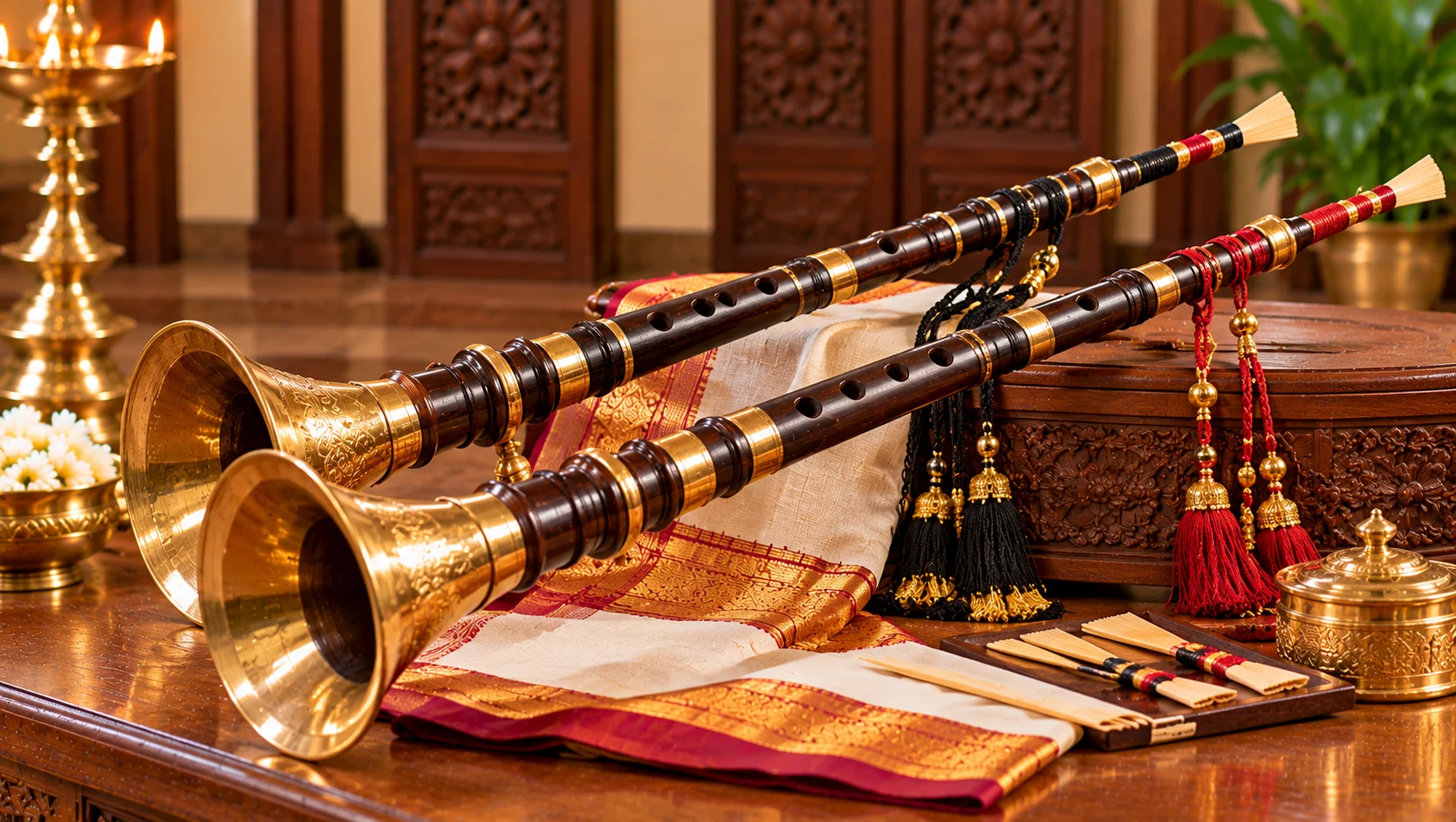
This image has been generated using AI for visual representation purposes only.
Discover Narasinghapettai Nagaswaram, a GI-registered regional product associated with Narasinghapettai, celebrated for its local heritage and traditional craftsmanship or production.
Narasinghapettai Nagaswaram is a regionally identified, GI-registered wooden double-reed wind instrument traditionally crafted in the village of Narasinghapettai (Thanjavur district), Tamil Nadu. The name as registered with the Geographical Indications Registry identifies the instrument as a handicraft musical instrument associated with the Narasinghapettai artisan community and protected under GI registration (Certificate No. 420, issued 21 January 2022). ()
The nagaswaram (also spelled nadaswaram/nadasvaram) is an established South Indian classical and temple instrument with references in historical literature; government craft documentation for the Narasinghapettai form describes the instrument’s long-standing place in temple rituals and regional music traditions and records the village of Narasinghapettai as a recognised centre for making these wooden instruments. The Narasinghapettai-specific GI application and supporting materials were filed on behalf of local instrument makers and a Thanjavur cooperative and document the community’s role in continuing the craft. ()
The Narasinghapettai Nagaswaram is traditionally associated with temple rituals, festivals and South Indian classical (Carnatic) performance contexts; the craft has been transmitted within local artisan families in Narasinghapettai and the community’s makers are named as authorised users in the GI registration documents. The instrument’s role in religious and ceremonial contexts is emphasised in government craft descriptions. ()
A wooden double-reed wind instrument with a flared bell designed for powerful acoustic projection in open courtyards and processional use. Narasinghapettai-made instruments are recorded as being carved from dense, mature hardwoods and finished with a separate mouthpiece (buffalo horn or wood) and a finely shaved bamboo reed secured for optimal vibration. Local makers preserve measuring and drilling practices for finger-hole placement and a characteristic overall shape and length (with regional forms such as the longer 'pari' distinguished from shorter types). These form and material choices are documented as relevant to resonance and projection in ceremonial settings. ()
Selection of mature, dense wood; rough shaping and hollowing of the instrument body to create a resonant bore; precise marking and drilling of finger holes; shaping and fitting of a mouthpiece (buffalo horn or wood); fabrication and shaving of a bamboo reed (kundal) which is fixed with cotton thread or similar tying material; tuning adjustments by altering hole sizes or lengths; final smoothing and polishing with natural oils or waxes for finish. Contemporary makers may combine traditional hand tools with small drilling machines for hole-making and finishing as recorded in government and press descriptions. ()
Hand-carving and hollowing of the wood using chisels and hand scrapers; manual measurement and layout for finger holes; traditional shaving and shaping of the bamboo reed; securing the reed with cotton thread or animal sinew; manual polishing with natural oils or beeswax to finish the surface. These methods are recorded alongside the careful selection of specific matured hardwoods. ()
Documented regional and cultural importance: Narasinghapettai is recognised in official GI documentation as a centre of artisanship for this nagaswaram form, and the GI registration recognises and protects the name 'Narasinghapettai Nagaswaram' as linked to the local making tradition. The instrument is used widely in temple ceremonies, festival processions and Carnatic musical settings, reflecting both musical and ceremonial value in the region. ()
Narasinghapettai Nagaswaram is registered with the Geographical Indications Registry (Application No. 467; Certificate No. 420, issued 21 January 2022) and lists local artisans and the Thanjavur Musical Instruments Workers Co-operative as applicant/authorised users. ()
Many Narasinghapettai instruments are documented as being made from dense local hardwoods; press and craft documentation specifically note use of Hardwickia binata (aacha) and sometimes reclaimed timber from old structures. ()
The instrument is documented as central to temple rituals, festival processions and classical/Carnatic performance contexts in the region, where its loud, projecting sound is valued. ()
The Narasinghapettai Nagaswaram is tied to the musical and ritual life of the Thanjavur region; local artisan families are documented as custodians of the making techniques, and the instrument is described in craft literature and press coverage as integral to temple and festival soundscapes in Tamil Nadu. The GI registration recognises this cultural linkage between the product and its place of origin. ()
It is a regionally identified wooden double-reed wind instrument traditionally made by artisans of Narasinghapettai in Thanjavur district, Tamil Nadu, recognised as a GI-registered handicraft musical instrument. ()
The Geographical Indications Registry issued Certificate No. 420 for Narasinghapettai Nagaswaram on 21 January 2022; the application was filed on 31 January 2014. ()
Documented principal materials include dense matured hardwoods (reported examples include Hardwickia binata (aacha), tamarind, jackfruit and occasionally rosewood), a buffalo-horn or wooden mouthpiece, and a shaved bamboo reed. ()
The GI application was filed by the Thanjavur Musical Instruments Workers Co-operative Cottage Industrial Society Limited representing local instrument makers; the registry record lists named authorised users from Narasinghapettai. ()
Government craft descriptions and press reporting highlight local material choices, specific shaping and finishing practices, and locally transmitted measurement and hole-placement methods; regional forms such as the longer 'pari' are also distinguished in reporting. ()
This image has been generated using AI for visual representation purposes only.
Let Karthi Travels help you plan a comfortable and memorable journey across Tamil Nadu.
Experience, Trust & Memories Built Over the Years





Your journey is in experienced hands, from planning to the final drop.

No hidden charges. Clear and upfront pricing.

Clean, inspected and well-serviced vehicles for a comfortable journey.

Professional drivers focused on safe and pleasant travel.

Dependable pickups and reliable travel service.
Travel Made Simple, Experiences Made Grand

Explore the best of each destination with our curated sightseeing tours.

Perfect for families and groups, planned with comfort, safety and flexibility in mind.

Peaceful and spiritually enriching journeys with carefully planned routes.

Personalised honeymoon tours and romantic destinations for your special journey.

Compliant and well-documented tour plans to make the most of your travel concession.
 WhatsApp Us