
Karthi Travels®
ISO 9001:2015 Certified
Negamam, Coimbatore, Tamil Nadu
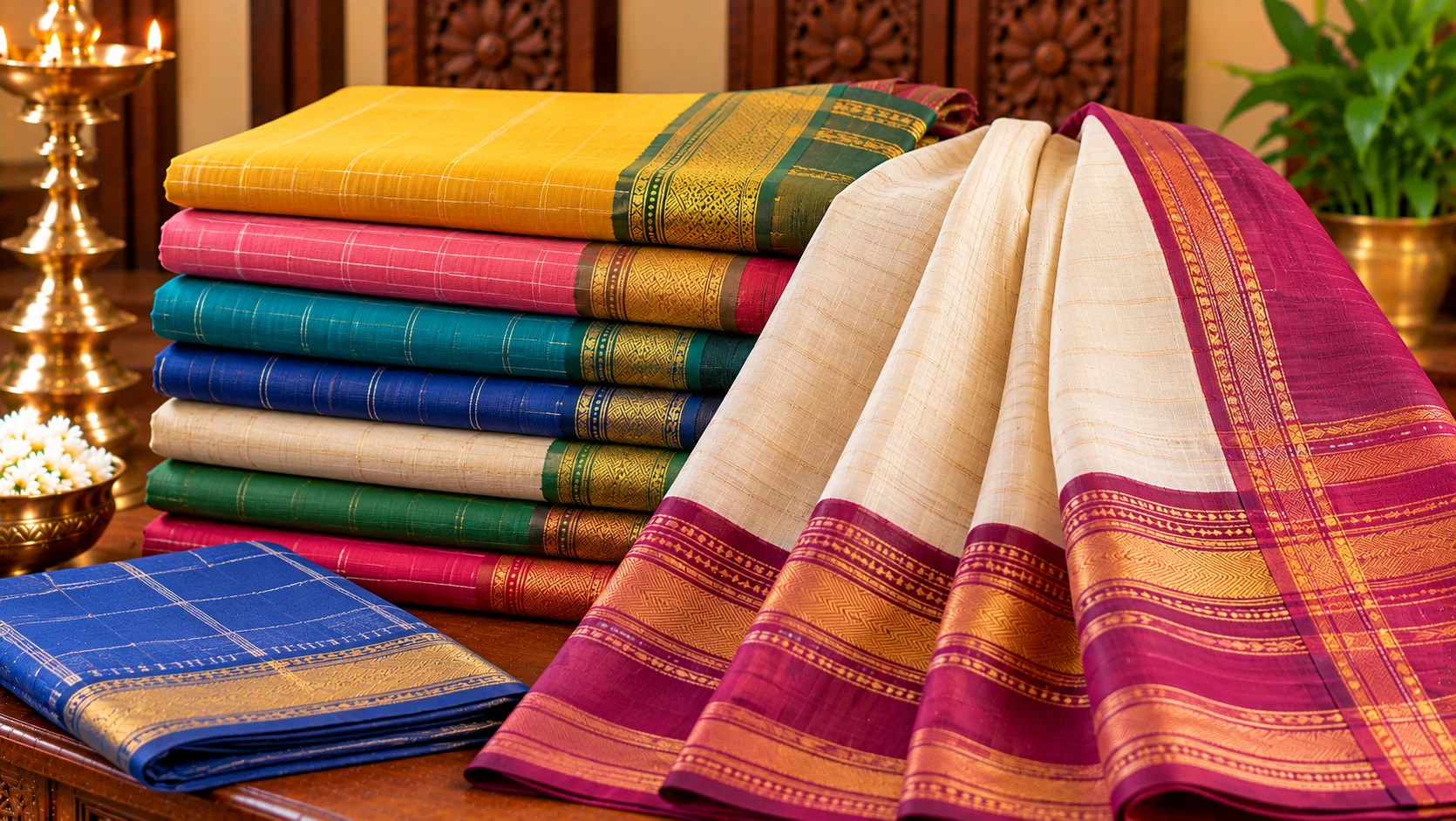
This image has been generated using AI for visual representation purposes only.
Discover Negamam Cotton Saree, a GI-registered regional product associated with Negamam, celebrated for its local heritage and traditional craftsmanship or production.
Negamam Cotton Saree is a GI-registered handwoven cotton saree traditionally produced in and around Negamam in Pollachi taluk, Coimbatore district, Tamil Nadu, India. It is a regionally identified handloom textile valued for a lightweight, breathable body and restrained, narrow-border designs associated with the local weaving clusters. ()
Documented records show a community handloom tradition centered on Negamam (Periya Negamam/Negamam cluster) in Coimbatore district; weavers from local artisan communities (including members of the Devanga weaving community) produced cotton sarees suited to the local climate and market for everyday clothing. Multiple cooperative societies and primary handloom weaver societies from the Negamam–Pollachi–Kinathukadavu area were party to the GI application. The Geographical Indications Registry records the application (No. 766) and certificate (No. 471) and shows the product as registered on 31 March 2023, following a filing dated 29 June 2021. The GI registration recognises the saree’s link to Tamil Nadu and records a group of authorised users drawn from local primary handloom cooperatives and the Tamil Nadu Handloom Weavers Co-operative Society (Co-optex). ()
Negamam saree production is an inherited handloom skill practiced by local weaving households and cooperative societies in and around Negamam. The craft has been associated with customary weaving communities (documented references include the Devanga community) and local primary handloom cooperatives that coordinate production inputs and marketing. The GI application and authorised-user list record multiple village-level primary weavers’ co‑operatives as registered users. ()
Negamam cotton sarees are characterised by a lightweight but medium-bodied hand, an airy and smooth weave, narrow or understated borders, and restrained colour palettes or subtle contrasts. Technically, traditional pieces use relatively fine cotton yarn in both warp and weft (documented use of 80’s count yarn) and a high number of picks per inch (reported as about 86–90 picks per inch), producing a fabric that balances strength and breathability. Lengths commonly reported for the traditional saree fall in the range of approximately 7.3–8.2 metres. Weaving is carried out on pit looms; extra-weft patterns are produced where required using dobby or jacquard attachments. ()
Key documented stages are: preparation and procurement of fine cotton yarn (80's count reported for warp and weft); warping and shuttle/pirn preparation; setting up the warp on a pit loom; weaving the body and border with attention to pick density (high picks per inch reported); production of extra‑weft motifs or embossed patterns where required using dobby or jacquard attachments on the loom; measuring and finishing the saree to traditional lengths (commonly 7.3–8.2 m). The process is carried out at village/household looms and in small cooperative production clusters. ()
Traditional methods documented for Negamam sarees include handloom/pit-loom weaving, use of fine cotton yarn counts (80's), high pick-density weaving, and the use of dobby or jacquard attachments on handlooms to create extra‑weft patterned or embossed effects. The craft has been transmitted within local weaving households and implemented through village-level cooperative societies. ()
Negamam Cotton Saree represents a documented regional handloom tradition of Coimbatore district that adapts textile structure and weave to a warm, humid climate. The GI registration recognises this link between a textile form and place, and local cooperative structures feature in the formal record as authorised users. The saree contributes to the cultural and economic fabric of the Negamam weaving clusters, sustaining handloom skills and local artisan identity. ()
Negamam Cotton Saree is a registered Geographical Indication (Application No. 766). The IP India record shows the certificate (No. 471) issued on 31 March 2023 and lists Tamil Nadu as the geographical area with multiple authorised primary handloom cooperatives. ()
Scholarly and industry sources report the traditional use of 80's count cotton yarn in both warp and weft, a high pick density (about 86–90 picks per inch), and typical saree lengths of roughly 7.3–8.2 metres—features that shape the saree's lightweight yet stable hand. ()
Weaving is documented on pit looms; where decorative patterns are required, dobby or jacquard attachments are used to create extra‑weft motifs or embossed effects within the traditional handloom workflow. ()
Negamam sarees are tied to the local weaving community identity (including documented association with the Devanga community) and to the region’s handloom heritage. The saree form is part of routine dress practices in the area and represents an artisanal tradition maintained through household looms and cooperatives. ()
Yes. The IP India Geographical Indications registry lists Negamam Cotton Saree (Application No. 766) as registered; the registration certificate (No. 471) is dated 31 March 2023. ()
It is produced in and around Negamam (Periya Negamam and nearby weaving villages) in Pollachi taluk, Coimbatore district, in the state of Tamil Nadu, India. The GI record names Tamil Nadu as the geographical area. ()
Documented specifications note the use of fine cotton yarn (reported as 80's count for both warp and weft), a relatively high pick density (about 86–90 picks per inch), a medium-bodied yet lightweight hand, and typical saree lengths around 7.3–8.2 metres. Weaving is carried out on pit looms; extra‑weft patterns are added using dobby or jacquard attachments where required. ()
The craft has been historically practised by local weaving communities (references include the Devanga community) and is represented in the GI record by a number of primary handloom weaver cooperative societies. Tamil Nadu Handloom Weavers Co‑operative Society (Co-optex) also appears among authorised users in the GI record. ()
The GI registry entry for Negamam Cotton Saree includes a certificate number and a GI logo; the registry also lists multiple authorised user societies that were included in the application record. These are part of the formal GI documentation maintained by the Geographical Indications Registry (IP India). ()
This image has been generated using AI for visual representation purposes only.
Let Karthi Travels help you plan a comfortable and memorable journey across Tamil Nadu.
Experience, Trust & Memories Built Over the Years





Your journey is in experienced hands, from planning to the final drop.

No hidden charges. Clear and upfront pricing.

Clean, inspected and well-serviced vehicles for a comfortable journey.

Professional drivers focused on safe and pleasant travel.

Dependable pickups and reliable travel service.
Travel Made Simple, Experiences Made Grand

Explore the best of each destination with our curated sightseeing tours.

Perfect for families and groups, planned with comfort, safety and flexibility in mind.

Peaceful and spiritually enriching journeys with carefully planned routes.

Personalised honeymoon tours and romantic destinations for your special journey.

Compliant and well-documented tour plans to make the most of your travel concession.
 WhatsApp Us