
Karthi Travels®
ISO 9001:2015 Certified
The Nilgiris district, Tamil Nadu, The Nilgiris
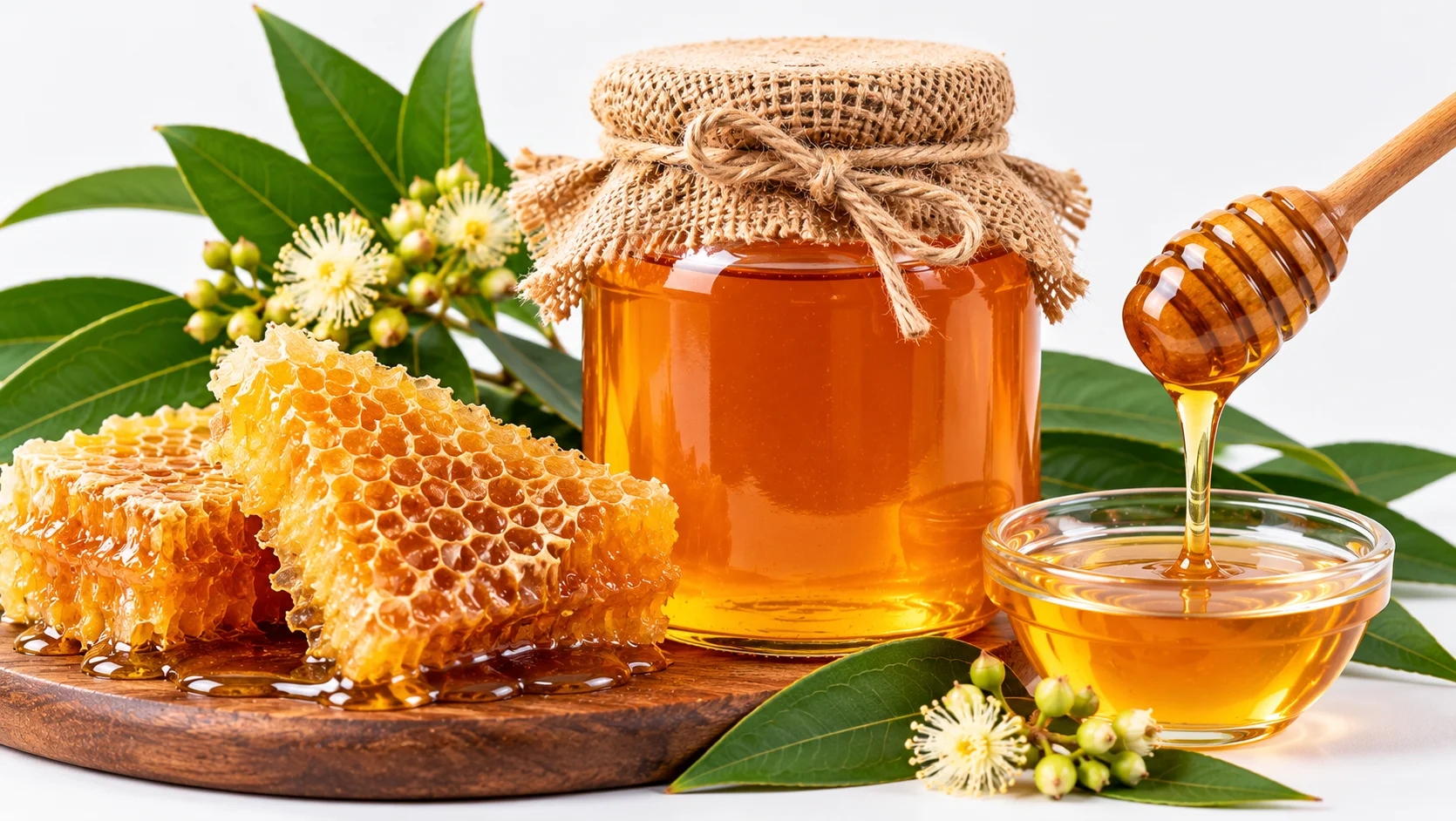
This image has been generated using AI for visual representation purposes only.
A honey product candidate for research into documented regional beekeeping and forest-honey traditions.
Nilgiris Forest Honey is honey associated with the forested landscapes of The Nilgiris district in Tamil Nadu. Forest honey is produced by honeybees that collect nectar from flowering plants and trees growing in natural or relatively undisturbed landscapes. Its colour, aroma, flavour and consistency depend on the plants visited by the bees, the season, the bee species and the conditions under which the honey is harvested and stored. The Nilgiris, part of the Western Ghats, supports diverse vegetation and habitats that provide forage for a range of pollinating insects. Honey gathered in forest and adjoining rural landscapes may reflect this botanical diversity, although its precise floral composition varies between batches. Nilgiris Forest Honey is commonly marketed as a natural sweetener and regional food product. The term describes a product associated with the district's forest environment, but the actual harvesting location, floral source and processing method should be verified with the producer.
Honey collection has a long history in the forest and hill regions of southern India. Indigenous and other forest-dependent communities have traditionally gathered honey from wild bee colonies, using knowledge of seasonal flowering, bee behaviour and local terrain. Honey has served as food, a sweetener and a trade product, while bees contribute to pollination and the reproduction of flowering plants. The Nilgiris forms part of the biodiverse Western Ghats, where forest ecosystems and surrounding landscapes support different bee species and flowering plants. However, a distinct historical account establishing when a product specifically named Nilgiris Forest Honey originated has not been independently verified. Its background is best understood within the broader traditions of honey gathering and beekeeping in the Nilgiris and southern India.
Honey is valued in many Indian food traditions as a sweetener and ingredient in household preparations. In forest and hill communities, honey gathering can also form part of traditional ecological knowledge, including an understanding of bee behaviour, flowering seasons and safe collection practices. The Nilgiris' diverse landscapes provide a regional setting for honey production and collection. Forest honey associated with the district connects local food markets with pollinator activity and the surrounding environment. The specific cultural practices associated with any particular Nilgiris honey product depend on the community and producer and should not be assumed without evidence.
Nilgiris Forest Honey may vary from light amber to darker brown, with a flavour ranging from mild and floral to strong and earthy. These differences depend on the flowers visited by the bees, the season, the proportion of nectar from different plants and the handling of the harvested honey. Its consistency can range from relatively fluid to thicker or crystallised over time. Crystallisation is a natural process in many honeys and does not automatically mean that the product has spoiled. The term forest honey does not guarantee a single botanical source, a particular nutrient profile or a specific level of purity. Product quality depends on harvesting hygiene, moisture content, storage, processing and protection against contamination. Buyers should look for clear producer details and reliable food-safety information.
Honeybees collect nectar from flowering plants and transport it to the hive or nest, where it is processed through enzymatic activity and moisture reduction. As the nectar matures, its water content decreases and it develops into honey. Depending on the production method, honey may be harvested from managed beehives or collected from wild colonies by trained collectors. The honey is removed from the comb using a suitable extraction method. It may then be strained or filtered to remove wax fragments and other visible material, with the degree of filtration varying by producer. The harvested honey is placed in clean, food-grade containers and stored under appropriate conditions. Responsible collection avoids unnecessary damage to bee colonies and surrounding habitats. The precise harvesting and processing practices for Nilgiris Forest Honey depend on the individual producer.
Traditional honey collection in forest and hill landscapes relies on knowledge of bee behaviour, flowering seasons and local terrain. Collectors identify active colonies and assess suitable collection conditions. Where wild honey is gathered, careful handling is important to reduce risks to collectors and minimise disturbance to the colony and habitat. Honey is separated from the comb and transferred to suitable containers. In managed beekeeping, colonies are maintained in hives and honey is extracted when the combs are ready for harvesting. Both approaches can produce honey, but their methods, environmental impacts and traceability differ. These are general honey-collection practices and should not be taken as proof that every product sold as Nilgiris Forest Honey is wild-harvested or produced by a particular traditional method.
Nilgiris Forest Honey connects a familiar natural sweetener with the biodiversity and agricultural landscape of The Nilgiris. Honey production depends on the relationship between flowering plants, bees and the surrounding environment. Responsible honey collection and beekeeping can provide income for producers and encourage interest in pollinator habitats. Honey is used in household cooking, beverages and selected food preparations, while its distinctive flavour can make it attractive as a regional product. The name Nilgiris Forest Honey communicates a regional association, but the actual source, production method and floral composition should be confirmed through the producer's information.
The product is linked with The Nilgiris district in the biodiverse Western Ghats of Tamil Nadu.
Honey is produced by bees from floral nectar through enzymatic processing and moisture reduction.
The aroma, colour and flavour can change according to flowering plants, season and harvesting location.
Honey can be used to sweeten beverages, accompany breakfast foods and prepare selected desserts and recipes.
Honey production depends on healthy bee populations and flowering plants within the surrounding landscape.
The harvesting location, production method and floral source should be confirmed with the seller rather than inferred from the product name.
Honey has been used as food and a sweetener across India for generations. In forested and hilly regions, honey gathering can be connected with knowledge of local plants, seasonal flowering and bee behaviour. The Nilgiris' varied habitats provide a natural context for pollinator activity and honey production. Forest honey associated with the district represents a link between local food products and the surrounding landscape. However, the cultural significance and harvesting traditions of a particular batch depend on its actual producer and source community, and should not be generalised without verification.
Store honey in a clean, dry, tightly sealed food-grade container at room temperature, away from direct sunlight, excessive heat and moisture. Always use a clean, dry spoon to avoid introducing water or food particles. Honey may crystallise naturally during storage; crystallisation alone does not indicate spoilage. Follow the manufacturer's storage instructions and best-before date, especially for commercial products. Honey should never be given to children under 12 months of age because it can contain spores that cause infant botulism. Buyers should also check packaging for ingredient declarations, producer details and food-safety information.
Nilgiris Forest Honey is honey associated with The Nilgiris district of Tamil Nadu. Its colour, flavour and composition depend on the floral sources visited by bees and the way the honey is harvested and handled.
Bees collect nectar from flowers and process it inside their hive or nest by adding enzymes and reducing its moisture content. Mature honey is then harvested, strained or filtered as appropriate and packed.
Not necessarily. The term forest honey may describe honey collected from wild colonies or honey produced by managed bees near forested areas. The actual collection method should be confirmed with the producer.
Honey varies according to the flowers visited by bees, the season, the mixture of nectar sources and handling practices. These factors can produce differences in colour, aroma, taste and consistency.
No. Crystallisation is a natural process in many honeys and does not automatically mean the honey has spoiled. Follow the manufacturer's guidance and check for unusual odours, contamination or other signs of deterioration.
Keep it in a clean, dry, tightly sealed container at room temperature, away from moisture, excessive heat and direct sunlight. Use a clean, dry spoon when serving.
No. Honey should not be given to children under 12 months of age because it can contain spores that cause infant botulism.
Check the producer's address, stated harvesting or processing location, batch information and any available traceability details. The name Nilgiris Forest Honey alone does not prove that the honey was harvested or processed within the district.
A specific GI registration for Nilgiris Forest Honey has not been verified. Its regional association alone does not establish GI registration.
This image has been generated using AI for visual representation purposes only.
Let Karthi Travels help you plan a comfortable and memorable journey across Tamil Nadu.
Experience, Trust & Memories Built Over the Years





Your journey is in experienced hands, from planning to the final drop.

No hidden charges. Clear and upfront pricing.

Clean, inspected and well-serviced vehicles for a comfortable journey.

Professional drivers focused on safe and pleasant travel.

Dependable pickups and reliable travel service.
Travel Made Simple, Experiences Made Grand

Explore the best of each destination with our curated sightseeing tours.

Perfect for families and groups, planned with comfort, safety and flexibility in mind.

Peaceful and spiritually enriching journeys with carefully planned routes.

Personalised honeymoon tours and romantic destinations for your special journey.

Compliant and well-documented tour plans to make the most of your travel concession.
 WhatsApp Us