
Karthi Travels®
ISO 9001:2015 Certified
Palamedu, Madurai district, Tamil Nadu, Madurai
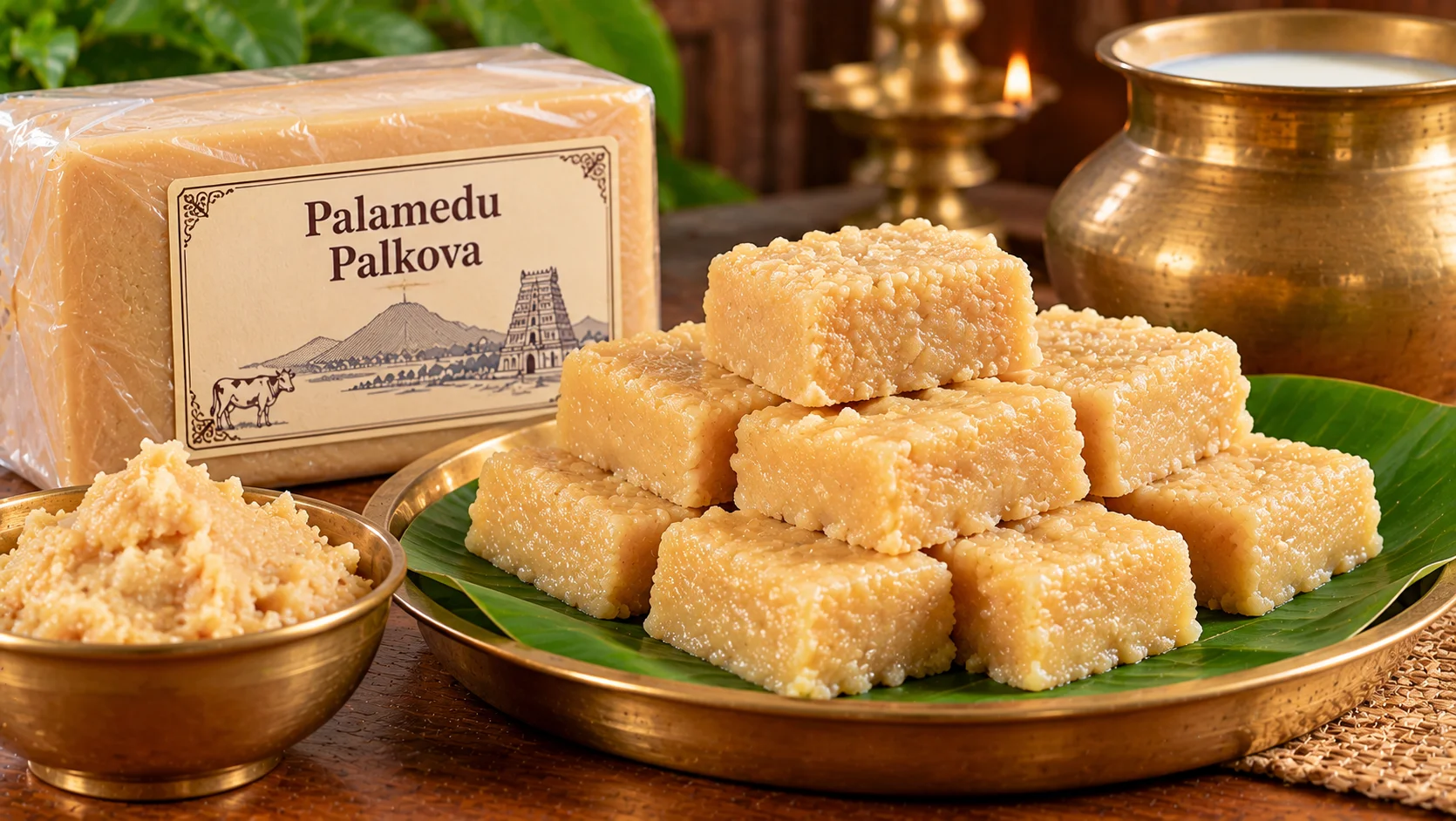
This image has been generated using AI for visual representation purposes only.
A traditional milk-based sweet associated with Palamedu in Madurai district.
Palamedu Palkova is a traditional milk-based sweet associated with Palamedu in Madurai district, Tamil Nadu. Palkova, also known as paalkova or palkova, is prepared by slowly heating milk and stirring it continuously until much of its water evaporates and the milk solids become thick and concentrated. Sugar is added to create a rich, creamy sweet with a characteristic caramelised milk flavour. Depending on the recipe, the finished palkova may be soft and moist or firm enough to hold its shape. Palamedu is a rural settlement near Madurai known for its agricultural surroundings and its association with the region's dairy-based food culture. While palkova is made in several parts of Tamil Nadu, this product represents a regional sweet associated with Palamedu. The exact history of a distinctive Palamedu-specific palkova tradition requires further local verification.
Milk-based sweets have a long history in Tamil Nadu, where milk, curd, ghee and other dairy products have traditionally been used in household cooking, festive foods and offerings. Palkova developed as a way of concentrating milk through prolonged heating, producing a sweet with a dense texture and rich flavour. The preparation requires patience because the milk must be heated gradually and stirred to prevent scorching. Across Tamil Nadu, palkova is produced by sweet makers, dairy businesses and household cooks, with regional variations in sweetness, texture and finishing. Palamedu's association with this sweet fits within the wider dairy and confectionery traditions of the Madurai region. However, a specific historical account establishing when palkova production began in Palamedu has not been independently verified.
Palkova is part of Tamil Nadu's wider tradition of preparing sweets from milk and other dairy products. Milk is slowly reduced to concentrate its solids, creating a rich sweet that can be served to guests, shared during family celebrations or purchased from local sweet shops. Dairy-based sweets are commonly associated with hospitality, festivals and special occasions across the state. Palamedu Palkova reflects this broader culinary tradition in a local regional context. Its specific significance within Palamedu's community customs or festival practices has not been independently documented.
Palkova is distinguished by its concentrated milk flavour, creamy consistency and characteristic sweetness. Slow heating gives the milk solids a dense texture and can create gentle caramelised notes. Depending on the recipe and cooking time, the sweet may be moist and soft, slightly grainy or firm enough to cut into portions. A simple traditional preparation generally uses milk and sugar, although recipes and commercial products may include additional ingredients. Colour can range from pale cream to light golden or deeper beige according to the milk, cooking duration and degree of caramelisation. These characteristics describe palkova generally; no exclusive texture, ingredient ratio or manufacturing method unique to Palamedu has been verified.
Fresh milk is poured into a wide, heavy-bottomed vessel and heated gradually. The milk is stirred frequently to prevent sticking or scorching, while evaporation slowly reduces its volume. As the water content decreases, the milk solids become increasingly concentrated and the mixture thickens. Sugar is added according to the recipe, and cooking continues with careful stirring until the desired consistency and flavour develop. The mixture is removed from the heat when it reaches the required texture. It is then cooled and portioned into containers or serving pieces. Commercial producers may use larger vessels, controlled heating equipment and batch-processing methods, while smaller sweet makers may follow traditional open-pan preparation. Exact methods and ingredient ratios vary between producers.
Traditional palkova preparation relies on slowly reducing milk over heat while stirring continuously or at frequent intervals. A broad, heavy-bottomed vessel helps distribute heat and allows moisture to evaporate. The cook monitors the mixture as it thickens, adjusting the heat and stirring more frequently to avoid scorching. Sugar is incorporated during the cooking process according to the recipe. The mixture is taken off the heat when the milk solids reach the desired consistency. This general method is used for palkova across Tamil Nadu and is not documented as an exclusive technique of Palamedu.
Palamedu Palkova represents the appeal of traditional dairy sweets in the Madurai region. Its preparation transforms fresh milk into a concentrated confection that can be enjoyed as a dessert, shared with visitors or given as a food gift. The product can support local sweet shops, dairy suppliers and small-scale confectionery businesses when it is produced and sold locally. Its regional identity is linked to Palamedu, while its ingredients and preparation reflect a wider Tamil culinary tradition. The precise local history and scale of palkova production in Palamedu should be confirmed with individual producers.
Prepared by slowly reducing milk to create a dense, rich confection with a characteristic dairy flavour.
Presented as a regional sweet associated with Palamedu in Madurai district, Tamil Nadu.
The consistency can range from soft and moist to firm, depending on the cooking time and recipe.
Traditional palkova is generally made with milk and sugar, with optional flavourings used in some variations.
Gradual evaporation concentrates the milk solids and develops the sweet's characteristic flavour.
Palkova is commonly enjoyed as a dessert and can be purchased for family visits, celebrations and food gifts.
Milk-based sweets occupy an important place in Tamil Nadu's food culture, where dairy products are used in everyday cooking, festive preparations and hospitality. Palkova is valued for its rich taste and the skill required to reduce milk to the correct consistency without scorching it. It is commonly shared during family gatherings and special occasions, although customs vary between households and communities. Palamedu Palkova connects this wider culinary tradition with the local identity of Palamedu and the Madurai region. A distinct ritual or festival practice specific to Palamedu Palkova has not been verified.
Palkova is a dairy-based sweet and can spoil if handled or stored improperly. Its shelf life depends on the recipe, moisture content, packaging, hygiene and storage temperature. Follow the manufacturer's storage instructions and use-by date. Fresh palkova generally requires refrigeration and should not be left at room temperature for extended periods, especially in warm weather. Keep it in a clean, airtight container and use a clean, dry utensil when serving. Discard the product if it develops an unusual smell, visible mould, unexpected discoloration or other signs of spoilage. For commercially packaged products, check whether refrigeration is required before opening and after opening.
Palamedu Palkova is a milk-based sweet associated with Palamedu in Madurai district, Tamil Nadu. Palkova is prepared by slowly reducing milk and adding sugar to produce a rich, concentrated confection.
Palamedu is a town in Madurai district in southern Tamil Nadu, India.
Traditional palkova is generally made with milk and sugar. Some recipes include cardamom, ghee or nuts, depending on the producer and the desired variation.
Milk is heated slowly while being stirred so that water evaporates and the milk solids become concentrated. Sugar is added according to the recipe, and cooking continues until the desired thickness and flavour are achieved.
Palkova typically has a rich milk flavour and pronounced sweetness, with a creamy or slightly grainy texture. Longer cooking may create gentle caramelised notes. The exact flavour depends on the recipe and preparation.
A historical record establishing Palamedu as the exclusive birthplace of palkova has not been verified. Palkova is made in several parts of Tamil Nadu, and the Palamedu name is used here to identify a regional product association.
Follow the manufacturer's instructions and use-by date. Fresh dairy-based palkova generally requires refrigeration, should be kept in a clean airtight container and should not be left unrefrigerated for extended periods.
Yes. It can be purchased as a regional food gift for family visits, celebrations and other occasions. Choose properly packaged products and check storage requirements and shelf life before travelling with them.
A specific GI registration for Palamedu Palkova has not been verified. Its association with Palamedu should not be treated as proof of GI registration.
This image has been generated using AI for visual representation purposes only.
Let Karthi Travels help you plan a comfortable and memorable journey across Tamil Nadu.
Experience, Trust & Memories Built Over the Years





Your journey is in experienced hands, from planning to the final drop.

No hidden charges. Clear and upfront pricing.

Clean, inspected and well-serviced vehicles for a comfortable journey.

Professional drivers focused on safe and pleasant travel.

Dependable pickups and reliable travel service.
Travel Made Simple, Experiences Made Grand

Explore the best of each destination with our curated sightseeing tours.

Perfect for families and groups, planned with comfort, safety and flexibility in mind.

Peaceful and spiritually enriching journeys with carefully planned routes.

Personalised honeymoon tours and romantic destinations for your special journey.

Compliant and well-documented tour plans to make the most of your travel concession.
 WhatsApp Us