
Karthi Travels®
ISO 9001:2015 Certified
Papanasam / Ambasamudram area, Tirunelveli
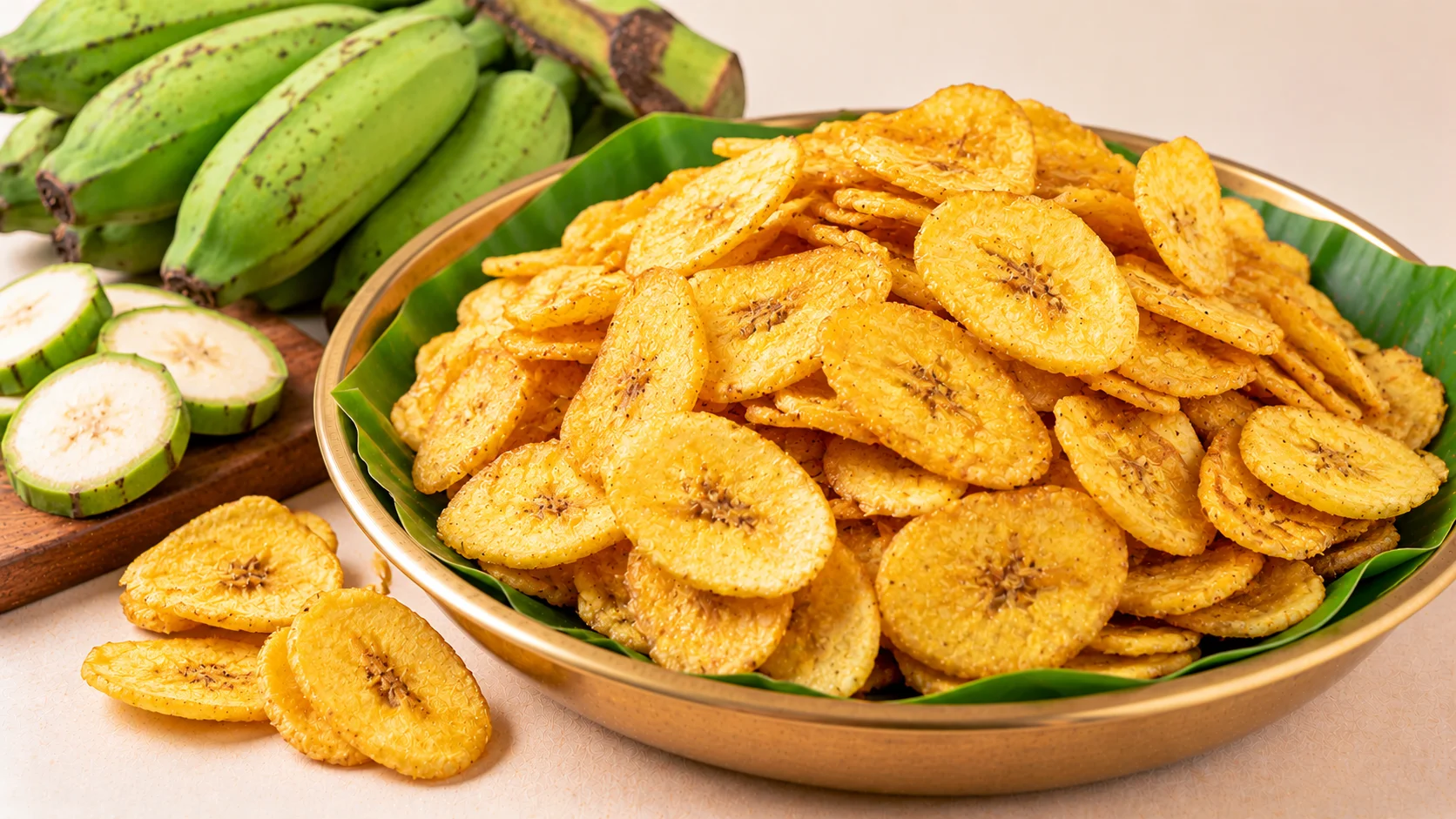
This image has been generated using AI for visual representation purposes only.
Packaged banana chips sold in the Tamiraparani region. Confirm whether bananas are sourced and processed locally; record oil, seasoning, allergens and shelf life from the product label.
Papanasam Banana Chips are traditional-style banana chips associated with Papanasam and the surrounding Ambasamudram area in southern Tamil Nadu. Prepared by slicing bananas or plantains into thin pieces and deep-frying them until crisp, they are enjoyed as a savoury snack with tea or coffee. Depending on the recipe, the chips may be made from firm, unripe bananas and seasoned with salt or other spices. Banana cultivation is an established part of the agricultural landscape around Ambasamudram, providing a regional context for banana-based food products. The exact ingredients and preparation methods vary between households and producers.
Bananas have long been cultivated and used in food preparations across southern India. Agricultural records identify banana cultivation in the Ambasamudram area, where irrigated farming supports a range of crops. Frying sliced bananas to make crisp snacks is part of the wider South Indian culinary tradition, particularly in Tamil Nadu and neighbouring Kerala. Papanasam is also known as a destination in the foothills of the Western Ghats, attracting visitors to its river, waterfalls, and temple. However, a specific historical account documenting when Papanasam Banana Chips first originated, or identifying an individual inventor, could not be firmly established.
Banana chips are a familiar snack across southern India and are commonly served with tea or coffee, shared with visitors, and carried during journeys. In the Papanasam and Ambasamudram area, they form part of the wider regional snack tradition alongside other savoury foods. Their connection with the locality is supported by the area's banana-growing agricultural context, although a unique ritual or ceremonial role for Papanasam Banana Chips specifically could not be established.
Papanasam Banana Chips are characterised by thin banana or plantain slices fried until crisp. Depending on the variety used and the frying method, the finished chips may range from pale golden to deeper golden in colour. Plain versions commonly feature a simple salty flavour, while other recipes may include chilli or additional seasonings. The choice of banana variety, frying oil, slice thickness, and seasoning can differ between makers. No single standardised recipe or documented technical specification has been established for chips sold under this regional name.
Firm bananas or plantains are selected, washed, and peeled. The edible portion is sliced into thin, even rounds using a knife or slicer. Depending on the recipe, the slices may be seasoned or briefly treated before frying. They are added in batches to hot cooking oil and fried until crisp, with the cooking time adjusted to suit the thickness and moisture content of the slices. The chips are removed from the oil and drained. Salt or other seasonings may be added while they are warm. Once fully cooled, the chips are placed in clean, dry, airtight packaging to help retain their crispness. Preparation details vary by producer.
Traditional-style banana-chip preparation involves selecting suitable bananas, peeling them, and slicing them thinly by hand or with a simple slicing tool. The slices are deep-fried in hot oil until their moisture is reduced and they become crisp. Makers judge readiness by the colour and texture of the chips. Salt is a common basic seasoning, while some versions include chilli or other spices. The finished chips are drained and allowed to cool before being stored in a dry container.
Papanasam Banana Chips represent a familiar South Indian snack tradition associated with the Papanasam and Ambasamudram area. The region's agricultural records document banana cultivation, providing a relevant connection between local farming and banana-based food preparations. The chips are convenient to serve, easy to share, and commonly enjoyed as an everyday snack. Their regional identity is based on the stated locality and wider food culture rather than a verified unique recipe or registered geographical designation.
The product is associated with Papanasam and the surrounding Ambasamudram area of Tirunelveli district in southern Tamil Nadu.
Banana cultivation is documented in the Ambasamudram agricultural area, providing a regional context for banana-based snacks.
Thin slicing and deep-frying produce the characteristic crunch of banana chips.
Basic versions generally use salt, while some recipes include chilli or other seasonings.
Banana chips are commonly enjoyed with tea or coffee, shared with visitors, and carried during journeys.
The chips form part of the wider savoury-snack culture of southern Tamil Nadu.
Papanasam and Ambasamudram are part of the wider food and agricultural landscape of Tirunelveli district. Banana cultivation is an established local agricultural activity, while banana chips belong to a broader South Indian tradition of making crisp snacks from plantains. These snacks are part of everyday hospitality and informal food sharing. Although banana chips are popular across many neighbouring regions, a distinct religious, ritual, or festival-specific association unique to Papanasam Banana Chips could not be firmly verified.
The shelf life of banana chips depends on the banana variety, moisture remaining after frying, oil quality, packaging, and storage conditions. Allow the chips to cool completely before placing them in a clean, dry, airtight container. Store them away from humidity, heat, and direct sunlight to help preserve their crispness. Avoid introducing moisture with wet hands or utensils. For commercially packaged chips, follow the manufacturer's storage instructions and best-before date. Discard chips that develop an unusual smell, mould, or other signs of spoilage. No single shelf-life period can be specified for every homemade or commercial version.
Papanasam Banana Chips are crispy banana or plantain snacks associated with Papanasam and the Ambasamudram area of Tirunelveli district, Tamil Nadu. They are made by slicing bananas thinly and frying them until crisp.
Papanasam is in the Ambasamudram area of Tirunelveli district, Tamil Nadu, near the foothills of the Western Ghats.
Firm, unripe bananas or plantains are commonly used because they can be sliced and fried into crisp chips. The exact variety depends on the producer.
The choice of oil varies by recipe and producer. Groundnut oil and coconut oil are among the oils used for banana chips in South Indian preparations.
Plain versions are generally salted and savoury. Some producers may offer chilli-flavoured, pepper-seasoned, or other spiced varieties.
A registered Geographical Indication status specifically for Papanasam Banana Chips could not be verified from the available research. They should not be described as a registered GI product without confirmation from the official GI Registry.
Allow the chips to cool completely, then keep them in a clean, dry, airtight container away from humidity and direct sunlight. Follow the manufacturer's storage instructions for packaged products.
This image has been generated using AI for visual representation purposes only.
Let Karthi Travels help you plan a comfortable and memorable journey across Tamil Nadu.
Experience, Trust & Memories Built Over the Years





Your journey is in experienced hands, from planning to the final drop.

No hidden charges. Clear and upfront pricing.

Clean, inspected and well-serviced vehicles for a comfortable journey.

Professional drivers focused on safe and pleasant travel.

Dependable pickups and reliable travel service.
Travel Made Simple, Experiences Made Grand

Explore the best of each destination with our curated sightseeing tours.

Perfect for families and groups, planned with comfort, safety and flexibility in mind.

Peaceful and spiritually enriching journeys with carefully planned routes.

Personalised honeymoon tours and romantic destinations for your special journey.

Compliant and well-documented tour plans to make the most of your travel concession.
 WhatsApp Us