
Karthi Travels®
ISO 9001:2015 Certified
Puducherry region, Puducherry
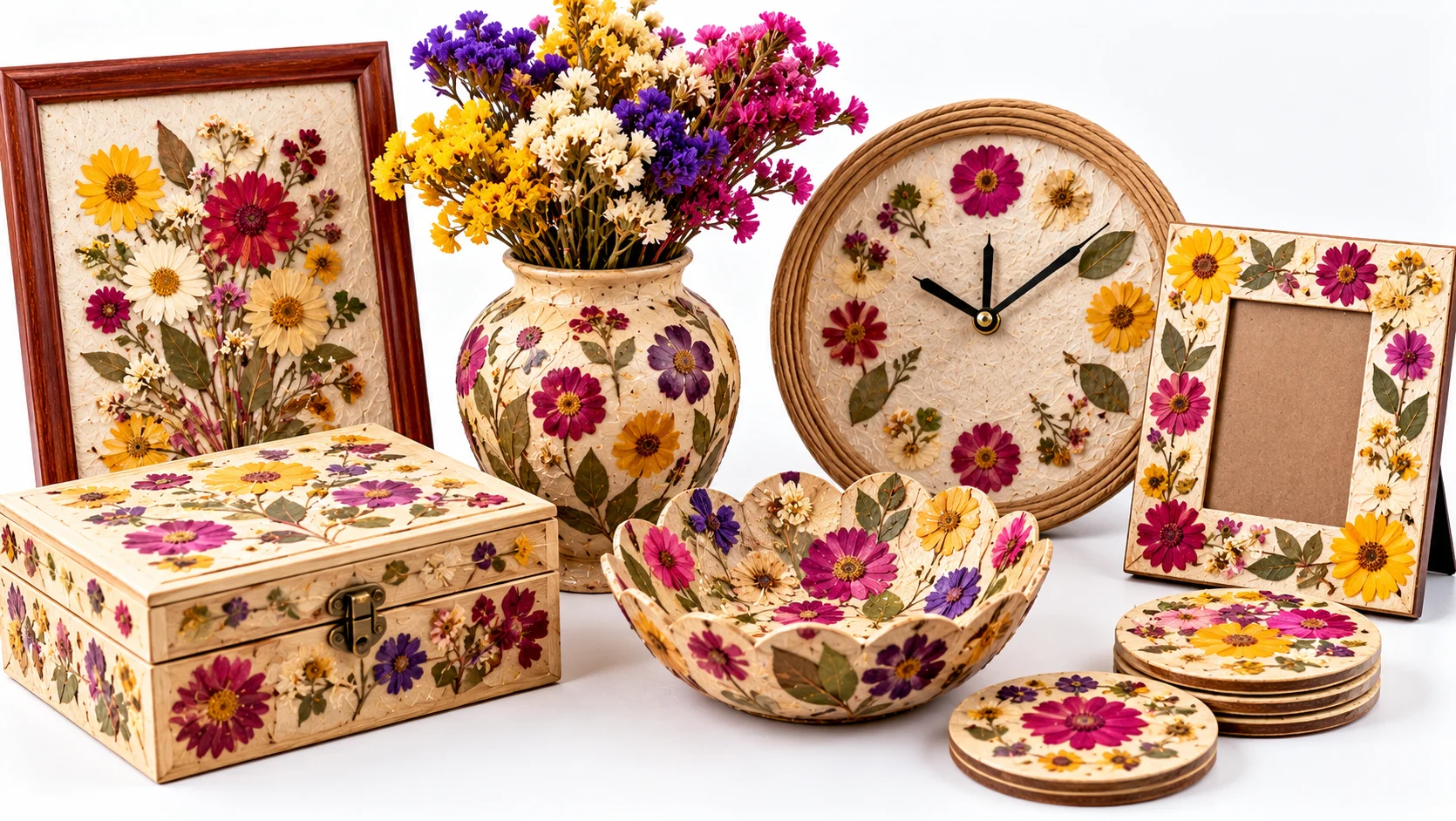
This image has been generated using AI for visual representation purposes only.
Decorative craft products proposed for research into documented regional floral-art traditions.
Puducherry Dried-Flower Crafts are decorative items made using dried flowers, petals, leaves, and other plant materials. These crafts can include framed floral arrangements, decorative pictures, greeting cards, bookmarks, keepsakes, gift items, and small home-decor products. Drying flowers allows their shapes and colours to be preserved for use in artistic arrangements after the flowers have been removed from their fresh state. Depending on the technique, flowers may be air-dried, pressed between absorbent sheets, or preserved using other drying methods. The dried materials are then arranged and attached to paper, board, fabric, or other suitable surfaces. Some designs use natural plant forms, while others incorporate printed backgrounds, decorative borders, glass frames, or additional craft materials. Puducherry's handicraft and souvenir markets provide a setting in which visitors may encounter floral art and nature-inspired decorative products. The region's gardens, coastal environment, cultural attractions, and artisan retail outlets make botanical designs an appealing theme for gifts and souvenirs. However, the name 'Puducherry Dried-Flower Crafts' is a descriptive regional product category rather than evidence of one standardised craft tradition. The exact origin, materials, and techniques of individual products can vary, and not every item sold in Puducherry is necessarily made locally. Buyers interested in supporting local artisans should ask about the maker and production location. Dried-flower crafts are valued for their natural forms, decorative versatility, and the personal character of handmade arrangements.
Using dried and pressed plants for decoration is a craft practice found in many parts of the world. Flowers and leaves have been preserved for botanical study, keepsakes, artwork, and decorative arrangements for generations. Pressed-flower art became particularly associated with botanical collections, albums, greeting cards, and framed pictures, while other drying techniques have been used to retain the shape of flowers for arrangements and ornaments. These general practices provide the background for contemporary dried-flower crafts sold in many Indian towns and tourist destinations. Puducherry has a diverse handicraft and souvenir market, but a continuous, uniquely local historical tradition specifically identified as 'Puducherry Dried-Flower Crafts' cannot be established from the product name alone. Individual products may be created by local craft makers, hobby artists, florists, gift businesses, or other suppliers using different techniques. Their designs may reflect botanical themes, local flowers, seasonal availability, or broader decorative trends. As interest in handmade gifts and nature-inspired interiors has grown, dried-flower arrangements have become a practical option for framed art, greeting cards, bookmarks, and keepsakes. Claims about the founding of a particular workshop, a traditional Puducherry drying method, or a historical origin should be supported by information from the relevant maker or a reliable local record.
Dried-flower crafts preserve the visual form of flowers and leaves for decorative or sentimental purposes. Floral keepsakes may commemorate a visit, celebration, special occasion, or personal memory. Pressed-flower compositions can also encourage appreciation of plant shapes, textures, and colours by arranging natural materials into pictures and other artworks. In Puducherry, such products can serve as souvenirs for visitors seeking small decorative gifts. Their significance depends on the design and intended use rather than on a single established regional ritual or tradition. The product category should therefore be understood as a contemporary craft and decorative practice unless a specific maker documents a more particular local heritage.
Dried-flower crafts are characterised by the use of preserved botanical materials arranged into decorative compositions. Pressed flowers are flattened and are often suitable for framed pictures, cards, bookmarks, and other relatively flat designs. Whole dried flowers may retain more of their original three-dimensional shape and can be used in small arrangements, ornaments, or decorative displays. Leaves, grasses, seed heads, and other plant materials may be included to add contrast and texture. Colours can remain close to their original appearance or change during drying, while some products may include dyed or treated materials. Designs range from simple arrangements of a few flowers to detailed compositions with layered petals, backgrounds, lettering, and frames. The longevity and appearance of the finished craft depend on the plant species, drying technique, exposure to light and moisture, and quality of the mounting materials.
Production begins with selecting flowers and plant materials that suit the intended design. The materials are inspected and prepared, and excess moisture is removed using an appropriate drying method. For pressed-flower designs, flowers and leaves are arranged between absorbent sheets and pressed until sufficiently dry and flat. For three-dimensional arrangements, flowers may be air-dried by hanging them or placing them in a suitable drying environment; other preservation methods may be used depending on the flower and desired result. Once dry, the materials are sorted by colour, size, shape, and condition. The maker plans the composition before attaching the flowers to paper, card, board, fabric, or another base. Suitable adhesives are applied carefully to minimise damage to delicate petals and leaves. The finished piece may be placed in a frame, covered with a protective sheet, or finished as a greeting card, bookmark, ornament, or gift item. Each product is checked for loose materials, smudges, and damage before packaging. Exact techniques differ between makers, and some commercial products may combine natural dried flowers with artificial or dyed decorative components.
Common techniques used in dried-flower crafts include air-drying, flower pressing, botanical arrangement, mounting, and protective framing. Air-drying allows suitable flowers to lose moisture while retaining some of their three-dimensional form. Pressing flattens flowers and leaves between absorbent materials, making them suitable for artwork and stationery. After drying, the maker arranges the botanical elements into a planned design and attaches them to a stable base. Framing or covering the artwork can help reduce handling and exposure to dust. Some makers use additional techniques such as trimming, layering, or combining dried materials with paper illustration and lettering. These are general dried-flower craft methods and should not be presented as an exclusive or historically documented Puducherry technique without evidence from a specific artisan or workshop.
Puducherry Dried-Flower Crafts offer decorative products that combine natural botanical forms with artistic arrangement. They can be purchased as souvenirs, gifts, keepsakes, or home accessories. Because each flower has its own shape and may dry with slight differences in colour and texture, handmade compositions can have an individual appearance. The craft also provides opportunities for small businesses and makers to create products in different sizes and price ranges. For travellers, framed floral art, bookmarks, cards, and small keepsakes are convenient to carry. Confirming the place of manufacture helps distinguish locally made products from items produced elsewhere and resold in the region.
Crafts use dried or pressed flowers, petals, leaves, and other plant elements to create decorative designs.
Products may include framed floral pictures, greeting cards, bookmarks, ornaments, keepsakes, and small decorative arrangements.
The shape, colour, and arrangement of botanical materials can give each handmade piece a distinctive appearance.
Small dried-flower products can serve as gifts or mementos for visitors exploring Puducherry.
Makers may use pressing, air-drying, careful arrangement, mounting, and framing according to the product design.
Pressed and dried flowers can be incorporated into artwork, stationery, keepsakes, and nature-inspired home décor.
Flowers are widely used in Indian cultural life, including religious offerings, celebrations, decoration, and personal gifting. Dried-flower crafts use botanical materials in a different way by preserving their appearance for decorative or commemorative purposes. These products can connect the beauty of flowers with memories of a place or occasion. In Puducherry, dried-flower crafts may be found within the wider market for handmade gifts, souvenirs, and decorative items. However, there is insufficient basis to describe the entire category as a distinct traditional craft unique to Puducherry. The cultural context of an individual piece depends on its maker, design, materials, and intended use.
Dried-flower crafts can remain attractive for a long time when protected from moisture, direct sunlight, dust, and rough handling. Keep framed pieces away from damp walls and areas with frequent temperature or humidity changes. Prolonged sunlight can fade flower colours, while moisture can soften the materials, cause mould, or loosen adhesives. Handle pressed-flower artwork by its frame or backing rather than touching the petals. Dust exposed arrangements gently with a soft brush, and avoid wet cleaning unless the maker confirms that it is safe. Store unframed pieces flat in dry protective sleeves or boxes. Do not place heavy objects on delicate floral designs. The lifespan varies with the flower species, drying quality, adhesive, frame, and storage environment; natural dried flowers may gradually change colour or become brittle over time.
They are decorative products made using dried or pressed flowers, petals, leaves, and other botanical materials. Examples include framed floral artwork, greeting cards, bookmarks, keepsakes, and small decorative arrangements.
Flowers may be pressed flat or dried while retaining more of their three-dimensional shape. The preserved materials are then arranged and attached to paper, board, fabric, or another base to create decorative products.
Look for them at local gift shops, craft outlets, florists, and souvenir retailers. Availability varies, and buyers seeking locally made products should ask the seller to confirm the maker and production location.
They may use real dried or pressed flowers and leaves, but the materials vary by product. Some designs may also include artificial flowers, dyed botanical materials, printed elements, or other decorative components. Check the product description before buying.
The name 'Puducherry Dried-Flower Crafts' should not be treated as a registered Geographical Indication without official verification. Check the official Geographical Indications Registry for the current status of the exact product name.
They can last for years when properly dried and stored, but natural flowers may gradually fade or become brittle. Longevity depends on the flower type, drying process, adhesives, framing, and exposure to sunlight and moisture.
Keep it away from direct sunlight, moisture, and dust. Handle it gently, avoid wet cleaning, and use a protective frame or cover where appropriate. Follow the maker's instructions for the particular product.
Yes. Small cards, bookmarks, and framed or packaged floral keepsakes can make attractive souvenirs. Fragile items should be wrapped carefully, and framed products should be protected from pressure and impact during travel.
The source of the flowers depends on the individual maker. Some materials may be locally sourced, while others may come from different regions. Ask the seller about the botanical materials and where the product was made if local sourcing is important to you.
This image has been generated using AI for visual representation purposes only.
Let Karthi Travels help you plan a comfortable and memorable journey across Tamil Nadu.
Experience, Trust & Memories Built Over the Years





Your journey is in experienced hands, from planning to the final drop.

No hidden charges. Clear and upfront pricing.

Clean, inspected and well-serviced vehicles for a comfortable journey.

Professional drivers focused on safe and pleasant travel.

Dependable pickups and reliable travel service.
Travel Made Simple, Experiences Made Grand

Explore the best of each destination with our curated sightseeing tours.

Perfect for families and groups, planned with comfort, safety and flexibility in mind.

Peaceful and spiritually enriching journeys with carefully planned routes.

Personalised honeymoon tours and romantic destinations for your special journey.

Compliant and well-documented tour plans to make the most of your travel concession.
 WhatsApp Us