
Karthi Travels®
ISO 9001:2015 Certified
Puducherry
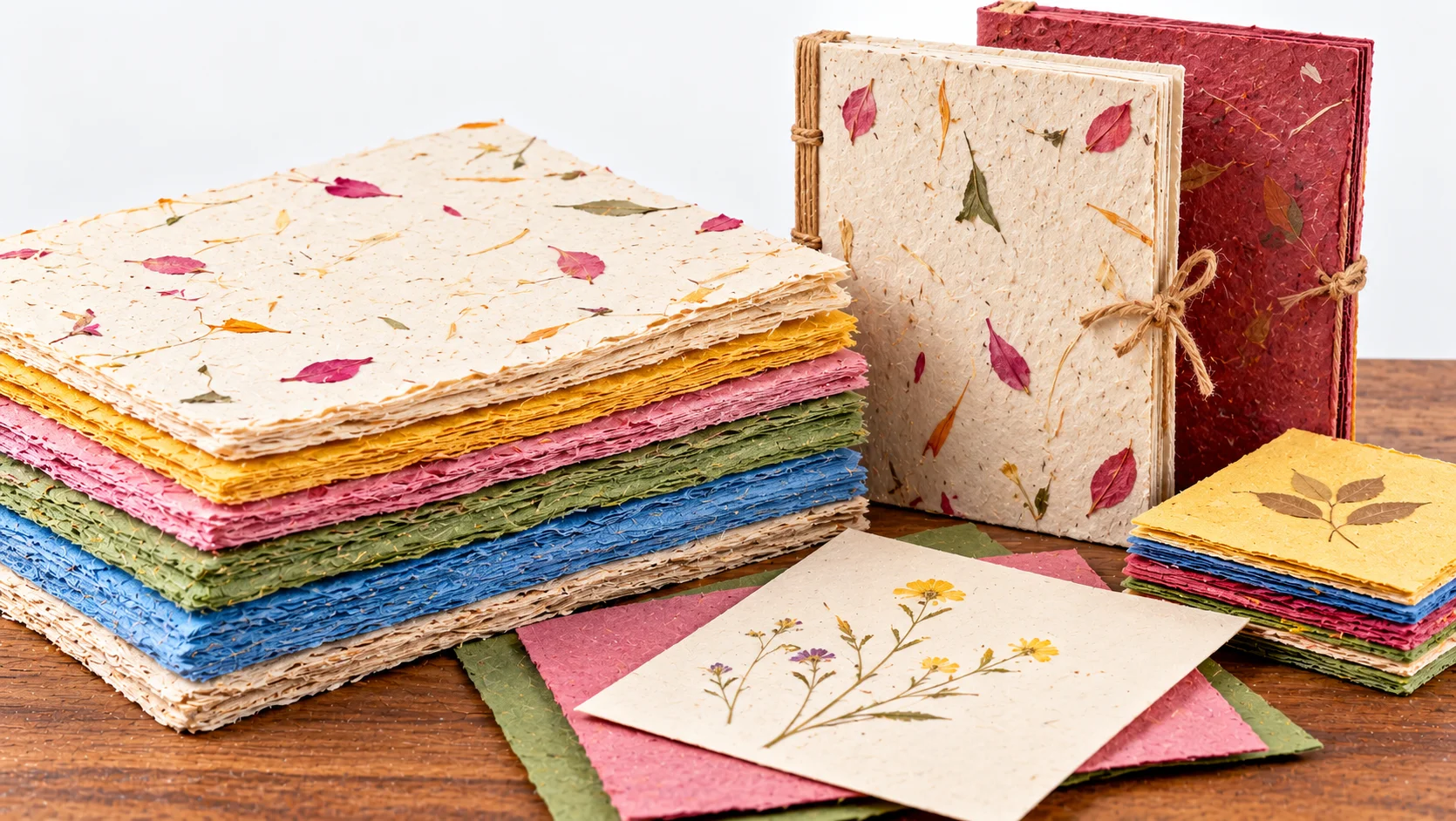
This image has been generated using AI for visual representation purposes only.
Handmade paper associated with Puducherry, with its production techniques and regional history to be researched.
Puducherry Handmade Paper is a specialty paper product associated with the region's paper-making industry and handicraft tradition. Unlike conventional machine-made paper, handmade paper is produced by forming sheets from a prepared pulp, draining water through a screen, and drying the resulting sheets. The finished paper can have a distinctive texture, natural-looking surface, and variations that reflect the materials and production method. It is used for stationery, notebooks, greeting cards, art paper, invitations, gift wrapping, packaging, and other creative applications. Puducherry is known for handmade paper production, including paper made by the Shri Aurobindo Handmade Paper Factory, an enterprise associated with the Sri Aurobindo Ashram. Depending on the product, the raw material may include cotton textile waste, recycled paper, or other suitable fibres. Handmade paper is valued for its tactile character and its suitability for printing, drawing, writing, and craft work. Products are available in different sizes, thicknesses, colours, and finishes, ranging from plain sheets to finished stationery and decorative paper goods. Visitors interested in locally made products can look for handmade-paper notebooks, cards, journals, and gift items in Puducherry's speciality shops. The term 'handmade paper' describes a production method rather than one single grade or formulation, so paper strength, texture, colour, and environmental characteristics depend on the actual materials and manufacturing process used.
Handmade paper has a long history in several parts of the world, and modern handmade-paper production in India has developed through craft enterprises, small manufacturers, and organisations promoting paper-making skills. In Puducherry, the Shri Aurobindo Handmade Paper Factory is particularly associated with the local handmade-paper industry. Linked to the Sri Aurobindo Ashram, the enterprise has helped establish handmade paper as a recognised local product and has supplied paper and paper-based goods for writing, printing, stationery, and creative work. The production of handmade paper involves preparing fibre pulp, forming individual sheets, removing excess water, and drying the sheets before finishing. The use of recovered cotton textile material and other suitable fibres is common in some handmade-paper operations, although the composition differs between products. Over time, handmade paper has found applications beyond traditional writing sheets, including notebooks, greeting cards, art supplies, envelopes, decorative products, and packaging. Puducherry's handmade-paper products are also of interest to visitors seeking locally produced stationery and gifts. The history of an individual paper product should be distinguished from the broader history of handmade paper: specific claims about the age of a workshop, the first production date, or a particular traditional recipe should be confirmed through the manufacturer or reliable institutional records.
Puducherry Handmade Paper represents a form of small-scale paper production that combines fibre preparation, sheet formation, drying, and finishing. Its value lies in the craftsmanship involved in making individual sheets and in the varied textures and appearances that can be achieved. The product also has a practical role in stationery, writing, printing, art, bookmaking, and decorative crafts. Handmade-paper enterprises in Puducherry contribute to the region's range of locally manufactured goods and provide visitors with an alternative to mass-produced stationery. While handmade paper is sometimes associated with sustainable production, the environmental benefits depend on the fibres used, energy and water consumption, chemical treatments, and waste-management practices of the individual manufacturer.
Puducherry Handmade Paper can feature a textured surface, visible fibre character, and subtle variations between sheets. Depending on the grade and production method, the paper may be thick or thin, smooth or rough, plain or coloured, and suitable for writing, printing, drawing, or decorative work. Some products are made from recovered cotton textile fibres or recycled paper, while others use different plant-based or paper fibres. Handmade sheets may have slightly irregular edges and individual variations that distinguish them from uniform machine-made paper. Finished products include notebooks, journals, envelopes, greeting cards, folders, gift paper, and art sheets. These characteristics are not universal: the appearance, durability, and intended use depend on the product specification and the maker's process.
Handmade paper production generally begins with selecting and preparing suitable fibres. Recovered cotton material, recycled paper, or other fibre sources may be sorted, cleaned, and cut or broken down before being processed into pulp. The pulp is mixed with water to create a suspension from which individual sheets can be formed. A mould and screen are dipped into or filled with the pulp, allowing fibres to collect across the screen as water drains away. The wet sheet is then transferred or couched onto a suitable surface, pressed to remove additional water, and dried. After drying, the paper may be trimmed, calendared, smoothed, coloured, or otherwise finished according to its intended use. Some grades receive sizing or other treatments to improve their writing, printing, or handling properties. The exact equipment and sequence vary between manufacturers, and not every handmade-paper product uses the same fibre mixture or finishing treatment.
The defining handmade-paper technique is the formation of individual sheets from a water-based fibre pulp using a screen or mould. The artisan or production worker controls the distribution of fibres, drainage, and transfer of the wet sheet, while pressing and drying help create the finished paper. Depending on the workshop, fibre preparation may involve recovered textile fibres, recycled paper, or other raw materials. Sheets can be finished by hand through trimming, smoothing, colouring, or surface treatment. Modern handmade-paper factories may combine manual sheet formation with mechanical pulping, pressing, or drying equipment. For this reason, the term handmade paper does not necessarily mean that every stage is performed entirely by hand; production methods should be confirmed with the manufacturer.
Puducherry Handmade Paper is an identifiable local speciality that connects paper-making skills with practical products used in everyday life, education, art, and gifting. It offers stationery and creative materials with a texture and appearance that can differ from ordinary mass-produced paper. Handmade-paper production can also create opportunities to use recovered fibres, including cotton textile waste, where suitable processes are in place. However, recycled content and environmental performance vary by product and should not be assumed without manufacturer information. For visitors, notebooks, cards, and other handmade-paper goods can serve as useful souvenirs that are easier to carry than many larger handicrafts.
Puducherry is associated with handmade-paper production, including the Shri Aurobindo Handmade Paper Factory linked to the Sri Aurobindo Ashram.
Handmade sheets may show tactile surfaces, visible fibre character, and subtle variations that distinguish them from machine-made paper.
Depending on the product, makers may use cotton textile waste, recycled paper, or other suitable fibres.
Handmade paper is used for notebooks, journals, greeting cards, envelopes, invitations, and other stationery.
Different grades can be used for drawing, printing, bookmaking, paper crafts, and decorative applications.
Paper-based products are lightweight and convenient to carry home as gifts or keepsakes from Puducherry.
Puducherry's handmade-paper industry is part of the region's broader landscape of small-scale manufacturing, craft production, and specialist retail. Handmade paper combines a practical material with visible characteristics created during sheet formation and finishing. Its use in notebooks, greeting cards, art paper, and gifts allows the product to reach students, artists, writers, craft enthusiasts, and visitors. The association of handmade-paper production with the Sri Aurobindo Ashram has also helped make it a recognisable product in Puducherry. Buyers can support local production by checking the manufacturer, choosing clearly labelled products, and learning about the fibres and processes used in the paper they purchase.
Handmade paper can remain usable for many years when stored correctly, but its longevity depends on fibre quality, acidity, sizing, dyes, coatings, and exposure to environmental conditions. Keep unused sheets and paper products in a clean, dry place away from direct sunlight, moisture, and excessive heat. Store paper flat where possible, or in suitable folders or boxes to reduce bending and dust accumulation. Avoid damp storage areas because humidity can cause warping, staining, or mould. Coloured or printed paper may fade if exposed to prolonged sunlight. For artwork, documents, or other items intended for long-term preservation, ask the manufacturer about acid content, archival suitability, and recommended storage conditions. Do not assume that every handmade paper is acid-free or archival grade.
Puducherry Handmade Paper refers to handmade paper products associated with the region's paper-making industry. The paper is formed from a prepared fibre pulp using a screen or mould, then pressed, dried, and finished.
Puducherry is known for handmade-paper production, including the Shri Aurobindo Handmade Paper Factory associated with the Sri Aurobindo Ashram. Check the product label or ask the seller to confirm the origin of a particular item.
Depending on the manufacturer, materials may include cotton textile waste, recycled paper, or other suitable fibres. Water is used during pulp preparation and sheet formation, and some papers receive colouring, sizing, or surface treatments.
It can be used for notebooks, journals, greeting cards, envelopes, invitations, drawing, selected printing applications, bookbinding, scrapbooking, paper crafts, and decorative wrapping. Choose a paper grade suited to the intended use.
It can make use of recovered fibres, including cotton textile waste or recycled paper, where these materials are used. However, environmental performance depends on the raw materials, water and energy use, processing chemicals, and waste-management practices. Check the manufacturer's information rather than assuming all handmade paper is eco-friendly.
Some grades are suitable for drawing, painting, or printmaking, but performance depends on thickness, absorbency, sizing, surface texture, and the medium being used. Ask the seller for a grade recommended for your chosen art technique.
Do not assume that the broad product name 'Puducherry Handmade Paper' is a separately registered GI product. For the latest registration status, check the official Geographical Indications Registry or documentation from the relevant government authority.
Keep it dry, flat, and away from direct sunlight, heat, dust, and damp conditions. For long-term preservation, check whether the paper is acid-free or archival grade, as these properties vary between products.
Depending on availability, visitors may find notebooks, journals, greeting cards, envelopes, folders, art sheets, and decorative paper products. Confirm the maker and place of manufacture if you specifically want a product made in Puducherry.
This image has been generated using AI for visual representation purposes only.
Let Karthi Travels help you plan a comfortable and memorable journey across Tamil Nadu.
Experience, Trust & Memories Built Over the Years





Your journey is in experienced hands, from planning to the final drop.

No hidden charges. Clear and upfront pricing.

Clean, inspected and well-serviced vehicles for a comfortable journey.

Professional drivers focused on safe and pleasant travel.

Dependable pickups and reliable travel service.
Travel Made Simple, Experiences Made Grand

Explore the best of each destination with our curated sightseeing tours.

Perfect for families and groups, planned with comfort, safety and flexibility in mind.

Peaceful and spiritually enriching journeys with carefully planned routes.

Personalised honeymoon tours and romantic destinations for your special journey.

Compliant and well-documented tour plans to make the most of your travel concession.
 WhatsApp Us