
Karthi Travels®
ISO 9001:2015 Certified
Puducherry region, Puducherry
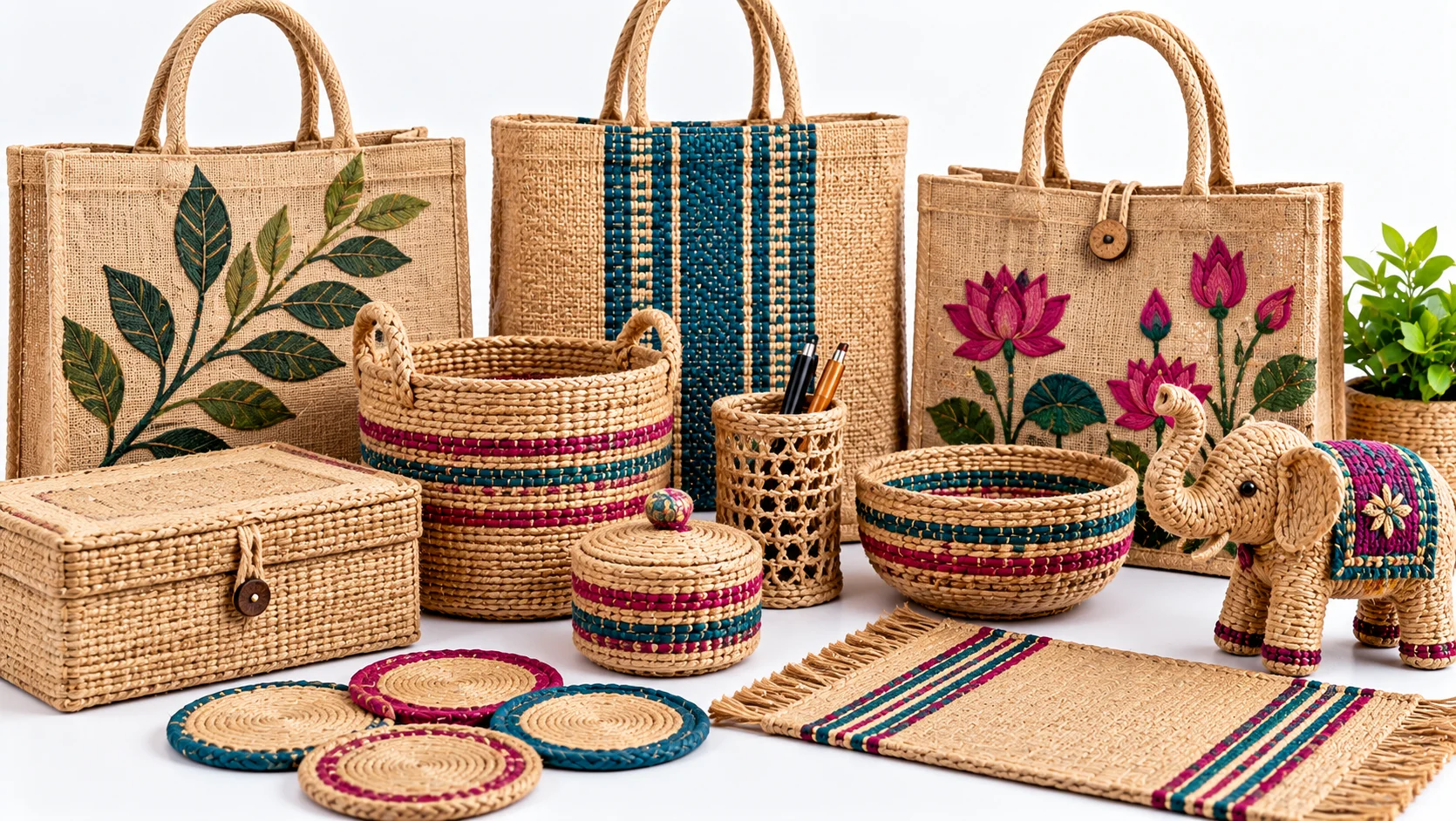
This image has been generated using AI for visual representation purposes only.
A handicraft product candidate requiring verification of its documented local production and traditional significance.
Puducherry Jute Handicrafts are decorative and functional products made using jute fibre, yarn, fabric, and related materials. Jute is a natural plant fibre commonly used to produce bags, baskets, table accessories, storage products, wall decorations, and gift items. Its coarse texture and earthy appearance make it suitable for products with a natural or rustic style. Depending on the design, jute may be woven, braided, stitched, knotted, or combined with cotton, wood, rope, and other materials. Products in this category can include shopping bags, handbags, pouches, table mats, coasters, planters, decorative hangings, and small storage baskets. In the Puducherry region, jute handicrafts may be available through craft shops, gift outlets, and retailers selling handmade or natural-fibre products. They appeal to travellers looking for practical souvenirs and alternatives to some conventional synthetic accessories. However, the name 'Puducherry Jute Handicrafts' describes a broad product category rather than one verified, standardised regional craft. Jute products sold in Puducherry may be made locally or sourced from other parts of India, where jute cultivation and manufacturing are established industries. The exact origin, materials, and production method therefore vary by item. Buyers interested in supporting local artisans should ask about the maker and manufacturing location. The quality and durability of a jute product depend on the fibre, weave, stitching, finishing, lining, and intended use. With suitable care, many jute accessories can serve as reusable household items, shopping bags, and decorative gifts.
Jute has a long history as a commercial plant fibre in the Indian subcontinent, particularly in eastern India and the Bengal region, where its cultivation and processing developed into major agricultural and industrial activities. The fibre has traditionally been used for sacks, ropes, twine, packaging, and other practical products. Over time, jute has also been adapted for consumer goods such as bags, home accessories, decorative items, and fashion products. This expansion has brought jute into the wider handicraft and gift market, where makers combine traditional fibre-working skills with stitching, weaving, braiding, and contemporary design. Puducherry has a diverse retail and handicraft environment, and jute products may be sold as practical accessories and souvenirs. Nevertheless, there is insufficient evidence to establish a single, historically distinct craft tradition specifically known as 'Puducherry Jute Handicrafts'. Products sold in the region may be created by local makers or supplied by manufacturers and craft producers elsewhere in India. Their history therefore depends on the individual product and its actual place of manufacture. Today, jute handicrafts are used for shopping, storage, decoration, and gifting. Interest in reusable bags and natural-looking household accessories has also helped make jute products familiar to shoppers. Claims about a particular Puducherry workshop, traditional local weaving technique, or historical origin should be verified with the maker or a reliable local source.
Jute has traditionally been valued for its strength and versatility as a plant fibre. Its established uses include ropes, sacks, twine, and packaging, while modern craft applications extend to bags, storage baskets, table accessories, and decorative products. Jute handicrafts bring a familiar natural material into everyday consumer products, combining practical function with woven or stitched textures. In Puducherry, such products can form part of the wider selection of handicrafts and souvenirs available to residents and visitors. Their significance is primarily functional and decorative unless a specific item is linked to a documented local artisan tradition. Because jute handicrafts are produced across many regions, it is important not to assume that every jute product sold in Puducherry represents an exclusive regional technique.
Jute handicrafts are generally recognisable by their fibrous texture, natural tan or golden-brown colour, and sturdy appearance. Depending on the product, the fibre may be woven into fabric, twisted into rope, braided into decorative forms, or stitched into bags and accessories. Some items retain the natural colour of the fibre, while others are dyed or printed in different colours and patterns. Bags may include cotton linings, zippers, handles, buttons, or other fittings. Home accessories may combine jute with wood, cotton, metal, or other materials. The finish ranges from simple utility products to more elaborate decorative designs. Strength and lifespan vary with the quality of the jute, the density of the weave, stitching, lining, and exposure to moisture. Since 'Puducherry Jute Handicrafts' is a broad category, these features should not be interpreted as evidence of a single standardised local design.
The production process depends on the type of jute handicraft. For woven products, jute fibres are processed into yarn or prepared as suitable weaving material. The yarn may be woven into fabric or assembled into a product using established textile techniques. For bags and pouches, jute fabric is measured, cut, stitched, and finished with handles, linings, closures, or pockets as required. Braided or rope-based products are created by twisting or interlacing fibres into the desired shape before securing the ends. Baskets and decorative objects may be formed by weaving, coiling, stitching, or combining jute with a supporting frame. Some products receive dyeing, printing, embroidery, or other decorative finishing. The finished item is inspected for loose fibres, uneven stitching, weak joins, and defects before packaging. Materials and manufacturing methods vary widely between products, and some commercially available items may be partly machine-made or assembled from components produced elsewhere. The actual process used for an item sold in Puducherry should be confirmed with its maker or supplier.
Jute handicrafts can involve weaving, braiding, twisting, stitching, knotting, and coiling. Weaving interlaces yarns or prepared fibres to create a flat or structured material, while braiding combines strands into stronger decorative forms. Stitching joins jute fabric into bags, pouches, covers, and other products. Coiling and wrapping techniques can be used to make baskets, containers, and decorative accessories. Makers may also combine jute with cotton fabric, rope, wooden elements, or other materials to improve functionality or create different finishes. These are general techniques used in jute product manufacture and craft production; they should not be presented as exclusive to Puducherry without evidence of a specific local workshop or tradition.
Puducherry Jute Handicrafts offer practical and decorative products made from a natural plant fibre. Bags, baskets, pouches, and home accessories can be useful purchases for visitors who want functional souvenirs. Jute's texture also suits products with a simple, natural appearance. These handicrafts provide opportunities for designers, artisans, retailers, and small businesses to create products for everyday use and gifting. However, the environmental advantages of an individual jute item depend on its full material composition, manufacturing process, durability, and reuse. A product containing jute may also include synthetic lining, coatings, adhesives, or fittings. Buyers can make a more informed choice by checking the label, asking about local manufacture, and selecting products suited to repeated use.
Jute is a plant-derived fibre used to create a wide range of practical and decorative products.
Jute handicrafts can include shopping bags, handbags, pouches, storage baskets, and household accessories.
The fibre's coarse texture and earthy appearance suit rustic, traditional, and contemporary designs.
Products may be woven, braided, twisted, stitched, knotted, or coiled depending on their design.
Well-made jute bags and storage accessories can be reused for suitable everyday purposes when kept in good condition.
Small jute accessories can make useful gifts for travellers, although the place of manufacture should be checked if local origin matters.
Jute has an important place in the material and manufacturing history of the Indian subcontinent, particularly in regions where it is cultivated and processed on a large scale. Its use has expanded from traditional utility products such as sacks and ropes to consumer accessories and decorative crafts. Jute handicrafts demonstrate how a familiar fibre can be adapted to modern needs through weaving, stitching, braiding, and design. In Puducherry, jute products may be encountered among the broader range of locally sold handicrafts and souvenirs. However, the general category is not sufficient to establish a unique Puducherry cultural origin. Identifying the actual maker and manufacturing location helps distinguish locally produced goods from products sourced from other craft and industrial centres.
Jute products can last for a long time when they are well made and kept dry, but their lifespan depends on fibre quality, construction, stitching, dyes, coatings, and frequency of use. Store jute bags and accessories in a clean, dry, well-ventilated place. Avoid leaving them wet or in damp cupboards, as moisture can encourage mould, odours, and fibre deterioration. Brush away dust with a soft brush or dry cloth. Do not machine-wash or soak a jute product unless the manufacturer specifically confirms that it is suitable, because moisture and agitation can distort the weave or weaken adhesives and linings. Treat stains carefully according to the care instructions, and allow the item to dry fully before storage. Keep products away from prolonged direct sunlight if their dyes or decorative finishes may fade. Check handles, seams, and fasteners periodically on bags that carry heavy items.
They are jute-based products associated with the Puducherry regional retail and handicraft category. Examples may include bags, pouches, baskets, table accessories, and decorative items. The actual place of manufacture varies by product.
Jute is a natural plant fibre widely used to make yarn, fabric, ropes, sacks, and other products. It is also used in consumer goods such as bags, baskets, and home accessories.
You can look for jute bags, baskets, and accessories in handicraft shops, gift stores, and retailers selling natural-fibre products. Ask the seller about the manufacturer if you specifically want an item made in Puducherry.
Some products may be handmade or hand-finished, while others may use machine-made fabric or commercially manufactured components. Check the product description or ask the seller about the production method.
Jute is a plant-derived fibre, and reusable jute products may reduce the need for some disposable alternatives when used repeatedly. However, the environmental impact depends on the product's full material composition, processing, durability, transport, and disposal. Jute items may also contain synthetic linings or coatings.
Brush away dust and follow the manufacturer's care instructions. Avoid soaking or machine-washing jute products unless the maker confirms that the specific item can tolerate it. Keep the product dry to reduce the risk of mould and fibre damage.
The broad name 'Puducherry Jute Handicrafts' should not automatically be treated as a separately registered Geographical Indication. Check the official Geographical Indications Registry for the current status of the exact product name.
Inspect the weave, stitching, handles, seams, and closures. Check whether the product contains other fibres or synthetic coatings, and ask where it was manufactured if local origin is important to you.
Yes. Jute bags, pouches, baskets, and decorative accessories can make useful gifts. Choose an item suited to the recipient's needs and check its construction and care instructions before purchasing.
This image has been generated using AI for visual representation purposes only.
Let Karthi Travels help you plan a comfortable and memorable journey across Tamil Nadu.
Experience, Trust & Memories Built Over the Years





Your journey is in experienced hands, from planning to the final drop.

No hidden charges. Clear and upfront pricing.

Clean, inspected and well-serviced vehicles for a comfortable journey.

Professional drivers focused on safe and pleasant travel.

Dependable pickups and reliable travel service.
Travel Made Simple, Experiences Made Grand

Explore the best of each destination with our curated sightseeing tours.

Perfect for families and groups, planned with comfort, safety and flexibility in mind.

Peaceful and spiritually enriching journeys with carefully planned routes.

Personalised honeymoon tours and romantic destinations for your special journey.

Compliant and well-documented tour plans to make the most of your travel concession.
 WhatsApp Us