
Karthi Travels®
ISO 9001:2015 Certified
Ramanathapuram region, Tamil Nadu, Ramanathapuram
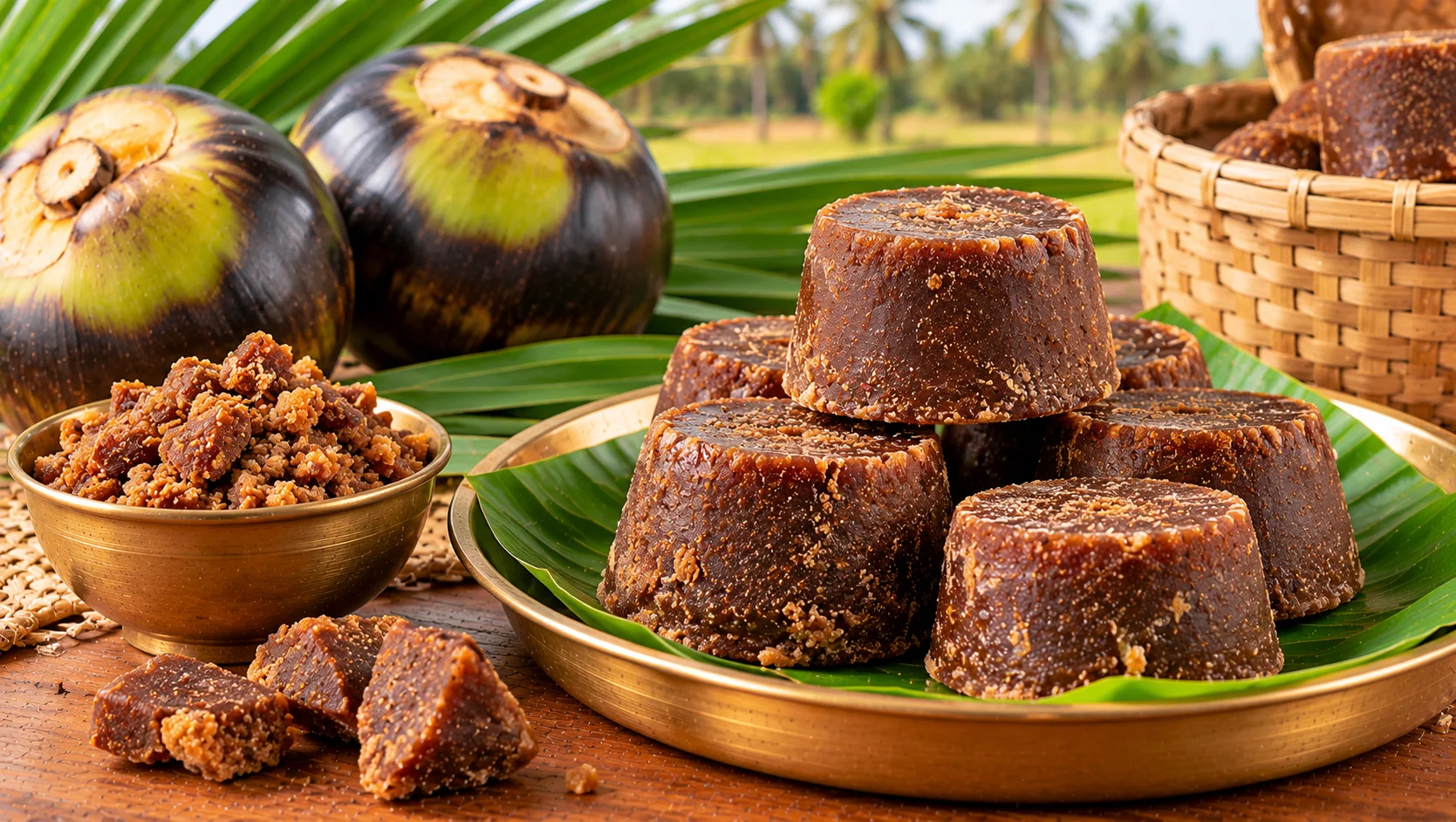
This image has been generated using AI for visual representation purposes only.
Palm-based jaggery associated with the Ramanathapuram region.
Ramanathapuram Panai Karupatti is traditional palm jaggery made by concentrating the sweet sap collected from palmyra palm trees. Known as panai karupatti in Tamil, this natural sweetener is associated with the palm-growing communities of southern Tamil Nadu, including the Ramanathapuram region. Unlike refined white sugar, palm jaggery is produced by boiling and reducing palm sap until it reaches a thick consistency and solidifies into blocks or other forms. It is valued for its deep brown colour, characteristic caramel-like flavour and use in traditional sweets, beverages and household cooking. Depending on the producer and processing method, the finished product may have a firm, dense texture or a slightly softer consistency. Panai karupatti is commonly used in traditional recipes as an alternative to refined sugar and is also sold as a regional food product.
Palm sap collection and the preparation of palm jaggery have long been part of traditional livelihoods in Tamil Nadu's palm-growing areas. Palmyra palms provide several useful products, including fruit, leaves, fibres and sweet sap that can be processed into jaggery. In southern Tamil Nadu, palm-based products have historically supported rural households and small-scale producers. Ramanathapuram and neighbouring districts form part of a wider region where palmyra palms and their products are familiar features of local life. Panai karupatti has traditionally been used to sweeten foods and drinks and to prepare regional sweets. Although palm jaggery has a long history in Tamil Nadu, a precise founding date for a distinct Ramanathapuram-specific variety has not been independently established.
Panai karupatti represents the traditional use of palmyra palm resources in Tamil Nadu. Palm sap collection and jaggery production require practical knowledge of the tree, sap collection, heating and concentration. In rural communities, palm-derived products have provided food ingredients and sources of income for generations. Palm jaggery is used in home cooking, festive preparations and traditional sweets, connecting the product with regional food practices. In the Ramanathapuram region, it forms part of the wider heritage of palm-based products and rural livelihoods.
Ramanathapuram Panai Karupatti is typically dark brown to deep reddish-brown, with a rich, caramel-like flavour and a sweet aroma. It is produced by concentrating palmyra palm sap rather than extracting sugar from sugarcane. Depending on the processing technique, it may be sold as solid blocks, rounded pieces or other moulded shapes. Its texture can range from hard and dense to somewhat softer, depending on moisture content and storage conditions. The flavour and colour are influenced by the freshness of the sap, heating temperature, duration of concentration and the producer's method. Natural variation is common in traditionally produced palm jaggery, and product quality should be assessed using the ingredient label, cleanliness, aroma and condition of the product.
Fresh sweet sap is collected from palmyra palm trees using established sap-tapping practices. The sap is transferred to a processing area and heated in large vessels to reduce its water content. As the liquid boils, it becomes progressively more concentrated and develops the colour and flavour associated with palm jaggery. The producer monitors the consistency until the mixture reaches a suitable stage for setting. It is then poured into moulds or containers and allowed to cool and solidify. Once firm, the jaggery is removed, packed and prepared for sale. Hygiene, prompt handling of the sap and control of the heating process are important because fresh palm sap can ferment if it is not processed appropriately. Specific equipment, moulds and processing practices differ between producers.
Traditional panai karupatti production relies on collecting palmyra sap and concentrating it through sustained heating. Skilled producers judge the progress of boiling by observing the colour, thickness and behaviour of the liquid. Once the concentrated sap reaches the required consistency, it is poured into moulds to set. In small-scale production, the process may use large metal vessels and a controlled fire, requiring regular attention throughout the boiling stage. The quality of the final jaggery depends on sap freshness, cleanliness, heating conditions and the point at which the concentrated syrup is removed from the fire. Modern producers may use improved equipment or different packaging methods while retaining the basic process of concentrating palm sap.
Ramanathapuram Panai Karupatti connects traditional food preparation with the economic and cultural importance of palmyra palms in southern Tamil Nadu. The product provides a sweetener for home kitchens and traditional food businesses while supporting palm-tapping and processing livelihoods. Its use in sweets, drinks and everyday cooking helps sustain recipes that rely on regional ingredients. Palm jaggery is also valued by consumers seeking traditional alternatives to refined sugar, although its nutritional and health effects depend on the quantity consumed and the overall diet. The product's regional identity reflects the wider importance of palm-based food traditions rather than an exclusively local production method.
Panai karupatti is produced by concentrating the sweet sap collected from palmyra palm trees.
Palm jaggery is used in traditional sweets, drinks and household recipes across Tamil Nadu.
It commonly has a deep brown colour and a distinctive caramel-like flavour, with natural variation between batches.
Sap collection and jaggery preparation form part of the wider livelihood traditions of palm-growing communities.
It can be grated, crushed or dissolved for use in beverages, sweets and selected savoury preparations.
The product reflects the broader palm-product heritage of Ramanathapuram and southern Tamil Nadu.
Palmyra palms have a longstanding place in the rural landscape and traditional economy of Tamil Nadu. Their leaves, fruit, fibres and sap have been used for food, crafts and other practical purposes. Panai karupatti is one of the foods produced from this versatile tree and remains familiar in traditional cooking. In southern Tamil Nadu, palm jaggery is associated with local food knowledge and the work of palm-tapping communities. Ramanathapuram Panai Karupatti forms part of this wider regional heritage, connecting a locally familiar sweetener with established practices of sap collection, processing and food preparation.
Store panai karupatti in a cool, dry place, away from direct sunlight, moisture and strong odours. Keep it in an airtight, food-safe container after opening. Palm jaggery can absorb moisture and may soften or become sticky in humid conditions. The shelf life depends on the moisture content, processing hygiene, packaging and storage conditions. Follow the manufacturer's best-before date and storage instructions. Inspect the product before use and discard it if there is visible mould, an unusual odour or other signs of spoilage. Use clean, dry utensils when handling the jaggery.
It is traditional palm jaggery associated with the Ramanathapuram region of Tamil Nadu. It is made by heating and concentrating the sweet sap collected from palmyra palm trees until it sets.
Traditional panai karupatti is made from palmyra palm sap. Plain palm jaggery does not require added sugar, although commercial products should be checked for their ingredient information.
Fresh palm sap is collected and boiled to remove water and concentrate its sugars. When it reaches the required consistency, it is poured into moulds and allowed to cool and solidify.
Palm jaggery is made from palm sap, while cane jaggery is made from sugarcane juice. Their flavours, aromas, colours and processing characteristics can differ.
It can be used to sweeten traditional sweets, beverages, porridge and other recipes. It may be crushed, grated or dissolved depending on the preparation.
Palm jaggery is less refined than white sugar and may retain small amounts of minerals, but it is still a concentrated source of sugars. It should be consumed in moderation and should not be treated as a medicine.
Keep it in an airtight, food-safe container in a cool, dry place. Protect it from moisture and use clean, dry utensils to help maintain its quality.
Yes. Palm jaggery may be sold as solid blocks, rounded pieces or smaller portions. Crushed or grated forms may also be available for convenient cooking.
A specific GI registration for Ramanathapuram Panai Karupatti has not been verified. Its regional association should not be taken as confirmation of GI registration.
This image has been generated using AI for visual representation purposes only.
Let Karthi Travels help you plan a comfortable and memorable journey across Tamil Nadu.
Experience, Trust & Memories Built Over the Years





Your journey is in experienced hands, from planning to the final drop.

No hidden charges. Clear and upfront pricing.

Clean, inspected and well-serviced vehicles for a comfortable journey.

Professional drivers focused on safe and pleasant travel.

Dependable pickups and reliable travel service.
Travel Made Simple, Experiences Made Grand

Explore the best of each destination with our curated sightseeing tours.

Perfect for families and groups, planned with comfort, safety and flexibility in mind.

Peaceful and spiritually enriching journeys with carefully planned routes.

Personalised honeymoon tours and romantic destinations for your special journey.

Compliant and well-documented tour plans to make the most of your travel concession.
 WhatsApp Us