
Karthi Travels®
ISO 9001:2015 Certified
Salem, Tamil Nadu
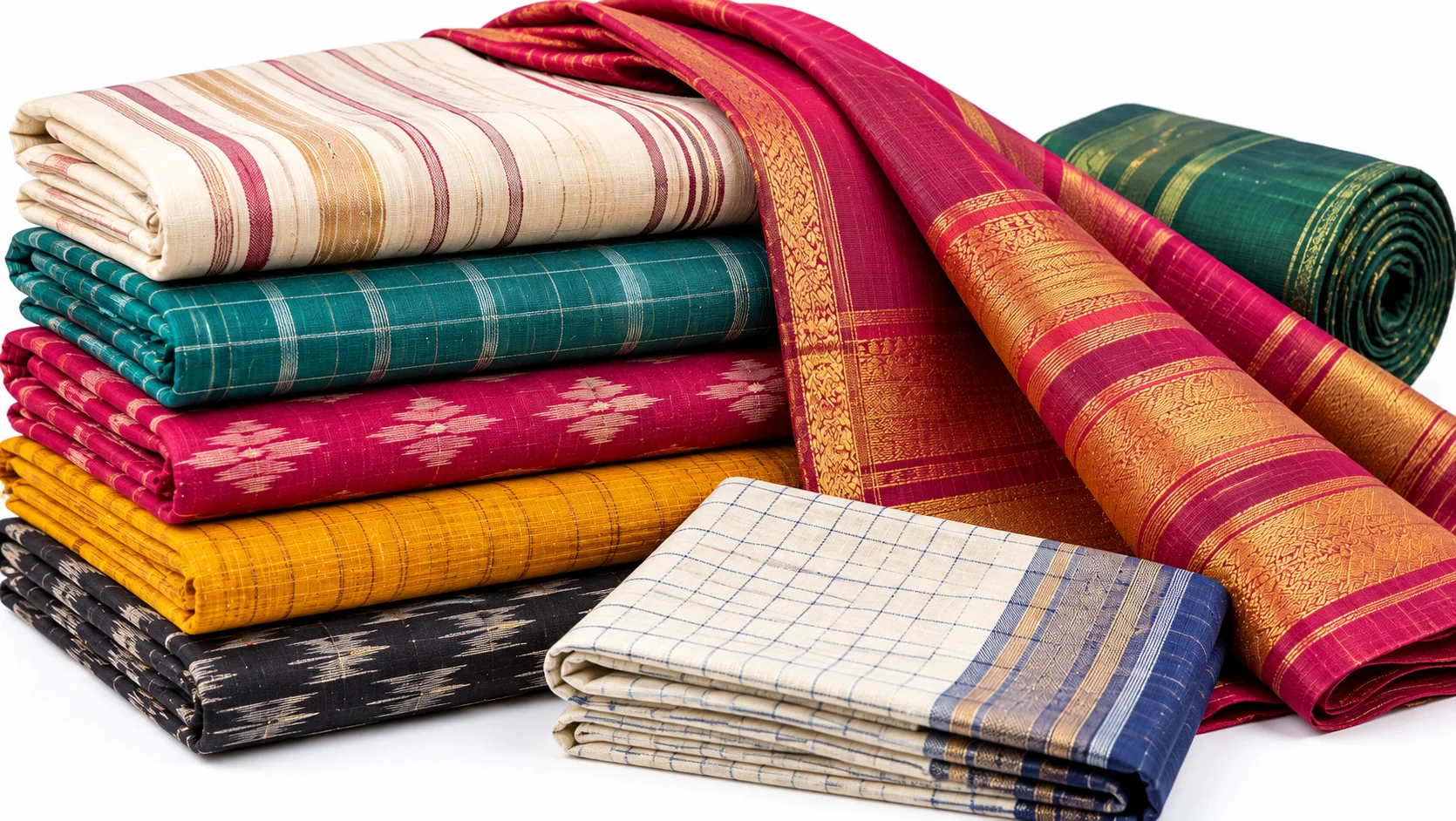
This image has been generated using AI for visual representation purposes only.
Discover Salem Fabric, a GI-registered regional product associated with Salem, celebrated for its local heritage and traditional craftsmanship or production.
Salem Fabric is a regionally identified textile product from Salem district (Tamil Nadu), registered as a Geographical Indication in India. The term covers handwoven fabrics and sarees produced in and around Salem that are known for silk-based cloths with detailed workmanship and the use of metallic zari embellishment.
Salem Fabric was registered as a Geographical Indication in India following an application filed by the Salem Exporters Association on 12 February 2004; the GI certificate was issued on 19 September 2005. Documentary material submitted with the application describes a long-standing textile and handloom presence in Salem district and highlights established weaving clusters (notably Elampillai) and local artisanal specialisations. Over time producers in the Salem area have woven principally silk sarees (pattu) and, more recently, also cotton–silk blends; the GI registration records and district-level publications identify the product as part of the district’s textile heritage rather than asserting a single origin story or a singular historical founder.
The production of Salem Fabric is linked to inherited handloom weaving skills practised in Salem district. Local weaving communities and cooperative societies have been engaged in saree and fabric production; district and GI documentation identify Elampillai and surrounding weaving clusters as important centres for these traditional skills.
Salem Fabric is characterised by the use of lustrous mulberry-silk yarns (pattu) and the incorporation of zari work that adds metallic motifs and borders. The fabrics are noted for intricate workmanship in weaving and finishing typical of the Salem weaving clusters. Both pure silk and silk–cotton (cotton-silk) constructions are recorded in documentation associated with the product.
Documentation on the GI registration describes Salem Fabric as produced through conventional textile stages practiced by local weavers: preparing yarn (silk yarns and, where used, cotton yarns), dyeing and finishing of yarns, setting up warps and weft on handloom, handloom weaving to form the cloth and incorporation of zari motifs during weaving or as borders, followed by finishing and inspection for quality as practiced by local producers and cooperative societies.
Handloom weaving techniques and local hand-weaving practices established in Salem clusters are documented as central to Salem Fabric production. The use of traditional handloom practice to integrate zari into woven borders and motifs is specifically recorded in district- and GI-related material.
Salem Fabric represents a component of Salem district’s textile and artisanal economy and cultural heritage. It is cited in government and GI records as a locally produced textile with socio-economic importance for weaving communities and as part of the district’s identity as a weaving centre.
Salem Fabric was filed for GI protection on 12 February 2004 and the GI certificate was issued on 19 September 2005; the applicant for registration was the Salem Exporters Association.
Elampillai and surrounding villages in Salem district are recorded in district and GI documentation as principal centres where the handloom fabrics identified as Salem Fabric are produced.
Documented product features include the use of mulberry silk (pattu) and metallic zari used to create borders and motifs; cotton–silk blends are also noted in the district literature.
Salem Fabric is linked to the cultural and ritual life of the region through its role as ceremonial clothing and its production by local weaving communities. District sources note that fabrics from Salem have been used as temple attire in regional religious contexts.
Salem Fabric is a GI-registered textile product from Salem district (Tamil Nadu), encompassing handwoven fabrics—notably silk sarees—produced in local weaving clusters and recognised for silk yarns and zari work.
The GI application for Salem Fabric was filed on 12 February 2004 and the certificate was issued on 19 September 2005 (registered under the Geographical Indications of Goods Act).
Documented principal materials include mulberry silk (pattu) and metallic zari; cotton is recorded where cotton–silk blends are produced.
Government and GI documentation identify Elampillai and other Salem district weaving clusters and local weaving communities as principal producers associated with the product.
Recorded distinguishing features include the use of lustrous mulberry-silk yarns, handloom weaving with detailed workmanship and the presence of zari borders or motifs; these are described in district and GI materials as characteristic of Salem Fabric.
This image has been generated using AI for visual representation purposes only.
Let Karthi Travels help you plan a comfortable and memorable journey across Tamil Nadu.
Experience, Trust & Memories Built Over the Years





Your journey is in experienced hands, from planning to the final drop.

No hidden charges. Clear and upfront pricing.

Clean, inspected and well-serviced vehicles for a comfortable journey.

Professional drivers focused on safe and pleasant travel.

Dependable pickups and reliable travel service.
Travel Made Simple, Experiences Made Grand

Explore the best of each destination with our curated sightseeing tours.

Perfect for families and groups, planned with comfort, safety and flexibility in mind.

Peaceful and spiritually enriching journeys with carefully planned routes.

Personalised honeymoon tours and romantic destinations for your special journey.

Compliant and well-documented tour plans to make the most of your travel concession.
 WhatsApp Us