
Karthi Travels®
ISO 9001:2015 Certified
Salem, Tamil Nadu
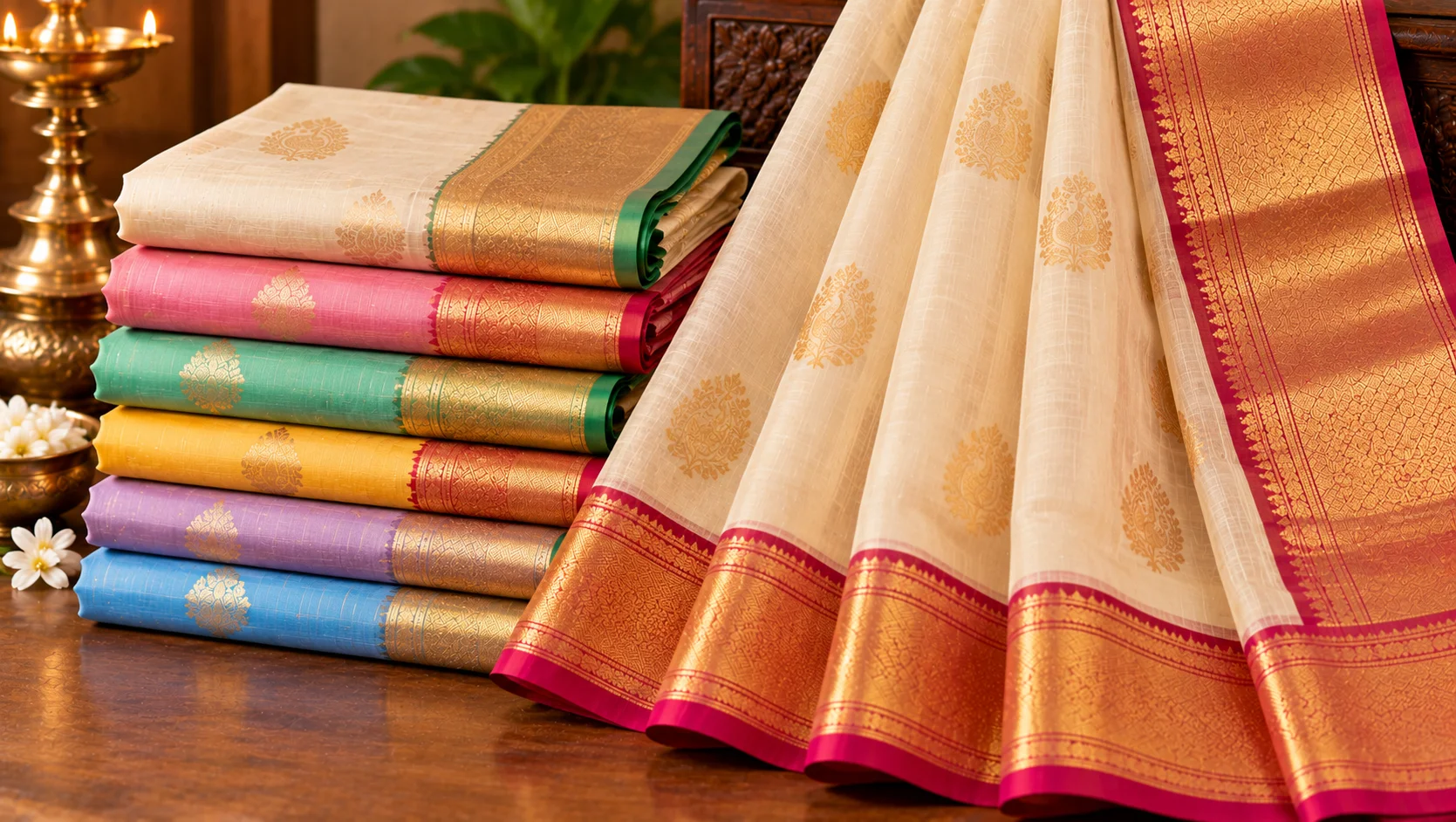
This image has been generated using AI for visual representation purposes only.
Discover Salem Silk known as Salem Venpattu, a GI-registered regional product associated with Salem, celebrated for its local heritage and traditional craftsmanship or production.
Salem Silk known as Salem Venpattu is a handloom silk textile tradition from Salem in Tamil Nadu, India. The name commonly refers to white silk veshtis/dhotis (Venpattu) and related silk garments woven in the Salem district. The product is a geographically identified handicraft produced by local handloom weavers and registered as a Geographical Indication (GI) from Tamil Nadu.
The Salem Venpattu weaving tradition is documented as a local handloom practice in Salem district, where communities of handloom weavers (including Saurashtrian weaving groups) have produced white silk dhotis, sarees and related garments. An application for Geographical Indication status was filed by the Department of Handlooms and Textiles (filed 16 May 2007) and the product was registered under the GI regime with a certificate issued in March 2008. The official GI registration records identify the product as a handloom/handicraft of Tamil Nadu and list authorized user co-operative societies in Salem. Local weaving villages and production centres named in district-level material include Chinthamaniyur, Panchukalipatty, Semmandapatty and manufacturing centres such as Elampillai.
Weaving of Venpattu is an inherited handloom skill in Salem district practiced by local weaving communities, including Saurashtrian groups. The craft preserves techniques for producing white silk veshtis/dhotis and silk garments with characteristic border work; the skills include warping, loom preparation and shuttle weaving on pit or raised pit looms and the use of extra-warp techniques for border motifs.
Salem Venpattu is characterised by a predominantly white silk body with a lustrous surface and distinctive borders. The fabric is woven from mulberry silk in both warp and weft, and the borders are formed using pure zari or a "half-fine" (imitation) zari. Weaving is normally done on pit looms or raised pit looms; border motifs are produced using an extra-warp (extra weft/warp) technique facilitated by a lattice dobby mechanism. These features—white body, lustre, and the extra-warp zari border—are the specific traits identified for Salem Venpattu.
Typical stages recorded for Salem Venpattu handloom production include: procuring and preparing mulberry silk yarn (for warp and weft); warping and sizing the yarn; setting up the handloom (pit loom or raised pit loom); weaving the plain white body while producing the border using an extra-warp technique (border motifs woven with the aid of a lattice dobby); and final finishing and trimming of the woven veshti/dhoti or garment.
Handloom weaving on pit looms or raised pit looms; use of lattice dobby attachments to weave extra-warp borders; hand-operated shuttle weaving and traditional warping techniques maintained by local weaving communities.
Salem Venpattu is part of the textile and handloom heritage of Salem district and Tamil Nadu. The product is integrated into local clothing traditions (veshti/dhoti and sarees) and represents the specialised handloom skills of communities in the Salem area. Its registration as a Geographical Indication recognises the connection between the product’s specific characteristics and its place of origin.
Salem Silk known as Salem Venpattu was registered as a Geographical Indication (handicraft) with the GI authority; the application was filed in May 2007 and the registration certificate was issued in March 2008.
The term 'Venpattu' is associated with the white silk veshti/dhoti produced in Salem, noted for its whiteness and lustre and for having characteristic zari borders.
The cloth is traditionally woven on pit or raised pit looms; border motifs are produced using an extra-warp technique implemented with a lattice dobby.
Venpattu forms part of traditional dress culture in Tamil Nadu where white silk veshtis/dhotis and silk sarees are used for festivals, religious ceremonies and other formal occasions. The craft also embodies the continuity of handloom weaving knowledge among Salem’s weaving communities.
Salem Venpattu refers to white silk veshtis/dhotis and related silk garments handwoven in Salem district, Tamil Nadu, noted for a white, lustrous body and distinctive zari borders.
Yes. Salem Silk known as Salem Venpattu is registered as a Geographical Indication (GI) for handicraft products from Tamil Nadu; the GI application was filed in 2007 and a registration certificate was issued in 2008.
Salem Venpattu is woven using pure mulberry silk for the warp and weft, with border work executed using pure zari or half-fine (imitation) zari.
Traditional Venpattu is woven on pit looms or raised pit looms. The plain white body is woven in silk while the border motifs are produced using an extra-warp technique with the assistance of a lattice dobby on the loom.
Local weaving communities in Salem district, including Saurashtrian weavers, and villages such as Chinthamaniyur, Panchukalipatty and Semmandapatty are recorded as producers; Elampillai is noted as a major manufacturing centre in the district.
This image has been generated using AI for visual representation purposes only.
Let Karthi Travels help you plan a comfortable and memorable journey across Tamil Nadu.
Experience, Trust & Memories Built Over the Years





Your journey is in experienced hands, from planning to the final drop.

No hidden charges. Clear and upfront pricing.

Clean, inspected and well-serviced vehicles for a comfortable journey.

Professional drivers focused on safe and pleasant travel.

Dependable pickups and reliable travel service.
Travel Made Simple, Experiences Made Grand

Explore the best of each destination with our curated sightseeing tours.

Perfect for families and groups, planned with comfort, safety and flexibility in mind.

Peaceful and spiritually enriching journeys with carefully planned routes.

Personalised honeymoon tours and romantic destinations for your special journey.

Compliant and well-documented tour plans to make the most of your travel concession.
 WhatsApp Us