
Karthi Travels®
ISO 9001:2015 Certified
Sankarankovil, Tenkasi
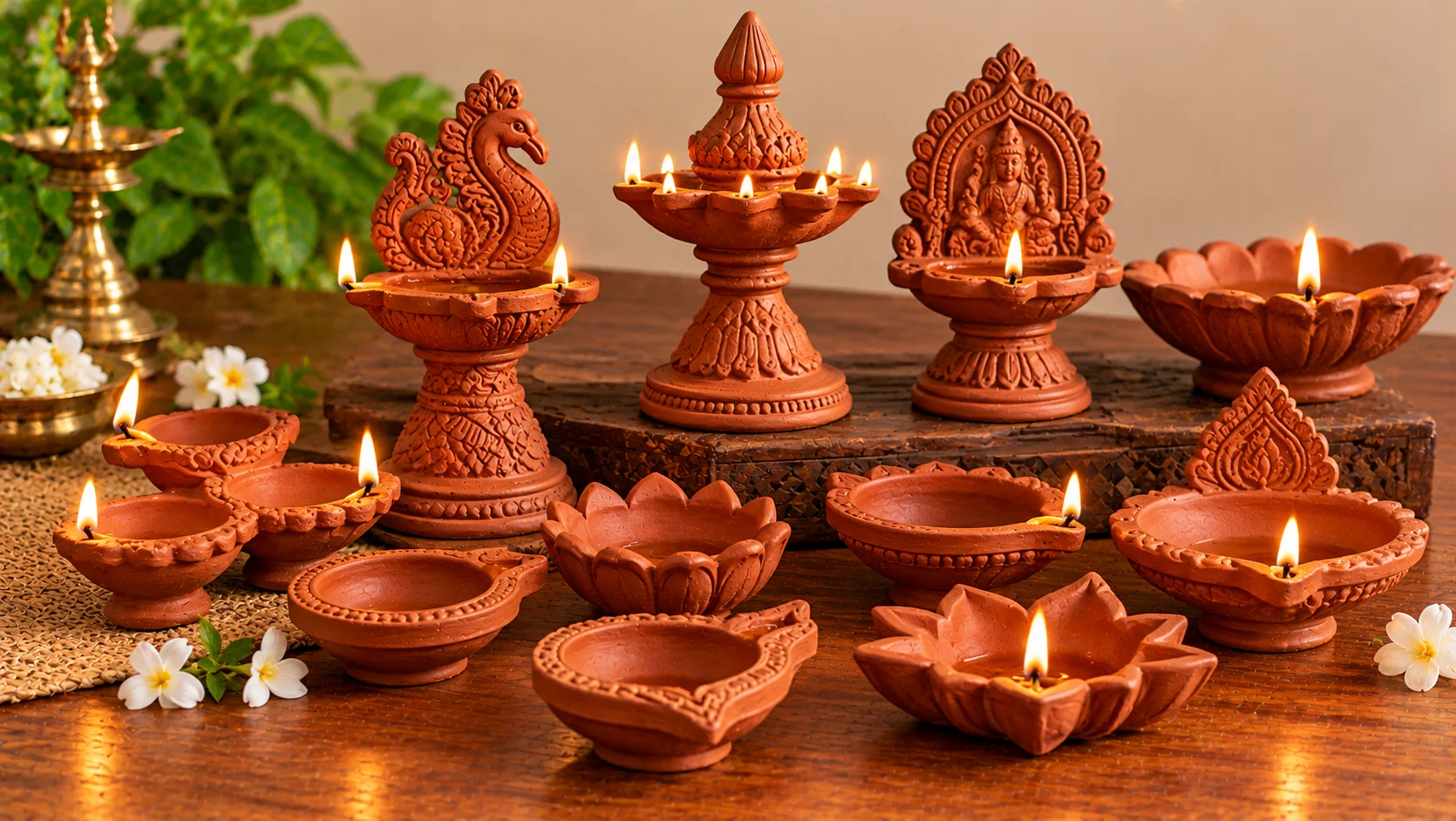
This image has been generated using AI for visual representation purposes only.
Clay lamps and small pottery items from a traceable local potter. Describe the clay, firing and intended use only when confirmed by the maker; distinguish them from GI-listed products.
Sankarankovil Clay Lamps are traditional earthen lamps made from natural clay and used for religious worship, festivals and household lighting. Sankarankovil, a historic temple town in southern Tamil Nadu, has a strong religious and cultural identity associated with the Sankaranarayana Swamy Temple. Clay lamps are widely used across Tamil Nadu during daily prayers, Karthigai Deepam, Deepavali and other auspicious occasions. These lamps are shaped from workable clay, dried and fired to produce lightweight vessels that can hold oil and a cotton wick. Depending on the potter and intended use, they may be simple single-flame lamps or more elaborate designs. While clay lamps are a widespread Tamil tradition, the specific status of Sankarankovil as a distinct centre for clay-lamp production requires further local verification.
Earthen lamps have been used in South Indian homes and temples for generations as practical sources of light and symbols of devotion. Before electric lighting became common, oil lamps were essential for illuminating homes, shrines and public spaces. Their religious importance continues through daily puja and festivals in which rows of lamps are lit to signify auspiciousness, knowledge and the triumph of light over darkness. Sankarankovil's long-standing temple traditions provide a relevant cultural setting for the use of clay lamps. However, a separate documented history establishing Sankarankovil as a uniquely recognised clay-lamp manufacturing centre has not been verified.
Clay lamps have an important place in Tamil Hindu worship and household rituals. Lighting a lamp before a deity is commonly associated with inviting auspiciousness, expressing devotion and dispelling darkness. Earthen lamps are especially popular during Karthigai Deepam and Deepavali, when families and temples illuminate their surroundings with rows of lights. In temple towns such as Sankarankovil, these familiar devotional practices form part of the broader religious environment. The craft also reflects traditional pottery skills used to turn natural clay into practical ritual objects.
Traditional clay lamps are generally made from natural terracotta and feature a shallow bowl with a projecting spout that holds the cotton wick. The bowl is designed to contain a small quantity of oil or ghee while the wick draws fuel towards the flame. Depending on the design, lamps may have a rounded or flattened base, a single wick channel or several wick-holding points. Their natural reddish-brown colour comes from the clay and firing process, although some lamps may be painted or decorated. Hand-shaped lamps can show small differences in size, rim shape and surface texture. These characteristics describe traditional Tamil clay lamps generally and are not exclusive to Sankarankovil.
The potter first selects suitable clay and removes stones and other unwanted material. Water is added and the clay is kneaded until it becomes smooth and workable. Small portions are shaped by hand into shallow bowls, and one side is extended to form a spout for the wick. The rim and base are adjusted to help the lamp sit securely on a flat surface. The shaped lamps are left to dry gradually until much of their moisture has evaporated. They are then fired in an appropriate kiln or pottery-firing arrangement to harden the clay. After cooling, the lamps are checked for cracks, unstable bases and other defects. Some products may receive decorative colouring, while simple traditional lamps are sold in their natural terracotta finish.
Traditional clay-lamp making relies on preparing suitable clay and shaping small vessels by hand. The potter uses fingers and simple tools to form the bowl, wick spout and base, paying attention to wall thickness and balance. Lamps are dried before firing to reduce the risk of cracking. Firing hardens the clay and gives the finished lamp its characteristic earthen appearance. Methods and firing conditions vary by workshop and region. These techniques are common to traditional Tamil pottery, but a distinct production method unique to Sankarankovil has not been verified.
Sankarankovil Clay Lamps represent the connection between everyday pottery and devotional life in southern Tamil Nadu. Their practical purpose is to hold oil and a wick, while their symbolic meaning is associated with prayer, auspicious beginnings and the removal of darkness. They are relevant to household worship, temple rituals and major festivals. Clay lamps are also an accessible product of traditional pottery because they can be made in simple forms from widely available raw materials. Their continued use helps sustain demand for earthenware and preserves the familiarity of traditional lighting customs.
Made from shaped and fired clay, giving the lamps their characteristic earthy appearance.
The shallow bowl holds oil or ghee while the projecting spout supports the wick.
Clay lamps are commonly used for household puja, temple worship and auspicious ceremonies.
Earthen lamps are widely used during Karthigai Deepam, Deepavali and other occasions involving traditional lighting.
Many lamps retain a natural reddish-brown finish, although decorated versions are also available.
The town's established temple culture provides a local cultural context for the use of traditional devotional lamps.
In Tamil culture, lighting an oil lamp is widely understood as a symbol of auspiciousness, spiritual awareness and the victory of light over darkness. Earthen lamps are particularly associated with Karthigai Deepam, when homes and religious spaces are illuminated with rows of lights, and with Deepavali celebrations. Sankarankovil's prominent temple traditions make devotional lamps relevant to the town's wider religious culture. Nevertheless, the broader cultural significance of Tamil clay lamps should be distinguished from claims about a unique local manufacturing tradition, which requires more specific evidence.
Properly fired clay lamps can be stored for long periods if protected from impact and moisture. Keep unused lamps in a dry place and arrange them so they do not rub against one another or become chipped. Handle them carefully because terracotta can break if dropped. Before use, inspect each lamp for cracks and ensure that it rests securely on a stable, non-flammable surface. Use only a suitable quantity of oil or ghee, keep the wick controlled and never leave a burning lamp unattended. Keep flames away from curtains, paper, children and pets, and extinguish the lamp safely after use.
They are traditional earthen oil lamps associated with the cultural and devotional setting of Sankarankovil in Tenkasi district, Tamil Nadu. They are made from clay and designed to hold oil or ghee and a cotton wick.
Sankarankovil is a historic temple town in Tenkasi district in southern Tamil Nadu, India. It is known for the Sankaranarayana Swamy Temple.
The lamp itself is made from natural pottery clay mixed with water and shaped before firing. For lighting, a cotton wick and suitable oil or ghee are used.
The potter prepares and kneads the clay, shapes it into a shallow bowl with a wick spout, dries it and fires it. Once cooled, the lamp is checked for cracks and stability.
They can be used for daily household worship, temple-related practices and festivals such as Karthigai Deepam and Deepavali, in keeping with wider Tamil traditions.
Lighting a lamp is widely associated with auspiciousness, devotion and the symbolic removal of darkness. The practice is common in Tamil households and religious settings.
Store them in a dry place, protect them from impacts and handle them carefully to prevent chips and breakage. Check each lamp for cracks before lighting it.
They can be used outdoors on a stable, non-flammable surface when conditions are safe. Keep them sheltered from strong wind, avoid placing them near flammable materials and never leave a burning lamp unattended.
A specific GI registration for Sankarankovil Clay Lamps has not been verified. Clay lamps are a widespread traditional product across Tamil Nadu, and their use in Sankarankovil does not by itself establish a registered geographical indication.
This image has been generated using AI for visual representation purposes only.
Let Karthi Travels help you plan a comfortable and memorable journey across Tamil Nadu.
Experience, Trust & Memories Built Over the Years





Your journey is in experienced hands, from planning to the final drop.

No hidden charges. Clear and upfront pricing.

Clean, inspected and well-serviced vehicles for a comfortable journey.

Professional drivers focused on safe and pleasant travel.

Dependable pickups and reliable travel service.
Travel Made Simple, Experiences Made Grand

Explore the best of each destination with our curated sightseeing tours.

Perfect for families and groups, planned with comfort, safety and flexibility in mind.

Peaceful and spiritually enriching journeys with carefully planned routes.

Personalised honeymoon tours and romantic destinations for your special journey.

Compliant and well-documented tour plans to make the most of your travel concession.
 WhatsApp Us