
Karthi Travels®
ISO 9001:2015 Certified
Swamimalai, Thanjavur, Tamil Nadu
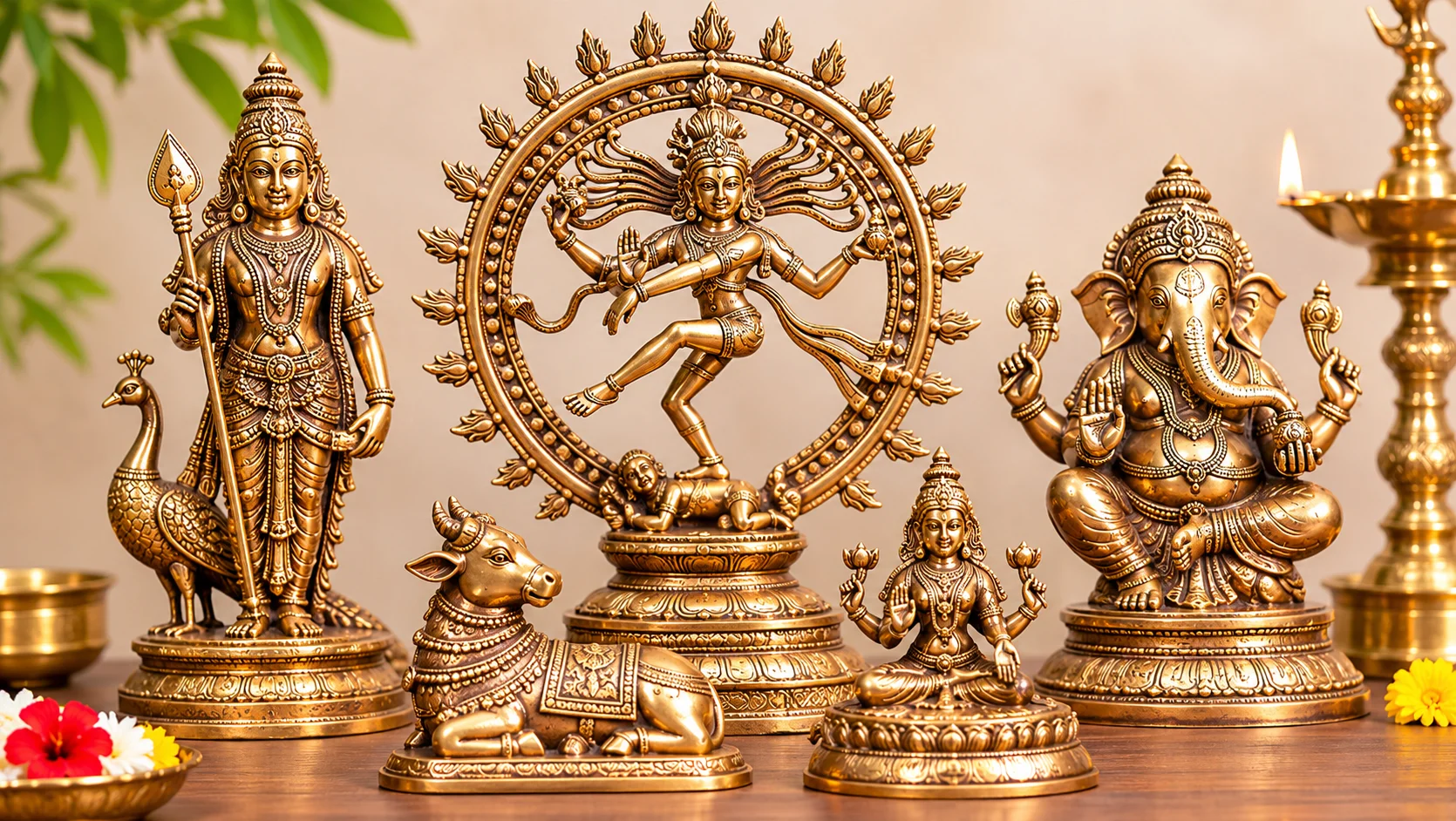
This image has been generated using AI for visual representation purposes only.
Discover Swamimalai Bronze Icons, a GI-registered regional product associated with Swamimalai, celebrated for its local heritage and traditional craftsmanship or production.
Swamimalai Bronze Icons are hand-made metal religious and ritual icons produced in the village of Swamimalai (Thanjavur district), Tamil Nadu, India. The craft covers bronze and panchaloha (multi-metal) icons made by hereditary sculptor-craftspeople (sthapathis) using traditional casting and finishing methods associated with the Swamimalai workshops.
Documented administrative records show Swamimalai Bronze Icons as a recognized Geographical Indication for the metal handicraft produced in Tamil Nadu (original application filed 26 July 2006; certificate issued 22 April 2008). A separate GI registration for a logo was filed in January 2015 with a certificate date of 31 March 2016. Ethnographic and craft studies describe a long-standing local practice of bronze icon manufacture in Swamimalai and neighbouring Kumbakonam, with workshop families (sthapathis) passing techniques and iconographic rules informed by Shilpa Shastra across generations. The craft has an established role in supplying images for temple use, ritual, processions and devotional practice in the region.
The tradition is carried by hereditary sculptor-craftspeople commonly referred to as sthapathis. Training, iconographic proportions and many design principles draw on the Shilpa Shastra textual tradition and on workshop-based apprenticeship. Production and ritual use are interwoven: workshops traditionally make icons for temple installation, ritual worship and processions, and some finishing or alloying practices have ritual significance in local practice.
Icons are typically produced by hand using an investment (lost‑wax / cire‑perdue) casting method. Materials include bronze and panchaloha (multi‑metal alloys) giving a characteristic metallic colour and weight; fine modelling of anatomy and ornamentation follows canonical proportions; final work includes chasing, engraving and hand‑finishing. Some icons are solid‑cast while others use hollow casting techniques; sizes range from small household images to larger temple and processional icons.
Typical stages documented in Swamimalai workshops are: (1) modelling the icon in beeswax to the desired form and detail; (2) building an outer investment mould using layers of fine and coarse clay around the wax model; (3) heating to melt and drain the wax (the ‘lost‑wax’ step) leaving a cavity; (4) melting the chosen metal/alloy and pouring it into the prepared mould; (5) breaking the clay investment after cooling to reveal the cast metal icon; and (6) finishing operations such as filing, chasing, engraving, polishing and, where practised, application of metal cladding or kavacha.
The craft uses the madhuchchishta (madhuchishta) or lost‑wax (cire‑perdue) tradition and workshop practices preserved in hereditary sthapathi families. Iconographic rules and proportions are informed by Shilpa Shastra texts; finishing is executed by hand with traditional chasing and engraving tools. In some customary practices devotees’ small gold or silver offerings are incorporated into the metal charge for panchaloha casting.
Swamimalai’s metal icon production is an integral part of local religious and artistic life in the Cauvery delta: workshops historically supplied temple images and processional deities, supported ritual practice and contributed to regional metalcraft identities. The craft is recognised administratively through India’s Geographical Indications system, reflecting its documented association with the Swamimalai area and its traditional production practices.
Swamimalai Bronze Icons are a registered Geographical Indication for Tamil Nadu; the original application was filed in 2006 with a certificate issued in 2008, and a registered GI logo was later recorded in 2016.
The craft is produced using the lost‑wax (cire‑perdue / madhuchchishta) casting technique followed by hand chasing and engraving—methods maintained in hereditary sthapathi workshops.
Productions include bronze and panchaloha (multi‑metal) alloys; panchaloha alloys and the addition of small precious‑metal offerings have customary and ritual associations in local practice.
Icon production in Swamimalai is historically linked to the temple culture of the area; workshops have produced images intended for temple rituals, processions and community ceremonies, and the craft practice is tied to hereditary workshop lineages and regional iconographic conventions.
Yes. Swamimalai Bronze Icons are registered under India’s Geographical Indications system (original application filed 26 July 2006; certificate issued 22 April 2008). A registered logo application was also recorded with a certificate date in 2016.
Documented materials include copper‑based bronzes and multi‑metal panchaloha alloys. Beeswax and clay are used in the lost‑wax (investment) casting process.
They are typically made by the lost‑wax (cire‑perdue / madhuchchishta) process: a wax model is made, a clay investment is formed and the wax removed by heating; molten metal is poured into the cavity, the mould is broken after cooling, and the cast icon is finished by hand with chasing, engraving and polishing.
No. The GI identifies a registered product and its traditional production area and methods, but not every metal object sold in the region is necessarily covered by the GI registration or authorised by its registrant. Buyers or users wishing to confirm GI status should rely on official certificates or authorised‑user information (this entry is informational and does not advise particular sellers).
Swamimalai icons are exported, but export of older objects that may be antiques is subject to national export regulations; in India, certain antique metallic images may require a Non‑Antiquity Certificate from relevant authorities before export. Export advice and regulatory compliance should be confirmed with the responsible authorities.
This image has been generated using AI for visual representation purposes only.
Let Karthi Travels help you plan a comfortable and memorable journey across Tamil Nadu.
Experience, Trust & Memories Built Over the Years





Your journey is in experienced hands, from planning to the final drop.

No hidden charges. Clear and upfront pricing.

Clean, inspected and well-serviced vehicles for a comfortable journey.

Professional drivers focused on safe and pleasant travel.

Dependable pickups and reliable travel service.
Travel Made Simple, Experiences Made Grand

Explore the best of each destination with our curated sightseeing tours.

Perfect for families and groups, planned with comfort, safety and flexibility in mind.

Peaceful and spiritually enriching journeys with carefully planned routes.

Personalised honeymoon tours and romantic destinations for your special journey.

Compliant and well-documented tour plans to make the most of your travel concession.
 WhatsApp Us