
Karthi Travels®
ISO 9001:2015 Certified
Nagercoil, Kanniyakumari, Tamil Nadu
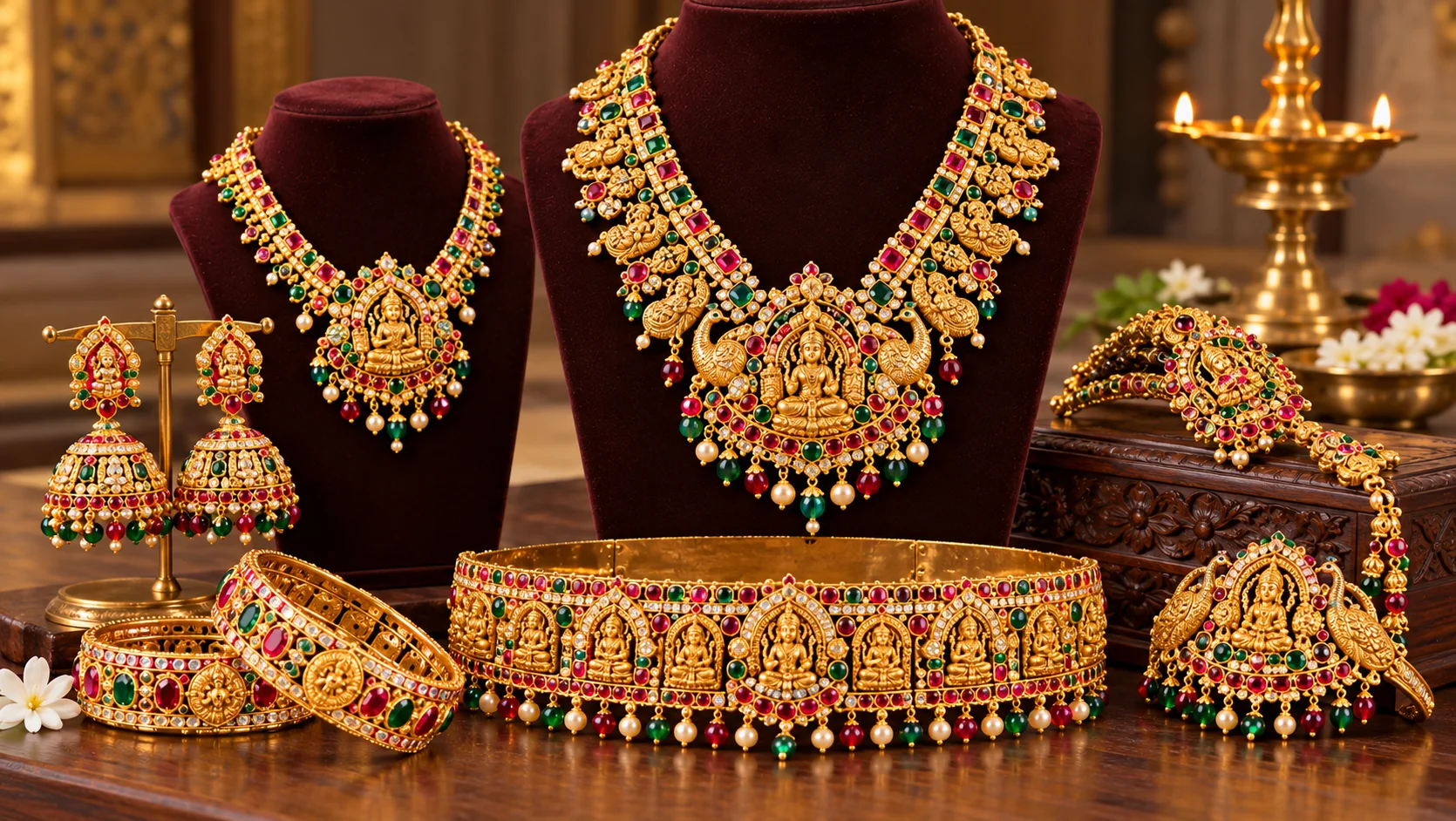
This image has been generated using AI for visual representation purposes only.
Discover Temple Jewellery of Nagercoil, a GI-registered regional product associated with Nagercoil, celebrated for its local heritage and traditional craftsmanship or production.
Temple Jewellery of Nagercoil is a regionally identified handicraft of Nagercoil (Kanniyakumari district) in Tamil Nadu, India. The GI-protected product describes a local style of temple and classical-dance jewellery produced by artisan clusters around Vadasery (Nagercoil) and is recognised for its characteristic red-and-green 'Kuchu kal' (Kemp) stones and traditional handcrafting methods. ()
The Geographical Indication application for Temple Jewellery of Nagercoil was filed with the Development Commissioner (Handicrafts) on 26 July 2006 and a certificate of registration was issued on 13 July 2007; the GI registration and related documents identify Nagercoil (Vadasery area) and the broader Tamil Nadu region as the geographical area. The craft is traditionally associated with temple ritual adornment and later with classical-dance (Bharatanatyam/Kuchipudi) costume in the region. Local craftsmen and some craft publications describe an older historical association of temple-style jewellery in the region (oral tradition links production to earlier centuries and to temple patronage), but those early-origin claims are presented in the sources as craft-community tradition rather than as fully documented archaeological or epigraphic fact. ()
Production is an inherited artisan skill practised in the Nagercoil/Vadasery cluster; local jewellers (many identified in the GI authorised-user records) maintain specialised knowledge of form-making, lac/wax stone-setting and gold-over-silver finishing used for temple adornment and dance regalia. The craft traditions include generational transmission within families and workshop groups in Vadasery. ()
Characteristic features include: (1) a red-and-green colour palette produced by locally referenced 'Kuchu kal' or Kemp stones (traditional red/green stones or their modern equivalents); (2) motifs drawn from temple iconography — lotus, peacock, depictions of deities and temple-architecture elements; (3) construction that commonly uses a silver base finished with gold overlay (gold leaf or plating) to achieve the look and weight distinct from solid-gold jewellery; and (4) a raised stone-setting method using lac or a wax/resin that gives a slightly elevated, luminous setting for the stones. These traits are documented in GI and craft sources as distinguishing the Nagercoil temple-jewellery style. ()
Typical production stages recorded in craft descriptions: (1) forming the structural frame and motifs by hand from silver sheet/wire; (2) assembling and soldering the main components; (3) preparing cavities or recessed settings and filling these with lac, natural resin or wax; (4) placing and pressing the red/green stones (Kuchu kal / kemp stones) into the softened lac/wax (sometimes with coloured foil beneath to enhance reflected light); (5) hardening the lac/wax setting (often by gentle heating) to secure stones; (6) applying gold overlay (gold leaf or electroplating) to achieve the gold appearance; and (7) finishing and polishing. These stages are described in craft-centre and handicraft accounts of the Vadasery method. ()
Hand-hammering and manual forming of silver sheet, hand-soldering of components, lac/wax (natural resin) stone-setting, use of reflective foil beneath stones for colour effect, and hand-finishing/polishing. The craft is strongly workshop- and hand-skill-oriented rather than machine-based in its traditional practice. ()
Temple Jewellery of Nagercoil holds regional cultural and artistic significance as temple adornment and as jewellery used in classical-dance costume; it is recognised by the Government of India through a GI registration that documents the local production cluster and aims to protect the craft identity. The style preserves motifs and execution linked to temple iconography and performing-arts traditions of the region. ()
Application filed 26 July 2006; certificate of registration issued 13 July 2007 (GI application no. 65, certificate number 39). The IP India record lists the product as a registered handicraft from Tamil Nadu. ()
The GI documentation and authorised-user list identify Vadasery (Nagercoil) as the principal production cluster with numerous named artisans and family workshops recorded as authorised users in the GI records. ()
Sources describe a traditional use of red-and-green 'Kuchu kal' (Kemp) stones and a raised lac/wax setting that together give the jewellery its characteristic red–green sparkle and slightly elevated stone profile. ()
The jewellery is culturally linked to temple worship practices and the visual vocabulary of South Indian temple art; it is also integral to classical-dance aharya (costume) traditions. Local workshop communities in Vadasery have historically supplied temple and ritual needs in the surrounding region, and the GI registration recognises this cluster-based cultural production. ()
Yes. The GI application (no. 65) was filed 26 July 2006 and the certificate of registration was issued on 13 July 2007; the GI record names Nagercoil (Tamil Nadu) and records authorised local artisans. ()
‘Kuchu kal’ (often called Kemp) refers in craft sources to the traditional red-and-green stones used in Nagercoil temple jewellery. Sources note that historically cabochon-style red and green stones were used; in some modern pieces equivalent glass or synthetic stones are also employed. ()
Traditional descriptions include gold jewellery used for temple adornment, but the documented local practice in the Vadasery cluster commonly uses a silver structural base finished with gold leaf or plating to achieve the gold appearance while maintaining a different weight and cost profile. ()
The GI documentation and authorised-user list identify workshops and artisans clustered in Vadasery (Nagercoil) in Kanniyakumari district; many named artisan families and units are recorded in the GI authorised-user records. ()
A traditional raised-setting method using lac or a wax/resin (sometimes with reflective foil beneath stones) is described in craft accounts; the stones are pressed into softened lac/wax which is then hardened to hold them securely. ()
This image has been generated using AI for visual representation purposes only.
Let Karthi Travels help you plan a comfortable and memorable journey across Tamil Nadu.
Experience, Trust & Memories Built Over the Years





Your journey is in experienced hands, from planning to the final drop.

No hidden charges. Clear and upfront pricing.

Clean, inspected and well-serviced vehicles for a comfortable journey.

Professional drivers focused on safe and pleasant travel.

Dependable pickups and reliable travel service.
Travel Made Simple, Experiences Made Grand

Explore the best of each destination with our curated sightseeing tours.

Perfect for families and groups, planned with comfort, safety and flexibility in mind.

Peaceful and spiritually enriching journeys with carefully planned routes.

Personalised honeymoon tours and romantic destinations for your special journey.

Compliant and well-documented tour plans to make the most of your travel concession.
 WhatsApp Us