
Karthi Travels®
ISO 9001:2015 Certified
Thanjavur, Tamil Nadu
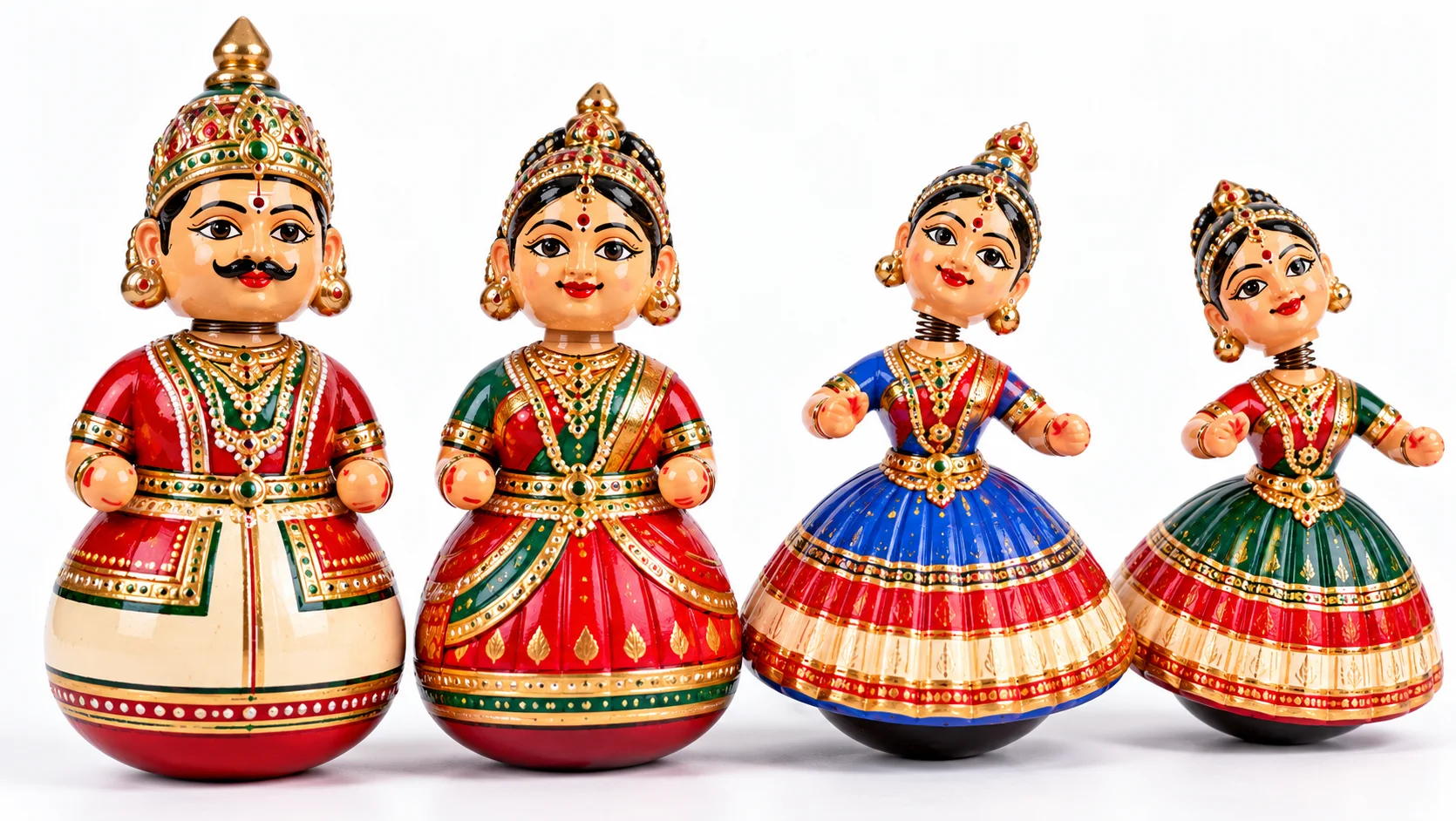
This image has been generated using AI for visual representation purposes only.
Discover Thanjavur Doll, a GI-registered regional product associated with Thanjavur, celebrated for its local heritage and traditional craftsmanship or production.
Thanjavur Doll (locally Thalaiyatti Bommai) is a traditional handicraft doll from Thanjavur district, Tamil Nadu, India. Known for its self-righting, bobble-head motion and brightly painted forms, the doll is a regional craft associated with Thanjavur's artisan traditions and is registered as a Geographical Indication of India.
Documented sources link the Thanjavur head-shaking doll tradition to the cultural environment of Thanjavur in the late 18th–19th centuries, with later development and popularisation under the region’s royal and courtly patronage. The craft evolved from simple toy forms into decorated figures reflecting local performance, devotional and courtly imagery. The Government of India registered "Thanjavur Doll" as a Geographical Indication with a certificate issued in 2008, recognising the product's association with Thanjavur district.
The craft is produced by local artisan families in and around Thanjavur and embodies inherited skills in modelling, weighting and hand-painting. Production and finishing techniques are passed within artisan communities and the dolls form part of local ritual and festival displays (notably the golu/kolu arrangements during Navratri) and other domestic decorative traditions.
A rounded, weighted base concentrates mass so the figure gently oscillates and returns upright when tapped (a self-righting or bobble-head mechanism). Bodies are modelled by hand or in simple moulds, finished with brightly coloured paints and often depict pairs (king/queen), deities, dancers or local personae. The combination of the engineered rounded base, light articulated head or neck assembly and vivid surface painting distinguishes Thanjavur Dolls from other regional figurines.
Artisans prepare a rounded, bowl-like base that concentrates weight at the bottom; the doll body is shaped by hand or with simple moulds and joined to the base. Where the design requires head movement, heads are fitted on an axle or light joint and secured so a small impulse makes the head and body oscillate while the weighted base re-centres the figure. After shaping and assembly the surface is smoothed and hand-painted in bright colours; finishing varies with the primary material (clay-based pieces are allowed to dry/cure while plaster-based pieces are set to harden).
Hand-modelling and low-technology moulding for body shapes; creation of a precisely weighted rounded base to achieve the self-righting motion; manual assembly of head and body with simple fastenings; and hand-painting techniques for facial and costume detailing.
Thanjavur Dolls are part of the material culture of Thanjavur, reflecting local aesthetic links to classical dance, courtly imagery and festival display. The product’s Geographical Indication registration recognises the craft’s association with Thanjavur district and helps differentiate authentic regional production from look-alike items produced elsewhere.
The Government of India has registered 'Thanjavur Doll' as a Geographical Indication, recognising its association with Thanjavur district and the traditional craft processes used there.
A rounded, weighted base and a light articulated head produce a gentle oscillation and automatic re-centring that are characteristic features of these dolls.
Thanjavur Dolls are traditionally used as part of the golu/doll-display practice during Navratri and are also made to represent deities, dancers and royal pairs reflecting local cultural themes.
The dolls are integrated into local festival practices (notably golu during Navratri) and reflect Thanjavur’s long-standing courtly and performance-related iconography. Many forms draw on regional dance and devotional themes, linking the craft with broader Thanjavur artistic traditions.
The dolls are distinguished by a rounded, weighted base and an articulated head or neck arrangement that produces a gentle oscillation and automatic return to upright position, combined with hand-painted surface decoration and regional iconography.
Yes. The product is registered as a Geographical Indication associated with Thanjavur district, recognising the link between the craft and its place of origin.
Traditional and contemporary examples are made from terracotta clay or Plaster of Paris, with hand-applied pigments/paints for finished decoration. Simple metal string or fastenings may be used where articulation is required.
They are used as decorative and ritual display pieces—prominently in Navratri golu arrangements—made as toys, devotional figures or representational artworks depicting royal, mythological or dance subjects.
Yes. Locally they are often called Thalaiyatti Bommai (head-shaking doll) and variants include names such as Uruttu Bommai and Chettiar Bommai for certain regional or stylistic types.
This image has been generated using AI for visual representation purposes only.
Let Karthi Travels help you plan a comfortable and memorable journey across Tamil Nadu.
Experience, Trust & Memories Built Over the Years





Your journey is in experienced hands, from planning to the final drop.

No hidden charges. Clear and upfront pricing.

Clean, inspected and well-serviced vehicles for a comfortable journey.

Professional drivers focused on safe and pleasant travel.

Dependable pickups and reliable travel service.
Travel Made Simple, Experiences Made Grand

Explore the best of each destination with our curated sightseeing tours.

Perfect for families and groups, planned with comfort, safety and flexibility in mind.

Peaceful and spiritually enriching journeys with carefully planned routes.

Personalised honeymoon tours and romantic destinations for your special journey.

Compliant and well-documented tour plans to make the most of your travel concession.
 WhatsApp Us