
Karthi Travels®
ISO 9001:2015 Certified
Thanjavur, Tamil Nadu
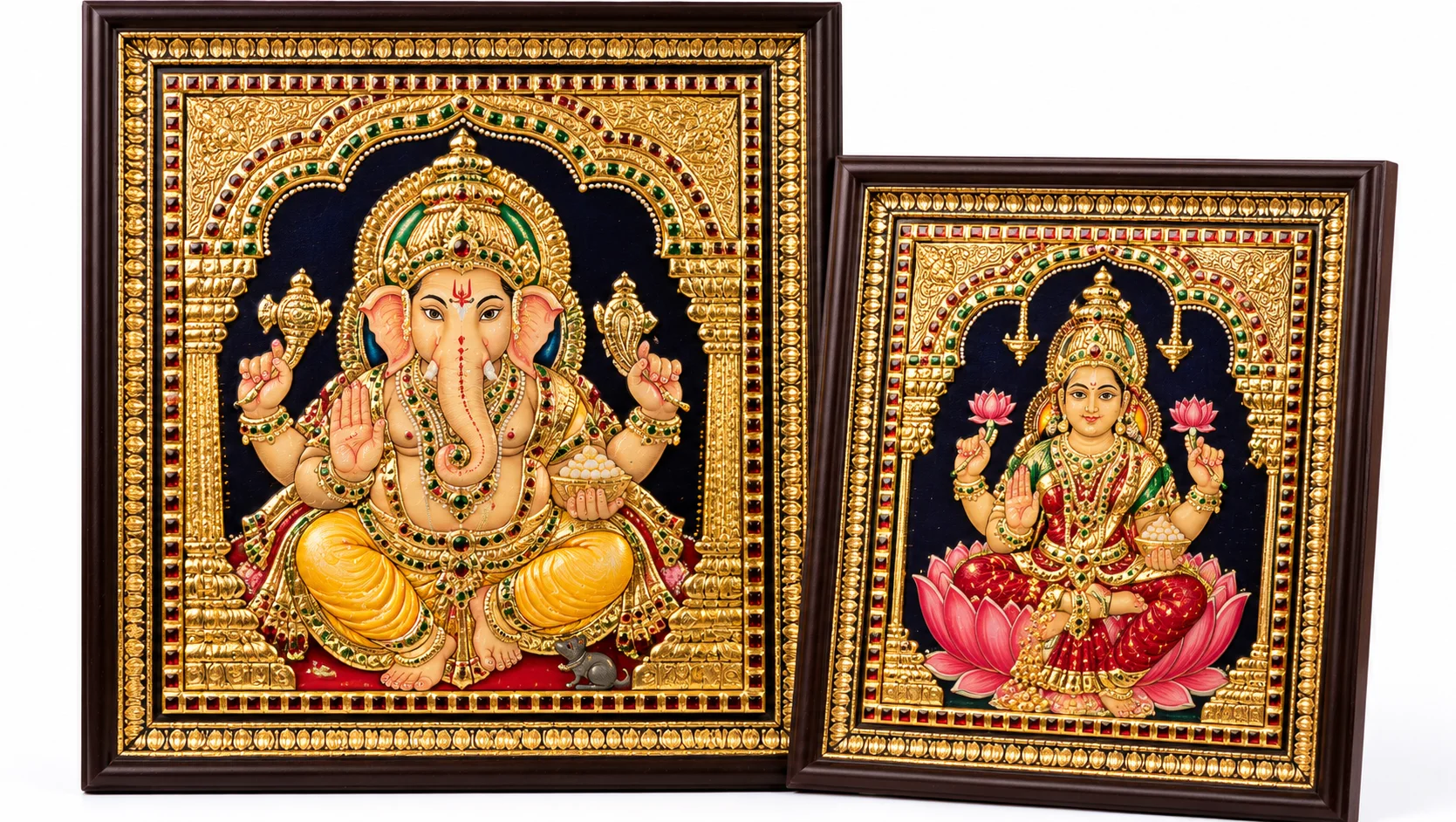
This image has been generated using AI for visual representation purposes only.
Discover Thanjavur Painting, a GI-registered regional product associated with Thanjavur, celebrated for its local heritage and traditional craftsmanship or production.
Thanjavur Painting is a classical South Indian panel-painting tradition named for Thanjavur (Tanjore) in Tamil Nadu. Locally called palagai padam (literally "picture on a wooden plank"), it is a handicraft form noted for a central iconic figure, raised gesso relief, bright colour, and the application of gold leaf and inlaid glass or stone ornamentation. The registered Geographical Indication for this craft ties the name "Thanjavur Paintings" to works produced by the traditional methods associated with the Thanjavur region.
Scholarly and museum accounts describe Thanjavur (Tanjore) painting as a distinct South Indian panel-painting tradition that matured in the Thanjavur region and drew on visual vocabularies associated with local temple painting and court patronage. Art-historical sources commonly link the form’s characteristic gilding and relief work to developments in the region from the early modern period onward, with later formal consolidation under local court and workshop patronage. The craft was the subject of a Geographical Indication registration process during 2006–2007; the Thanjavur Paintings registration was filed on January 4, 2006 and a certificate of registration issued in May 2007 under the GI registry for India. Documentary records used in the GI application identify Thanjavur as the geographical area of association. Where accounts discuss older roots (for example, links with earlier temple murals and wider Deccan and Vijayanagara traditions) those are presented as art-historical interpretations rather than single definitive origin narratives.
Techniques and skills for Thanjavur painting are traditionally transmitted within local artisan workshops and families in and around Thanjavur. The form is closely associated with South Indian iconographic conventions used for devotional images (deities, saints) and with the region’s temple-art visual language. The craft has long served devotional, ritual, and decorative roles within local cultural practice.
Thanjavur paintings are typically executed on a panel (palagai) and are distinguished by (1) a raised relief (gesso) surface used to create embossed ornament and modelling, (2) the application of gold leaf over the raised areas to produce a lustrous, gilded surface, (3) inlay or setting of glass beads, polished stones or similar ornament to add three-dimensional sparkle, and (4) a central, often devotional, composition rendered in vivid pigments. The combination of panel support, gesso relief and gold overlay is the principal feature that separates traditional Thanjavur painting from other South Indian schools.
A typical sequence recorded in museum and craft descriptions is: (1) selection and preparation of a wooden panel (joined planks or single plank) and smoothing of the surface; (2) pasting a fine cloth (usually muslin) to the panel with adhesive to create the painting ground; (3) applying a white primer or chalk-based paste to level and prepare the ground; (4) transferring or sketching the composition onto the prepared ground; (5) creating raised relief (gesso) ornament and modelling using a chalk/limestone-and-adhesive paste to build embossed details; (6) applying gold leaf over the raised relief areas and burnishing as required; (7) fixing glass beads, polished stones or similar ornaments into designated areas; (8) painting the figure and background with colours and detailing; and (9) final finishing and drying. Specific workshop practices and exact materials can vary between artisans and over time.
Key traditional techniques include palagai padam (mounting the painted composition on a wooden plank), mukku or gesso relief work formed from a chalk/limestone paste mixed with a binder to create raised ornament, hand-application of gold leaf over the relief areas, and the hand-setting of glass beads or polished stones into the golded relief. These methods are labour-intensive and are executed with hand tools and brushes in small studio settings.
Thanjavur painting occupies a recognized place in the artistic heritage of Thanjavur and Tamil Nadu: it reflects regional temple-iconographic traditions, a localized panel-painting practice, and the continuity of specialised artisan techniques. Because many works depict deities and devotional scenes, the paintings have both artistic and ritual significance in domestic and temple contexts. The form’s registration as a Geographical Indication recognises its association with the Thanjavur region and traditional methods of production.
Traditional Thanjavur paintings are panel paintings known locally as palagai padam—literally 'picture on a wooden plank'—reflecting the customary use of a cloth-backed wooden support.
Raised gesso (chalk-and-adhesive) relief is a defining visual technique; these raised areas are typically covered with gold leaf and ornamented with glass or stone inlays to create a distinctive luminous surface.
Thanjavur Paintings were registered in the Indian Geographical Indications register following an application filed in 2006; the craft’s GI certificate was issued in May 2007, linking the name to the Thanjavur region and its traditional methods.
Thanjavur painting is integral to the visual culture of the Thanjavur region: its iconography draws on temple visual traditions and South Indian devotional imagery. Historically linked to local workshop practices and court and temple patronage, the form continues to represent a recognizable regional craft associated with Thanjavur’s artistic heritage.
Thanjavur paintings are panel-based and can be sensitive to environmental conditions: wooden supports may warp or crack with fluctuations in humidity and temperature, and gilded surfaces and pasted elements (cloth backing, stone inlays) are vulnerable to mechanical damage and dust. Museum and conservation guidance recommends stable, moderate humidity and temperature, protection from direct sunlight, and professional conservation for fragile or historically important pieces.
A Thanjavur painting is a traditional South Indian panel painting from the Thanjavur region characterized by a cloth-backed wooden panel, raised gesso relief, application of gold leaf over the relief, and inlaid glass or stone ornamentation, typically portraying a central devotional figure.
Traditional Thanjavur paintings are usually on a wooden plank (palagai), show raised gesso relief over which gold leaf is applied, and include glass or stone inlay around a central iconic composition rendered in vivid colours.
The name 'Thanjavur Paintings' is officially associated with the Thanjavur region of Tamil Nadu; the craft is entered in the Indian Geographical Indications register following registration activity in 2006–2007.
Common materials include a wooden panel (traditionally jackfruit or teak), cloth backing, a chalk- or limestone-based gesso paste with binder, gold foil for gilding, glass beads or polished stones for inlay, and paints/pigments for colouring.
Because these are panel-based works, avoid prolonged exposure to direct sunlight and large swings in humidity or temperature; keep them dry, dusted gently, and seek professional conservation for any structural damage or significant ageing.
This image has been generated using AI for visual representation purposes only.
Let Karthi Travels help you plan a comfortable and memorable journey across Tamil Nadu.
Experience, Trust & Memories Built Over the Years





Your journey is in experienced hands, from planning to the final drop.

No hidden charges. Clear and upfront pricing.

Clean, inspected and well-serviced vehicles for a comfortable journey.

Professional drivers focused on safe and pleasant travel.

Dependable pickups and reliable travel service.
Travel Made Simple, Experiences Made Grand

Explore the best of each destination with our curated sightseeing tours.

Perfect for families and groups, planned with comfort, safety and flexibility in mind.

Peaceful and spiritually enriching journeys with carefully planned routes.

Personalised honeymoon tours and romantic destinations for your special journey.

Compliant and well-documented tour plans to make the most of your travel concession.
 WhatsApp Us