
Karthi Travels®
ISO 9001:2015 Certified
Thanjavur, Tamil Nadu, Thanjavur
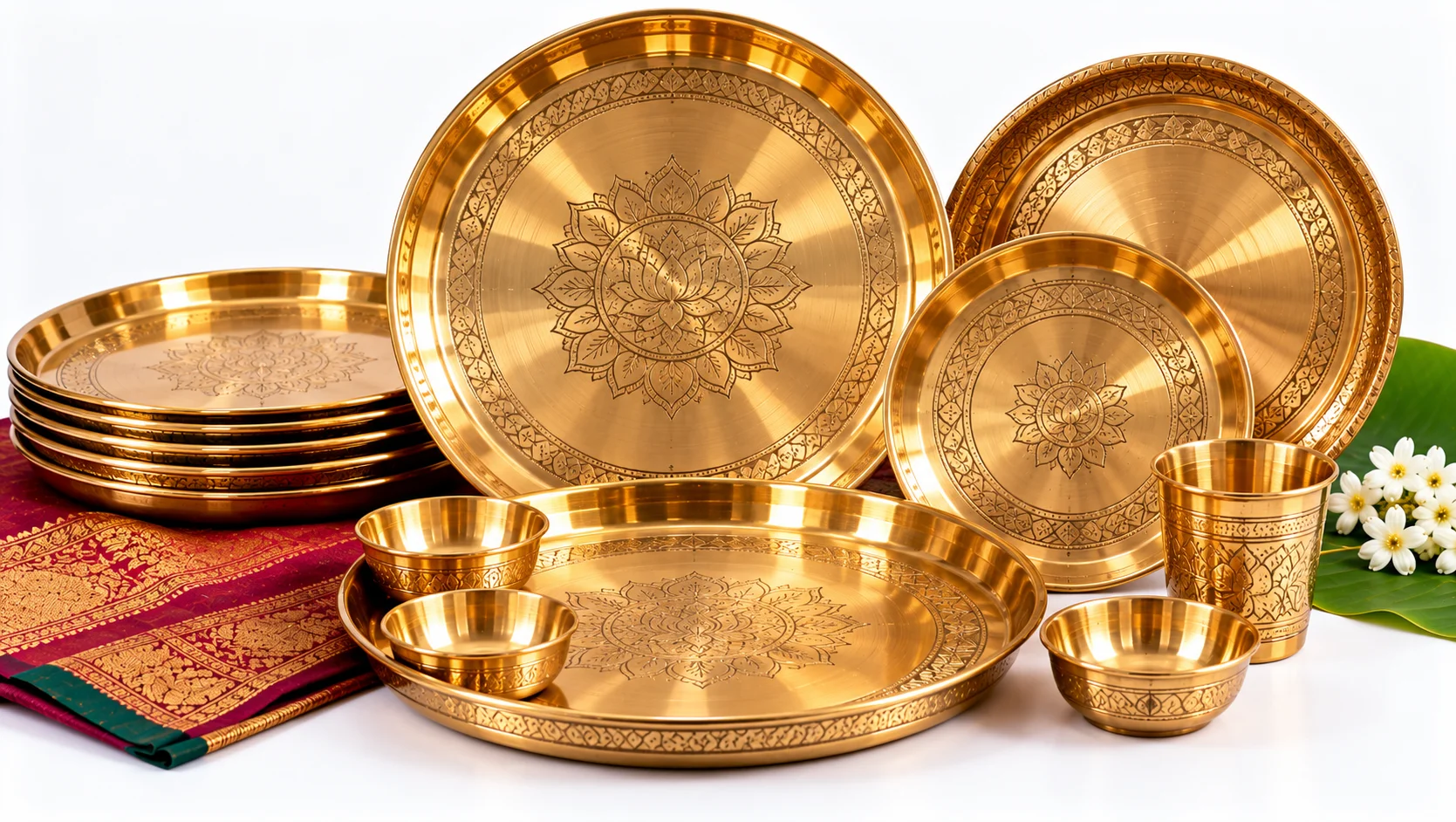
This image has been generated using AI for visual representation purposes only.
Traditional brass plates proposed for research into their documented materials, manufacture and regional associations.
Thanjavur Traditional Brass Plates are metal plates associated with the wider household metalware and handicraft market of Thanjavur, Tamil Nadu. Brass is an alloy composed primarily of copper and zinc and is valued for its warm golden appearance, workability, and ability to be formed into different shapes. Brass plates may be used for serving food, presenting offerings, household display, or decoration, depending on their construction and suitability. Designs range from plain, polished plates to products featuring raised rims, engraved patterns, or ornamental details. Traditional metal plates have a long history across India, where vessels made from copper and its alloys have served practical, domestic, and ceremonial purposes. Thanjavur is known for its historic temples, traditional arts, and handicraft activity, while nearby Nachiarkoil is particularly associated with brass standing oil lamps known as Nachiarkoil Kuthuvilakku. This wider metalworking heritage provides regional context for brass products available in the area. However, the name 'Thanjavur Traditional Brass Plates' is a descriptive product category and does not, by itself, establish a unique local manufacturing tradition or a Geographical Indication registration. Plates sold in Thanjavur may be made locally or sourced from other manufacturing centres. Their composition, thickness, weight, surface finish, and production technique vary by manufacturer. Visitors interested in traditional-style metalware can compare different designs and ask sellers about the place of manufacture and intended use. If a plate is intended for food service, buyers should confirm that its alloy and any internal coating are suitable for food contact. Decorative brass plates should not automatically be assumed safe for serving all foods, particularly acidic foods.
Metal plates and serving vessels have been used in Indian households for generations. Artisans across the subcontinent have worked with copper and copper-based alloys to produce utensils for food service, storage, religious offerings, and ceremonial use. Brass, which is primarily made from copper and zinc, became a widely used material for household objects because it can be formed into many shapes and given a polished finish. In Tamil Nadu, metal utensils form part of a broader material culture associated with everyday dining, domestic practices, and religious settings. Thanjavur developed a distinctive cultural identity through its temples, classical arts, painting, sculpture, and handicraft traditions. The surrounding region also includes specialist metalworking centres, such as Nachiarkoil, which is especially known for its traditional brass Kuthuvilakku lamps. These traditions provide context for the metalware available in Thanjavur, but they do not establish that every brass plate sold in the city was manufactured locally or follows a unique historical technique. The specific history of a product marketed as 'Thanjavur Traditional Brass Plates' would require evidence about its maker, workshop, and production process. Modern brass plates may be produced through casting, pressing, spinning, or other shaping methods, with manual or mechanical finishing. Today, brass plates may be purchased for practical household use, decoration, gifting, or collecting, provided that their material and intended purpose are suitable for the buyer's needs.
Metal plates have practical and cultural roles in many Indian households. Depending on their design, they may be used for serving meals, presenting food, arranging offerings, or displaying decorative objects. Traditional metal utensils are also associated with hospitality, household routines, and certain ceremonial practices. Brass plates belong to the wider tradition of Indian metalware, in which artisans transform copper-based alloys into useful and decorative objects. Thanjavur's historic and artistic heritage provides a broader regional context for these products, but the exact significance of an individual plate depends on its intended use and the traditions of the people using it. Not every brass plate has a religious or ceremonial purpose, and the regional name alone does not establish a distinct local ritual tradition.
Brass plates generally have a warm golden-yellow appearance and may be polished to a bright shine or given a more subdued finish. They are available in different diameters, thicknesses, weights, and rim designs. Some have flat surfaces and simple edges, while others feature raised borders, engraved decoration, or patterned rims. Their shape and weight depend on the manufacturing process and intended purpose. Brass can tarnish or darken through exposure to air, moisture, and handling, so the appearance may change over time. Some products may have protective coatings that affect their cleaning requirements and suitability for food contact. Brass composition varies between manufacturers, and surface colour alone cannot establish the exact alloy or quality. The name 'Thanjavur Traditional Brass Plates' does not guarantee a standardised local design, so buyers should inspect the individual item and confirm its origin and intended use.
The production process for brass plates depends on the design, thickness, and manufacturing method. Some plates may be formed from prepared brass sheet or metal stock through cutting, pressing, spinning, or other shaping techniques. Other designs may be cast in moulds and refined after cooling. The plate is shaped to create a stable base and an appropriate rim, and the surface is smoothed to remove irregularities. Depending on the design, decorative details may be added through engraving, embossing, or other finishing methods. The plate is then polished or treated to achieve the intended appearance. Finished products should be checked for sharp edges, uneven surfaces, unstable shapes, and visible defects. Some plates may receive a protective coating, although the type and suitability of such finishes vary. The exact manufacturing process used for a particular plate should be confirmed with its maker, because there is no basis to assume that all brass plates sold in Thanjavur follow one standardised regional method.
Traditional metalware production can involve manual shaping, casting, pressing, spinning, filing, edge finishing, and polishing. Depending on the plate's construction, artisans may shape prepared metal stock or cast the object before refining its surface. The rim may be shaped or reinforced to improve the plate's form, while decorative designs can be added through engraving or other techniques. Polishing gives brass its characteristic shine, although some products are finished in a less reflective style. Contemporary workshops may combine manual finishing with machinery. These techniques are used in metalware production across India and should not be described as exclusive to Thanjavur without documentation of a specific workshop or established craft tradition.
Thanjavur Traditional Brass Plates represent a traditional-style metalware category within the wider household and handicraft market of Tamil Nadu. Depending on their construction, they may serve as serving utensils, decorative objects, ceremonial plates, or gifts. Their appeal often lies in their metallic appearance, reusable construction, and association with traditional household products. For visitors, a brass plate can be a practical purchase or souvenir, but the intended use and manufacturing origin should be checked before buying. Buyers should distinguish general brass plates from specifically registered handicrafts, such as Nachiarkoil Lamps, whose Geographical Indication status applies to a defined product identity rather than all brassware sold in the region.
Brass plates are available in a range of sizes and designs for household, decorative, and other specified purposes.
Brass typically has a warm golden-yellow appearance that can be polished or finished with a more subdued surface.
Products may feature plain surfaces, raised rims, engraved patterns, or decorative borders.
Brass plates may be shaped from metal sheet, pressed, spun, cast, or finished using a combination of techniques.
Brass plates belong to the broader Indian tradition of producing metal utensils for domestic, decorative, and ceremonial purposes.
Buyers should confirm the alloy and any protective coating before using a brass plate for serving food.
Metal utensils are part of the material culture of Tamil Nadu and many other Indian regions. Plates and vessels made from copper-based alloys have been used for household dining, serving, storage, and ceremonial purposes. Brass plates continue this broad tradition through their practical forms and distinctive metallic appearance. Thanjavur's cultural heritage includes historic temples, traditional arts, and handicraft activity, while the nearby town of Nachiarkoil is known for its recognised brass Kuthuvilakku lamp-making tradition. This regional context helps explain the presence of traditional-style metalware in local markets, but it does not establish a unique Thanjavur origin for every brass plate sold there. The cultural meaning of a particular plate depends on its design, intended use, maker, and documented provenance.
Brass plates can remain in good condition for many years when properly maintained, although their surfaces may tarnish or become dull over time. Clean them according to the manufacturer's instructions and dry them thoroughly after washing. Store them in a clean, dry place and avoid prolonged exposure to moisture. Use gentle cleaning methods and avoid harsh abrasives or chemicals that could scratch the surface or damage a protective coating. If a plate is intended for food service, confirm that its alloy and any internal finish are suitable for food contact. Do not assume that every decorative brass plate is safe for serving food, particularly acidic foods. Avoid using plates with unknown coatings, damaged surfaces, or signs of corrosion for food until their suitability has been established. Follow any specific care guidance supplied by the maker.
The name describes brass plates associated with the regional metalware category in Thanjavur, Tamil Nadu. The manufacturing origin and intended use of a particular plate should be confirmed with the seller.
Brass is an alloy made primarily from copper and zinc. Its exact composition varies according to the grade and intended application.
Some plates may be hand-finished, while others may be shaped or manufactured using machinery, casting, pressing, or spinning. Ask the seller about the production method and whether the plate was made locally.
The name 'Thanjavur Traditional Brass Plates' should not automatically be treated as a registered Geographical Indication. Nachiarkoil Lamps are a distinct registered product associated with the nearby town, but that recognition does not extend to all brassware. Check the official Geographical Indications Registry for the current status of the exact product name.
Use a brass plate for food only if the manufacturer confirms that its alloy and any surface coating are suitable for food contact. Decorative brass plates should not automatically be assumed safe for serving all foods.
Do not assume that a brass plate is suitable for acidic foods. Confirm its intended use with the manufacturer because the alloy and any internal coating affect food-contact suitability.
Follow the manufacturer's care instructions, use gentle cleaning methods, and dry the plate thoroughly. Avoid harsh abrasives or chemicals that could damage its surface or protective coating.
You can enquire at local metalware retailers, household-goods shops, and handicraft outlets. Ask the seller to confirm the manufacturer and production location if you specifically want a plate made in Thanjavur.
Inspect the surface, rim, thickness, and overall construction. Ask about the alloy composition, protective coating, food-contact suitability, cleaning instructions, and place of manufacture.
This image has been generated using AI for visual representation purposes only.
Let Karthi Travels help you plan a comfortable and memorable journey across Tamil Nadu.
Experience, Trust & Memories Built Over the Years





Your journey is in experienced hands, from planning to the final drop.

No hidden charges. Clear and upfront pricing.

Clean, inspected and well-serviced vehicles for a comfortable journey.

Professional drivers focused on safe and pleasant travel.

Dependable pickups and reliable travel service.
Travel Made Simple, Experiences Made Grand

Explore the best of each destination with our curated sightseeing tours.

Perfect for families and groups, planned with comfort, safety and flexibility in mind.

Peaceful and spiritually enriching journeys with carefully planned routes.

Personalised honeymoon tours and romantic destinations for your special journey.

Compliant and well-documented tour plans to make the most of your travel concession.
 WhatsApp Us