
Karthi Travels®
ISO 9001:2015 Certified
Thoothukudi region, Thoothukudi
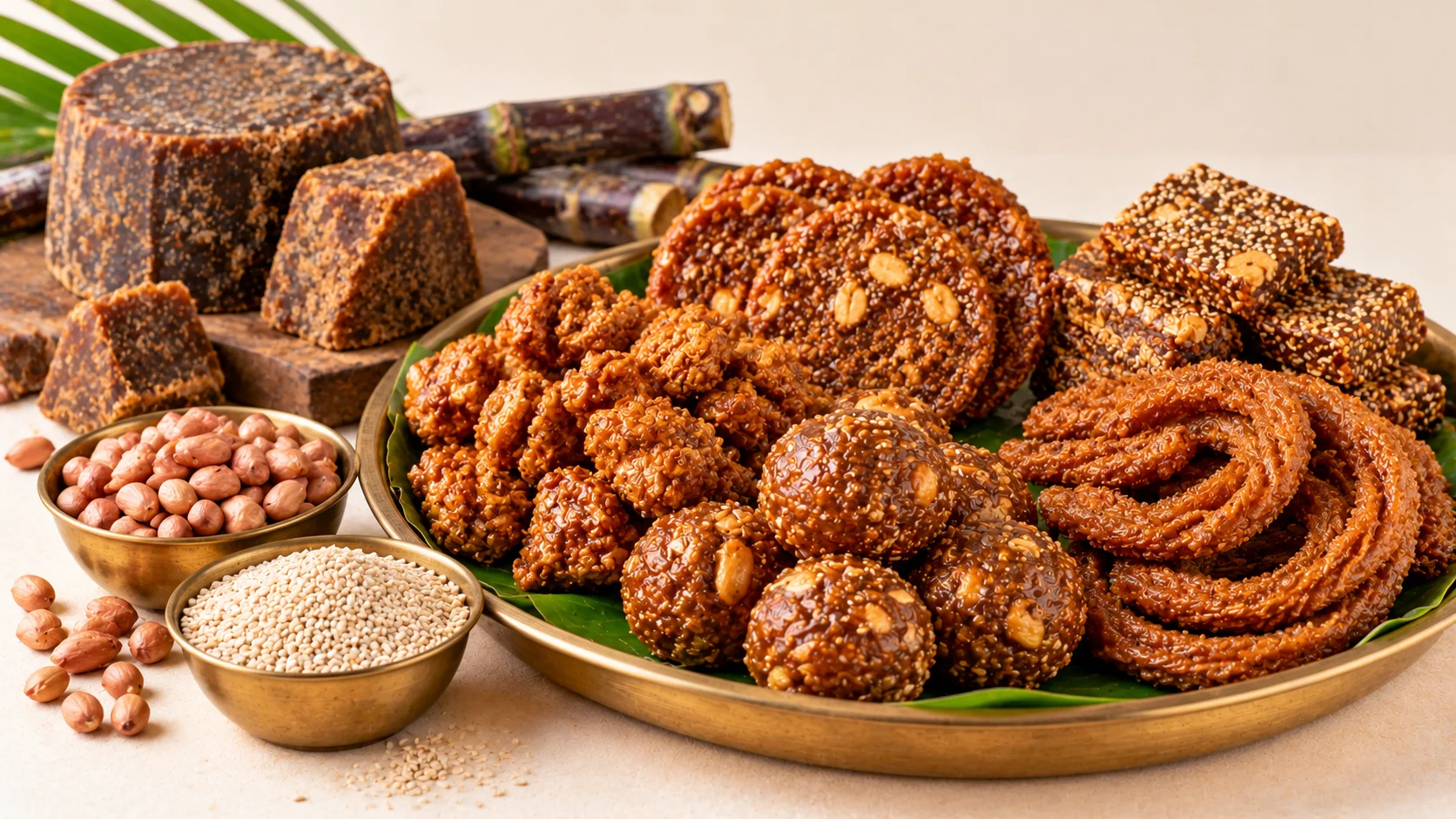
This image has been generated using AI for visual representation purposes only.
Packaged sweets or snacks made with palm jaggery, a traditional sweetener in parts of southern Tamil Nadu. Record the exact product and ingredients because this is a category, not one standardised recipe.
Thoothukudi Karupatti Snacks refers to traditional sweet snacks and confectionery preparations made using karupatti, or palm jaggery, associated with Thoothukudi and the surrounding region of southern Tamil Nadu. Karupatti is traditionally produced by concentrating the sweet sap collected from palmyra palms and solidifying it into blocks. Its characteristic deep sweetness and distinctive flavour make it an important ingredient in regional sweet-making traditions. Depending on the preparation, karupatti may be combined with rice flour, gram flour, nuts, dry ginger or other ingredients to create different snacks and sweets. Examples of palm-jaggery-based preparations found in Tamil Nadu include karupatti mittai, sweet paniyaram and palm-jaggery-coated fried snacks. These preparations differ in their ingredients and production methods. Thoothukudi's association with palmyra cultivation and palm-jaggery production provides an important regional context for these traditional foods. However, Thoothukudi Karupatti Snacks is a broad category rather than one universally standardised recipe.
The history of Thoothukudi Karupatti Snacks is connected to the longstanding use of palmyra palm products in southern Tamil Nadu. The palmyra palm has historically supplied sap, leaves, fibre and other materials used in regional food and household practices. Concentrating palm sap to produce jaggery provides a traditional method of preserving its sweetness in a solid form suitable for storage and cooking. In the Thoothukudi region, particularly the wider palmyra-growing areas of southern Tamil Nadu, palm jaggery has been used as a sweetener in household preparations and traditional confectionery. It can be combined with flour, spices, nuts and other ingredients to produce different sweet snacks. Recipes and preparation methods vary among households and communities, and no single historical date or inventor can be established for the broad category of karupatti-based snacks. Individual preparations have their own culinary histories, while palm-jaggery production forms part of the wider regional tradition. The development of modern packaged karupatti snacks represents an adaptation of these traditional ingredients and preparations to contemporary food production. The exact introduction dates of individual commercial snack varieties cannot be established without product-specific historical evidence.
Thoothukudi Karupatti Snacks reflect the traditional use of palm jaggery in the food culture of southern Tamil Nadu. Preparing these foods requires knowledge of how palm jaggery behaves when heated, dissolved into syrup or combined with flour and other ingredients. Depending on the snack, the preparation may involve making jaggery syrup, mixing ingredients into a dough or batter, shaping individual portions, frying or baking, and coating the finished preparation with syrup. The correct consistency of the jaggery mixture is important for achieving the intended texture and sweetness. Traditional recipes vary according to the type of snack and household practice. The use of palm jaggery also connects confectionery preparation with the regional palmyra economy, in which collecting palm sap and producing jaggery are established traditional activities.
The principal distinguishing ingredient in Thoothukudi Karupatti Snacks is karupatti, a traditional palm jaggery produced from concentrated palmyra palm sap. It provides a deep, caramel-like sweetness and a flavour that differs from that of refined white sugar. The appearance, texture and ingredients of the finished snacks depend on the particular preparation. Some are soft and chewy, while others are crisp, dense or coated with jaggery syrup. Ingredients may include rice flour, gram flour, groundnuts, sesame seeds, dry ginger or other components, depending on the recipe. Some preparations are deep-fried before being combined with palm-jaggery syrup, whereas others are cooked directly with the sweetener. There is no single standard shape, colour, texture or ingredient ratio for the broad category. The defining characteristic is the use of palm jaggery in a traditional snack or confectionery preparation.
The production process depends on the type of karupatti snack being prepared. Palm jaggery itself is traditionally produced by collecting palmyra palm sap and heating it to concentrate the sugars. The concentrated liquid is cooked until it reaches a suitable consistency and then poured into moulds or containers to solidify. For snack preparation, the jaggery may be broken into pieces and dissolved in water to create a syrup. Depending on the recipe, the syrup is strained to remove impurities before further cooking. Flour, nuts, seeds or other ingredients may then be added in suitable proportions. Some preparations are shaped into individual portions and fried, while others are cooked as batter-based sweets or combined with a prepared snack before the jaggery mixture sets. In certain preparations, spices such as dry ginger contribute additional flavour. The finished product is cooled until it reaches the intended consistency. Ingredient proportions, heating temperatures, cooking times and finishing techniques vary substantially between different karupatti snacks, so no single production process applies to the entire category.
Traditional methods associated with karupatti snacks include concentrating palmyra sap into jaggery, dissolving jaggery to prepare syrup, and combining the sweetener with other ingredients during cooking. The cook must judge the consistency of the syrup according to the intended preparation. Some snacks require a syrup that coats fried ingredients, while others involve incorporating the sweetener directly into a dough or batter. Frying, shaping and cooling techniques vary by snack. Dry ginger and other spices may be incorporated into selected preparations. These methods rely on practical knowledge of the behaviour of palm jaggery under heat and the relationship between syrup consistency and the final texture. The specific techniques used depend on the individual recipe and should not be assumed to be identical across all regional karupatti snacks.
Thoothukudi Karupatti Snacks represent the connection between traditional confectionery and the palmyra-based food economy of southern Tamil Nadu. Palm jaggery provides a distinctive regional sweetener that is used in a variety of household preparations and confectionery products. The Thoothukudi region, including areas associated with palmyra cultivation and jaggery production, forms part of this wider culinary tradition. These snacks also illustrate how a traditional agricultural product can be adapted into different food preparations through variations in flour, nuts, spices and cooking techniques. Their significance lies in the continued culinary use of palm jaggery and the associated regional knowledge of ingredient preparation. Since the product name covers multiple snacks, the historical and cultural significance of any particular variety should be considered separately.
Karupatti is made by concentrating palmyra palm sap and is used as a distinctive sweetener in traditional southern Tamil Nadu food preparations.
Palm jaggery can be combined with flour, nuts, seeds and spices to create different traditional snacks with varied flavours and textures.
Karupatti-based snacks are associated with the culinary traditions and palmyra-growing areas of Thoothukudi and southern Tamil Nadu.
Karupatti-based snacks form part of the broader food culture of southern Tamil Nadu, where palmyra palm products have traditionally been used for food and other purposes. Palm jaggery connects confectionery preparation with the skills involved in collecting palm sap and processing it into a concentrated sweetener. In Thoothukudi and surrounding areas, palm-jaggery production is associated with the regional palmyra economy. Different families and communities prepare sweet snacks using their own ingredient combinations and cooking methods. These foods may be served during everyday hospitality, family occasions and festive gatherings. However, no single festival, ceremonial practice or historical event can be attributed to the entire category of Thoothukudi Karupatti Snacks without evidence specific to an individual preparation.
Shelf life depends on the specific snack, its moisture content, ingredients, cooking process and packaging. Dry, crisp preparations may require protection from moisture to preserve their texture, while soft or moist sweets may have different storage requirements. Store packaged products according to the manufacturer's instructions and protect them from contamination, excessive heat and humidity. Products containing nuts, oils or other perishable ingredients may require additional care. No universal shelf-life duration can be established for all karupatti-based snacks.
Thoothukudi Karupatti Snacks is a broad term for traditional sweet snacks and confectionery associated with the Thoothukudi region that use karupatti, or palm jaggery, as a sweetener. The ingredients, shapes and preparation methods vary according to the particular snack.
Karupatti is traditional palm jaggery made by collecting sap from palmyra palms, heating it to concentrate the sugars and allowing the concentrated mixture to solidify. Production methods and the final characteristics can vary.
Palm jaggery is the defining ingredient, while other ingredients depend on the preparation. Rice flour, gram flour, nuts, seeds, dry ginger and cooking oil may be used in selected varieties. Not every snack contains all these ingredients.
No. Palm-jaggery-based snacks are found in different parts of Tamil Nadu. Thoothukudi and its surrounding palmyra-growing areas are associated with palm-jaggery production, but the origin of each individual snack variety may differ.
An official Geographical Indication registration for a product category specifically named Thoothukudi Karupatti Snacks could not be established from the available research. The regional association with palm jaggery does not by itself establish GI registration. Any claim of GI protection should be checked against the official Indian Geographical Indications Registry.
This image has been generated using AI for visual representation purposes only.
Let Karthi Travels help you plan a comfortable and memorable journey across Tamil Nadu.
Experience, Trust & Memories Built Over the Years





Your journey is in experienced hands, from planning to the final drop.

No hidden charges. Clear and upfront pricing.

Clean, inspected and well-serviced vehicles for a comfortable journey.

Professional drivers focused on safe and pleasant travel.

Dependable pickups and reliable travel service.
Travel Made Simple, Experiences Made Grand

Explore the best of each destination with our curated sightseeing tours.

Perfect for families and groups, planned with comfort, safety and flexibility in mind.

Peaceful and spiritually enriching journeys with carefully planned routes.

Personalised honeymoon tours and romantic destinations for your special journey.

Compliant and well-documented tour plans to make the most of your travel concession.
 WhatsApp Us