
Karthi Travels®
ISO 9001:2015 Certified
Thoothukudi
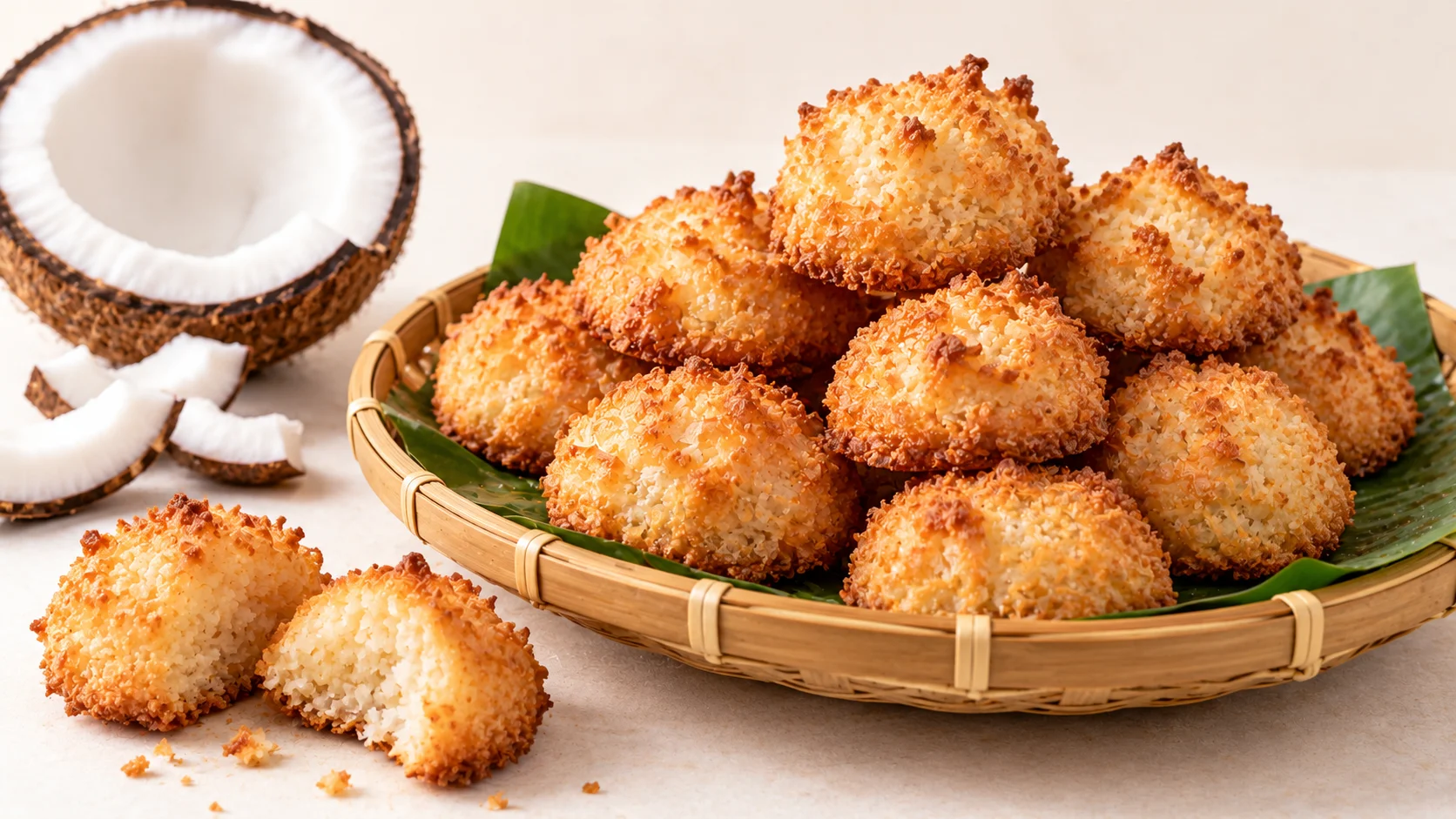
This image has been generated using AI for visual representation purposes only.
A locally recognised confectionery commonly made with cashews, egg whites and sugar. Its crisp, light texture distinguishes it from many almond-based European macaroons; the precise history of its introduction should be treated cautiously.
Thoothukudi Macaroons are a traditional confectionery speciality associated with the coastal city of Thoothukudi, also known as Tuticorin, in Tamil Nadu. Unlike many European almond-based macaroons, the characteristic Thoothukudi preparation uses cashew nuts, egg whites and sugar. The ingredients are combined to create a light, airy mixture that is shaped into small conical forms and baked until the exterior becomes crisp while the interior retains a delicate, airy texture. The confectionery is recognised for its pale colour, distinctive shape and rich cashew flavour. Its association with Thoothukudi reflects the city's maritime connections and the adaptation of confectionery traditions through cultural exchange. It remains an important part of the city's regional food identity.
The history of Thoothukudi Macaroons is associated with the movement of European confectionery traditions into coastal South India and their subsequent adaptation to local ingredients and tastes. Historical interpretations connect the broader macaroon tradition with European sweet-making practices involving nuts, sugar and egg whites. Thoothukudi's development as a maritime port brought the city into contact with overseas traders, missionaries and diverse culinary traditions. The Portuguese established a presence in Thoothukudi in the sixteenth century, followed by the Dutch and later the English, creating a historical setting for cultural and culinary exchange. Some accounts suggest that European-style macaroon preparation reached the region through these maritime connections and was adapted by local confectioners. In the Thoothukudi version, cashews replaced almonds, producing a distinctive regional confection. The exact date of its introduction and the identity of its first maker have not been conclusively established. Over time, the cashew-based macaroon became closely associated with Thoothukudi and developed a recognisable regional identity. The precise sequence of events through which the recipe reached the city remains uncertain, so specific origin stories should be treated as historical interpretations rather than verified facts.
Thoothukudi Macaroons represent a specialised regional baking tradition based on the careful combination of ground cashew nuts, sugar and egg whites. Preparing the mixture requires attention to ingredient consistency and the incorporation of air into the egg-white mixture. Folding the ground cashews into the sweetened egg whites helps preserve the light texture, while piping or shaping the mixture produces the characteristic conical forms. Baking requires control over temperature and duration so that the macaroons develop a crisp exterior without losing their delicate internal structure. These techniques reflect practical knowledge associated with traditional confectionery production. Although individual recipes and equipment may differ, the combination of cashews, egg whites and sugar is central to the commonly documented Thoothukudi style.
Thoothukudi Macaroons are distinguished by their cashew-based composition, light texture and characteristic small conical or spiral-shaped appearance. Their principal ingredients are ground cashew nuts, sugar and egg whites. The egg whites contribute an airy structure, while the cashews provide a rich nutty flavour. The macaroons are generally pale cream to light golden in colour, depending on the recipe and baking conditions. Properly prepared examples typically have a delicate, crisp exterior and a light interior that breaks apart easily when eaten. Unlike French macarons, which commonly consist of almond-based shells joined by a filling, Thoothukudi Macaroons are generally individual baked confections without a sandwich filling. They are also distinct from coconut macaroons, which rely primarily on coconut rather than ground cashews.
The preparation of Thoothukudi Macaroons generally begins with grinding cashew nuts into a suitable consistency. Depending on the recipe, the nuts may be ground to different degrees of fineness to influence the finished texture. Sugar is finely ground or otherwise prepared for mixing. Egg whites are separated from the yolks and beaten or incorporated into the mixture using a method appropriate to the recipe. The ground cashews and sugar are combined with the egg whites, with careful folding used to distribute the ingredients while retaining air in the mixture. The prepared mixture is transferred to a piping bag or similar implement and shaped into small conical or spiral forms on baking trays. The macaroons are then baked under controlled conditions until their structure sets and the exterior becomes crisp. Some traditional preparations use prolonged, relatively gentle baking to develop the desired texture. Exact baking temperatures, durations, ingredient proportions and mixing methods vary among recipes and producers and should not be treated as universally standardised.
A characteristic technique in Thoothukudi Macaroon preparation is the incorporation of ground cashew nuts into a sweetened egg-white mixture while preserving sufficient air for a light texture. Folding is important because excessive mixing can alter the consistency of the mixture. Shaping the mixture into small cones or spiral forms gives the confectionery its recognisable appearance. Controlled baking is another important technique, allowing the outside to become crisp while the interior remains light. Traditional practitioners rely on experience to judge mixture consistency, shaping and baking progress. Some preparations use a slow-baking approach, but exact methods and timings differ and should not be assumed to be identical across all producers.
Thoothukudi Macaroons are an established regional food speciality associated with Thoothukudi and its culinary identity. They illustrate how international confectionery traditions can be adapted through the use of locally familiar ingredients and distinctive preparation techniques. Replacing almonds with cashews gave the local version a recognisable flavour and helped differentiate it from other macaroon varieties. The confectionery also reflects the broader history of cultural exchange associated with coastal trading towns in Tamil Nadu. Its continued recognition as a characteristic sweet of Thoothukudi makes it a notable part of the region's food heritage. Its significance lies in its regional association, distinctive preparation and place within the city's confectionery tradition.
Unlike many European almond-based macaroons, the Thoothukudi variety is traditionally prepared using ground cashew nuts, sugar and egg whites.
The mixture is commonly piped into small conical or spiral forms before baking, giving the confectionery its recognisable appearance.
The regional sweet reflects the adaptation of confectionery traditions in Thoothukudi, a historic maritime city in Tamil Nadu.
Thoothukudi Macaroons form part of the culinary identity of Thoothukudi, a coastal city with a long history of maritime trade and cultural exchange. The confectionery is an example of how a broader European-style sweet was adapted into a regional Indian preparation through the use of cashews and distinctive shaping and baking techniques. Its association with the city has become an important part of its regional recognition. The macaroons are consumed during everyday hospitality as well as celebrations and are recognised as a characteristic local sweet. Their history also provides an opportunity to understand the interaction of overseas culinary influences with local ingredients and baking traditions. Specific stories about the first maker or the exact date of introduction remain uncertain and should not be treated as established historical facts.
Shelf life depends on the recipe, moisture content, baking process, packaging and storage conditions. Because Thoothukudi Macaroons contain egg whites and ground nuts, their storage life should not be assumed to be identical across different preparations. Keep them in a clean, dry, airtight container and protect them from moisture, which can reduce their crispness. Follow the storage instructions and consumption period provided for the specific product. No universal shelf-life duration can be established for all Thoothukudi Macaroons.
Thoothukudi Macaroons are a traditional baked confectionery associated with Thoothukudi in Tamil Nadu. They are generally made from ground cashew nuts, sugar and egg whites, producing a light sweet with a crisp exterior and delicate texture.
Thoothukudi Macaroons are associated with Thoothukudi city in Thoothukudi district, Tamil Nadu, India. Their development is commonly linked to the adaptation of European-style macaroon traditions, although the exact date and circumstances of their introduction remain uncertain.
The principal ingredients in the commonly documented preparation are cashew nuts, sugar and egg whites. The cashews provide the characteristic nutty flavour, while the egg whites help create the light texture.
Thoothukudi Macaroons are generally individual cashew-based baked sweets shaped into small cones or spirals. French macarons are typically almond-based shells assembled in pairs with a filling. The two confectioneries differ in ingredients, shape, preparation and texture.
The official Indian Geographical Indications Registry lists an application for Thoothukudi Macaroon under application number 487, filed on 7 July 2014, with its status shown as Examination in the available record. This does not establish completed GI registration. The product should not be described as a registered GI product unless its registration is confirmed in the official register.
This image has been generated using AI for visual representation purposes only.
Let Karthi Travels help you plan a comfortable and memorable journey across Tamil Nadu.
Experience, Trust & Memories Built Over the Years





Your journey is in experienced hands, from planning to the final drop.

No hidden charges. Clear and upfront pricing.

Clean, inspected and well-serviced vehicles for a comfortable journey.

Professional drivers focused on safe and pleasant travel.

Dependable pickups and reliable travel service.
Travel Made Simple, Experiences Made Grand

Explore the best of each destination with our curated sightseeing tours.

Perfect for families and groups, planned with comfort, safety and flexibility in mind.

Peaceful and spiritually enriching journeys with carefully planned routes.

Personalised honeymoon tours and romantic destinations for your special journey.

Compliant and well-documented tour plans to make the most of your travel concession.
 WhatsApp Us