
Karthi Travels®
ISO 9001:2015 Certified
Tirunelveli region, Tirunelveli
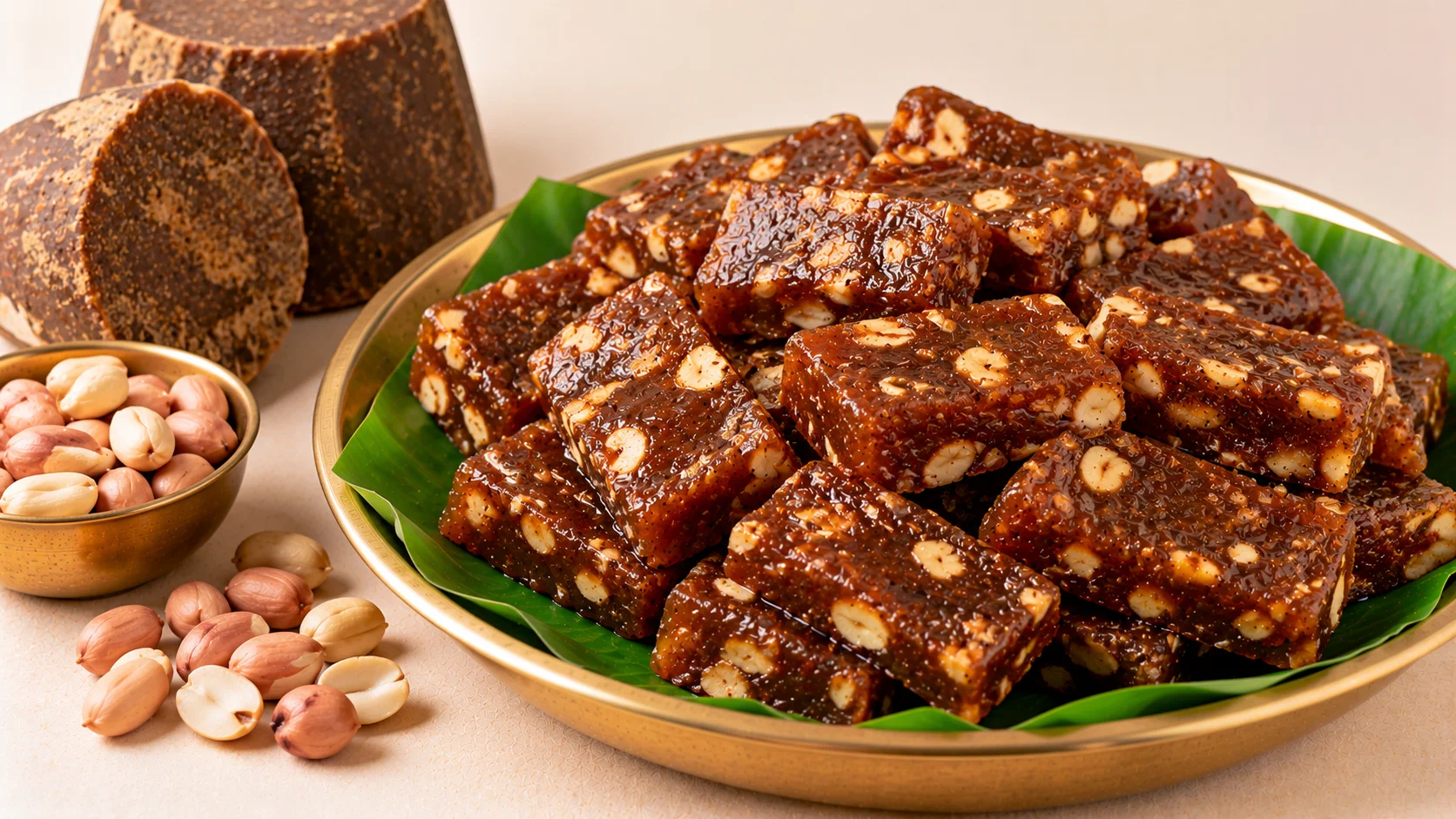
This image has been generated using AI for visual representation purposes only.
A broad local sweet category using palm jaggery. Ingredients and forms differ by producer; specify the actual confectionery product and verify that its name is not already represented by a GI item.
Tirunelveli Karupatti Mittai is a traditional-style sweet associated with Tirunelveli and the surrounding districts of southern Tamil Nadu. It is commonly prepared using karupatti, or palm jaggery, as the principal sweetener, together with a batter made from rice and urad dal. The batter is shaped into decorative spirals or concentric patterns and deep-fried before being dipped in warm palm-jaggery syrup. The finished sweet can have a crisp exterior with a rich, caramel-like sweetness and a distinctive palm-jaggery flavour. Recipes may vary between households and sweet makers, and related versions are also known as Chenni Mittai or Seeni Mittai when prepared with sugar instead of palm jaggery.
Karupatti Mittai belongs to the wider tradition of traditional sweets made with palm jaggery in southern Tamil Nadu. Palm jaggery has long been used as a sweetener in the region, where palmyra palms and associated food products have played an important role in local food culture. Food and recipe accounts identify Karupatti Mittai as a traditional sweet associated with Tirunelveli and nearby areas, including Thoothukudi. Some versions are prepared for Deepavali and other family or festive occasions. However, a definitive historical date, individual inventor, or documented origin for Tirunelveli Karupatti Mittai could not be firmly established.
Karupatti Mittai reflects the longstanding use of palm jaggery in southern Tamil Nadu's sweet-making traditions. It is enjoyed as a snack or dessert and may be prepared for festivals, family gatherings, and special occasions. Its preparation combines a fermented or rested rice-and-urad-dal batter with palm-jaggery syrup, bringing together familiar ingredients used in regional home cooking. The sweet also illustrates the role of traditional sweet makers in maintaining local recipes and variations.
The main distinguishing feature of Karupatti Mittai is its use of palm jaggery rather than ordinary white sugar as the syrup sweetener. The batter is commonly made from rice and urad dal, then piped or squeezed into circular, spiral, or decorative shapes before frying. The fried pieces are dipped in warm palm-jaggery syrup, which coats the surface and contributes a deep brown colour and rich caramel-like flavour. Depending on the preparation, the sweet may be crisp, crunchy, or slightly chewy. Cardamom or dry ginger may be added to the syrup, and recipes vary in batter proportions, shape, fermentation time, and syrup consistency.
Rice and urad dal are cleaned and soaked separately or together according to the recipe. They are ground with a little water to form a smooth batter, which may be rested or fermented before use. Palm jaggery is dissolved in water and heated until melted, then filtered to remove impurities. The filtered syrup is boiled until it reaches a sticky consistency suitable for coating the fried sweet. The batter is transferred to a piping bag or a clean food-safe dispenser and squeezed into circular or spiral shapes over hot oil. The shapes are fried until cooked and golden, then briefly dipped in warm palm-jaggery syrup so that the syrup coats them evenly. The finished sweets are allowed to cool before serving or packing. Cooking temperature, syrup thickness, batter consistency, and resting time vary by recipe.
Traditional-style preparation involves soaking rice and urad dal, grinding them into batter, and allowing the mixture to rest when the recipe requires it. Palm jaggery is melted in water and strained before being boiled to a sticky syrup. The batter is shaped by hand or through a small opening in a piping tool and fried in hot oil. The fried pieces are dipped in warm syrup while it is still fluid enough to coat them. The maker judges readiness through the colour of the fried batter and the consistency of the syrup. Some recipes use cardamom or dry ginger to add aroma. Family methods and local sweet-making practices influence the shape, crispness, and final sweetness.
Tirunelveli Karupatti Mittai represents the palm-jaggery-based confectionery traditions of southern Tamil Nadu. Its ingredients reflect the region's established use of rice, pulses, and palmyra-derived sweeteners. The preparation of the batter, shaping of the sweet, and cooking of the syrup require attention to texture and temperature. The sweet is associated with everyday snacking and festive food traditions, and it is one of several regional sweets that use karupatti to create a distinctive flavour.
Karupatti is the principal sweetener, providing a rich, earthy sweetness and a deep brown colour.
Many traditional recipes combine rice with urad dal to create the batter used for shaping and frying the sweet.
The batter is commonly piped or squeezed into circular, spiral, or decorative patterns before frying.
Proper frying and syrup preparation can produce a crunchy exterior with a sweet coating.
The sweet is associated with Tirunelveli and neighbouring parts of southern Tamil Nadu, where palm jaggery is widely used in traditional preparations.
A closely related sweet uses sugar instead of palm jaggery and is often known as Seeni Mittai or Chenni Mittai.
Palm jaggery has a longstanding place in the food traditions of southern Tamil Nadu, where it is used in sweets, snacks, and other preparations. Karupatti Mittai reflects this culinary heritage by combining palm jaggery with rice-and-pulse batter to create a shaped, deep-fried confection. The sweet is associated with the broader regional food culture of Tirunelveli and neighbouring districts, including Thoothukudi. It may be prepared for Deepavali and family occasions, although a single festival-specific or ritual role exclusive to Tirunelveli Karupatti Mittai could not be firmly established.
The shelf life depends on the moisture remaining in the fried batter, the consistency of the palm-jaggery syrup, handling, and packaging. Allow the sweets to cool completely before placing them in a clean, dry, airtight container. Store them away from moisture, heat, and direct sunlight. Use a clean, dry utensil when handling the sweets. Homemade preparations may soften as they absorb moisture, while commercially packed products may have different storage requirements. Follow the producer's instructions and best-before date, and discard the product if it develops mould, an unusual smell, or other signs of spoilage. No single shelf-life period can be specified for all recipes.
Tirunelveli Karupatti Mittai is a traditional-style sweet associated with southern Tamil Nadu. It is commonly made from rice-and-urad-dal batter shaped into decorative patterns, deep-fried, and coated with palm-jaggery syrup.
Karupatti is palm jaggery, a traditional sweetener made by concentrating the sap of palmyra or other suitable palm varieties. It has a characteristic rich flavour and brown colour.
Common ingredients include rice, urad dal, palm jaggery, water, and cooking oil. Cardamom, dry ginger powder, and a small amount of salt may be included depending on the recipe.
Rice and urad dal are soaked and ground into batter. The batter is shaped into decorative forms and deep-fried. Palm jaggery is melted, strained, and boiled into syrup, and the fried pieces are dipped in the warm syrup before cooling.
The principal difference is the sweetener. Karupatti Mittai uses palm jaggery, while Seeni Mittai or Chenni Mittai uses sugar syrup. Similarities in batter and shaping methods depend on the recipe.
Karupatti Mittai is enjoyed as a traditional sweet and may be prepared for Deepavali, family gatherings, and other special occasions. Practices vary between households and sweet makers.
A registered Geographical Indication status specifically for Tirunelveli Karupatti Mittai could not be verified from the available research. It should not be described as a registered GI product without confirmation from the official GI Registry.
After cooling completely, store the sweet in a clean, dry, airtight container away from heat and moisture. Follow the producer's storage instructions for packaged versions and discard the product if there are signs of spoilage.
This image has been generated using AI for visual representation purposes only.
Let Karthi Travels help you plan a comfortable and memorable journey across Tamil Nadu.
Experience, Trust & Memories Built Over the Years





Your journey is in experienced hands, from planning to the final drop.

No hidden charges. Clear and upfront pricing.

Clean, inspected and well-serviced vehicles for a comfortable journey.

Professional drivers focused on safe and pleasant travel.

Dependable pickups and reliable travel service.
Travel Made Simple, Experiences Made Grand

Explore the best of each destination with our curated sightseeing tours.

Perfect for families and groups, planned with comfort, safety and flexibility in mind.

Peaceful and spiritually enriching journeys with carefully planned routes.

Personalised honeymoon tours and romantic destinations for your special journey.

Compliant and well-documented tour plans to make the most of your travel concession.
 WhatsApp Us