
Karthi Travels®
ISO 9001:2015 Certified
Tirunelveli
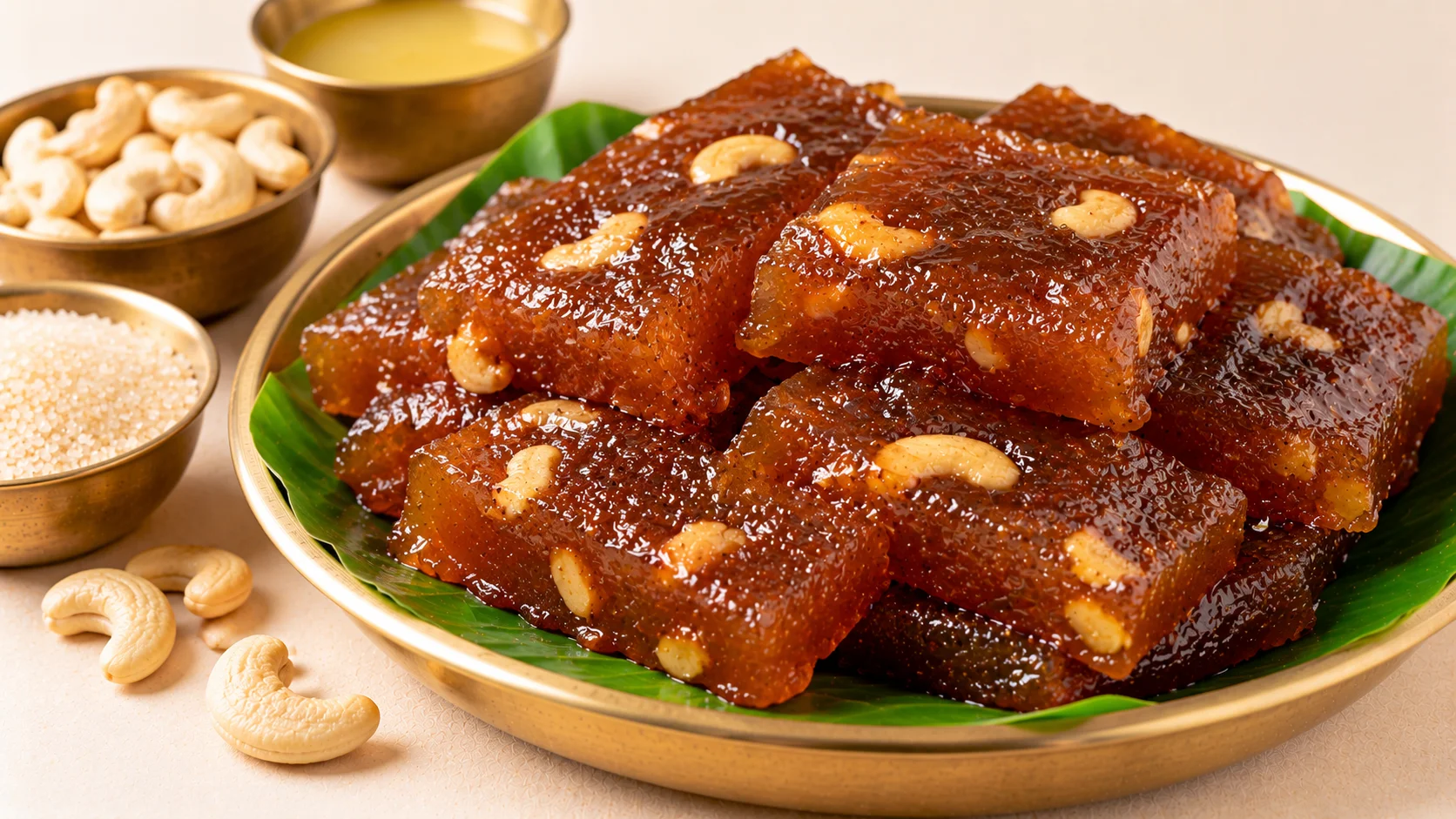
This image has been generated using AI for visual representation purposes only.
A halwa variety associated in local food writing with coconut milk and a soft, rich texture. Recipes vary; describe the actual product's ingredients and avoid making health claims or treating it as identical to wheat-based Tirunelveli halwa.
Tirunelveli Muscoth Halwa is a rich, sweet confection associated with southern Tamil Nadu. Unlike the better-known wheat halwa of Tirunelveli, which is commonly prepared with wheat extract, sugar, and ghee, Muscoth Halwa is distinguished by the use of coconut milk alongside a wheat-based extract. The mixture is slowly cooked with sugar until it develops a glossy appearance and a soft, dense, slightly chewy texture. Cashews may be added for flavour and texture. Although the product is sold in Tirunelveli, its commonly reported regional history is closely connected with Mudalur in Thoothukudi district.
Accounts of Muscoth Halwa's history connect the sweet with Sri Lankan culinary traditions and the use of coconut milk. Food-history reporting describes how Joseph Abraham, a resident of Mudalur, encountered the sweet during travel to Sri Lanka in the 1950s and subsequently adapted the preparation in his home village. The recipe is reported to have developed into a locally recognised speciality during the following decades. Family-run sweet businesses helped establish its reputation and distribution. These accounts are useful historical leads, although details of the product's earliest history are based largely on reported family and community narratives rather than a single definitive historical record.
Muscoth Halwa is part of the diverse sweet-making traditions of southern Tamil Nadu. It is prepared for sharing with family and visitors, served as a dessert, and carried as a regional food gift. Its coconut-rich flavour and distinctive texture distinguish it from other varieties of halwa sold in the region. Family knowledge, small-scale confectionery production, and the transmission of recipes between generations contribute to its regional identity.
Muscoth Halwa is distinguished by its combination of coconut milk and wheat-derived liquid or extract, which gives it a richer coconut flavour than conventional Tirunelveli wheat halwa. Sugar provides sweetness and contributes to the finished texture, while slow cooking helps produce a glossy, dense, and slightly elastic confection. Cashews are commonly included in some versions. The colour can range from light brown to a deeper caramel shade, depending on the recipe and cooking process. Recipes and commercial formulations vary, so coconut milk, wheat extract, sugar, and optional nuts should be understood as common rather than universally fixed ingredients.
Coconut milk is extracted from grated coconut, while a wheat-based liquid is prepared by soaking and grinding wheat or by mixing and washing wheat flour with water to separate the starch-rich liquid. The liquids are strained and allowed to settle where required by the method. The prepared wheat extract and coconut milk are combined with sugar in a heavy cooking vessel. The mixture is heated and stirred continuously as it thickens. Some recipes use caramelised sugar to develop a deeper colour. Cooking continues until the halwa becomes dense, glossy, and cohesive. Cashews may be added near the end. The finished mixture is transferred to a suitable tray, allowed to cool, and cut or packed into portions. Commercial production methods, ingredients, and cooking times vary.
Traditional-style Muscoth Halwa preparation involves extracting coconut milk and preparing a wheat-based liquid before cooking them with sugar. The mixture is stirred slowly over heat, with close attention to thickening, colour, and texture. Depending on the recipe, sugar may be caramelised separately before being incorporated. Continued cooking allows the mixture to develop its characteristic dense, glossy consistency. Cashews may be folded in before the halwa is transferred to a tray for cooling. The process requires patience and careful control of heat to prevent scorching and achieve a consistent texture.
Muscoth Halwa represents a distinctive branch of southern Tamil Nadu's confectionery traditions. Its use of coconut milk reflects the wider culinary importance of coconut in the region and distinguishes it from wheat-and-ghee-based halwa. The sweet is associated with family-run confectionery businesses, local food heritage, and the sharing of regional specialities. Its connection with Mudalur and its availability in Tirunelveli illustrate how regional foods can become associated with several neighbouring towns through production, trade, and travel.
Coconut milk is a defining ingredient in many Muscoth Halwa recipes and gives the sweet a rich, distinctive flavour.
Muscoth Halwa typically combines coconut milk with a wheat-based extract, while conventional Tirunelveli wheat halwa is commonly associated with wheat extract, sugar, and ghee.
Food-history accounts connect the sweet's development in southern Tamil Nadu with Sri Lankan culinary influences and its later preparation in Mudalur.
Slow cooking helps produce a cohesive, glossy confection that is soft and slightly chewy.
Cashews are included in many versions, adding a nutty flavour and contrast in texture.
The sweet is associated with Mudalur and is also available through sweet makers and shops serving Tirunelveli and neighbouring areas.
Muscoth Halwa forms part of the sweet-making heritage of southern Tamil Nadu, particularly the food traditions associated with Mudalur and nearby towns. Reported accounts of its development connect local confectionery makers with Sri Lankan coconut-milk sweet traditions. Over time, family businesses and regional sweet shops have helped introduce it to a wider audience. The sweet is enjoyed during ordinary family occasions, visits, and celebrations, although a specific religious or ritual role for Muscoth Halwa itself could not be firmly established.
Shelf life varies according to the amount of moisture, coconut milk content, cooking method, packaging, and storage temperature. Some commercial producers state that their packaged products remain suitable for several weeks under specified conditions, but this should not be assumed for every version. Store the halwa according to the manufacturer's instructions, keep it protected from contamination, and refrigerate it when directed. Homemade versions containing coconut milk should be handled carefully because their shelf life may be shorter than that of some commercially processed products. Discard the halwa if it develops mould, an unusual smell, or other signs of spoilage. Follow the printed best-before date for packaged products.
Tirunelveli Muscoth Halwa is a rich southern Tamil Nadu sweet commonly made with coconut milk, a wheat-based extract, and sugar. Cashews may be added, and slow cooking produces its characteristic glossy, dense texture.
Muscoth Halwa commonly uses coconut milk together with a wheat-based extract. Conventional Tirunelveli wheat halwa is generally associated with wheat extract, sugar, and ghee, giving the two sweets different flavours and textures.
Published food-history accounts associate its development in southern Tamil Nadu with Mudalur in present-day Thoothukudi district and describe influences from Sri Lankan coconut-milk confectionery. Tirunelveli is another important place where the sweet is sold.
Food-history accounts connect the name 'Muscoth' with the Sinhala word for coconut milk and the sweet's reported Sri Lankan culinary connections. The precise history of the name should be treated as a reported explanation rather than a conclusively established etymology.
Common ingredients include coconut milk, wheat extract or wheat-based milk, and sugar. Cashews and ghee or other cooking fats may be used depending on the recipe.
A registered Geographical Indication status specifically for Tirunelveli Muscoth Halwa could not be verified from the available research. It should not be described as a registered GI product without confirmation from the official GI Registry.
Storage depends on the recipe and packaging. Follow the producer's instructions, protect the sweet from contamination, and refrigerate it when directed. Always observe the printed best-before date and discard the product if it shows signs of spoilage.
This image has been generated using AI for visual representation purposes only.
Let Karthi Travels help you plan a comfortable and memorable journey across Tamil Nadu.
Experience, Trust & Memories Built Over the Years





Your journey is in experienced hands, from planning to the final drop.

No hidden charges. Clear and upfront pricing.

Clean, inspected and well-serviced vehicles for a comfortable journey.

Professional drivers focused on safe and pleasant travel.

Dependable pickups and reliable travel service.
Travel Made Simple, Experiences Made Grand

Explore the best of each destination with our curated sightseeing tours.

Perfect for families and groups, planned with comfort, safety and flexibility in mind.

Peaceful and spiritually enriching journeys with carefully planned routes.

Personalised honeymoon tours and romantic destinations for your special journey.

Compliant and well-documented tour plans to make the most of your travel concession.
 WhatsApp Us