
Karthi Travels®
ISO 9001:2015 Certified
Tirunelveli
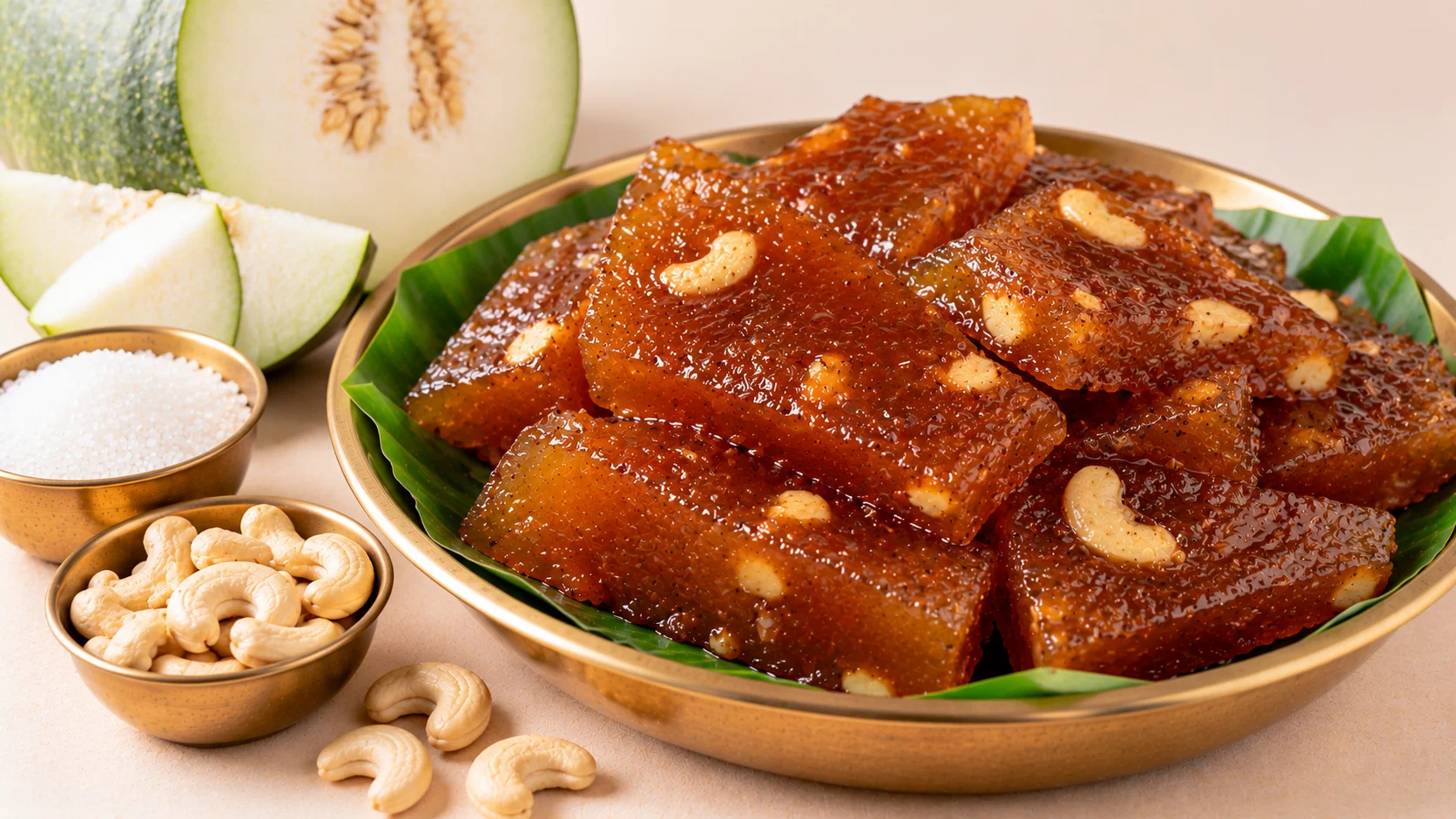
This image has been generated using AI for visual representation purposes only.
A locally sold halwa variety made by some confectioners with ash gourd and sweetening ingredients. Since recipes and availability vary, a page should be tied to a documented maker and label.
Tirunelveli Thadiyangai Halwa is a traditional-style South Indian sweet made primarily from thadiyangai, commonly understood as ash gourd or white pumpkin. Also known as vellai poosanikai halwa or Kasi halwa, it has a soft, glossy texture and a delicate sweetness. The grated or finely chopped vegetable is cooked with sugar and ghee until it thickens, with cardamom, saffron, and cashew nuts commonly used to enhance its flavour. It is prepared in Tirunelveli and is part of the wider variety of halwa sweets enjoyed across southern Tamil Nadu.
Ash gourd has long been used in Indian cooking, including sweet preparations and desserts. Thadiyangai Halwa is associated with the broader South Indian tradition of cooking vegetables with sugar and ghee to create rich, soft sweets. It is also known as Kasi halwa or poosanikai halwa and is served at weddings and family celebrations in parts of southern India. Tirunelveli food listings identify Thadiyangai Halwa as one of the halwa varieties available in the region. However, a specific historical date, inventor, or documented origin for a distinct Tirunelveli version could not be firmly established.
Thadiyangai Halwa is associated with festive meals, weddings, family gatherings, and dessert servings in South Indian food culture. Its use of ash gourd demonstrates how a familiar vegetable can be transformed into a sweet dish through slow cooking with sugar and ghee. In Tirunelveli, it is one of several halwa varieties that complement the area's wider reputation for traditional sweets.
The main distinguishing feature of Thadiyangai Halwa is its use of ash gourd rather than wheat as the principal ingredient. When cooked, the vegetable develops a soft, moist texture that combines with sugar and ghee to create a glossy sweet. Cardamom gives it an aromatic flavour, while saffron may provide fragrance and colour. Cashews are commonly added for a nutty taste and contrasting texture. Depending on the recipe, the finished halwa may be white, pale yellow, or golden-orange. Ingredient proportions and cooking methods vary among households and sweet makers.
The ash gourd is washed, peeled, and cut open to remove the seeds and soft inner portion. The edible flesh is grated or finely chopped. Excess liquid may be squeezed out, depending on the recipe, and the grated vegetable is cooked in a heavy-bottomed vessel until it softens and some moisture evaporates. Sugar is then added and stirred into the mixture as it thickens. Ghee is incorporated gradually while cooking continues. Cardamom and optional saffron are added for fragrance, and cashews may be fried in ghee and mixed into the halwa. The mixture is cooked until it reaches a soft, glossy consistency and is served warm or allowed to cool before portioning.
Traditional-style preparation relies on fresh ash gourd, careful grating, and slow cooking to reduce excess moisture and develop the desired texture. The vegetable is stirred regularly to prevent sticking, while sugar is added to create the sweetened mixture. Ghee is incorporated during cooking to enrich the flavour and give the halwa a glossy finish. Cardamom, saffron, and cashews may be added according to household or producer preferences. The cooking time depends on the water content of the vegetable and the desired consistency.
Tirunelveli Thadiyangai Halwa represents the variety of sweets prepared and enjoyed in southern Tamil Nadu. Its vegetable-based preparation distinguishes it from the better-known wheat-based Tirunelveli halwa and illustrates the diversity of the region's confectionery traditions. The sweet is suitable for festive meals, weddings, family gatherings, and everyday dessert servings. Its regional identity comes from its presence among the halwa varieties associated with Tirunelveli rather than from a single universally documented origin story.
Thadiyangai Halwa uses ash gourd or white pumpkin as its main ingredient, giving it a soft texture and a flavour distinct from wheat-based halwa.
The sweet is also commonly called Kasi halwa or poosanikai halwa in South Indian culinary usage.
Cooking the grated vegetable with sugar and ghee creates a moist, glossy confection that can be served warm or cooled.
Cardamom is commonly used for fragrance, while saffron may add further aroma and colour.
Cashews add a nutty flavour and a pleasant contrast to the soft texture of the halwa.
Thadiyangai Halwa is among the different halwa varieties prepared or sold in Tirunelveli alongside the region's better-known wheat halwa.
Ash gourd is a familiar ingredient in South Indian cooking, and its use in halwa reflects the regional practice of transforming vegetables into sweets. Thadiyangai Halwa, also known as Kasi halwa or poosanikai halwa, is associated with wedding meals and festive occasions in parts of South India. In Tirunelveli, it forms part of the area's wider selection of halwa sweets. A specific religious ritual or festival exclusive to Tirunelveli Thadiyangai Halwa could not be firmly established.
The shelf life depends on the moisture content of the ash gourd, the amount of sugar and ghee used, preparation hygiene, and storage conditions. Store the halwa in a clean, covered container and refrigerate it if it will not be consumed promptly, especially in warm weather. Use a clean, dry utensil when serving and avoid leaving the sweet exposed for extended periods. For commercially packaged products, follow the manufacturer's storage instructions and best-before date. Discard the halwa if it develops mould, an unusual smell, or other signs of spoilage. No single shelf-life period can be specified for all recipes.
Tirunelveli Thadiyangai Halwa is a sweet made primarily from ash gourd or white pumpkin cooked with sugar and ghee. Cardamom, saffron, and cashew nuts may be added for flavour and texture.
In this culinary context, thadiyangai refers to ash gourd, also commonly called white pumpkin or winter melon in English.
The names Thadiyangai Halwa, Kasi halwa, and poosanikai halwa are commonly used for similar ash gourd-based sweets. Recipes and ingredient proportions may vary.
Thadiyangai Halwa is made mainly from ash gourd, while conventional Tirunelveli wheat halwa is made using a wheat-derived liquid or extract, sugar, and ghee. The two sweets have different textures and flavours.
Common ingredients include ash gourd, sugar, ghee, and cardamom. Cashews are often added, while saffron and a small amount of salt may be used in some recipes.
It can be served as a dessert after meals and is associated with wedding meals, family gatherings, and festive occasions in parts of South India.
A registered Geographical Indication status specifically for Tirunelveli Thadiyangai Halwa could not be verified from the available research. It should not be described as a registered GI product without confirmation from the official GI Registry.
Keep it in a clean, covered container and refrigerate it if it will not be eaten promptly. Follow the manufacturer's storage guidance for packaged products and discard the halwa if there are signs of spoilage.
This image has been generated using AI for visual representation purposes only.
Let Karthi Travels help you plan a comfortable and memorable journey across Tamil Nadu.
Experience, Trust & Memories Built Over the Years





Your journey is in experienced hands, from planning to the final drop.

No hidden charges. Clear and upfront pricing.

Clean, inspected and well-serviced vehicles for a comfortable journey.

Professional drivers focused on safe and pleasant travel.

Dependable pickups and reliable travel service.
Travel Made Simple, Experiences Made Grand

Explore the best of each destination with our curated sightseeing tours.

Perfect for families and groups, planned with comfort, safety and flexibility in mind.

Peaceful and spiritually enriching journeys with carefully planned routes.

Personalised honeymoon tours and romantic destinations for your special journey.

Compliant and well-documented tour plans to make the most of your travel concession.
 WhatsApp Us