
Karthi Travels®
ISO 9001:2015 Certified
Tiruppur
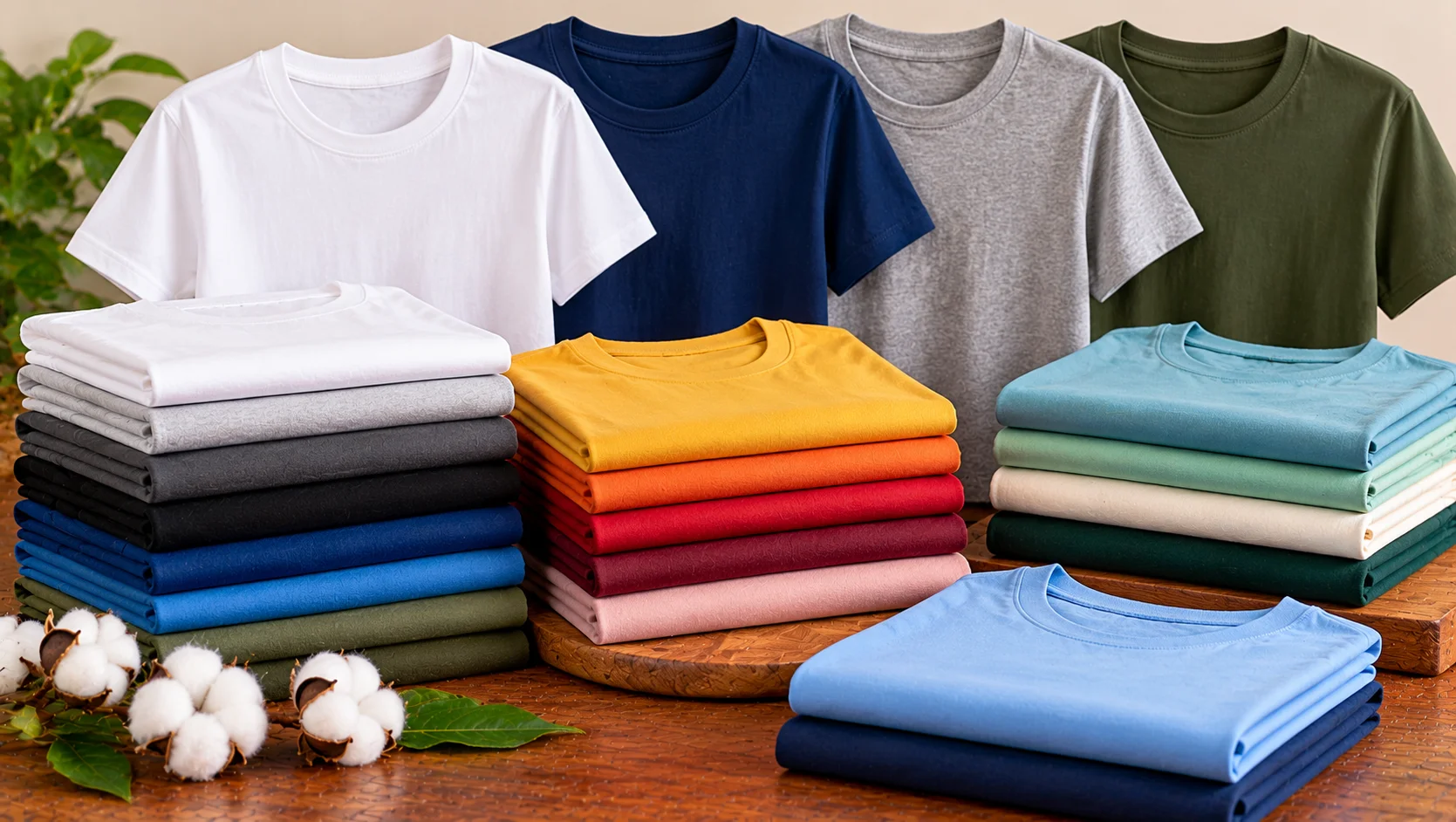
This image has been generated using AI for visual representation purposes only.
Knitted cotton garments made by a traceable Tiruppur manufacturer. The town is an important knitwear centre; for each product record fibre composition, manufacturer and whether production actually occurs locally.
Tiruppur Cotton T-Shirts are knitted cotton garments manufactured in Tiruppur, Tamil Nadu, a major centre for India's knitwear and garment industry. The town is widely known for its cotton knitwear production, supported by a network of specialised units involved in yarn sourcing, knitting, dyeing, fabric processing, cutting, stitching, finishing and packaging. Cotton T-shirts produced in Tiruppur are available in numerous styles, including crew-neck, V-neck, polo, oversized, fitted and children's designs. Depending on the manufacturer, they may be made from regular cotton, combed cotton, organic cotton or premium cotton varieties. Tiruppur's integrated manufacturing ecosystem serves both domestic and international markets, supplying garments for retailers, wholesalers, private labels and fashion brands. Product quality, fabric weight, cotton composition, stitching and finishing vary according to the specifications and standards followed by each manufacturer.
Tiruppur's knitwear industry began developing during the early twentieth century. Historical accounts of the local textile sector identify 1925 as the year the first knitwear unit was established in the town. Production expanded gradually, and by the 1940s Tiruppur had emerged as an important knitwear centre in South India. During the early decades, the industry mainly supplied the domestic market. Export activity expanded from the late 1970s and accelerated during the 1980s, helping Tiruppur become a major source of cotton knitted garments. The establishment of the Tiruppur Exporters' Association in 1990 provided an industry platform for exporters and supported the development of international markets. As manufacturing capacity grew, the town developed a specialised production network covering knitting, dyeing, printing, garment stitching and finishing. Cotton T-shirts became one of the prominent products associated with this industrial growth.
Tiruppur Cotton T-Shirts represent the development of modern textile manufacturing and garment production in Tamil Nadu. Unlike a traditional handcrafted product made using a single inherited technique, these T-shirts are part of an industrial textile cluster built around specialised skills, manufacturing networks and large-scale production. The industry provides employment and supports businesses involved in yarn supply, knitting, dyeing, printing, stitching, packaging and exports. Cotton T-shirts have become a recognisable product of Tiruppur's manufacturing identity and illustrate the town's role in connecting regional industrial skills with domestic and international apparel markets.
Tiruppur Cotton T-Shirts are associated with the town's specialised knitted-garment manufacturing ecosystem. The fabric is commonly produced by knitting cotton yarn into a stretchable structure suitable for casual clothing. Depending on the product, manufacturers may use single jersey, ribbed knit or other knitted constructions. Features vary by cotton grade, yarn count, fabric weight, stitch density, dyeing method and finishing treatment. Available options include lightweight everyday T-shirts, heavier premium garments, printed promotional shirts, plain basics and custom-branded apparel. Manufacturing services may include cutting, stitching, neck rib attachment, screen printing, embroidery, labelling and packing. The term Tiruppur Cotton T-Shirts identifies a regional manufacturing association rather than one standardised fabric specification, quality grade or exclusive design.
Cotton T-shirt manufacturing typically begins with selecting suitable cotton yarn or sourcing knitted fabric that meets the required specifications. Yarn is knitted into fabric using circular knitting machines or other appropriate equipment. The fabric may undergo bleaching, dyeing, washing, printing or other processing treatments, depending on the product. After processing, it is inspected for defects and checked for relevant fabric characteristics. Pattern pieces are laid out and cut according to the required sizes and designs. The cut components are stitched together, including the body panels, sleeves, shoulder seams and neckband. Additional operations may include hemming, printing, embroidery, label attachment and other finishing work. The finished garments are checked for measurements, seam quality, colour consistency and visible defects before being folded, packed and dispatched. Manufacturing arrangements differ: some facilities handle several stages in-house, while others rely on specialised partner units within Tiruppur's textile cluster.
Tiruppur's cotton T-shirt production is based on specialised textile and garment-making skills rather than a single traditional handcraft technique. Knitted fabric is produced by interlocking yarn loops to create a flexible structure suitable for everyday clothing. Garment makers use pattern cutting, stitching, seam finishing and quality inspection to assemble the T-shirt. Neckbands and hems are constructed to provide a suitable fit and finish. Depending on the design, manufacturers may add screen prints, digital prints, embroidery or other decorative details. Modern units combine skilled manual operations with industrial knitting, cutting and sewing equipment. Fabric selection, yarn quality, garment measurements and finishing standards vary according to the manufacturer's specifications and the intended market.
Tiruppur Cotton T-Shirts are significant because they represent one of the most recognisable product categories from Tiruppur's knitwear industry. The town has developed a specialised ecosystem of manufacturers and service providers that support garment production from knitting through final packing. The industry serves domestic consumers as well as international apparel brands and retailers. Its development has created employment and supported related activities such as textile processing, printing, transport, packaging and export logistics. Cotton T-shirts illustrate how a regional manufacturing cluster can develop expertise in a particular product category while adapting to changing fashion trends, customer specifications and international market requirements.
Tiruppur is widely recognised as a major knitwear manufacturing centre, with a specialised network of textile and garment businesses.
Cotton knitted fabric is commonly used to create breathable, soft and comfortable T-shirts suitable for everyday wear.
Manufacturers produce crew-neck, V-neck, polo, oversized, fitted, printed and children's T-shirts according to different market requirements.
The local production ecosystem includes yarn sourcing, knitting, dyeing, fabric processing, cutting, stitching, printing, finishing and packaging.
Depending on the manufacturer, T-shirts can be customised by fabric weight, colour, size, print, embroidery, labels and branding.
Tiruppur manufacturers supply a range of customers, including local retailers, wholesalers, private-label businesses and international apparel buyers.
Available options may include regular cotton, combed cotton, organic cotton and different knitted fabric constructions, subject to the manufacturer's specifications.
Tiruppur's cotton T-shirt industry reflects the town's transformation from a regional agricultural settlement into a major textile and garment manufacturing centre. The growth of knitwear production during the twentieth century, followed by the expansion of exports, created a distinctive industrial identity for the town. Manufacturers, exporters and specialised processing units collectively developed the skills and infrastructure needed to produce knitted garments at scale. The Tiruppur Exporters' Association, established in 1990, became an important industry organisation representing exporters and promoting the local knitwear sector. Today, cotton T-shirts are among the product types associated with Tiruppur's role in India's textile economy. Their significance is primarily industrial and economic rather than that of a traditional handicraft with one fixed regional design.
Cotton T-shirts do not have a fixed shelf life when stored correctly, but their appearance and durability depend on fabric quality, dye stability, stitching and storage conditions. Wash according to the care label and separate dark or strongly coloured garments from light-coloured clothing when necessary. Use suitable detergents and avoid excessive heat if the label recommends low-temperature washing. Turn printed garments inside out before washing to help protect the design. Dry in accordance with the care instructions and avoid prolonged direct sunlight if colour fading is a concern. Store clean, completely dry T-shirts in a dry, well-ventilated cupboard away from moisture, pests and direct sunlight. Organic or specially finished garments may have additional care requirements stated by the manufacturer.
Tiruppur Cotton T-Shirts are knitted cotton garments manufactured in Tiruppur, Tamil Nadu. They are produced in a wide range of styles and specifications for domestic and international markets.
Tiruppur has a well-established knitwear industry supported by specialised units for knitting, dyeing, fabric processing, stitching, printing, finishing and packaging. This manufacturing network has helped the town become a major centre for cotton knitted garments.
Historical accounts identify 1925 as the year the first knitwear unit was established in Tiruppur. The industry expanded during the twentieth century, and exports grew significantly from the late 1970s and 1980s.
No. Although cotton is a major material in Tiruppur's knitwear industry, individual garments may use 100% cotton, cotton blends or other fibres. Check the garment label for the exact fibre composition.
Common styles include crew-neck, V-neck, polo, oversized, fitted, printed, embroidered and children's T-shirts. Manufacturers may also offer different fabric weights, colours and custom branding options.
Some manufacturers offer organic cotton garments, but organic status should be verified through the product documentation and any relevant certification. The location of manufacture alone does not establish organic certification.
A registered GI status specifically for Tiruppur Cotton T-Shirts could not be verified from the sources consulted. Tiruppur's reputation as a knitwear manufacturing centre does not by itself establish formal GI registration.
Follow the garment's care label, use suitable washing temperatures and avoid excessive heat when drying or ironing. Turn printed garments inside out before washing and store them clean and dry.
Yes. Tiruppur is a major knitwear export centre, and manufacturers supply cotton garments to international buyers as well as domestic retailers. Export capabilities and product specifications vary by manufacturer.
This image has been generated using AI for visual representation purposes only.
Let Karthi Travels help you plan a comfortable and memorable journey across Tamil Nadu.
Experience, Trust & Memories Built Over the Years





Your journey is in experienced hands, from planning to the final drop.

No hidden charges. Clear and upfront pricing.

Clean, inspected and well-serviced vehicles for a comfortable journey.

Professional drivers focused on safe and pleasant travel.

Dependable pickups and reliable travel service.
Travel Made Simple, Experiences Made Grand

Explore the best of each destination with our curated sightseeing tours.

Perfect for families and groups, planned with comfort, safety and flexibility in mind.

Peaceful and spiritually enriching journeys with carefully planned routes.

Personalised honeymoon tours and romantic destinations for your special journey.

Compliant and well-documented tour plans to make the most of your travel concession.
 WhatsApp Us