
Karthi Travels®
ISO 9001:2015 Certified
The Nilgiris, Tamil Nadu
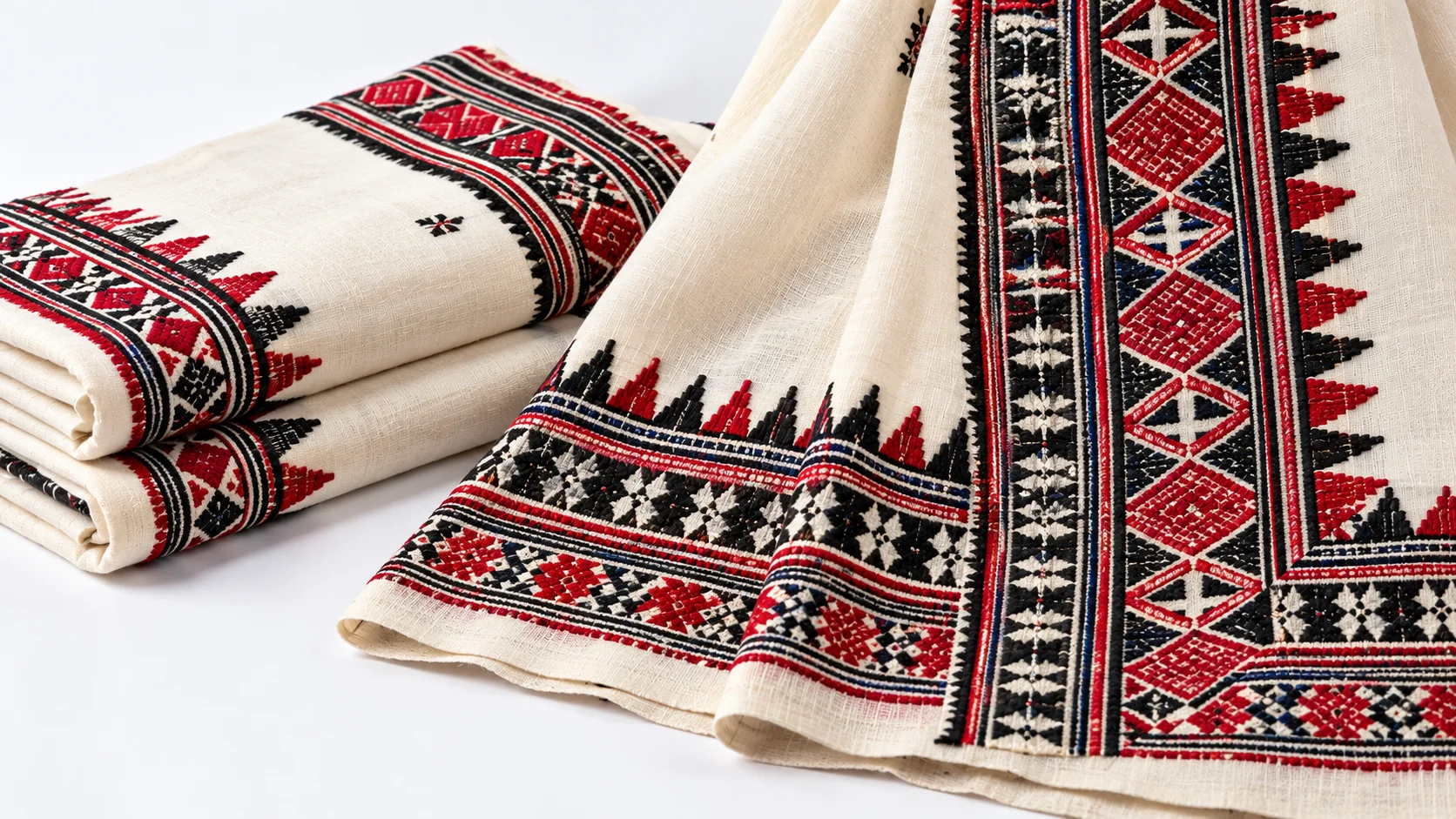
This image has been generated using AI for visual representation purposes only.
Discover Toda Embroidery, a GI-registered regional product associated with The Nilgiris, celebrated for its local heritage and traditional craftsmanship or production.
Toda Embroidery is a traditional counted‑thread hand embroidery practised by the Toda community of the Nilgiris district (Tamil Nadu, India). It is normally worked in red and black thread on a coarse off‑white cotton ground and is applied to the Toda cloak (pootkhull(zh)y) and related textile items. Toda Embroidery is a Geographical Indication (GI)‑registered handicraft for the Nilgiris (Certificate of Registration issued 26 March 2013). ()
Documented sources show that the GI application for Toda Embroidery was filed by Keystone Foundation together with Toda Nalavaazhvu Sangam and that the Controller of Geographical Indications issued the Certificate of Registration on 26 March 2013. The practice itself is described in anthropological and craft documentation as an inherited, women’s needlework tradition within the Toda community of the Nilgiri Hills; historically it has been worked on the traditional rectangular cloak (pootkhull(zh)y) and, in more recent decades, on a range of accessory and household items. The GI application and supporting material state that girls traditionally learn the technique from their mothers and that the cloth used is a coarsely woven off‑white cotton (often woven for the Todas by neighbouring weavers) on which motifs are embroidered in continuous lengthwise bands. ()
Toda Embroidery is described in the GI specification and supporting documentation as a women’s craft of the Toda community that transmits pattern vocabulary, counting technique and cultural motifs across generations. The stitched motifs (locally called pukhoor) draw on Toda material culture, local flora and fauna and dairy ritual imagery; the work is integrated with the traditional cloak (pootkhull(zh)y) that is an element of Toda dress and ceremonial use. ()
Principal, documented features are: (1) a counted‑thread needle‑weaving technique executed on coarse off‑white cotton so motifs align with warp and weft threads; (2) characteristic use of red and black embroidery thread on a white ground; (3) motifs worked in continuous lengthwise bands rather than across the width; (4) reversible construction (both sides show the work, with a ‘looped’ obverse traditionally considered the display face by the Todas); and (5) a named motif vocabulary (pukhoor) that includes nature‑ and ritual‑inspired geometric forms, buffalo and other local motifs. These features are described in the GI application/specification. ()
In documented practice the base cloth (coarsely woven off‑white cotton) is prepared and in traditional garments folded and sewn to form the cloak (pootkhull(zh)y). The embroiderer counts warp and weft threads of the fabric and executes the counted‑thread, needle‑weaving stitches to build motifs in continuous lengthwise bands (pukhoor). Motifs are repeated in bands along the length; after embroidery the item is finished with edge treatments and any necessary stitching to create the final cloak or accessory. The GI application describes these stages as the normal sequence of production. ()
The documented, distinctive method is a counted‑thread needle‑weaving technique (often described as needle‑weaving rather than outline surface embroidery). No design outlines are traced on the cloth; motifs are formed by following and counting the warp and weft of the coarse fabric. The embroidery is worked in repetitive bands and the technique produces a reversible effect with a looped, ‘rough’ obverse. ()
Toda Embroidery has documented cultural importance as part of Toda dress and identity: motifs reference animals, plants and objects connected to Toda life (for example the buffalo), and embroidered cloaks are associated with ceremonial and communal occasions. The GI registration recognises the craft’s geographic and cultural link to the Nilgiris and provides a legal recognition intended to protect the traditional knowledge and link the named product to that area. These points are set out in the GI application and the IP India registration. ()
Toda Embroidery is registered as a Geographical Indication for the Nilgiris; the Certificate of Registration was issued on 26 March 2013. ()
The craft uses a documented set of traditional motifs called pukhoor, drawn from local plants, animals and material culture; the GI application lists multiple named pukhoor designs. ()
Toda Embroidery is worked by counting warp and weft threads (a needle‑weaving approach) to create motifs in continuous bands; the technique produces a reversible fabric surface with a characteristic display face. ()
The embroidery vocabulary and the principal buffalo motif reflect the central place of dairy and buffalo‑related religion and ritual in Toda life; embroidered cloaks are part of Toda dress conventions and are associated with communal and festive settings. The GI documentation records these cultural links between motif, clothing and Toda identity. ()
Documented sources state that Toda Embroidery is worked by the women of the Toda community; skills are transmitted within families and younger women typically learn from older women. ()
Yes. Toda Embroidery is a GI‑registered handicraft for the Nilgiris; the registration certificate was issued on 26 March 2013. ()
The documented specification describes a coarse off‑white cotton base fabric embroidered with cotton thread, using predominantly red and black thread colours. ()
Designs (pukhoor) are formed by a counted‑thread needle‑weaving technique: the embroiderer counts the warp and weft threads of the coarse cloth and builds geometric and representational motifs in continuous bands without tracing outlines. ()
Traditionally the cloak (pootkhull(zh)y) is the principal item; the same embroidery vocabulary is also used on shawls, stoles and a range of accessory and household textiles as recorded in the GI application. ()
This image has been generated using AI for visual representation purposes only.
Let Karthi Travels help you plan a comfortable and memorable journey across Tamil Nadu.
Experience, Trust & Memories Built Over the Years





Your journey is in experienced hands, from planning to the final drop.

No hidden charges. Clear and upfront pricing.

Clean, inspected and well-serviced vehicles for a comfortable journey.

Professional drivers focused on safe and pleasant travel.

Dependable pickups and reliable travel service.
Travel Made Simple, Experiences Made Grand

Explore the best of each destination with our curated sightseeing tours.

Perfect for families and groups, planned with comfort, safety and flexibility in mind.

Peaceful and spiritually enriching journeys with carefully planned routes.

Personalised honeymoon tours and romantic destinations for your special journey.

Compliant and well-documented tour plans to make the most of your travel concession.
 WhatsApp Us