🛕About Temple
Abathsagayeswarar Temple at Alangudi, also known as Apatsahayesvarar Temple, is an ancient Shiva temple in Alangudi near Kumbakonam in Tamil Nadu. The presiding deity is Lord Shiva as Abathsagayeswarar, the protector who helps devotees in times of danger. The goddess is worshipped as Elavarkuzhali Amman. The temple is one of the revered Paadal Petra Sthalams praised in the Tamil Shaiva canon, giving it a special place in the sacred geography of the Kaveri delta.
The temple is best known as the Guru Sthalam of the Navagraha temple circuit around Kumbakonam. In this association, Guru, the planet Jupiter, is worshipped through the shrine of Dakshinamurthy, the form of Shiva as the supreme teacher. Devotees visit the temple especially on Thursdays and during Guru Peyarchi, the transit of Jupiter, for worship connected with learning, wisdom, marriage, children, and spiritual guidance.
Alangudi is situated in the fertile temple region of the Chola country, close to Needamangalam, Kumbakonam, Thanjavur, and Tiruvarur. The temple combines historical Shaiva worship, Tevaram sanctity, Navagraha devotion, and living ritual practice. Its sacred tank, sthala vriksha, shrines, and festival traditions continue to draw pilgrims from across Tamil Nadu and from the wider South Indian diaspora.
ℹ️Temple Information
🛕
Presiding Deity
Abathsagayeswarar
👸
Goddess
Elavarkuzhali Amman
⭐
Temple Type
Shiva temple, Paadal Petra Sthalam, Navagraha Guru Sthalam, Dravidian temple
📅
Built Period
At least 7th century CE as established by Tevaram hymns; the extant structural temple reflects Chola-period and later development.
🏛
Dynasty
Chola period; later renovations under subsequent regional patrons.
Need Help Planning your visit to
Arulmigu Abathsagayeswarar Temple?
Our travel experts can help you with transportation,
darshan timings, nearby sightseeing and complete temple tour planning.
⭐Temple Significance
Abathsagayeswarar Temple is significant as a Paadal Petra Sthalam praised in the Tevaram, as the Guru Sthalam among the Navagraha temples of the Kumbakonam region, and as an active Shaiva temple where Lord Shiva is worshipped as the protector from danger. The shrine of Dakshinamurthy gives the temple its special association with Guru, the planet Jupiter, making it a major destination for devotees seeking blessings connected with wisdom, education, marriage, children, and auspicious life events.
📜History
The verifiable antiquity of Abathsagayeswarar Temple is established by its place in the Tevaram tradition. The temple is counted among the Paadal Petra Sthalams, the Shiva temples praised by the Nayanmar saints in the 7th century CE. This literary evidence shows that the shrine was an important place of Shaiva worship by the early medieval period. The sacred site is also known in older Tamil devotional usage as Thiru Irum Poolai, a name connected with the sthala tradition of the temple.
The temple stands in the former Chola heartland of the Kaveri delta, a region where many early Shaiva shrines were expanded into stone temple complexes under Chola patronage. The present temple fabric reflects the development of Tamil Dravidian temple architecture, with later additions and renovations made over time by regional patrons and temple authorities. A specific founding king or builder is not firmly established in widely available historical records, so the temple is best described as an ancient shrine of at least 7th-century sanctity with later Chola-period structural development.
Its religious importance continued through the medieval and later periods because of two overlapping identities: as a Tevaram shrine of Lord Shiva and as the Guru Sthalam in the Navagraha circuit. The Guru association made Alangudi a major pilgrimage centre for devotees performing Navagraha worship. Today the temple remains under active worship and is administered as a living Hindu temple, preserving both Shaiva liturgy and the popular Guru-related devotional practices of the region.
🕉️Mythology
The central mythology of Alangudi is connected with Lord Shiva as Abathsagayeswarar, the one who protects beings during crisis. In the temple tradition, the name is associated with Shiva saving the devas and the worlds from danger during the episode of the halahala poison that emerged from the churning of the ocean. The word aalam is associated in Tamil usage with deadly poison, and the sacred name of the place is linked with Shiva’s compassionate act of removing danger.
The form of Shiva venerated here as the rescuer is closely related to the temple’s identity as a place of refuge. Devotees approach Abathsagayeswarar for protection from fear, obstacles, misfortune, and difficult planetary influences. The mythology does not replace the historical identity of the shrine; rather, it explains the theological meaning of the deity’s name and the devotional experience of the temple. The goddess Elavarkuzhali Amman is worshipped as the compassionate divine mother who grants grace along with the presiding Lord.
Alangudi is also associated with Guru worship through Dakshinamurthy, Shiva as the silent preceptor who imparts wisdom. In Shaiva theology, Dakshinamurthy represents supreme knowledge, right understanding, and the removal of ignorance. Because Guru, the planet Jupiter, is connected with wisdom, teaching, children, auspiciousness, and dharma, devotees link the Dakshinamurthy shrine with Guru Bhagavan. This mythology and devotional symbolism make the temple a major centre for Guru-related worship in the Navagraha tradition.
🏛Architecture
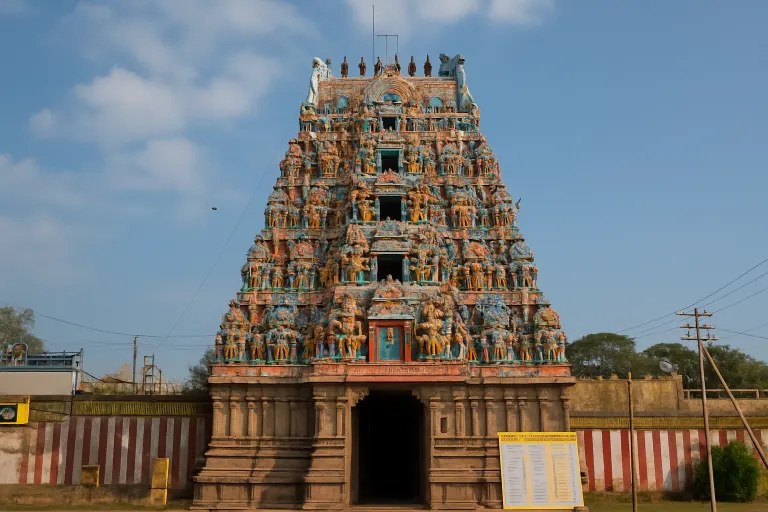
Abathsagayeswarar Temple follows the South Indian Dravidian temple layout typical of the Kaveri delta. The complex is entered through a multi-tiered rajagopuram and contains prakara passages, mandapas, subsidiary shrines, and the central sanctum of Lord Abathsagayeswarar in linga form. The arrangement reflects the mature Tamil temple tradition in which the sanctum, circumambulatory paths, goddess shrine, sacred tank, and festival spaces together form the ritual landscape.
The main sanctum enshrines Shiva as Abathsagayeswarar, while Elavarkuzhali Amman has a separate shrine within the temple complex. A major feature is the shrine of Dakshinamurthy, worshipped here in connection with Guru Bhagavan. This shrine is central to the temple’s Navagraha identity, and many devotees offer worship there on Thursdays and during Guru Peyarchi. The temple also includes shrines for deities commonly found in Shaiva temples, including Ganesha, Murugan, Chandikeswarar, and other associated forms of worship.
The architectural character is not limited to monumental form; it is closely tied to ritual movement. Devotees enter through the gopuram, worship the presiding Shiva linga, proceed to the goddess shrine, and then visit the Guru-associated Dakshinamurthy shrine. The sacred tank and sthala tree add to the temple’s traditional spatial identity. While the complex has received repairs and renovations over centuries, its core layout remains that of an ancient Tamil Shaiva temple serving daily worship, festival processions, and Navagraha pilgrimage.
🌳
Sacred Features
🌳 Temple Tree
Poolai
Poolai is the sthala vriksha associated with the temple and is linked with the older sacred name Thiru Irum Poolai.
💧 Temple Tank
Amrita Pushkarini
Amrita Pushkarini is the sacred tank associated with the temple and forms part of its traditional ritual landscape.
✨
Temple Highlights
✨
Guru Sthalam of the Navagraha circuit
Alangudi is the temple associated with Guru, or Jupiter, among the Navagraha temples around Kumbakonam. Devotees worship Dakshinamurthy here for Guru-related blessings.
✨
Paadal Petra Sthalam
The temple is one of the sacred Shiva temples praised in the Tevaram hymns, confirming its early medieval Shaiva importance.
✨
Lord Abathsagayeswarar
Shiva is worshipped here as the protector who helps devotees in danger, giving the temple its distinctive sacred name.
✨
Elavarkuzhali Amman shrine
The goddess is worshipped as Elavarkuzhali Amman, the consort of the presiding deity and the compassionate mother of the temple.
✨
Dakshinamurthy worship
The Dakshinamurthy shrine is central to the temple’s Guru association and is especially visited on Thursdays and Guru transit occasions.
🙏
Spiritual Benefits
Worship of Lord Abathsagayeswarar for protection from danger and distress
Prayers to Dakshinamurthy for wisdom and clarity
Guru-related worship for education and learning
Devotional prayers for marriage blessings
Prayers for children and family welfare
Worship for relief from adverse Guru-related astrological concerns
Spiritual focus on removing ignorance and gaining right understanding
Participation in Pradosham and Shiva worship for inner discipline
🎉
Major Festivals
🎉
Guru Peyarchi
Guru Peyarchi, the transit of Jupiter, is the most important festival associated with the temple’s Guru Sthalam identity. Large numbers of devotees worship Dakshinamurthy and perform Guru-related prayers.
🎉
Maha Shivaratri
Maha Shivaratri is observed with special worship to Lord Abathsagayeswarar, reflecting the temple’s primary identity as a Shiva shrine.
🎉
Pradosham
Pradosham worship is observed for Lord Shiva and attracts devotees for evening worship on the prescribed lunar days.
🎉
Aippasi Annabhishekam
Annabhishekam to Lord Shiva is observed in the Tamil month of Aippasi, a widely followed Shaiva temple ritual.
🪔
Special Poojas
🪔
Guru Bhagavan Abhishekam
Special abhishekam and worship are offered in connection with Guru, especially at the Dakshinamurthy shrine.
🪔
Thursday Guru Archanai
Thursday worship is important for devotees seeking Guru-related blessings for wisdom, education, marriage, children, and auspiciousness.
🪔
Pradosha Pooja
Pradosha pooja is performed for Lord Shiva during the sacred twilight period on Pradosham days.
🪔
Maha Shivaratri Pooja
Special night worship and abhishekam are conducted for Lord Shiva during Maha Shivaratri.
🚗
How to Reach
🛣️
By Road
Alangudi is accessible by road from Kumbakonam, Needamangalam, Thanjavur, and Tiruvarur. Buses and taxis are available from nearby towns.
🚆
By Rail
Needamangalam railway station is the nearest commonly used railway station. Kumbakonam railway station is another major railhead for pilgrims.
✈️
By Air
Tiruchirappalli International Airport is the nearest major airport, with onward travel to Alangudi by road.
💡
Visitor Tips
Check the current temple timings before travelling, especially on festival days.
Expect larger crowds on Thursdays and during Guru Peyarchi.
Needamangalam railway station is the commonly used rail access point for Alangudi.
Plan extra time if combining this temple with the Kumbakonam Navagraha circuit.
Dress modestly and follow temple customs while entering shrines.
Keep footwear only in the designated area outside the temple.
Photography rules should be confirmed at the temple before taking pictures.
During major festivals, local traffic and parking near the temple may be restricted.

 WhatsApp Us