🛕About Temple
Agneeswarar Shukran Temple at Kanjanur, also written as Kanjanoor or Thirukkanjanur, is an ancient Shiva temple in the Kumbakonam region of Tamil Nadu. The presiding deity is Lord Shiva worshipped as Agneeswarar, and the goddess is Karpagambal. The temple is especially known as the Shukra Sthalam among the Navagraha temples of the Cauvery delta, where devotees worship for the grace associated with Shukra, the planet Venus.
Unlike several Navagraha temples that have a separate planetary shrine as the central focus of worship, Kanjanur is distinctive because Shukra is worshipped through Lord Shiva himself. The temple’s sacred identity is therefore both Shaiva and Navagraha-related. It is also counted among the revered Paadal Petra Sthalams, the Shiva temples praised in the Tevaram hymns of the Tamil Saiva canon.
The temple stands close to Suryanar Kovil and Aduthurai, making it part of the well-known Navagraha pilgrimage circuit around Kumbakonam. Devotees visit the temple for regular Shiva worship, Friday worship connected with Shukra, and parihara worship associated with marriage, family harmony, prosperity, artistic refinement, and relief from afflictions attributed to Venus in astrology. The temple preserves the atmosphere of a historic Cauvery-delta shrine, combining mythology, medieval Tamil devotional heritage, and continuing worship traditions.
ℹ️Temple Information
🛕
Presiding Deity
Agneeswarar
⭐
Temple Type
Shiva temple, Navagraha Sthalam, Shukra Sthalam, Paadal Petra Sthalam, Dravidian temple
📅
Built Period
Early medieval Chola period, with the sacred site known from the Tevaram age; the standing stone temple reflects later Chola-period development and subsequent renewals.
🏛
Dynasty
Chola, with later South Indian renovations and additions.
Need Help Planning your visit to
Agneeswarar Shukran Temple?
Our travel experts can help you with transportation,
darshan timings, nearby sightseeing and complete temple tour planning.
⭐Temple Significance
Agneeswarar Shukran Temple is significant as the Shukra Sthalam of the Navagraha pilgrimage circuit and as a Paadal Petra Sthalam of the Tamil Shaiva tradition. It is especially noted for the absence of a separate principal Shukra shrine, because Lord Shiva as Agneeswarar is worshipped as the source of Shukra’s grace. The temple unites Tevaram-era Shaiva sanctity, Chola-period temple culture, and continuing astrological parihara worship.
📜History
Kanjanur Agneeswarar Temple belongs to the old sacred geography of the Chola country on the northern bank region of the Cauvery. Its sanctity is attested by its inclusion among the Paadal Petra Sthalams, temples praised in the Tevaram hymns. This places the shrine within the devotional landscape of the early medieval Tamil Saiva movement, which flourished from the 7th century onward through the hymns of the Nayanmar saints.
The existing structural temple is associated with the Chola period, the era in which many brick and earlier shrines in the Cauvery basin were expanded or rebuilt in stone. The temple’s plan, stone sanctum, mandapas, prakaras, and sculptural vocabulary reflect the architectural and ritual culture that developed under Chola patronage and continued under later South Indian rulers. Later additions and renewals were made over time, as is common with major living temples in the Kumbakonam region.
Historically, Kanjanur is also important because it connects the Tevaram Shaiva tradition with the later Navagraha pilgrimage tradition. While the temple is popularly visited today as the Shukra Sthalam, its older identity is that of a Shiva temple dedicated to Agneeswarar. This continuity shows how a medieval Shaiva shrine became part of a wider regional pattern of planetary worship without losing its primary dedication to Shiva. The specific individual founder is not securely documented in widely accepted historical records.
🕉️Mythology
The mythology of Kanjanur is centred on Lord Shiva as Agneeswarar. The name is connected with Agni, the fire deity, who is described in the temple’s sacred tradition as worshipping Shiva here. Through that worship, the place became associated with purification, light, and the transforming power of divine grace. This mythological association explains the name Agneeswarar and gives the shrine its ritual importance in local Shaiva tradition.
Kanjanur is also identified with Shukra, the planetary deity Venus and the preceptor of the Asuras in Hindu mythology. In the local religious understanding, Shukra received the grace of Lord Shiva at this place. For this reason, there is no need for a separate Shukra image as the principal focus of worship; Shiva as Agneeswarar is revered as the source of the blessing connected with Shukra. Devotees therefore worship the main linga for relief from Shukra-related astrological afflictions.
Another tradition associated with the temple concerns the saint Haradatta Sivacharya, who is linked with Kanjanur in local Shaiva memory. Narratives about his devotion emphasize unwavering surrender to Shiva and the superiority of sincere worship over outward identity. These stories belong to the temple’s mythological and devotional heritage rather than to datable political history. Together, the legends of Agni, Shukra, and Haradatta give Kanjanur its distinctive spiritual identity within the Kumbakonam temple region.
🏛Architecture
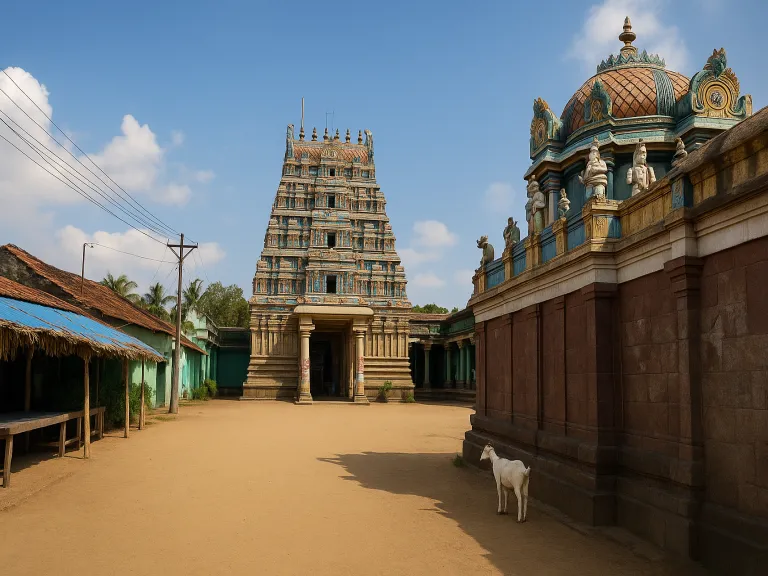
Agneeswarar Shukran Temple follows the Dravidian temple layout characteristic of the Cauvery delta. The temple has a rajagopuram, enclosed prakaras, a central sanctum for Lord Agneeswarar, and separate spaces for subsidiary deities and ritual movement. The axial arrangement from the entrance toward the sanctum reflects the conventional South Indian Shaiva temple plan, guiding the devotee from the outer precinct into the more sacred inner zone.
The sanctum enshrines Shiva in the form of a linga, with the goddess Karpagambal worshipped in her own shrine. The temple also contains the usual sacred components of a living Shaiva temple, including mandapas used for worship, circumambulation paths, and shrines connected with the Shaiva pantheon. The temple’s architectural identity is not that of an isolated planetary shrine, but of a complete Shiva temple that also functions as the Shukra Sthalam of the Navagraha circuit.
Its masonry form and layout reflect the long development of temple architecture under Chola and later South Indian patronage. The gopuram, prakaras, shrines, and sculptural details belong to a temple that has undergone worship, maintenance, and additions across centuries. The architecture reinforces the temple’s theological focus: devotees approach Shukra’s grace through the worship of Agneeswarar. This gives Kanjanur a distinctive place among Navagraha temples, where the planetary association is integrated into the main Shaiva sanctum rather than separated from it.
🌳
Sacred Features
🌳 Temple Tree
Purasu tree
The purasu tree is recorded in the temple tradition as the sthala vriksha, the sacred tree associated with the shrine.
💧 Temple Tank
Agni Theertham
Agni Theertham is associated with the temple’s mythology of Agni worshipping Lord Shiva and is revered as the sacred water body connected with the shrine.
✨
Temple Highlights
✨
Shukra Sthalam of the Navagraha circuit
Kanjanur is the temple associated with Shukra, or Venus, among the nine Navagraha temples around Kumbakonam.
✨
Lord Shiva worshipped as Shukra’s grace
The temple is distinctive because the main deity, Agneeswarar, is worshipped for Shukra-related blessings rather than a separate principal Shukra shrine.
✨
Paadal Petra Sthalam
The temple is counted among the Shiva temples praised in the Tevaram hymns of the Tamil Saiva canon.
✨
Ancient Cauvery-delta shrine
The temple belongs to the historic Chola-country sacred landscape near Kumbakonam, a region dense with medieval Shiva temples.
✨
Association with Agni
The name Agneeswarar is linked with the temple mythology of Agni worshipping Lord Shiva at this sacred place.
✨
Near Suryanar Kovil
The temple is located close to Suryanar Kovil, making it a regular part of Navagraha pilgrimage itineraries.
🙏
Spiritual Benefits
Devotees seek relief from Shukra dosha and Venus-related astrological afflictions.
Worship is sought for harmony in marriage and family life.
Devotees pray for prosperity, comforts, and well-being.
Artists and students seek refinement, creativity, and learning associated with Shukra.
Couples pray for mutual affection and auspicious domestic life.
Worship of Agneeswarar is sought for purification and removal of obstacles.
Devotees seek the blessings of Goddess Karpagambal for family welfare and auspiciousness.
🎉
Major Festivals
🎉
Maha Shivaratri
A major annual festival for Lord Shiva, observed with special worship and night-long devotion in Shiva temples including Agneeswarar Temple.
🎉
Sukra Peyarchi
The transit of Shukra is important for devotees who visit Kanjanur for Shukra-related worship and parihara.
🎉
Pradosham
The twice-monthly Pradosha period is important for Shiva worship and is observed with special puja to Lord Agneeswarar.
🎉
Arudra Darshan
A major Shaiva festival connected with Lord Nataraja and the cosmic dance of Shiva.
🎉
Aipasi Annabhishekam
A Shaiva observance in the Tamil month of Aipasi, when the Shiva linga is worshipped with cooked rice as a symbol of abundance and gratitude.
🪔
Special Poojas
🪔
Sukra Parihara Puja
Devotees perform worship to Lord Agneeswarar seeking relief from Shukra dosha and blessings connected with Venus.
🪔
Friday Worship
Fridays are associated with Shukra, and devotees visit the temple for archana and prayers for prosperity, marriage harmony, and family welfare.
🪔
Abhishekam to Agneeswarar
Ritual bathing of the Shiva linga is performed as part of regular Shaiva worship and special offerings.
🪔
Pradosha Puja
Special worship to Lord Shiva during Pradosham is observed by devotees seeking removal of obstacles and divine grace.
🪔
Archana to Karpagambal
Devotees worship Goddess Karpagambal for auspiciousness, compassion, prosperity, and family well-being.
🚗
How to Reach
🛣️
By Road
Kanjanur is accessible by road from Kumbakonam, Aduthurai, Mayiladuthurai, and Suryanar Kovil. Local buses, taxis, and private vehicles are commonly used for Navagraha temple visits in this region.
🚆
By Rail
The nearest convenient railway access is through Aduthurai and Kumbakonam railway stations, from where local road transport can be used to reach Kanjanur.
✈️
By Air
The nearest major airport is Tiruchirappalli International Airport. From there, visitors can travel by road or rail toward Kumbakonam and continue to Kanjanur.
💡
Visitor Tips
Plan extra time if visiting on Fridays, festival days, or during Sukra Peyarchi, when devotee crowds can be higher.
Kanjanur is close to Suryanar Kovil and can be combined with nearby Navagraha temples in the Kumbakonam region.
Dress modestly and be prepared to remove footwear before entering the temple premises.
Verify current opening hours and special pooja arrangements locally before travelling, as timings may change on festival days.
Carry small cash for archana or offering counters if you intend to perform worship.
Respect temple silence and avoid disturbing ongoing rituals in the sanctum and mandapas.
If covering multiple Navagraha temples in one day, start early because the temples generally close in the afternoon.

 WhatsApp Us