🛕About Temple
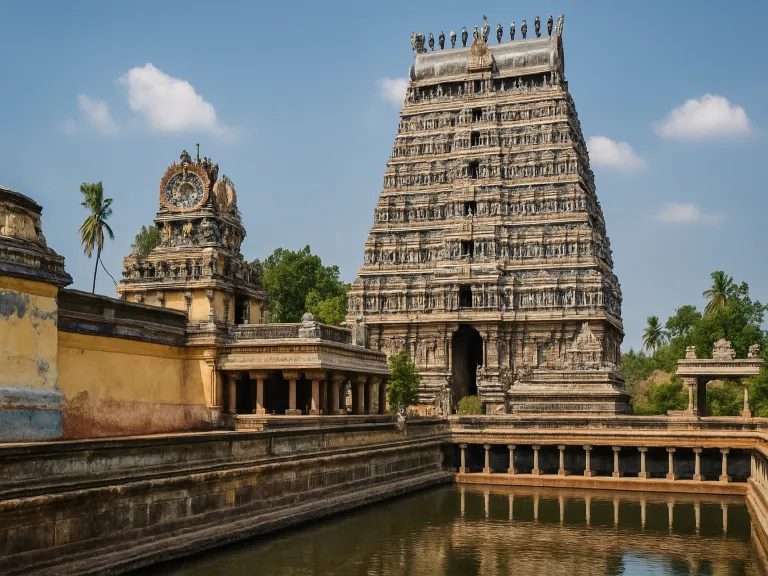
Ammai Nathar Temple at Cheranmahadevi is a Saiva temple in Tirunelveli district, Tamil Nadu, situated in the historic settlement of Cheranmahadevi near the Tamiraparani river. The temple is dedicated to Lord Shiva, worshipped here as Ammai Nathar. It is best known in regional pilgrimage practice as the second temple of the Tamiraparani Nava Kailasam circuit, the group of nine Shiva temples associated with the nine planetary forces in Tamil devotional tradition.
The shrine is associated with Chandran, the Moon, within the Nava Kailasam order. Devotees visit the temple as part of the complete Nava Kailasam pilgrimage that follows the course of the Tamiraparani from the Western Ghats region toward the river’s lower reaches. The temple’s religious identity is therefore connected not only with Shiva worship but also with the sacred geography of the river, which has shaped temple culture in the Tirunelveli region for many centuries.
Ammai Nathar Temple remains an active place of worship for local devotees and pilgrims. Its importance is primarily devotional and regional rather than monumental. Publicly available historical details on its exact founder, consecration date, and formal ritual school are not securely established in standard sources; therefore, those details are not stated here as facts. The temple is valued for its place in the Nava Kailasam circuit, its connection with the Tamiraparani, and its continuing role in the Saiva religious life of Cheranmahadevi.
ℹ️Temple Information
🛕
Presiding Deity
Ammai Nathar
⭐
Temple Type
Shiva temple, Nava Kailasam temple, Navagraha-associated temple, Tamiraparani river pilgrimage shrine
Need Help Planning your visit to
Arulmigu Ammai Nathar Temple?
Our travel experts can help you with transportation,
darshan timings, nearby sightseeing and complete temple tour planning.
⭐Temple Significance
Ammai Nathar Temple is significant as the second shrine of the Tamiraparani Nava Kailasam circuit and as the temple associated with Chandran, the Moon. It is an important Saiva pilgrimage point at Cheranmahadevi and is visited by devotees undertaking the nine-temple Nava Kailasam journey along the Tamiraparani river.
📜History
Cheranmahadevi is one of the historically important settlements of the Tirunelveli region, an area where the Tamiraparani river supported agriculture, temple patronage, and religious institutions through the medieval period. The town is known for multiple old temples and for its place in the sacred geography of southern Tamil Nadu. Ammai Nathar Temple belongs to this wider religious landscape, but the exact date of its original foundation is not securely documented in widely accessible historical accounts.
The temple’s historical identity is closely connected with the Tamiraparani Nava Kailasam tradition. The nine shrines in this circuit are treated as a connected Saiva pilgrimage group, and Ammai Nathar Temple is recognized as the second among them. This association has preserved the temple’s importance among pilgrims even where detailed dynastic records for the individual shrine are not clearly available. The Chandran association is especially important in later devotional mapping of the Nava Kailasam temples.
No historically verified founder can be stated with confidence from well-established public information. The temple is often described as ancient in pilgrimage literature, but the word “ancient” does not by itself provide a secure century, builder, or dynasty. Because the available information does not establish a specific ruler, patron, inscriptional date, or construction phase for Ammai Nathar Temple, those fields are left blank. The historically safe statement is that the temple is an old Saiva shrine at Cheranmahadevi, now principally known through the Tamiraparani Nava Kailasam pilgrimage tradition.
🕉️Mythology
The mythology of Ammai Nathar Temple is part of the larger Nava Kailasam legend connected with the Tamiraparani river. In local sacred tradition, Sage Romasa, a disciple of Sage Agastya, wished to attain liberation through the worship of Lord Shiva. Sage Agastya instructed him to place nine flowers in the Tamiraparani and worship Shiva at each place where a flower came to rest. These nine places became the Nava Kailasam shrines.
Within this sacred narrative, Cheranmahadevi is identified as the place of the second flower and is therefore venerated as the second Kailasam of the Tamiraparani circuit. The deity at this shrine is worshipped as Ammai Nathar, and the temple is linked with Chandran, the Moon. The mythology is devotional in nature and belongs to the living oral and pilgrimage tradition of southern Tamil Nadu rather than to a dated historical record.
Devotees connect the Moon association with mental calmness, emotional balance, family harmony, and relief from difficulties attributed to Chandra dosha in astrological belief. Pilgrims who undertake the Nava Kailasam journey usually worship at all nine temples, seeing the circuit as a complete act of Shiva devotion along the sacred river. The mythological importance of Ammai Nathar Temple therefore lies in its position within this river-based spiritual journey and its role as the Chandran shrine among the nine Kailasams.
🏛Architecture
Ammai Nathar Temple follows the broad pattern of a South Indian Saiva temple, with Lord Shiva worshipped in the form of a linga as the principal deity. The temple’s sacred arrangement centers on the sanctum of Ammai Nathar, with associated spaces for worship, circumambulation, and offerings. As with many Saiva temples in the region, the presence of Nandi facing the Shiva shrine forms an important part of the devotional axis of worship.
The temple is better known for its religious identity than for a fully documented architectural history. Publicly available descriptions do not provide a secure account of the original architect, the exact construction phase, or a detailed chronology of renovations. For this reason, specific claims about the number of prakaras, gopuram phases, sculptural programs, mandapa dates, or royal building campaigns are not stated here unless they are established by dependable temple records or historical documentation.
Architecturally, the temple should be understood within the temple landscape of the Tamiraparani basin, where stone shrines, Saiva iconography, Nandi worship, subsidiary shrines, and festival-use spaces form the common sacred grammar. The shrine’s value is not dependent on monumental scale alone; it lies in the continuity of worship and its role in the Nava Kailasam circuit. The temple presents the compact, functional, and devotional character typical of many active regional Shiva temples in southern Tamil Nadu.
✨
Temple Highlights
✨
Second Nava Kailasam shrine
Ammai Nathar Temple is recognized as the second temple in the Tamiraparani Nava Kailasam pilgrimage circuit.
✨
Chandran association
The temple is associated with Chandran, the Moon, in the Navagraha-linked Nava Kailasam tradition.
✨
Tamiraparani sacred geography
The shrine is part of the river-based Saiva pilgrimage tradition of the Tamiraparani region.
✨
Shiva worship at Cheranmahadevi
The presiding deity is Lord Shiva, worshipped as Ammai Nathar in the historic town of Cheranmahadevi.
✨
Pilgrimage circuit importance
Devotees often visit this temple along with the other eight Nava Kailasam temples as a complete spiritual journey.
🙏
Spiritual Benefits
Worship of Lord Shiva for inner peace and spiritual steadiness
Devotional worship connected with Chandran, the Moon
Prayer for mental calmness and emotional balance
Worship for family harmony and domestic well-being
Participation in the complete Nava Kailasam pilgrimage
Prayer for relief from difficulties associated with Chandra dosha in astrological belief
Strengthening of devotion through circumambulation and Shiva worship
Seeking grace through worship along the sacred Tamiraparani river
🎉
Major Festivals
🎉
Maha Shivaratri
Maha Shivaratri is the principal annual festival of Lord Shiva worship across Saiva temples. Visitors should confirm the specific programme and timings for Ammai Nathar Temple locally.
🎉
Pradosham
Pradosham is an important recurring Saiva observance dedicated to Lord Shiva and Nandi. Devotees commonly perform Shiva worship on this occasion; current temple schedules should be confirmed locally.
🎉
Somavara worship
Monday worship is associated with Lord Shiva and also carries devotional relevance for Chandran-related worship. Temple-specific arrangements should be checked before visiting.
🪔
Special Poojas
🪔
Chandran-related worship
As the Chandran-associated shrine in the Nava Kailasam circuit, devotees offer prayers here for mental peace, emotional steadiness, and relief from Chandra dosha in astrological belief.
🪔
Shiva abhishekam
Abhishekam to Lord Shiva is a core Saiva form of worship. Availability, sponsorship procedure, and timing should be confirmed directly with the temple.
🪔
Pradosham pooja
Pradosham worship is connected with Lord Shiva and Nandi. Devotees visiting on Pradosham should verify the current pooja timing locally.
🚗
How to Reach
🛣️
By Road
Cheranmahadevi is reachable by road from Tirunelveli and other towns of the Tamiraparani region. Local buses, taxis, and private vehicles are commonly used for the Nava Kailasam circuit.
🚆
By Rail
Cheranmahadevi has railway access on the Tirunelveli region rail network. Travellers should verify current train services and station connectivity before planning the visit.
✈️
By Air
The nearest major airport generally used for the Tirunelveli region is Tuticorin Airport. Madurai Airport is another option for wider flight connectivity.
💡
Visitor Tips
Confirm the current temple opening hours locally before travelling.
If visiting as part of the Nava Kailasam circuit, plan the route and transport in advance.
Wear modest clothing suitable for worship at a Hindu temple.
Carry drinking water, especially during warm months in Tirunelveli district.
Check photography permission at the temple before taking any pictures.
Maintain silence and respect ongoing rituals inside the temple premises.
Keep small denominations of cash for offerings if needed.
Combine the visit with other documented temples in Cheranmahadevi if time permits.

 WhatsApp Us