🛕About Temple
Angala Parameswari Temple at Melmalayanur, in present-day Villupuram district of Tamil Nadu, is one of the best-known shrines dedicated to Angalamman, a fierce and protective manifestation of the Divine Mother. The temple is widely identified with Melmalayanur Angalamman and draws devotees from many parts of Tamil Nadu, Puducherry, Karnataka, and Andhra Pradesh. The shrine stands within a rural sacred landscape where Amman worship, guardian-deity traditions, and Tamil Shakti devotion remain closely connected.
The presiding goddess, Angala Parameswari, is worshipped as a compassionate yet formidable mother who protects devotees from fear, misfortune, disease, hostile forces, and mental distress. The temple is especially famous for the large gatherings held on Amavasai, the new-moon day, when devotees assemble for worship and for the celebrated Oonjal Seva associated with the goddess. The Masi month observances, including the Mayana Kollai festival, are among the temple’s most prominent annual events.
Melmalayanur is not primarily known through royal inscriptions or dynastic patronage; its importance comes from living worship, regional devotional memory, and continuous public participation. The temple represents a major centre of folk-Shakti worship that has grown into a large public pilgrimage shrine. Its identity combines Agamic-style temple elements with older village-goddess devotional practices, making it significant both as a sacred destination and as a cultural landmark of northern Tamil Nadu.
ℹ️Temple Information
🛕
Presiding Deity
Angala Parameswari
👸
Goddess
Angala Parameswari Amman
⭐
Temple Type
Shakti temple, Amman temple, Village guardian deity temple, Pilgrimage temple
Need Help Planning your visit to
Arulmigu Angala Parameswari Temple?
Our travel experts can help you with transportation,
darshan timings, nearby sightseeing and complete temple tour planning.
⭐Temple Significance
Melmalayanur Angala Parameswari Temple is a major Tamil Nadu Shakti shrine known for Angalamman worship, Amavasai gatherings, Oonjal Seva, and the Masi Mayana Kollai festival. It is especially significant for devotees who worship the goddess as a fierce protector and compassionate mother.
📜History
The documented historical record of Angala Parameswari Temple, Melmalayanur, is limited when compared with inscription-rich Chola, Pandya, or Vijayanagara temples. No widely cited foundation inscription securely identifies the original builder, exact year of construction, or ruling dynasty responsible for establishing the shrine. For this reason, the temple’s early history is best understood through its continuing religious life, local memory, and its long-standing place in the Amman worship traditions of the region.
Melmalayanur developed as an important pilgrimage centre for Angala Parameswari worship, particularly through practices connected with Amavasai worship and the Masi Mayana Kollai festival. These observances brought the temple into wider public recognition and helped make it a major shrine for devotees seeking the grace of Angalamman. The temple’s fame expanded through pilgrimage networks linking Villupuram, Gingee, Tiruvannamalai, Puducherry, and nearby rural communities.
In the modern period, the shrine functions as a large public temple visited by thousands of devotees, especially during new-moon days and annual festivals. Its built environment and visitor facilities have been shaped by repeated renovations, administrative needs, and the growth of pilgrimage. The temple is commonly referred to as Arulmigu Angala Parameswari Amman Temple or Melmalayanur Angalamman Temple. Historically verifiable details regarding the original construction, royal grants, and dynastic affiliation remain unavailable in well-established public sources, and therefore those fields are left unspecified.
🕉️Mythology
The mythology of Melmalayanur Angala Parameswari is connected with the wider Shaiva tradition concerning Shiva, Brahma, and the removal of a severe sin. In this sacred narrative, Brahma’s pride is humbled when Shiva removes Brahma’s fifth head. The severed skull clings to Shiva, and he wanders as Bhikshatana bearing the skull-bowl. This story explains the burden of Brahmahatya dosha and the need for divine intervention.
Local tradition associates Angala Parameswari with the power that relieves this affliction and restores cosmic balance. The goddess is revered as the fierce Mother who enters places that ordinary beings fear, including the cremation ground, and transforms impurity, fear, and disorder into protection and grace. This mythic association is one reason the temple’s Masi Mayana Kollai observance, linked with cremation-ground symbolism, holds deep ritual importance for devotees.
In devotional understanding, Angala Parameswari is not merely a fearsome deity but a mother who accepts distress, karmic burdens, and unspoken anxieties from her children. Devotees approach her for protection from negative influences, relief from mental anguish, and strength to overcome obstacles. The Amavasai Oonjal Seva is understood in this devotional framework as a moment when the Mother’s grace is accessible to the gathered community. These accounts belong to mythology and temple tradition rather than dated political history.
🏛Architecture
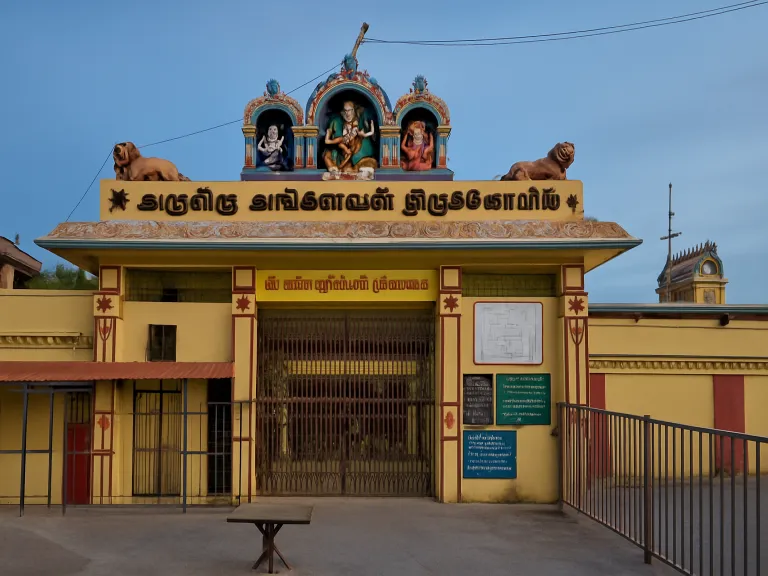
The present architecture of Angala Parameswari Temple, Melmalayanur, reflects the functional character of a major Tamil Shakti pilgrimage shrine. The complex is organized around the sanctum of the presiding goddess and includes spaces for darshan, offerings, circumambulation, festival movement, and crowd management. The entrance structures, mandapas, and shrine areas follow the recognizable vocabulary of Tamil temple architecture while serving the needs of a living Amman temple visited by large numbers of devotees.
As in many Tamil goddess temples, the visual emphasis is on the power and presence of the presiding deity rather than on a single documented royal architectural phase. The temple contains painted and sculptural elements associated with Shakti worship, including images of deities and guardian forms. The built environment has been shaped by renovation and expansion over time, especially to accommodate festival gatherings such as Amavasai worship and Masi observances. Public access routes, queue areas, and mandapas form an important part of the contemporary sacred experience.
The shrine’s architecture combines formal temple components with the atmosphere of a folk-Shakti centre. The sanctum serves as the ritual core, while the surrounding precinct supports vows, offerings, special worship, and festival processions. No securely documented inscriptional evidence is widely available to assign the temple to a particular dynasty or architectural school. Therefore, the architecture is best described as an evolved Tamil Amman temple complex rather than a monument attributable to a specific historical builder or period.
✨
Temple Highlights
✨
Famous Angalamman Shrine
The temple is one of the most prominent shrines dedicated to Angala Parameswari, widely revered as Melmalayanur Angalamman.
✨
Amavasai Oonjal Seva
New-moon day worship and the Oonjal Seva associated with the goddess attract large gatherings of devotees.
✨
Masi Mayana Kollai
The temple is closely associated with the Masi festival known as Mayana Kollai, a distinctive ritual observance linked with the fierce protective aspect of the goddess.
✨
Living Shakti Tradition
The temple represents a living form of Tamil Shakti worship that combines Amman devotion, guardian-deity traditions, and public pilgrimage.
✨
Major Regional Pilgrimage Centre
Melmalayanur is visited by devotees from Tamil Nadu and neighbouring regions, especially during new-moon days and annual festival periods.
🙏
Spiritual Benefits
Protection from fear and negative influences
Relief from mental distress and anxiety through devotion
Strength to overcome obstacles
Blessings for family welfare
Courage during difficult periods
Grace for fulfilment of sincere vows
Spiritual reassurance through worship of the Divine Mother
🎉
Major Festivals
🎉
Masi Mayana Kollai
A major annual festival of the temple, observed in the Tamil month of Masi, associated with the fierce protective aspect of Angala Parameswari and cremation-ground symbolism.
🎉
Amavasai Oonjal Seva
New-moon day worship is one of the temple’s most important recurring observances, when large numbers of devotees gather for darshan and the Oonjal Seva of the goddess.
🎉
Maha Shivaratri and Masi Observances
The Masi season, including the period around Maha Shivaratri, is closely associated with the temple’s major ritual calendar and the Mayana Kollai festival.
🪔
Special Poojas
🪔
Amavasai Oonjal Seva
A well-known special worship associated with new-moon days, when the goddess is worshipped with special devotion and large public participation.
🪔
Masi Mayana Kollai Ritual Worship
Special ritual observances conducted during the Masi festival period, connected with Angala Parameswari’s fierce protective form and the temple’s distinctive sacred tradition.
🪔
Abhishekam and Alankaram
Ritual bathing and decoration of the goddess form part of regular worship in the temple; devotees may seek current details directly from the temple administration.
🚗
How to Reach
🛣️
By Road
Melmalayanur is reachable by road from Gingee, Tiruvannamalai, Villupuram, Tindivanam, and Puducherry. Buses and private vehicles commonly approach the temple through the regional road network.
🚆
By Rail
The nearest convenient railway access is through Tiruvannamalai, Tindivanam, or Villupuram railway stations, followed by road travel to Melmalayanur.
✈️
By Air
Travellers can use Puducherry Airport or Chennai International Airport and continue by road to Melmalayanur.
💡
Visitor Tips
Confirm current darshan timings with the temple administration before travelling.
Expect heavy crowds on Amavasai days and during the Masi Mayana Kollai festival.
Plan transport and parking in advance during festival periods.
Carry only essential belongings and keep valuables secure in crowded areas.
Follow queue arrangements and instructions issued by temple staff or local authorities.
Wear modest clothing suitable for a place of worship.
Keep footwear only in designated areas.
Use authorized counters or temple offices for offerings, receipts, or special worship information.

 WhatsApp Us