🛕About Temple
Namakkal Anjaneyar Temple is a prominent Hanuman shrine in Namakkal, Tamil Nadu, located close to the famous rock-cut Sri Narasimhaswamy Temple and the shrine of Namagiri Thayar. The temple is known for its exceptionally tall image of Anjaneyar, who stands with folded hands facing Lord Narasimha. The shrine forms an important part of the sacred landscape around Namakkal hill, one of the best-known Vaishnava pilgrimage centres in the Kongu region.
The presiding deity, Sri Anjaneyar, is worshipped as the devoted servant of Sri Rama and as a great bhakta of Lord Vishnu. The image is widely identified by its towering height, open-to-sky setting and prayerful posture. Devotees visit the temple for courage, discipline, protection, relief from fear and strength in spiritual practice. The temple is especially crowded on Saturdays, Hanuman Jayanti and other Vaishnava festival days.
The Anjaneyar shrine is inseparably associated with the mythology of Namakkal, particularly the manifestation of Lord Narasimha and Namagiri Thayar. Pilgrims commonly visit Anjaneyar along with Sri Narasimhaswamy Temple, Namagiri Thayar shrine and the nearby Ranganathaswamy cave temple. Its location in the heart of Namakkal town makes it accessible to local devotees as well as travellers moving between Salem, Karur, Erode and Tiruchirappalli.
ℹ️Temple Information
🛕
Presiding Deity
Sri Anjaneyar
Need Help Planning your visit to
Sree Anjaneyar Temple?
Our travel experts can help you with transportation,
darshan timings, nearby sightseeing and complete temple tour planning.
⭐Temple Significance
Namakkal Anjaneyar Temple is significant as one of Tamil Nadu’s best-known Hanuman shrines, renowned for its about 18-foot standing image of Anjaneyar in folded-hands posture facing Lord Narasimha. Its importance is strengthened by its direct association with Namakkal Narasimhaswamy Temple and Namagiri Thayar, making it a major Vaishnavite pilgrimage point in the Kongu region.
📜History
The exact date of establishment of Namakkal Anjaneyar Temple is not fixed by a widely accepted inscriptional record available for the shrine. Its historical identity is closely connected with the older sacred complex around Namakkal hill, especially the rock-cut Narasimhaswamy Temple and the associated Namagiri Thayar shrine. The Narasimha cave temple belongs to the early medieval rock-cut temple tradition of Tamil Nadu, while the Anjaneyar shrine developed as an important standing Hanuman shrine facing the Narasimha sanctum.
Namakkal has been an important centre in the Kongu region and came under the influence of several South Indian powers over time, including the Cholas, Hoysalas, Vijayanagara rulers, Nayaks and later polities. The Anjaneyar Temple, however, does not have a securely documented founder or ruling dynasty that can be stated with certainty. For this reason, the built_by, built_period and dynasty details for the independent Anjaneyar shrine are best left unspecified unless supported by temple records or epigraphic evidence.
In modern times, the temple has become one of the most visited Hanuman shrines in Tamil Nadu. Its fame rests on the large standing idol, its devotional connection with Namakkal Narasimha, and continuous worship by devotees from across the state. The shrine is administered as a public Hindu temple and remains a major pilgrimage point within Namakkal town, complementing the historically significant cave temples around the hill.
🕉️Mythology
According to the sthala purana of Namakkal, the sacred hill and the connected shrines are linked to Lord Narasimha, Mahalakshmi and Anjaneya. After the episode of Narasimha destroying Hiranyakashipu, Mahalakshmi is associated with penance at Namakkal, where she sought the grace of the Lord. The local tradition connects this penance with the presence of Namagiri Thayar and the manifestation of Lord Narasimha in the hill shrine.
The Anjaneyar legend says that Hanuman brought a sacred saligrama connected with Lord Vishnu and came to Namakkal. He placed it down while performing worship and devotional duties. The saligrama became established at the site and is associated in the temple tradition with the manifestation of Namakkal hill and Lord Narasimha. Hanuman, unable to move it again, remained there in humble devotion, facing the Lord with folded hands.
This mythological account explains the devotional arrangement of the temples: Anjaneyar stands in reverence facing Sri Narasimhaswamy, while Namagiri Thayar is worshipped nearby. The mythology emphasizes Hanuman’s role as the model devotee who recognizes and worships the Supreme Lord in the Narasimha form. Pilgrims therefore treat a visit to Anjaneyar, Narasimhaswamy and Namagiri Thayar as a connected act of worship, rooted in the sacred story of Namakkal.
🏛Architecture
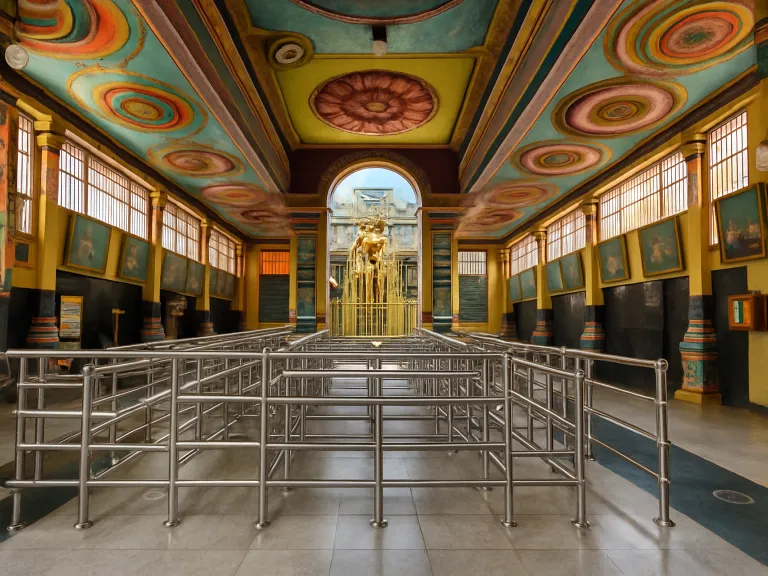
Namakkal Anjaneyar Temple is architecturally distinguished by its tall standing image of Sri Anjaneyar, measuring about 18 feet in height. The deity is shown in anjali mudra, with folded hands, facing the shrine of Lord Narasimha. The image is the central feature of the temple and gives the shrine its visual identity. Unlike many enclosed sanctums, the principal image is known for being worshipped in an open-to-sky setting.
The temple layout is compact and urban, reflecting its location within Namakkal town near the rock hill and the Narasimhaswamy Temple. The shrine is arranged to support direct darshan of the deity, with approach spaces for devotees, ritual offerings and festival worship. The open vertical emphasis of the Anjaneyar image contrasts with the rock-cut character of the nearby Narasimha and Ranganatha cave temples, making the temple architecturally distinctive within the same sacred area.
The sculptural treatment of Anjaneyar focuses on devotion rather than ornamented complexity. The deity’s erect posture, folded hands and forward-facing gaze toward Lord Narasimha communicate humility and surrender. The temple’s architectural significance lies not in large enclosures or elaborate mandapas, but in the scale, placement and devotional orientation of the idol. Together with the rock-cut shrines of Namakkal hill, it forms a unique pilgrimage setting where sculpture, orientation and mythology reinforce one another.
🌳
Sacred Features
💧 Temple Tank
Kamalalayam
Kamalalayam is associated with the sacred tradition of Namakkal and Namagiri Thayar. It is connected more broadly with the Namakkal temple complex rather than being a separate tank exclusively identified with the Anjaneyar shrine.
✨
Temple Highlights
✨
Tall Standing Anjaneyar Idol
The temple is famous for the approximately 18-foot image of Sri Anjaneyar standing with folded hands in a devotional posture.
✨
Facing Lord Narasimha
The Anjaneyar image faces the nearby Sri Narasimhaswamy Temple, reflecting the theological and mythological link between the shrines.
✨
Open-to-Sky Worship Setting
The main deity is known for being worshipped in an open-to-sky setting, a distinctive feature of the shrine.
✨
Part of Namakkal Sacred Circuit
Pilgrims usually visit this temple along with Narasimhaswamy Temple, Namagiri Thayar shrine and Ranganathaswamy cave temple.
✨
Major Hanuman Pilgrimage Centre
The temple attracts devotees from across Tamil Nadu, especially on Saturdays and Hanuman Jayanti.
🙏
Spiritual Benefits
Devotees worship for courage and inner strength.
Devotees seek protection from fear and negative influences.
Devotees pray for discipline, focus and devotion.
Devotees worship for success in righteous efforts and duties.
Devotees seek relief from mental anxiety and obstacles.
Devotees pray for physical stamina and moral confidence.
Devotees worship to strengthen devotion to Sri Rama and Lord Vishnu.
🎉
Major Festivals
🎉
Hanuman Jayanti
The principal festival of the temple, celebrated with special worship, alankaram and large gatherings of devotees seeking the blessings of Sri Anjaneyar.
🎉
Sri Rama Navami
Observed by devotees because of Hanuman’s inseparable devotion to Sri Rama. Special prayers and devotional recitations are commonly associated with the occasion.
🎉
Vaikunta Ekadashi
A major Vaishnavite observance in the Namakkal temple tradition, drawing devotees to the associated Vishnu shrines in the area.
🪔
Special Poojas
🪔
Abhishekam
Ritual bathing of the deity performed as part of temple worship on prescribed occasions and special days.
🪔
Vadai Malai Offering
A popular devotional offering to Hanuman in Tamil Nadu, in which devotees offer garlands made of vadai as an act of prayer and gratitude.
🪔
Butter Alankaram
A special decoration associated with Hanuman worship, offered by devotees seeking grace, protection and relief from difficulties.
🪔
Tulasi Malai Offering
Offering of tulasi garlands as a Vaishnavite devotional practice connected with worship of Vishnu and his devotees.
🚗
How to Reach
🛣️
By Road
Namakkal is well connected by road with Salem, Karur, Erode, Tiruchirappalli and other towns in Tamil Nadu. The temple is located within Namakkal town and can be reached by local transport from the bus stand.
🚆
By Rail
Namakkal Railway Station is the nearest railway station. From the station, local buses, taxis and auto-rickshaws are available to reach the temple area.
✈️
By Air
The nearest airport is Salem Airport. Tiruchirappalli International Airport is another major airport option for travellers coming from other regions.
💡
Visitor Tips
Confirm current temple timings before travel, especially on festival days.
Expect larger crowds on Saturdays and Hanuman Jayanti.
Visit the nearby Narasimhaswamy Temple and Namagiri Thayar shrine as part of the same pilgrimage circuit.
Wear modest clothing suitable for temple worship.
Use the designated queues and follow instructions from temple staff.
Carry drinking water during summer, as Namakkal can be hot.
Keep footwear only in the permitted area outside the shrine.
Avoid photography unless permission is clearly allowed at the temple.

 WhatsApp Us