🛕About Temple
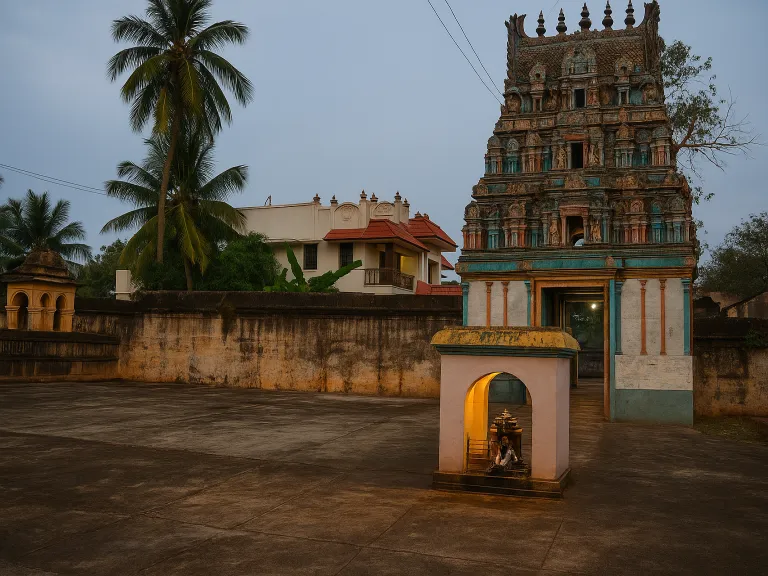
Apathsahayeswarar Temple at Thenkurangaduthurai, also written as Then Kurangaduthurai, is a Shiva temple at Aduthurai in the Kumbakonam-Mayiladuthurai region of Tamil Nadu. The shrine stands in the Cauvery delta, a landscape closely associated with the Tevaram hymns and the early medieval growth of Tamil Shaiva worship. The presiding deity is Lord Shiva as Apathsahayeswarar, the divine helper in times of danger, and the goddess is Pavazhakodi Ammai.
The temple is counted among the Paadal Petra Sthalams, the Shiva shrines praised in the canonical Tevaram hymns. Its identity is strengthened by its place-name: “Then” means south, “kurangu” means monkey, and “thurai” refers to a river-bank or bathing ghat. The name distinguishes it from Vada Kurangaduthurai, the northern Kurangaduthurai shrine. The association with the monkey figures of the Ramayana is central to the temple’s sacred memory.
Apathsahayeswarar Temple is valued not for monumental scale alone but for its literary, devotional, and geographical importance. It represents the older class of Cauvery-bank Shiva shrines where mythology, river worship, and Tamil hymnody meet. Devotees visit the temple to worship Shiva for protection, courage, and relief from distress. The temple is also part of the sacred pilgrimage circuit around Kumbakonam, Thiruvidaimarudur, Kanjanur, and other historic Shiva temples of the Cauvery basin.
ℹ️Temple Information
🛕
Presiding Deity
Apathsahayeswarar
👸
Goddess
Pavazhakodi Ammai
⭐
Temple Type
Shiva temple, Paadal Petra Sthalam, Cauvery river-bank temple
📅
Built Period
Documented by the 7th century CE through the Tevaram hymns of Tirugnana Sambandar
Need Help Planning your visit to
Arulmigu Apathsahayeswarar Temple?
Our travel experts can help you with transportation,
darshan timings, nearby sightseeing and complete temple tour planning.
⭐Temple Significance
Apathsahayeswarar Temple is significant as a Tevaram Paadal Petra Sthalam at Thenkurangaduthurai in the Cauvery delta. It is associated with Lord Shiva as the helper in danger and with the Ramayana-linked monkey tradition preserved in the place-name Kurangaduthurai.
📜History
The historically secure importance of Apathsahayeswarar Temple comes from its presence in the Tevaram tradition. The shrine was praised by Tirugnana Sambandar, one of the principal 7th-century Tamil Shaiva saints. This establishes that the temple was already a recognized place of Shiva worship by the 7th century CE. Its inclusion among the Paadal Petra Sthalams places it within the core sacred geography of Tamil Shaivism.
The temple belongs to the Chola country of the Cauvery delta, a region where many river-bank shrines received patronage, rebuilding, and ritual development across the early medieval and medieval periods. For this specific temple, no single historically documented founder can be stated from widely available sources. The present structure, like many ancient Cauvery temples, reflects successive phases of maintenance and renovation rather than one clearly attributable building campaign.
The name Thenkurangaduthurai also preserves an older geographical and devotional identity. “Thurai” indicates a sacred river-bank setting, while “Then” differentiates the shrine from Vada Kurangaduthurai. The historical memory of the temple is therefore based on three strong elements: its Tevaram attestation, its position in the Cauvery delta’s Shaiva landscape, and its continuous worship of Shiva as Apathsahayeswarar. Details such as the original builder, exact consecration date, and specific Agamic affiliation are not consistently documented in well-established public temple histories and are therefore not stated here.
🕉️Mythology
The sacred mythology of Thenkurangaduthurai is connected with the Ramayana-associated monkey tradition. The place-name itself preserves this association: “kurangu” means monkey and “thurai” means a river-bank or bathing place. Local temple tradition connects the shrine with worship offered by a monkey hero of the Ramayana, and this tradition is the reason the site is known as one of the Kurangaduthurai temples.
The deity’s name, Apathsahayeswarar, means Shiva who comes to the aid of devotees in danger. In devotional interpretation, the name expresses the grace of Shiva as protector, rescuer, and guide during difficult circumstances. The mythology of the shrine links this protective aspect with the Ramayana memory of fear, exile, danger, and divine support. Devotees therefore approach the Lord here with prayers for safety, courage, timely help, and removal of distress.
Thenkurangaduthurai is also paired in sacred geography with Vada Kurangaduthurai, the northern Kurangaduthurai. Together, the two names preserve the memory of monkey worship associated with Shiva on the banks of the Cauvery. The mythology should be understood separately from historical data: the Ramayana connection belongs to the temple’s sacred narrative and devotional identity, while the temple’s historical standing is established by its Tevaram reference and its place in the Paadal Petra Sthalam tradition.
🏛Architecture
Apathsahayeswarar Temple follows the essential layout of a Tamil Shiva temple. The sanctum enshrines Lord Shiva in the form of a linga, with worship centred on the garbhagriha and the adjoining mandapas. The goddess Pavazhakodi Ammai has a distinct presence within the temple complex, as is standard in Shaiva temple planning. The temple’s architectural character is rooted in the Dravidian tradition of the Cauvery region.
The shrine is more intimate in scale than the great royal temples of the Chola heartland, but it preserves the core features expected of an ancient Shiva temple: the sanctum, circumambulatory sacred space, subsidiary worship points, and ritual areas for daily puja and festival worship. The importance of the site lies in its sacred antiquity and Tevaram status rather than in a single monumental inscriptional building phase that can be attributed to a named royal patron.
As a Cauvery-bank shrine, the temple’s setting is architecturally and ritually meaningful. The idea of “thurai” connects the sacred enclosure with the riverine landscape that shaped Tamil Shaiva pilgrimage. The temple is part of a dense network of historic shrines around Kumbakonam and Mayiladuthurai, where architecture developed through layered patronage, local devotion, and continuous ritual use. Specific details such as the exact construction date, original architect, and formally documented Agama are not reliably available in widely established sources.
🌳
Sacred Features
💧 Temple Tank
Cauvery
The place-name includes “thurai”, indicating a sacred river-bank association with the Cauvery region.
✨
Temple Highlights
✨
Paadal Petra Sthalam
The temple is one of the Shiva shrines praised in the Tevaram hymns and is associated with Tirugnana Sambandar.
✨
Apathsahayeswarar
Lord Shiva is worshipped here as the divine helper who protects devotees in times of danger and distress.
✨
Then Kurangaduthurai identity
The name means the southern monkey-associated river-bank shrine and distinguishes it from Vada Kurangaduthurai.
✨
Cauvery delta shrine
The temple belongs to the sacred landscape of ancient Shiva temples along the Cauvery region.
✨
Goddess Pavazhakodi Ammai
The consort of Apathsahayeswarar is worshipped as Pavazhakodi Ammai within the temple.
🙏
Spiritual Benefits
Devotees worship Apathsahayeswarar for protection during danger.
Prayers are offered for courage during personal difficulties.
Devotees seek relief from fear, anxiety, and distress.
Worship at the shrine is associated with timely divine help.
Prayers are offered for family welfare and stability.
Devotees seek the grace of Lord Shiva for clarity and inner strength.
The temple is visited as part of Tevaram Shiva pilgrimage.
🎉
Major Festivals
🎉
Maha Shivaratri
An important annual observance dedicated to Lord Shiva, marked by special worship in Shiva temples.
🎉
Pradosham
A recurring Shiva worship observance connected with prayers to Lord Shiva and Nandi.
🎉
Thiruvathirai
A major Shaiva observance associated with Lord Shiva, especially in Tamil temples.
🎉
Aippasi Annabhishekam
A sacred Shiva temple observance in the Tamil month of Aippasi in which the linga is worshipped with cooked rice.
🪔
Special Poojas
🪔
Pradosha Pooja
Special worship of Lord Shiva during the Pradosham period.
🪔
Rudrabhishekam
Abhishekam to Lord Shiva with chanting of Rudra hymns, performed in Shiva temples according to local practice.
🪔
Somavara Worship
Monday worship dedicated to Lord Shiva, especially observed by devotees seeking protection and grace.
🚗
How to Reach
🛣️
By Road
The temple is reached through Aduthurai, which is connected by road with Kumbakonam and Mayiladuthurai.
🚆
By Rail
Aduthurai railway station is the nearest convenient rail point for reaching Thenkurangaduthurai.
✈️
By Air
The nearest major airport commonly used for this region is Tiruchirappalli International Airport.
💡
Visitor Tips
Confirm the current opening hours locally before planning the visit.
Carry offerings only according to temple practice and local guidance.
Dress modestly and follow normal Tamil Nadu temple etiquette.
Avoid photography inside the shrine unless permission is clearly given.
The temple can be combined with nearby Cauvery delta temples around Aduthurai, Kanjanur, Thiruvidaimarudur, and Kumbakonam.
Visit during cooler morning or evening hours for a more comfortable pilgrimage.
Maintain silence near the sanctum and allow space for regular puja.

 WhatsApp Us