🛕About Temple
Bangaru Kamakshi Amman Temple is a revered Shakti shrine in the old quarter of Thanjavur, Tamil Nadu, dedicated to Sri Bangaru Kamakshi Amman. The word Bangaru means golden, and the temple is known for its association with a golden form of Kamakshi, the compassionate Mother Goddess worshipped most famously at Kanchipuram. The shrine stands within the cultural landscape of Thanjavur, a city deeply connected with Chola, Nayak and Maratha religious patronage.
The temple is especially important in the history of Carnatic music because of its association with the composer Syama Sastri, one of the celebrated Trinity of Carnatic music. Syama Sastri served Bangaru Kamakshi as a hereditary priest and composed several kritis in praise of the goddess. Through these compositions, the shrine occupies a significant place not only in Tamil Nadu temple worship but also in South Indian classical music and devotional literature.
Unlike the monumental Brihadisvara Temple, Bangaru Kamakshi Amman Temple is valued for its sanctity, continuity of worship and historic movement of the deity from Kanchipuram to Thanjavur. Devotees visit the temple for darshan of Kamakshi as the divine mother who grants grace, protection and inner strength. The temple remains a cherished shrine for worshippers of Devi, admirers of Syama Sastri and visitors exploring Thanjavur’s living sacred heritage.
ℹ️Temple Information
🛕
Presiding Deity
Sri Bangaru Kamakshi Amman
👸
Goddess
Sri Bangaru Kamakshi Amman
⭐
Temple Type
Shakti temple, Amman temple, Hindu temple, Maratha-period temple
📅
Built Period
18th century CE
🏛
Dynasty
Thanjavur Maratha kingdom
Need Help Planning your visit to
Sri Bangaru Kamakshi Amman Temple?
Our travel experts can help you with transportation,
darshan timings, nearby sightseeing and complete temple tour planning.
⭐Temple Significance
Bangaru Kamakshi Amman Temple is significant as the Thanjavur shrine of the golden Kamakshi image associated with Kanchipuram, as a Maratha-period Shakti temple, and as the temple served by Carnatic composer Syama Sastri. Its importance combines Devi worship, Thanjavur history and South Indian classical music heritage.
📜History
The history of Bangaru Kamakshi Amman Temple is closely connected with the movement of the golden image of Kamakshi from Kanchipuram to Thanjavur. Temple accounts and histories of South Indian devotional culture record that the image was removed from Kanchipuram during a period of political disturbance to protect it from danger. The deity was carried by hereditary priests and eventually reached Thanjavur, where it received royal support under the Thanjavur Maratha rulers.
The present shrine belongs to the Maratha-period religious landscape of Thanjavur, especially the eighteenth century, when the Maratha court patronised temples, music, Sanskrit and Tamil learning. The installation of Bangaru Kamakshi in Thanjavur is commonly associated with this period of Maratha rule. The temple’s hereditary priests maintained the worship of the goddess, preserving the link between Kanchipuram Kamakshi worship and the Thanjavur shrine.
The temple gained wider cultural prominence through Syama Sastri, who was born in the eighteenth century and served the goddess as a priest. His family was connected with the custody and worship of Bangaru Kamakshi. Many of his compositions address Kamakshi with deep devotion, giving the temple a permanent place in the sacred geography of Carnatic music. The temple’s historical importance therefore rests on three well-known strands: the protected relocation of the deity, Maratha-period establishment in Thanjavur and its association with Syama Sastri’s devotional service.
🕉️Mythology
The mythology of Bangaru Kamakshi is rooted in the wider Kamakshi tradition of Kanchipuram, where the goddess is worshipped as a supreme form of Parvati, the divine mother. In Shakta devotion, Kamakshi is the one whose compassionate eyes grant grace to devotees. The name is interpreted in devotional literature as the goddess who draws seekers toward liberation through mercy, beauty and maternal power.
Local tradition connects the Thanjavur deity with the sacred image of Kamakshi from Kanchipuram. According to this tradition, the golden goddess was carried away from Kanchi for protection during a time of danger and was worshipped at different places before being enshrined in Thanjavur. This account is part of the temple’s sacred memory and explains why the Thanjavur shrine is treated with deep reverence by devotees of Kamakshi.
The goddess is approached as a living mother who protects her devotees, removes distress and grants spiritual steadiness. Syama Sastri’s songs strengthen this devotional image by addressing Kamakshi with intimacy, surrender and trust. In these compositions, mythology and personal devotion merge: the goddess is not merely a distant cosmic power but the mother who listens to prayer. The temple’s mythology therefore centres on protection, divine motherhood and the continuity of Kamakshi worship from Kanchipuram to Thanjavur.
🏛Architecture
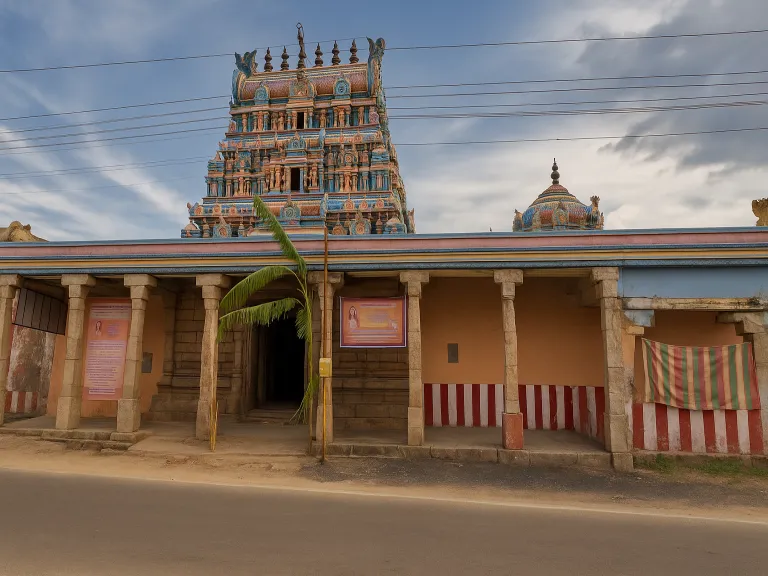
Bangaru Kamakshi Amman Temple is an urban shrine within Thanjavur rather than a vast temple complex. Its architectural importance lies in the sanctum of the goddess and the continuity of ritual worship rather than in monumental scale. The temple follows the general South Indian pattern of a sanctum for the presiding deity, connected worship spaces and subsidiary areas used for daily rituals and festival observances.
The shrine reflects the religious architecture of the later historic period in Thanjavur, particularly the Maratha-era devotional environment of the city. Unlike the massive Chola granite temples, this temple presents a more compact sacred setting suited to close darshan and regular worship. The focus of the interior is the sanctum of Sri Bangaru Kamakshi Amman, where the goddess is worshipped with alankaram, lamps, flowers and offerings according to temple practice.
The temple’s artistic identity is inseparable from the golden image of Kamakshi and its musical associations. Visitors experience it as a living shrine embedded in Thanjavur’s old streets, not as an archaeological monument. Its architectural value is therefore best understood through function: a protected sanctum for a historically significant goddess, a ritual space maintained by hereditary tradition and a devotional centre associated with Syama Sastri. The temple contributes to the layered sacred landscape of Thanjavur alongside larger and older temples of the city.
✨
Temple Highlights
✨
Golden Kamakshi Tradition
The temple is associated with Sri Bangaru Kamakshi, the golden form of Kamakshi connected with the sacred Kamakshi tradition of Kanchipuram.
✨
Association with Syama Sastri
Carnatic composer Syama Sastri served the goddess as a hereditary priest and composed celebrated kritis in praise of Kamakshi.
✨
Maratha-period Thanjavur Shrine
The shrine belongs to the religious and cultural environment of eighteenth-century Thanjavur under Maratha patronage.
✨
Shakti Worship in Old Thanjavur
The temple remains an important Amman shrine within the old urban sacred landscape of Thanjavur.
✨
Connection to Kanchipuram
Temple tradition preserves the memory of the deity’s movement from Kanchipuram to Thanjavur for protection during a disturbed period.
🙏
Spiritual Benefits
Devotees seek the grace of Kamakshi for protection and wellbeing.
Worshippers pray for peace of mind and emotional strength.
Devotees seek blessings for family harmony and prosperity.
The goddess is approached for removal of obstacles and distress.
Kamakshi worship is associated with maternal compassion and divine guidance.
Musicians and devotees of Carnatic music revere the shrine because of its link with Syama Sastri.
Devotees pray for spiritual steadiness and devotion to Devi.
🎉
Major Festivals
🎉
Navaratri
Navaratri is an important period for the worship of Kamakshi and Devi. Devotees offer prayers to the goddess with special devotion during the nine nights dedicated to the Divine Mother.
🚗
How to Reach
🛣️
By Road
The temple is in Thanjavur city and can be reached by local roads from the old town, railway station and bus stands. Taxis, autorickshaws and local buses are commonly used for travel within Thanjavur.
🚆
By Rail
Thanjavur Junction is the nearest major railway station. From the station, local transport is available to reach the temple in the city.
✈️
By Air
The nearest major airport is Tiruchirappalli International Airport. From Tiruchirappalli, Thanjavur is reachable by road and rail.
💡
Visitor Tips
Verify the current temple timings before visiting, as schedules may change on festival and special worship days.
Dress modestly and follow normal Hindu temple etiquette.
Do not photograph inside the temple unless permission is clearly given by temple authorities.
Navaratri can attract more devotees, so plan additional time for darshan during that season.
Combine the visit with other major temples in Thanjavur’s old city if time permits.
Maintain silence near the sanctum and avoid obstructing regular worship.
Check locally for special puja arrangements, offerings and festival schedules.

 WhatsApp Us